Welcome back for another installment of my monthly Behind the Camera. This month we are going to talk about something that I’ve been thinking about for a while now, and it has actually taken on a couple of different meanings along the way. I’m talking about a photographer shooting for themselves and not for a client, or a product, or for something that will expressly make them money. This concept has come to mind in my own inner ponderings and more recently when talking to new photographers that have hopes and dreams of becoming full time professional photographers. There are two pretty unique ways of looking at this idea that correspond with the reasons that it has come to mind. Before I really get started here, I think I need to have a quick attitude check. Yeah, I am feeling pretty good about my photography these days. As I am starting this entry, I have come off of a series of really great shoots with a lot of photographs that I am really proud of. There have been no disappointments with my recent treks which can sometimes be an unfortunate reality for me. In pretty much all respects, I am feeling pretty good about photography in general. Keep that in mind while I talk through this topic because there will be parts of it that sound really negative and might have a doomsday tilt. That is not my goal or intention here because I will always think that photography is a great art form and skill to practice.
OK, so what am I talking about when I say that we need to shoot for ourselves? Since this topic first came to mind thinking about my own photography, I’m going to start there. In the world of photography, there is an infinite amount of subject matter and types of photography that can be done, not to mention how you can go about doing it. Why did I land on being a landscape photographer to begin with? To put it simply, it was the genre that fit my personality the most when I was thinking about what to photograph. I enjoyed being outside and around nature. I liked the quiet and solitude of being by myself. There was nothing that felt rushed about landscape photography, and the photos conveyed that kind of relaxing feeling to look at. On the other hand, the thought of photographing a wedding or an event being surrounded by tons of people and a constant din of noise would have sent me running for a dark corner of the room where you would find me in the fetal position sucking my thumb. Being a sports photographer might have made sense, but I would need to know more about sports than how to make a hole-in-one using a football bat to the best of your ability. GO SPORTS!!!!! Seriously, since I don’t follow sports, I wouldn’t be able to predict how the action was going to go which would make me a terrible sports photographer. What about a journalistic photographer? That would have been too closely related to me being a police officer and the whole point of photography back then was to see the beauty that the world offered rather than the more negative side of life. That brought me back to photographing the landscape. Of course, at the time, I had no real idea how deep the landscape well ran.

I was a landscape photographer for many years when I got started in photography. It fit the bill for what I needed as a hobby. It got me out of the house on my off days and allowed me to see beautiful scenes that didn’t include crime scene tape, blood, or people yelling at me. It was relaxing and fulfilling. Landscape photography was just what I was needing to give my life balance and peace. I’m still a landscape photographer to this day, but I’m sure that you have noticed that most of my focus is now on the decay aspect of photography. I still count this as a form of landscape photography because it takes place outside with objects that in one way or another have become a part of the landscape. It is just the other side of “true” landscape photography which places an importance on omitting the hand of man within the scene.
Over the years, my definition of a landscape photograph has changed, and much of this shift is due in no small part to a book I read by Harold Davis about ten years ago. In this book, he talks about several definitions of the landscape and states quite effectively that in the modern age, it is crazy to dismiss humans and their artifacts when defining the landscape. That one concept has formed so much of the foundation of my current photographic philosophies. It allowed me to take what used to be a guilty pleasure and turn it into an accepted subject for the camera. Yes, I am talking about my decay photography which really focuses on those artifacts of humans that Mr. Davis talked about.

So, why this brief history lesson on my photography? Well, I wanted to point out how I got started, what I chose to photograph, and how that has morphed along the way. It shows that I have followed what I have wanted to shoot since the very beginning, and I think that is so important for a photographer to do. Of course, there were other decisions along the way that were made with my photography in regard to what I have chosen to do with my photos. At first, it was all a hobby and something that I wanted to do for myself. I created a website of sorts so that I could share the phots and there was always the dream of becoming famous and rich through photography. That is still a dream, although one that I don’t put a lot of stock in anymore. The hobby did progress, and I started to work towards making it a future financial option for myself. I stuck with what I was wanting to photograph which made the transition easy, but in hindsight, this is probably the hardest type of photography to actually make money in.
That being said, one of the most important decisions that I have made along the way has been to shoot for myself. There are times when I stray from that for one reason or another, but in the end, I always come back to that core belief. This goes far beyond subject matter which is mainly what I have touched on. I’m talking about how the actual process looks as a whole. This is a creative outlet and one that has many different variations on how it can be accomplished. If you check out YouTube and look at the various channels that are about landscape photography, you will see a common thread. A couple of hours of sleep, out well before sunrise to hike in the dark to some distant mountain peak to wait for the sun to come up revealing a Trezmendous view. Yes, I have done that many times, but it is not something that I really enjoy. I’m not a morning person and really don’t like getting up that early on a regular basis. However, to look at the popular opinions, that is what I would have to do in order to be a “real” landscape photographer.
Part of shooting for myself has become defined as going out when it suits me the best. I’ve adapted my shooting preferences to how I like to operate. This means that I tend to photograph on cloudy days which provides great light throughout the day rather than for an hour in the morning and an hour in the evening. I can even work at noon if I choose to do so. Of course, I still have the option for grabbing golden hour if the mood strikes, but it is not something that I am bound to.
This one variation on how landscape photography is supposed to be done increases my enjoyment of the process immensely because I’m not doing things that are abnormal for me and would make this feel like work. I can sleep in until I am ready to get up and still move slowly until I am ready to head out. I can stay up late at night if I want to and still be able to get out the next day and engage in photography if that is what I want to do. There are always exceptions to this as what I am wanting to shoot might force a very early morning, or a late night. There are also client considerations and when I am being directly paid to provide a service. In those cases, I have to go with their schedule. There is no way around that, but those are specific occurrences and I’m doing them because I have decided to do that shoot or provide that service. If at any time I feel that these options aren’t for me, I can choose to do something different. That freedom is a wonderful thing for me because everything that I do as a photographer I have chosen to do. There is nothing that comes up that is outside of my scope of control. I mean, what am I going to do fire me for not taking on a client or a shoot?

Not only do I choose the way that I shoot, I also have full control over what I shoot. I’ve talked a lot about being a landscape photographer which would also include decay photography. Does that mean that I am locked into those choices every time I feel creative? Absolutely not! There are times that I want to shoot off the wall subjects for something different and exciting. It might just be a fresh take on something that I have shot before, but it always lets me stretch my creative muscles. Having that freedom to shoot for myself really makes growth possible. Take the image of smoke above. These photos don’t usually do very well when posted on social media, and I have yet to sell a print of one of them. So, why in the world do I go back to this technique so many times over the years? Well, I count it as a learning experience for me as I always learn new techniques in post processing with these images. It also teaches me patience as each frame is a roll of the dice if it will even capture the smoke, and if it does, whether or not it will be in focus and of a pleasing design. Most everything else that I shoot removes the concept of chance as I can wait for that moment to make the exposure. With smoke, if you wait for it, it has already happened. It is more of a guessing game as to what will happen next.
Shooting for myself is something that I have largely always done, but there are times like back in 2008 when Toni convinced me to try portrait photography. I wasn’t ready to do that at the time, and it was not something that I really wanted to do either. I found very little enjoyment with it and the photos were really not up to par with what I was creating as a landscape photographer. This venture lasted about a year before I gave it up. Of course, being burned by many of my clients along the way factored into that decision to quit. I just wasn’t cut out to work with people as a photographer. Having gone into it not really wanting to, had a profound effect on the outcome and that experience led to failure.
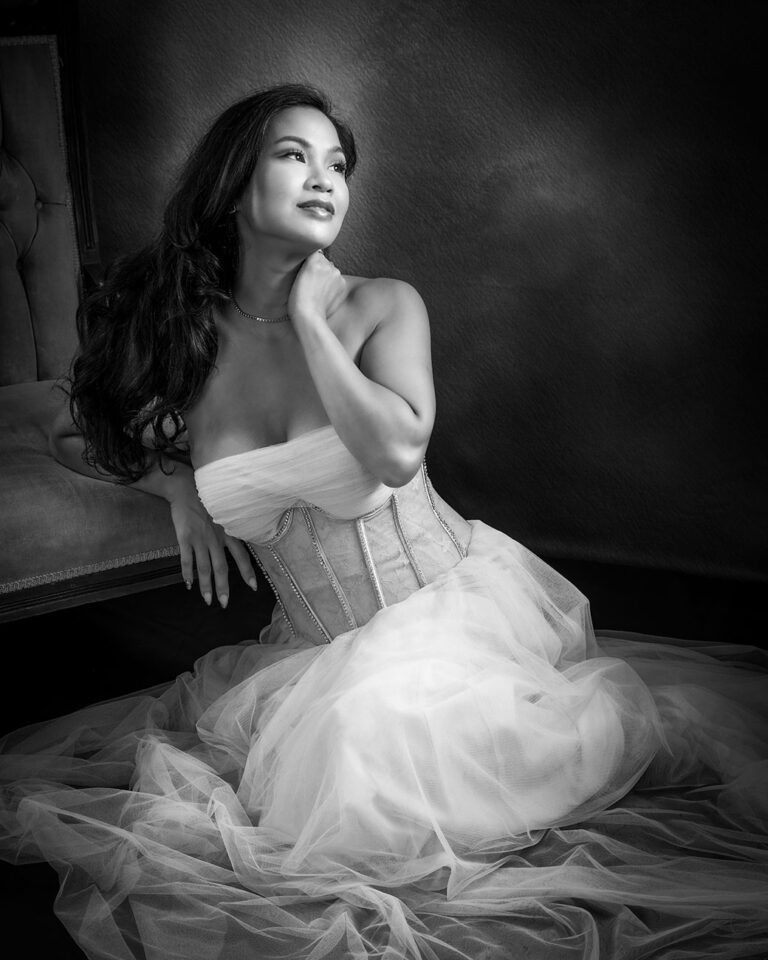
Fastforward more than a decade later and after having grown as a photographer and having left public service, I was feeling ready to try it again. This time, it was my idea and something that I was choosing to do. I wanted to learn more about portraiture, and I saw the artistic merit that it offered. Having that inner motivation to learn and enjoy this kind of photography opened up a whole new set of doors and the experience was completely unlike what I had gone through the first time around. Because this was something that I wanted to do, I started to set goals for myself and that motivated me to learn a great deal about portraiture. Something that I also learned along the way was that many of the concepts that I was learning in this realm could be applied to my landscape and decay work.
I was fortunate enough back in 2019 to be able to leave my career as a police officer in order to pursue photography full time. To a point, this was going to mean shooting for others rather than myself. I was going to be dependent on my clients which at the time were all based on my landscape and decay print sales and the fact that I had just started to teach workshops in those same genres. I was OK with that and decided to go full into that plan for creating photographs for others to be able to purchase. I found out really quickly that this was harder than I had suspected. It is nearly impossible to figure out what others will like, even basing it on previous responses. I found myself constantly chasing that approval from the audience and seeking to increase my reach. I was a business owner after all, and that meant that I was supposed to cater to the client.
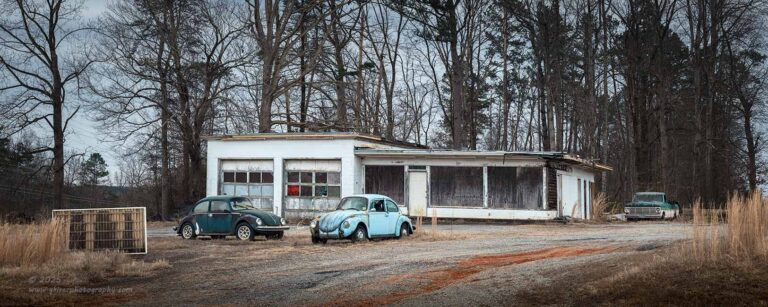
What I found was that I would never catch that rabbit. There was just no way that I was going to be able to shoot for somebody else which is exactly what I was trying to do. In actuality, I was alienating myself from my own artwork and I was starting to create things that were not necessarily “me.” I’m not sure how long that this lasted, but I did get ahead of it in short order because of something that I had said back in 2010 during an interview on “Roy’s Folks”. Other than a few awkward word moments that make me cringe to think about, I did say something to the effect of “If I don’t like what I’m shooting, how can I expect anyone else to like it?” There was a lot in that one statement and the more I considered it over the years the more valid it became. I had to have a connection with the subjects that I was shooting, and I had to be motivated to capture them in a specific way. That way was how I viewed the scene. Nowhere in that equation was there room to shoot for somebody else’s vision. That became even more unattainable when I really didn’t know what that vision might be.
Even as a professional, full-time photographer, I found that shooting for myself was always preferred. I had to shoot the things the way that I wanted to do it, with my reaction being the most important gauge to whether or not the image worked. This removed a lot of the stress from my plate and allowed me to be myself with the camera which is what I had done leading up to becoming a full-time photographer. It has allowed me to become a bona fide decay photographer which is where my creative desires have led over the years. When I think about this choice, I often question my own judgement though. While I am well known for this kind of photography, this is just not where my print sales are found. Looking back over the years, when it comes to clients putting down their money, those prints have pretty much always been my landscape photographs. Specifically, my coastal images which account for the largest percentage of all prints sold through the years…by far.
This is where I get confused. To this day, I choose to focus my attention on decay photographs in spite of the fact that my coastal landscapes sell better. It is also strange that my coastal work represents such a small fraction of my overall body of work since I only get the coast once a year at most. If I was shooting for the clients, I would probably be better off living at the beach and becoming very familiar with the area. While I do enjoy coastal photography for something different, I have reminded myself that even at the beach, I tend to gravitate towards the decay subjects. Why not follow the money and shoot what is profitable more often? Well, because I would cease to enjoy what I do and that would show in my photographs. In order to maintain motivation, I have to concentrate on what I love to capture. This allows me to branch out and do other things from time to time to keep it fresh while still keeping a momentum going. The few times that I do get out to the coast, I have such a momentum going that I can get a nice collection of photos from a few days’ work that will help to pad that portfolio and bring in some cash along the year.

This brings me to the second part of this argument and one that I have started to see on the forums for new photographers. It is usually in the form of the question, “I’m new to photography, what gear do I need to buy in order to shoot weddings?” That one question tells a lot about the person, I think. First of all, it tells me that they are getting started which is great. I love to see folks starting on this creative journey. Second, it tells me that they have no camera equipment to speak of, or they would have been saying “what can I add to this kit?” Thirdly, it is telling me that they are going for the most lucrative form of photography that is readily available for folks. Wedding photography is one of the most demanding and high stress forms of photography out there, and that is why it costs so much to hire a wedding photographer. Looking at the way that the question breaks down, I can’t help but think that the person asking the question has no idea what they are getting into and doesn’t know what they might actually like to photograph, they are only looking at the potential paycheck and a high return on minimal gear purchases. The joke is on them because wedding photographers need a ton of gear to make what they do work consistently.
This is where the advice of shoot for yourself comes in to play once again. When you are getting started in photography, you have to let some things happen organically. You have to figure out where your own interests lie, and you have to start exploring those areas of photography in your own ways. One of the best ways to get started in photography is to take your phone and go around and take photos of things that you are drawn to. This could be buildings, trees, waterfalls, old cars, new cars, people, animals, birds, signs, etc… It truly doesn’t matter what you take photos of, just use your camera to react to the scenes around you. Over time, you will start to see a pattern develop that will start to point you in the direction of what you naturally like to see and would want to photograph. This is the best way to figure out which direction you want to go with your photography. You would then start to build out a kit that will allow you to photograph whatever it is you are drawn to. Wedding photographers usually stem from those who really enjoy photographing people and events. They get good at it and figure out all the little tricks to make their lives easier during these sessions and they become capable of working a high stress event like a wedding. It is not something that you start off doing with your first camera.
The other question that I see pop up more often than it should is “I’m just starting out in photography and want to make it a business, what should I market myself as?” Again, the cart is getting put in front of the horses in a manner of speaking. There is a misconception out there that would suggest that all that is needed to become a professional photographer is having a camera. I would go as far as saying that if you have a camera, you can become a photographer, but being a professional photographer is something completely different and the actual act of photographing takes up such a small percentage of the time and effort.
The better idea here is to shoot for yourself and do what you love with a camera. As you build on your skills and talent, you will find an audience. This audience will eventually start paying you for your work and that is how you determine how to market yourself. You let things happen naturally because you are doing what you love, and you are shooting in a way that makes you happy. There will always be an audience for that, though it might not ever be for the masses. It is in your own uniqueness where we will find our own successes. These things are never evident from the beginning.

All of this is to say that when you are getting started out in photography, use your camera to express what your eyes are drawn to. Hone that creative and communicative skill while you really start to understand yourself. In time, you will settle on a “style,” although, I don’t really like that description because it tends to indicate too many specifics in what you choose to capture and how you go about doing it. During this process, you will develop an audience that appreciates what you do and will start paying you for your art, should that be a goal of yours. This could be photos that you have already shot, or it could be sessions for hire depending on what you like to shoot. This is all part of the natural evolution of photography for those that want to see some income from it. In the circles I find myself in mostly, that desire is the norm, but there is another side of the coin, and that is the ever hobbyist photographer.
Those that choose to shoot for their own enjoyment without ever really thinking about making an income from it count as the ever hobbyist in my opinion. Before you get on my case about this sounding negative, I will put it out there, right up front, that these photographers are usually the best at what they do, and they are the happiest as well. If I had it to do over again, I probably would have been better off being an ever hobbyist photographer. I’m actually moving more to that direction these days while keeping the business going. Why would I want to give up the lush lifestyle of a professional freelance photographer with all the fame and fortune that comes with it? Well, doing photography as a business is quite hard because you don’t get to shoot as much as you would want, and then you have to shoot when you don’t want to. You have deadlines, paperwork, taxes, maintenance of gear, and just general tasks that aren’t any fun and have very little to do with the art of photography.
I’ve done a lot of talking about how the business is going through the years. I even did quarterly updates after becoming an official business. If you have been following, or are interested, you will see that business has been terrible and by most accounts I should have folded years ago. I am staying afloat, but only barely. I’ve been looking at a lot of choices that would need to be made at some point, but I kept putting them off for hopes that things would turn around and I would start to see more of the success that had started pre-covid. Looking back over 2024 and how the income had worked out, I started to see the writing on the wall. That has held true through the first quarter of this year as I had only a single sale to log in the books for the first three months of 2025 and that was a deposit for a workshop. Yep, here is where that doom and gloom warning comes into play that I mentioned at the opening.
I had a choice to make, I could either invest a lot of money into marketing and making physical prints to take to art shows and travel all around doing those shows, or I could disengage from the business end of things and concentrate more on my enjoyment of photography. Sure, doing the art shows sounds like a lot of fun, but I would actually lose money doing them because I would have to rent the space, and then I would be selling ready to hang works which I would have to store between shows. I’ve looked into renting spaces before, and most of them cost enough that the venue would make all the profit off of the prints that I sold after I figured in the costs of getting them framed or doing them in a ready to hang media like canvas or metal. I didn’t get into this to make $10 on a print sale while the customer is spending $400+, and the venue gets 30% of that price. That would throw me into a depression that would end photography for me. I would also drive myself nuts trying to figure out which prints to make and how to present them because at the end of the day, I don’t want to store them. I have our walls filled here with framed prints that have been through competitions and won ribbons nearly 10 years ago which still haven’t found a new home. That is a lot of inventory to keep track of, but at least these pieces are on display and are being enjoyed. What I would have put together for an art show would have to be stored in a closet and potentially get damaged which is not a good option.
My other idea was to work on that book that I have been wanting to do for the longest time. It would have to be self-published which would mean that I would be responsible for distribution as well as storage until they all sold. I’ve talked about this before and ran through the numbers in detail. Essentially to get the book priced where folks have said they would buy it ($20.00 a copy), I would have to do a run of 2000 books at roughly $13.00 a copy, which is my cost. After you carry the one and count on your toes, my initial investment would be roughly $26,000 which would have to be paid up front to publish my book. I would then have to store 2000 copies and find homes for each of them at $20.00 which I would then have to pay to pack and ship to the customer. If……IF I sold all 2000 copies, I would make a small profit of a few thousand dollars, but the chances are much higher that I would be sitting on at least half of those books (probably more like 1700 of them) for an extended period of time which would mean that I would never see my initial investment back, much less a profit.
What have I chosen to do? Well, I’ve decided to shoot for myself once again, but in a different context. I’m still operating a business and still file taxes, carry insurance, and shoot for clients, but I am doing it with my own wants at the forefront. I’m doing photography the way I want to do it without too much concern for making a living at it. I’m a professional photographer that gets to treat photography like a hobby. As long as I stay afloat, I am going to count that as a success from a business standpoint. I’m going to do what I love and that is creating the photos that I want to and in the way that I want to. I’m going to teach however I can along the way because I think that photography is a great skill to have and a wonderful artistic expression. I get a lot of satisfaction out of sharing my passion for this craft and for seeing other photographers grow. These are the new metrics that I have for success and I’m already feeling a weight lifted off of me because I am no longer worried about how my work is being received or the condition of the economy which leads to less luxury spending.
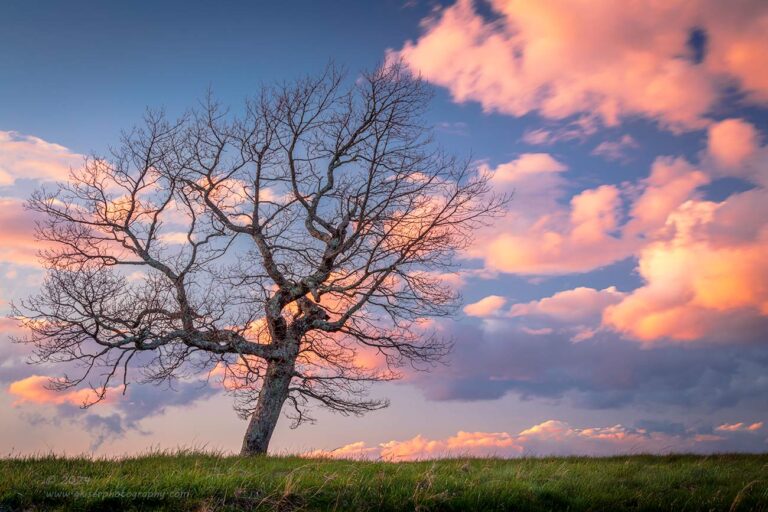
I have reached the best compromise that I can with photography at this point. Being a business allows me to afford the hobby of photography, and I get to do it for the pure enjoyment of it. I’m essentially the ever hobbyist that I have grown to envy with more time to engage in the craft. I shoot how I want to shoot and what I want to shoot while going off on tangents whenever I feel like it. I’ll take on occasional clients while teaching occasional workshops that I want to do, but none of those things are mandatory anymore. Even the rate that I create content is totally up to what I feel like.
This is something that I wish that new photographers understood about photography. The ones that really enjoy it are the ones that do it out of love and not as a business. If they can earn an income staying true to what they love, then that is the paramount success, but you should never go into it with the intention of shooting for someone else. This is an art form and should reflect your own creative voice without regard for attempting to figure out what somebody else might like.
Thank you for joining me for this this month’s Behind the Camera. I do hope that you have enjoyed it and maybe have learned a little something along the way. I’ll be back here on June 1st with another installment. It really is hard to believe that we are almost half-way done with 2025. It seems like it just got started.
Until next time…