Welcome back for another installment of my monthly Behind the Camera series. In this feature, I will tackle a photography related topic that might not fit in with any particular treks that I have taken. I’m always happy to answer questions here as well; so, if there is something that you would like to learn more about, or get a better understanding of, ask away. This month, I want to talk about something really fun, or at least I think it will be. So many times, we as photographers take our passion too seriously and refuse to take risks. I’m not talking about working on a summit during gale force winds that threaten to blow us into the Linville Gorge. That is a different kind of risk altogether and one that I would never recommend. What I am talking about here is allowing yourself to go out and take crazy photos of things that you might not normally consider. You never know what you might come up with and in my personal experience that these crazy photos are the ones that really stand out in a collection. Even beyond that, you will learn more by shooting those crazy photos than you might think.
What exactly am I talking about when I refer to crazy photos? It really could be anything at all, from using a Dutch tilt when you are usually a stickler for keeping the camera level. It could be trying intentional camera movement when you are usually all about a sharp image. For me, what I love doing is finding those subjects that would normally not be considered photographic and trying to make them look interesting and appealing. The best way to do that is to go on a photo walk which I have been doing regularly for the last few years. It is during these walks that I am forced to look at things photographically that I would not normally be drawn to because I am typically looking for things that look photogenic on the surface only. There is nothing wrong with that, but you will find that the photos that result are usually the expected ones, and you have to do a lot to make them stand out from the crowd of others who shoot similar things.

A great example of this concept was found in Elkin a while back during one of my photo walks. I just happened to be walking through a back alley in the downtown section. It is the rear of the buildings where I find the most interesting things because the fronts are kept very presentable for the visitors to the area. Behind the businesses, you never know what you might find. On this particular day I found one of those old magazine holders which had been spraypainted a dull silver at one point and the rain that had fallen on it over the years had started to make the wood peel. On any other day, I would have passed this by and looked for something more normal to photograph. However, since I was in the mindset to find quirky scenes and shoot those crazy photos, I was drawn to this area because of a couple of old chairs and this magazine rack on top of a small end table. To most it would be a pile of discarded junk, but I knew that there was a composition there somewhere. I just had to find it which was part of the hunt for me.
This is where part of the learning process comes into play. I’ve been photographing things for nearly two decades at this point and can get most compositions figured out with one eye tied behind my back. However, when I start shooting these crazy subjects, I have to apply compositional theories in ways that I don’t normally get to. This stretches my mind and forces me to look at things differently. By interpreting the scenes in different ways, I am able to get interesting shots of rather mundane objects and scenes. More importantly though, I am teaching myself other ways to deal with future compositions. Having these new tools available to me will give me a chance to try different things in situations where I have become more comfortable and lazy in my compositions. There is always a chance to learn, and shooting crazy things is a great way of doing just that.
For instance, I learned a great deal about controlling the depth of field to force the attention on the intended subject when the subject and background are relatively close in distance and in tone. I learned about the importance of using diagonals against horizontal and vertical lines to add excitement and draw the attention to specific areas of the frame. Shadows and highlights were important considerations as well when it came to establishing the subject as well as how to effectively crop in close while showing just enough of the environment to have the scene make sense. These were all concepts that I have been familiar with, but working in this kind of tight area with flat light was something different for me as was shooting an object that kind of blended into the surroundings due to the colors of the scene.

I was able to use the lessons that I gained off of that magazine holder which were put to use on a recent trek to the Outer Banks when I came across this Shad Boat in a marsh right next to a boardwalk. Even a year ago, I would have looked at this and probably passed it by because it was mostly covered by the reeds, and it was very close to the boardwalk. I would have wanted to isolate it better and have an unobstructed view. Taking what I learned from shooting a crazy picture of some junk behind a store, I was able to utilize angles to make the diagonal elements pull the attention to the main subjects while the rest of the scene was a more boring series of vertical lines. The use of diagonals established the subject, and then I was able to use shadow and highlight to further cement the visual weight of things within the frame. I was even able to use an element that didn’t have anything to do with the boat as a framing element as I had done with the garage door behind the magazine holder. Neither of these photos are typical in my collection, but that is what makes them stand out. Both work very well and the techniques involved came from putting no pressure on myself to just be able to capture a crazy photo during a photo walk.
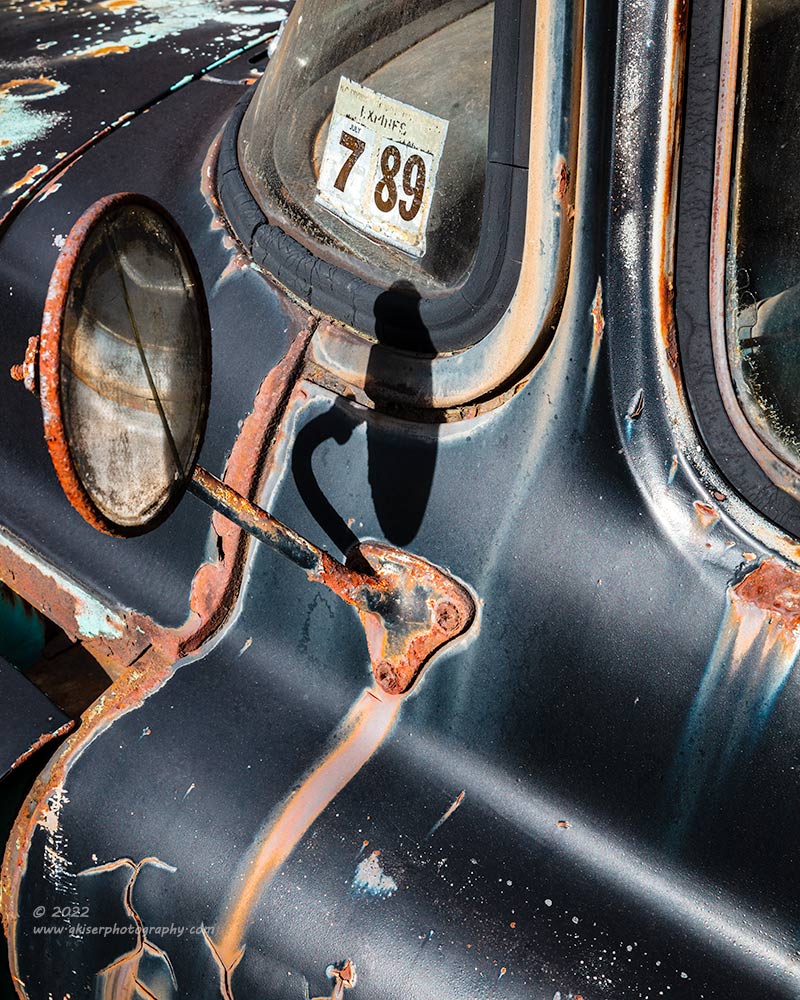
Shooting crazy things could just be picking out compositions that you really don’t think will work, but you figure you might as well try it while you are there. In this example, I really liked the patina of the old truck, but other than a shot of the tailgate, there wasn’t much that I could do with it because of where it was positioned and what was around it. The sun was looking good on the driver’s side and I liked the way that the rust was running down the side. I framed up a composition that filled the frame with the lines of the body panels and placed the mirror in a frame of lines from the hood. As the sun came out stronger, there was a shadow which was added that I liked. The whole composition felt odd to me at the time, but there was something about it that I liked, so I spent some time and shot this.
I learned a lot from doing this one, even though it is of a subject that I have shot many times over. I learned a lot about using the lines of the body panels to make interesting shapes within the frame. I learned to be able to use those shapes to frame other things like the mirror, and learned to use the sunlight to my advantage when it comes to showing dimension in the different surfaces. Sure, I had kind of done compositions like this before, but nothing quite as involved as this. I was able to take these concepts with me and have started shooting this section of cars a lot more often now that I know how well it works.
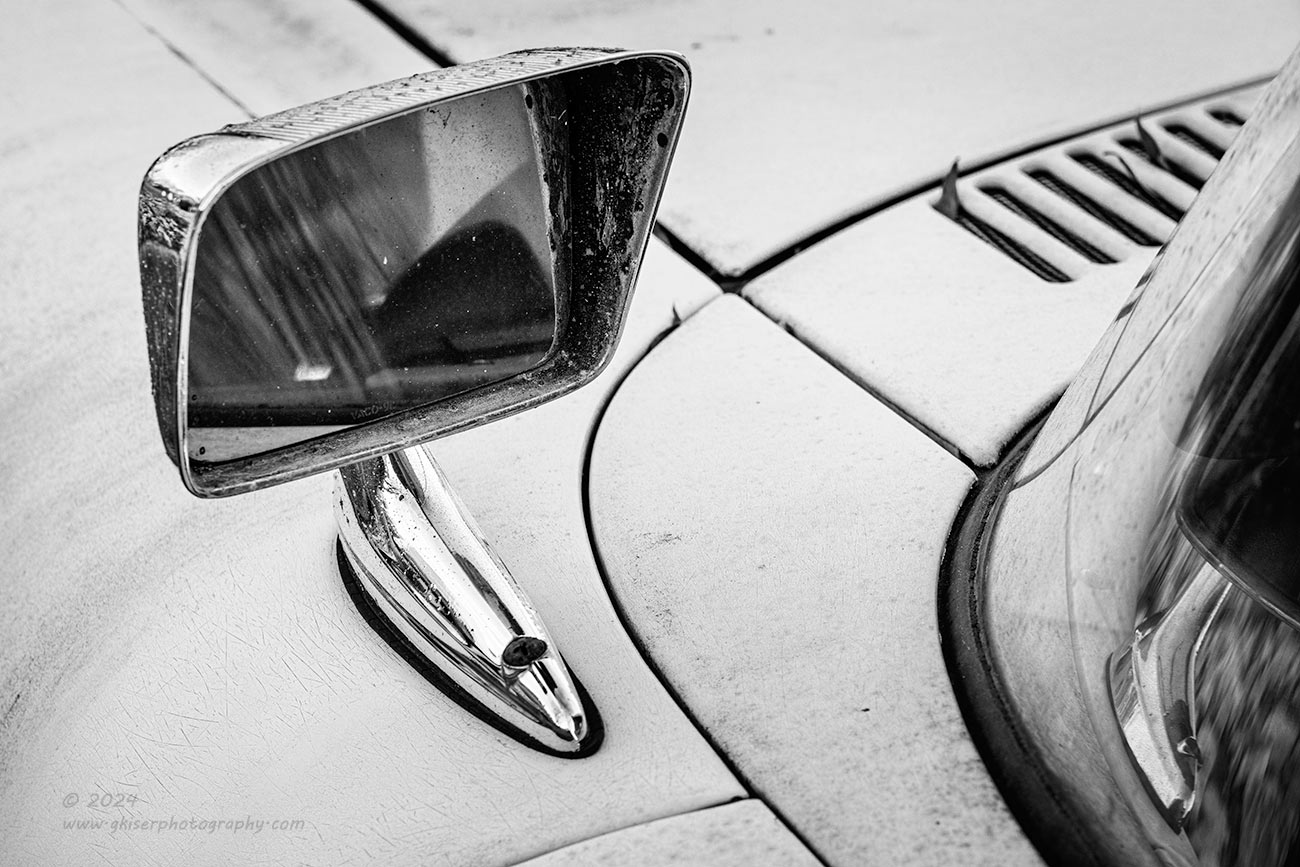
As recently as mid-February I used what I learned from that Chevy pickup and knew that there was a composition to be made with this Thunderbird. Now, I didn’t have the light, or the wonderful patina for this shot, but I remembered being able to use the body lines to establish shapes within the scene while using the mirror as a focal point. This is a much more simplistic view than my “crazy photo” was, but because I had been able to make visual sense out of all of that, I was able to work this scene out very efficiently in the failing light of the evening. Had it not been for just playing around when I had the time, I might not have seen this composition when time was of the essence, and I was working with a subject that had limited visual interest.
Photography is all about figuring things out on the fly. There are no established recipes that will cover every eventuality that you can read in a book. You have to feel your way around within your own photography to see what works for you and how you see the world. As you work out those things that make sense to you, you will eventually be able to recall what you did and do them again in similar situations. This is what learning is all about, but if you only shoot one thing, and shoot it in the same way every time, you will never grow as a photographer. That is where shooting those crazy photos will really help you to grow.
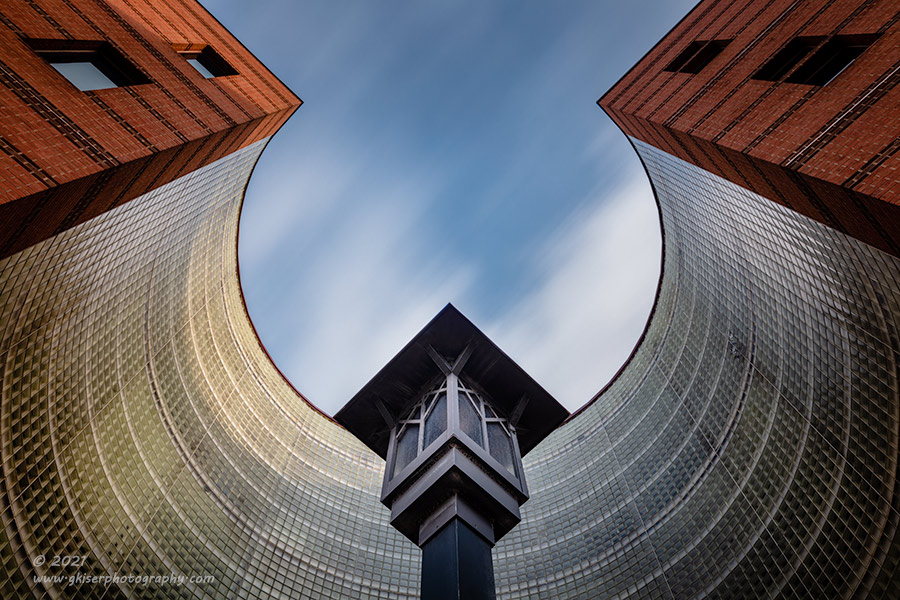
Take this photo as an example. Even three years later, this one still stands out in my collection. It was shot on a morning at Appalachian State University when I just felt like shooting a much different type of subject than I would normally do. I had seen architectural photos through social media that had interested me, but I had never seen buildings like those in my own travels. As I was walking around campus, I saw a building that had a very interesting shape and kind of begged to be shot in a style that was similar to what I had seen. I had never really done anything quite like this, and just started to play around with the angles. Eventually, I found a way to include the street light while using the building as a frame. Everything was lined up so that the shapes and lines were the focus of the composition rather than the subject. I added into the mix a long exposure to seal that fine art look to the sky. All of the elements that I put together made this shot work, and it was something that stood out as incredible at the time, and even made the top of the list for the most significant images of 2021.
I was just playing around with this building wanting to shoot something different at the time. I liked the idea, but really thought that it was a crazy photo to be trying for. In hindsight, I was very glad that I made the effort because the outcome was incredible. Even after all these years, I still love how this one turned out and it will always have a special place in my heart. Did I learn something from this crazy image? You bet I did! I learned the importance of seeing in the terms of shapes rather than in terms of just the subject. For a photographer, this is something that is incredibly important, especially when you start to look at things in terms of fine art.
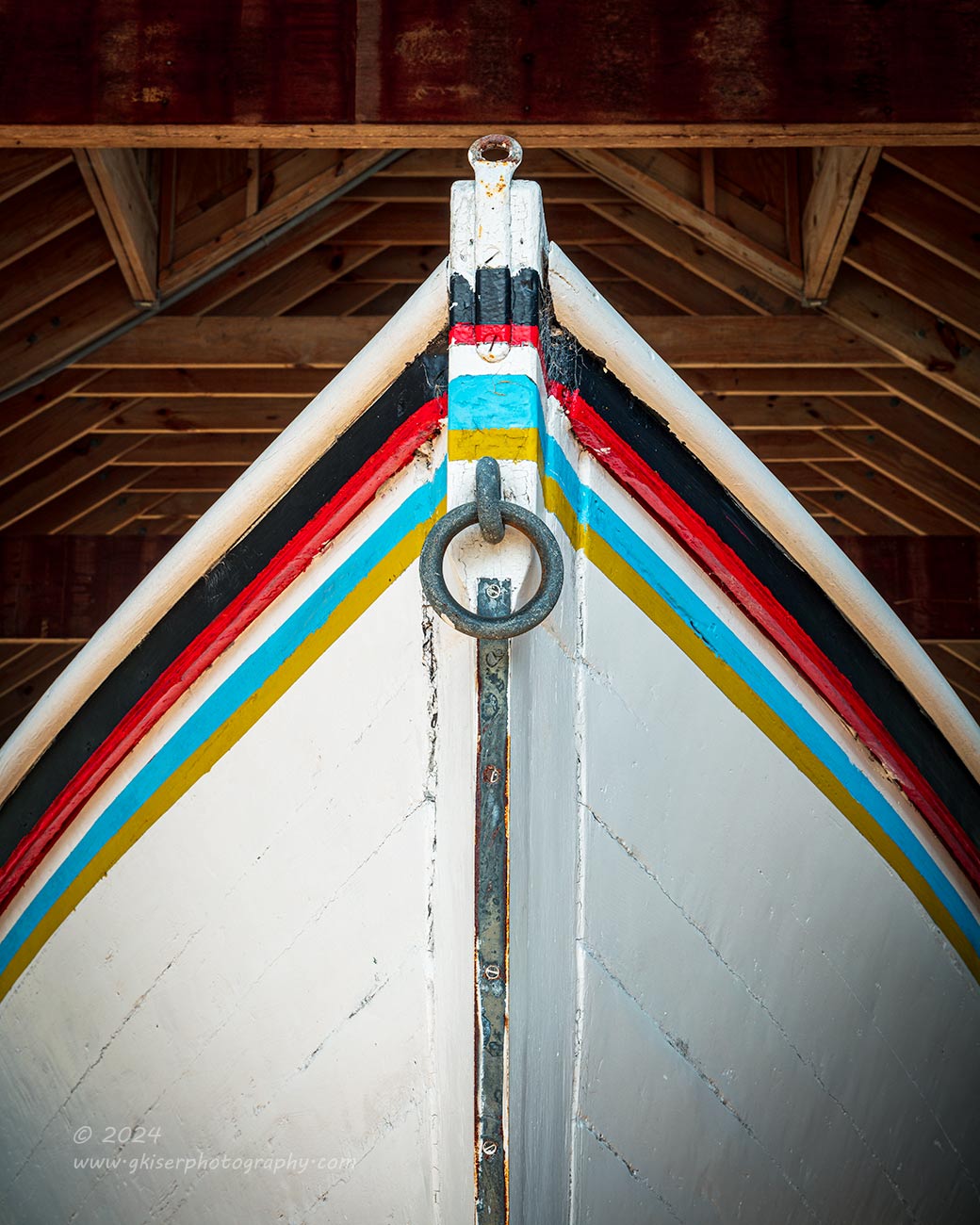
As recent as last month, I found myself using just those same concepts to make a photo that would normally be considered rather crazy for me, but I knew what I was going to be achieving when I was setting the composition up. The confidence that I had here was due to that building shot at Appalachian State University. I used the same perspective with the camera pointed almost straight up, and I concentrated on the shapes more than anything else. The odd thing here was that I had been looking around in the boathouse for something that I could use with the boat to make a good composition. It was the rafters that had caught my attention as they had a wonderful repeating pattern that made little triangles. I knew that I could get the boat to fit within those shapes, so in essence, the boat became the light fixture which was placed within the rafters which was like the curved building. I was no longer photographing a boat, but a series of shapes that included the stripes on the boat, as well as the metal trim along the spine. I’m not sure I would have seen this possibility had it not been for working that building years ago.
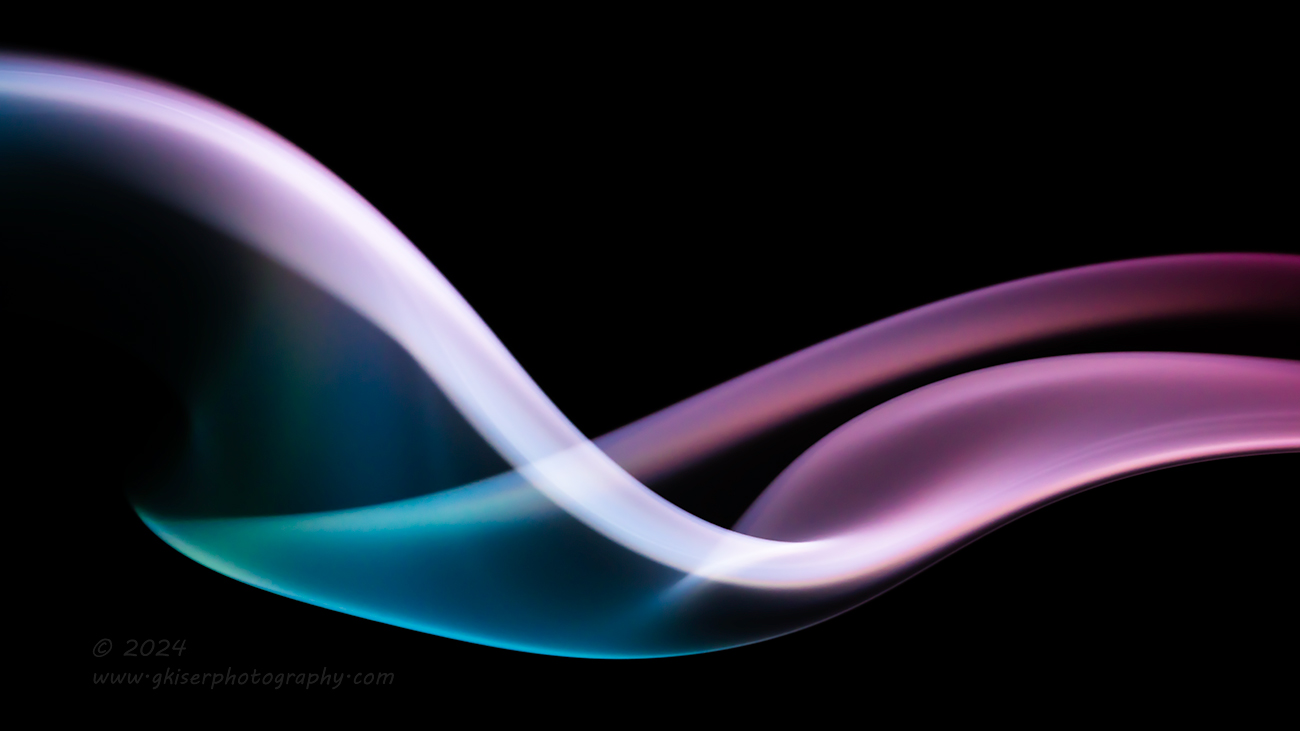
Crazy things can always include just that…crazy subjects. If you are feeling particularly creative and just want to create something off the wall, there are no limits to that creativity. Take for instance this recent smoke series that I shot. It was nearing the end of Winter, and I had been focusing on doing a lot of black and white work recently. I needed some color in my life and photographing smoke fit the bill. I knew that I could bring color into the images in a number of ways which would give me plenty of time working with colors. It was a lot of fun, and it was really freeing to try a different type of photography that I only do every so often.
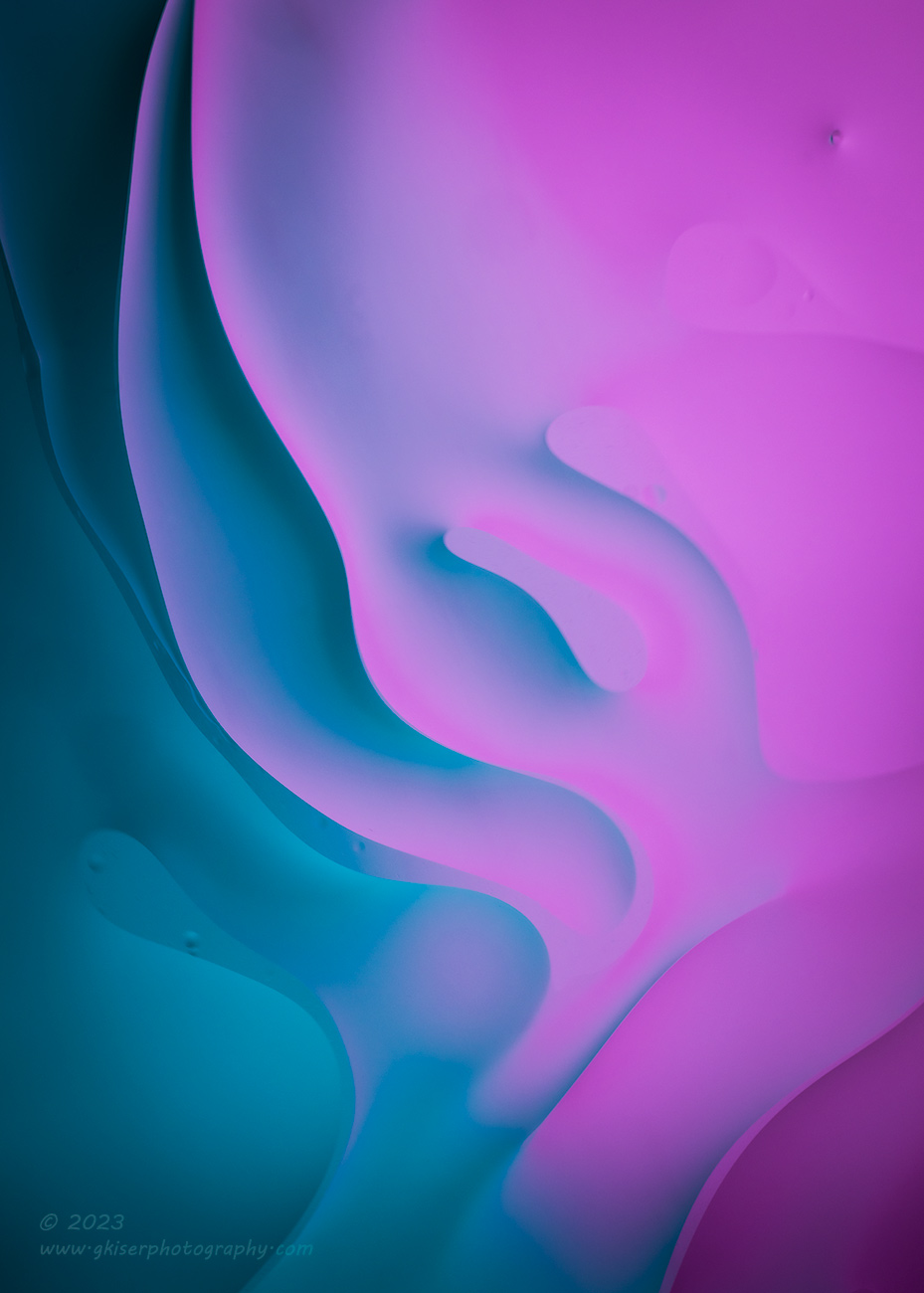
The same kind of thing can be said about my recent attempts at photographing oil and water. This was another chance I wanted to take where I was working with colors. I was able to really take control of things because I would pick a color, or two, which fit into the color palette that I had in mind. Then it was just a matter of finding shapes in the randomness of the concoction that worked to make a composition. This helped me with my color theory knowledge as well as being a great exercise in composition when dealing with random shapes. This experiment went a long way in teaching me about negative space vs empty space. I was able to establish which orientation the photo needed to be in to have it read correctly for a more pleasing presentation. Every decision that I made here had to work together, and it showed me some different types of visual language from what I have used in the past.
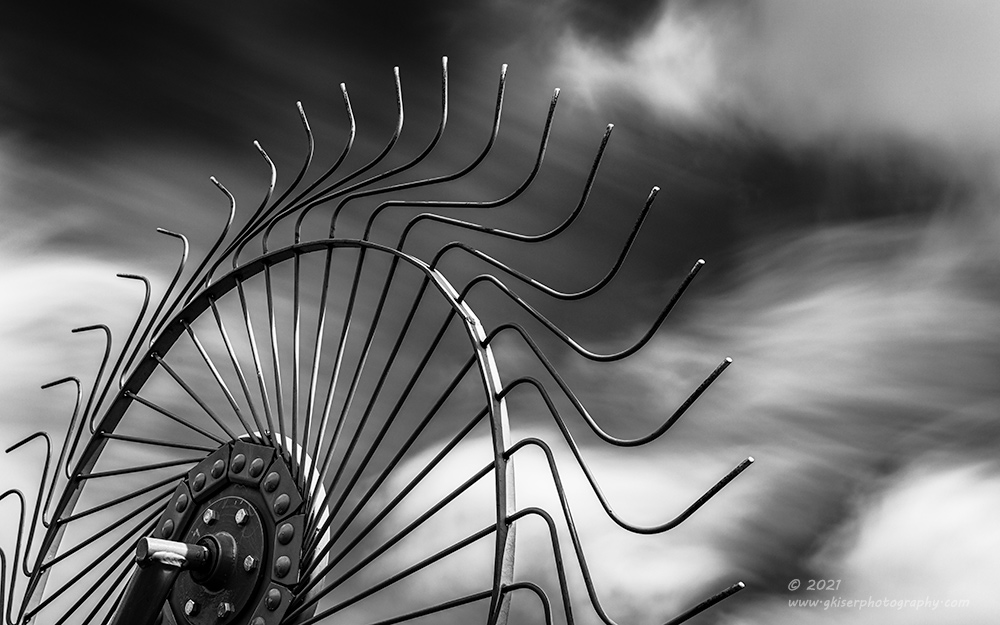
This is another one of my favorite crazy photos that I have shot. I had gone out that day looking for Fall color along the Blue Ridge Parkway. My mind said to look for trees and color, but when I came upon a tractor, my attention eventually went to an old hay rake which was being pulled by the tractor. This had nothing at all to do with the seasonal colors and had nothing to do with the Blue Ridge Parkway. The argument could be made that it had nothing at all to do with landscape photography in general. That pretty much makes this a crazy photo in my book considering my reason for being out there that day. Again, I went with the idea of hard lines and soft shapes to build the visual interest in the frame. The different elements were organized in a way that I felt offered a pleasing balance, and then I shot several frames so that I could have a bunch of options to pick from knowing that the visual balance would be better in some cases than in others based on the position of the clouds during the exposure. This was possibly one of my early ventures away from the established compositional “rules” when I started to form my compositions more on balance than on element placement.
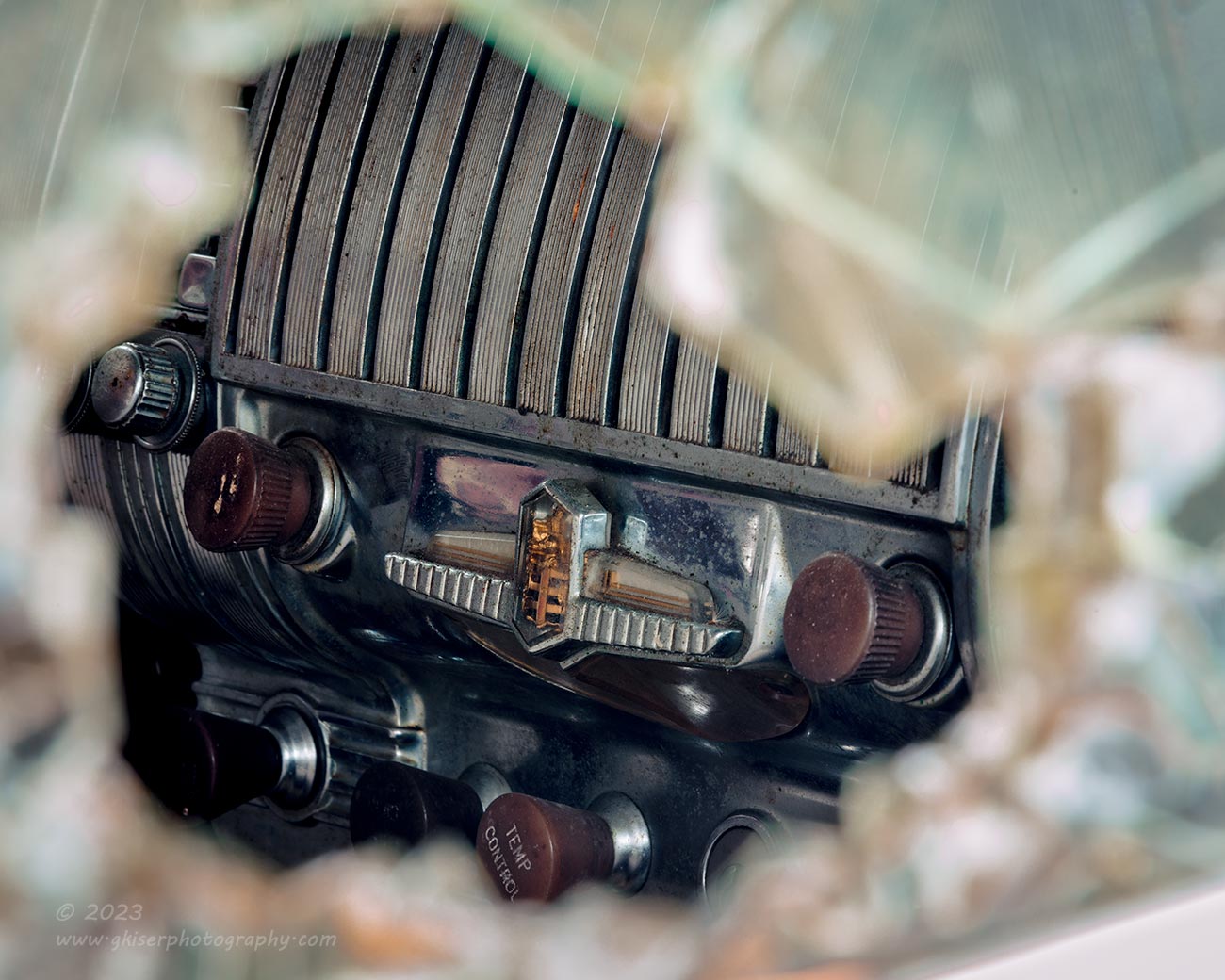
Getting away from some of the established compositional restraints has allowed me to create other crazy images that take advantage of certain elements that force the breaking of popular compositional theory. Take for instance, this photo where I found an opportunity to use the broken window as frame within a frame to focus the attention on the radio. In order to have that concept work, I had to throw most all of the organizational guidelines out of the photo. I just worked my position until there was a visual balance between the dash and the frame that I had selected. I went with my gut rather than any particular compositional theory. The courage to do these things comes from making crazy photos, and allowing myself to try things that you might be thinking would never work out.
When I was shooting this photo, I really didn’t expect anything at all to work out. I just had the time and felt like experimenting. It felt like a reach creatively, but I wanted to give it a try. As with most of the times when I start to work like this, something pretty incredible happens. I’ve since fallen in love with this photo for how it looks. It is something very different from what I normally would shoot, but I can’t help but explore the details that were captured. There is just something about those crazy photos that we shoot. They might not work out all the time, but if we keep trying them, eventually you will hit on some very special photographs. More importantly, you will learn so much more about yourself and your own artistic eye.
Never be afraid to go out and shoot those crazy photos. In fact, look for those opportunities and see what can work. The more tools that you have at your disposal, the more likely you will be able to utilize them on the fly when those opportunities arise. This is what makes a photographer great, not knowing all the technical junk that goes along with learning photography. We can be masters at exposure, focus, and even textbook composition, but unless we can learn to use all of this as part of our visual voice, we will have nothing at all to say. By shooting those crazy photos, you will start to understand more about how you see the world, and you will start to see how to effectively convey those visions.
Above all else, photography should be fun, and part of that fun is trying different things. If you don’t you will find yourself in a rut which will eventually wear on you and your creativity. Do things that you don’t expect, shoot oddball subjects in strange new ways. Build on that start until you find the photo that surprises you. In fact, you should always strive for the photo that will surprise you, so after you get that safe version successfully shot, begin looking at alternative compositions that you might not have wanted to try before. Sure, they might not work, but you might find that you find something more impressive than you thought possible.
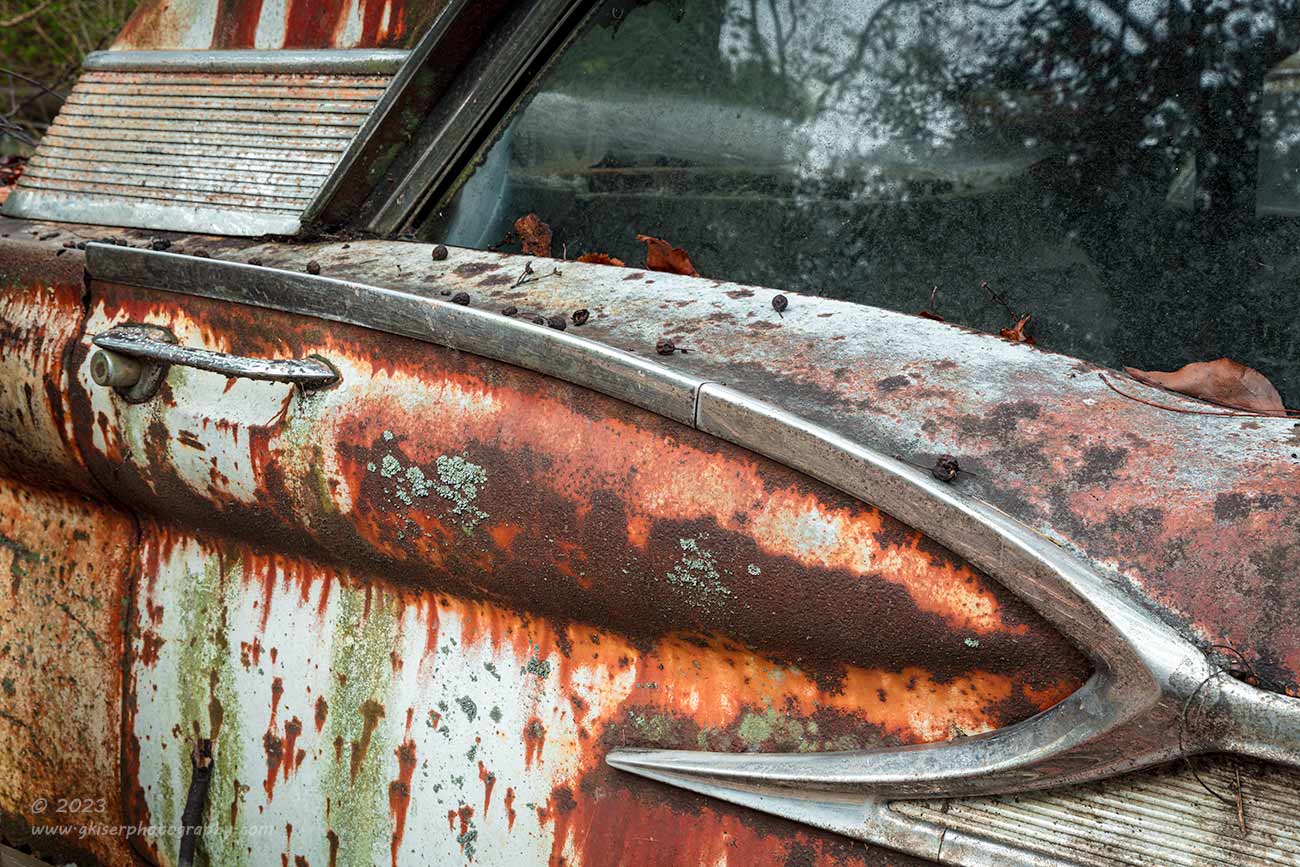
A fantastic example of this theory is when I was photographing this Ford a while back. I have worked this model car several times before and have always loved the design of the trim on the door. I started off with my usual straight on composition that showed the trim in a pretty graphic pattern. I was happy with the outcome because the patina was so wonderful, however, it was the expected composition in a lot of ways. I decided to break from tradition and change my angle. This simple move allowed me to get not only the trim, but the door handle, and the stainless trim at the base of the pillar behind the door. The resulting photo surprised me and brought a whole new dimension to this subject.
The frames where I had done the expected composition were discarded in favor of this one and I found that it was so much better in just about every respect. Try for that odd composition, or angle and try to surprise yourself. You will find that your photography skills will increase greatly every time you do this, even if it isn’t a success. The more you try and fail, the more you will learn what doesn’t work which will push you to what does work more often than not.
Photography is all about learning as we go, not just applying what we have seen or read. The techniques that you learn which form the basics of photography are like learning to read and write in elementary school. Everyone does the same assignment the same way. It is not until you get to high school that you are expected to write papers based on your own thoughts and writing patterns. The same applies to photography. If you are trying to fit everything that you do into the established norm, you will never go beyond “Run Spot, Run.” As you branch out to find your own voice in photography, you will begin to write something to effect of, “Spot, seeing the bouncing ball, took off at a dead sprint to catch it.” You have now put your personal spin on things which makes that sentence yours. All you have to do is the same thing with your photography and it will become yours as well.
I hope that you have enjoyed this month’s Behind the Camera. I had a really good time putting it together for you and I hope that you have benefited from it. If you need help exploring more about how this can improve your own photography, I encourage you to reach out to me about a mentorship. One thing that I really try to do with my clients is to determine how they see the world and work with them to bring their photography in line with that reality. I truly believe that photography should be deeply personal to the photographer which means that I should cater to their own vision and try to bring out their own personality in their photos.
I hope to see you back here next month when we will likely be talking about listening to the landscape. I’ve mentioned that several times here in the blog, so I figure it is a good time to explain what I am actually talking about. I look forward to seeing you back here again in May.
Until then….