Welcome back for another installment of my monthly Behind the Camera series. It is here that I will talk about different topics related to my photography and photography in general. Many of my topics come from questions that have come up in the past, and some are just about things that I wanted to talk about. Originally, I had planned on talking about the difference between zoom and prime lenses but have decided against that idea in favor of something a bit timelier with things that are going on with me. If you were paying attention around the beginning of April I started to get back into landscape photography after focusing mostly on my rural and decay subjects since the Summer. This is almost a natural change for me to go through as the year progresses because of how the seasons affect my subject matter.
If you will recall, I spoke a little about my thoughts dealing with landscape and decay photography late last year. While I wasn’t giving up landscape photography, I had made a conscious decision to move away from it in favor of something a little more unique to my style of photography. After that point, I really did spend most of my time hunting old cars and barns and felt really good about it. There were very few landscape images that were added over the winter, and that disparity was really brought home when I went out to Hanging Rock to photograph some waterfalls. I came back from that trek really thinking that my time with landscapes was finished because my reaction to the waterfalls was nothing compared to how I felt photographing the old Pontiac.
I’m not going to spend our time here today talking about whether I am going to focus on landscape or decay photography, or even portraiture. Instead, I am going to use these natural shifts in what I like to photograph to add some structure to a topic that was brought up last year leading up to one of my workshops. The question was simple enough in that they just wanted to know how I kept things fresh with my photography. It was a simple question, but one that I felt would make a great topic here. It was scheduled for later this Summer, but I thought that the time was right for me to share it now.
For a creative person, keeping their work fresh is often more difficult that you would think. Even recognizing what “fresh” is, could be difficult. There are many niche artists out there that are known for one thing and that is all that they do. For them, keeping things fresh becomes a very small change in the regular routine that might not even be noticed by the observer. Think about Harry Callahan who photographed his wife every day for 15 years. For most, I would suspect that the answer would be something similar to how I keep my own art fresh and inspired.
I think that for the purpose of our discussion today, I would like to use “fresh” and “inspired” interchangeably because when you get right down to it, we are talking about keeping the art produced feeling new and interesting. When you look at it like that, you might actually see many more ways of keeping things fresh and inspired in your own work. For me, inspiration comes in many forms. It can be a new technique for capturing images, or even processing them after the capture. More often than not, it is a change in subject matter, or location that I like to shoot.

Let’s look at it this way. If I became sedentary with my art, nothing would change year after year. It would become boring for you to look at, and for me to capture. The thought of photographing the same things in the same way that I did back in the beginning is a very depressing thought for sure. For me to maintain interest in photography, I have to see improvement and a change. If there is none, I will lose interest in it and eventually give it up.
In the beginning, it was learning new techniques of how to capture the photos with a camera. I learned all that I could and took the time to practice each new idea in the field. Every time I went out, it was fresh and interesting. I was inspired to create because I was striving to be like the other photographers that I was learning from. When that learning curve started to flatten, I turned to post processing for my inspiration. It was one of the biggest eye openers when I started to delve into post processing. I’ve talked about my views on this many times over the years, but essentially, when I found out what could be done to enhance a photograph and make it closer to how I saw the scene, it was totally inspiring for me. That kept me pumped to get out there and shoot more and more so that I could learn the editing techniques that I was seeing.
Eventually, that learning curve flattened out and I was left with a much more relaxed state of learning. This is not where inspiration comes from, and it was doing nothing to keep my work fresh. This is where I started to really change up the subject matter of what I was shooting. I had started as a purely landscape photographer and gradually started to embrace the rural and rusty subjects that would eventually become the decay subjects that I am likely most known for these days.
The simple act of transitioning from one type of photography to another inspired me once again because I was learning more about photography and how to capture things in different ways. It was almost like starting photography all over again, but with a much stronger understanding of the basics. It gave me the opportunity to go places that I would have never thought to go as a landscape photographer. For the first time, I didn’t have to travel to a distant protected park to get photos, I could quite literally go a few minutes down the road to find a subject in a field.
All of these things helped to keep my work fresh from the start. As long as I was trying new things, I stayed inspired. However, what happens when I start to run out of fresh ideas and locations to shoot? This is the long-term problem of a photographer which has a lot to do with being able to stay inspired and create fresh work. This is the part that I want to spend the most time talking about in this entry. After nearly 20 years of photography, how in the world do I keep it fresh and stay inspired with a camera?

I’ve talked plenty about how to keep things fresh when you are just starting out. It is easy then because it is all kind of new. What makes it difficult is when you have learned enough that you get comfortable in your skills. I’ll never say that I know everything in photography. In fact, in all honesty, the more I learn about photography, the more I realize that I don’t know. However, there is a point where you feel pretty confident in your abilities and can pay more attention to the small details in crafting a photograph. This is what I mean by being comfortable in your own skills. This is the time when it is easy to fall into a rut and a routine where you create widgets and not photographs. I’ve been there plenty of times and realize that I am painting by numbers at those times. I am not really paying attention to what I am capturing, but I’m just photographing the same things in the same way time and time again. This becomes a lot like that favorite pair of jeans that you keep wearing for an entire week without washing. It is comfortable, but are weeklong jeans really appealing to anyone?
If you look back through my blogs, you will likely see how I keep things fresh through the years. There is no secret to it at all. I will just randomly change things up and photograph something either completely different or find a subject that I haven’t done in quite a while. In the beginning, I used barns and the occasional old car as a diversion from my landscapes. Over time, I realized that I had a love for those “decay” subjects and they started to represent more and more of my portfolio. I gradually transitioned to the point where that was most of what I shot.
I learned a lot by working with these subjects and what I learned I was able to transition back to the landscapes that I had started with. As I would get bored with one, I would go to the other. Within those genres of photography, I found a lot of subtle areas that I could concentrate on as well. For instance, I might change up my landscape work with doing some coastal images, or waterfalls. Maybe I would just look for lone trees to shoot under a cloudy sky. Doing sunrises and sunsets instead of just cloudy days was another variation. When it came to my car photography, I could focus on details rather than a more complete story of the entire car. I could shoot different eras of cars with varying degrees of decay evident. I might even change it up and shoot a fully maintained and shiny car for a change of pace.

These tricks work very well for me considering I have two rather different directions in my photography. I can play around with each thing as I go along when I start to get in a rut with my creativity. You would think that I would have enough there to really keep my mind occupied and the inspiration flowing. That isn’t the case more often than I care to admit though. There have been plenty of times at any time of the year when I feel like I am just completely uninspired to create anything. I don’t feel like hiking around and looking for a composition, nor do I want to wake up early, or stay out late to get the photo. I might not want to go door to door begging to photograph somebody’s junk in the back yard, and equally don’t want to risk getting threatened by an armed neighbor wondering what I am doing on the side of the road with a camera. Yeah, there are just times that I don’t want to go through all of that drama for a photo, and I feel less than inspired because of it.
Those are the times that I will usually lay low for a while and just try to cultivate whatever creativity I might have. I’ll get into that specifically in another installment later this year. For the purposes of this entry, I will often do another tactic to get inspired. I’ll just completely change it up and do something that nobody expects from me. I guess this kind of started with a book that I read around 2008 or so which listed fun little photography projects that could be done at home. They were creative exercises designed to show you different ways of using a camera and there were several of them I was interested in trying. There was pretty much nothing in that book that dealt with what I usually photographed, but that was the point. I read through it all and learned a lot about how to capture different aspects of the world. Some of those techniques I decided to try and did so with great success. I still lean on those ideas to this day when I get to a point where the inspiration just isn’t there.
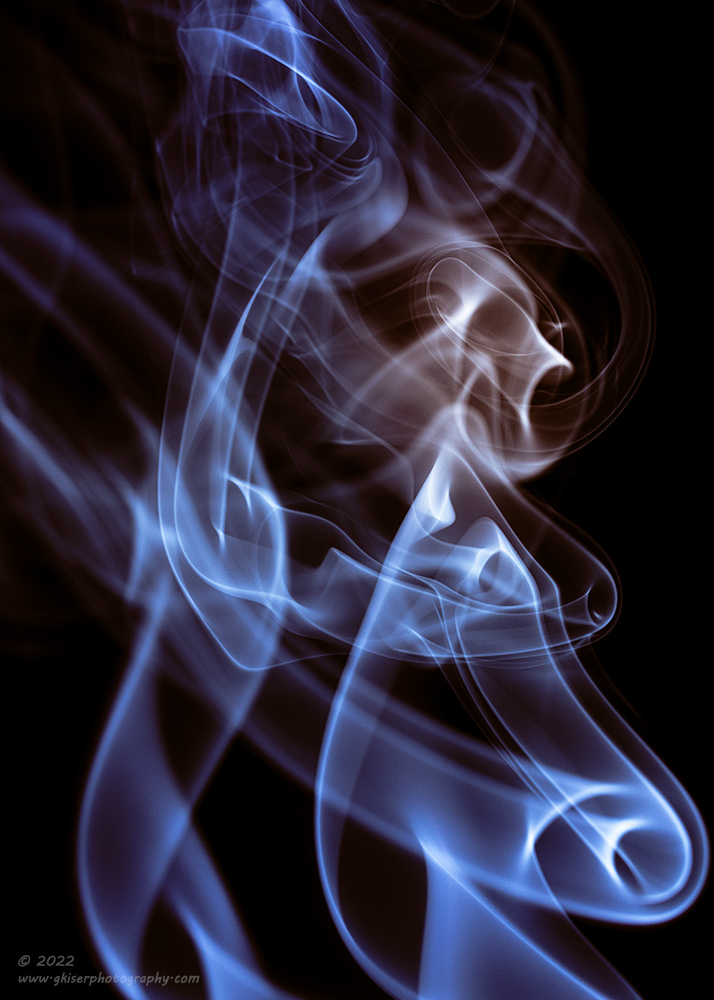
You might remember some of my smoke photography that I will do from time to time. This is one of those techniques that I learned all those years ago. It is a great diversion from my regular photography in that I am not dependent on the weather, or time of day to get the shot. I don’t even have to leave the house. I just set up some equipment that I have and start making art. There is no pressure on me during these times and all I have to do is create. That freedom is inspiring, and it also allows me to work outside of my comfort zone in all aspects of the creative process. In the case of smoke photography, I have learned a lot about post processing and just how much I can push an image before it starts to break down. By working with photos that are completely different, you will find new ways of doing many things that will then improve your “regular” photography.
All photography is, has to do with seeing things in a creative way. Photography is not about capturing what is there. It is about capturing something the way that you see it. By doing these little detours down in the studio, I will unavoidably learn different ways of communicating what I am seeing through the camera. I learn more about my creative voice during these odd little sessions. The inspiration that develops from the diversion will often spark the inspiration in my landscape and decay photography which will make it fresh once again.
That is kind of the whole key to keeping your photography fresh. You explore different styles and techniques which are not usually in your repertoire. As you expand your bag of tools, you will be able to utilize these different techniques in your regular photography. It just gives you another way of capturing what you love to do.

Here recently, I have been studying the art of portraiture which includes a lot of information on lighting and color theory. These are areas that I have kind of figured out accidentally over the years, but now have challenged what I actually know and what I think I know. The learning process of portraiture has introduced a new and thrilling direction in my photography which has had a huge impact in keeping photography fresh for me. It really is like relearning photography again and I get to look at it with brand new eyes. It is the lessons like color theory and the use of dramatic light that has also opened up a whole new way of looking at my landscape and decay photography.

Let’s take for instance this recent photograph of my favorite Pontiac. I’ve shot it a number of times, in many conditions. When I saw it in the low clouds and fog, I was inspired to give it another try. This was not my normal consideration because I generally want a lot more detail in the sky than what was being offered here. What I saw was flat light and textures which I understood more after studying portrait lighting. This isn’t a big leap from what I used to look for in photographs, but how I edited it takes a page directly from some of the books that I have read on color theory. In all actuality, there were a lot more colors in this scene, and I would suspect that once upon a time I would have gone after this as a black and white capture.
What I did here was look at the majority of the photos as color images, but with a twist. Taking into account the different ways of using colors, I chose to go with a largely analogous color theme. This didn’t mean changing the colors as much as tweaking them to limit the number of hues that were represented. The desaturated cooler tones fit the scene very well and added to the mood. It created a very specific look for this series of photos that fit the subject quite well. The resulting images were a direct result of the new techniques I was learning from another type of photography.
This situation has played out many times over the years as I go off on photographic tangents. I will learn new things either by accident or intentionally which I will then bring back to my other photos to create a slightly different look or aesthetic. These changes make it possible to return to the same scenes over and over to get images that look different. Sometimes it is an improvement, other times it is not. The main thing is that I am able to do things differently each time and the more different ways I can capture the same subject, the more tools I will have in my pocket when the opportunity arises.
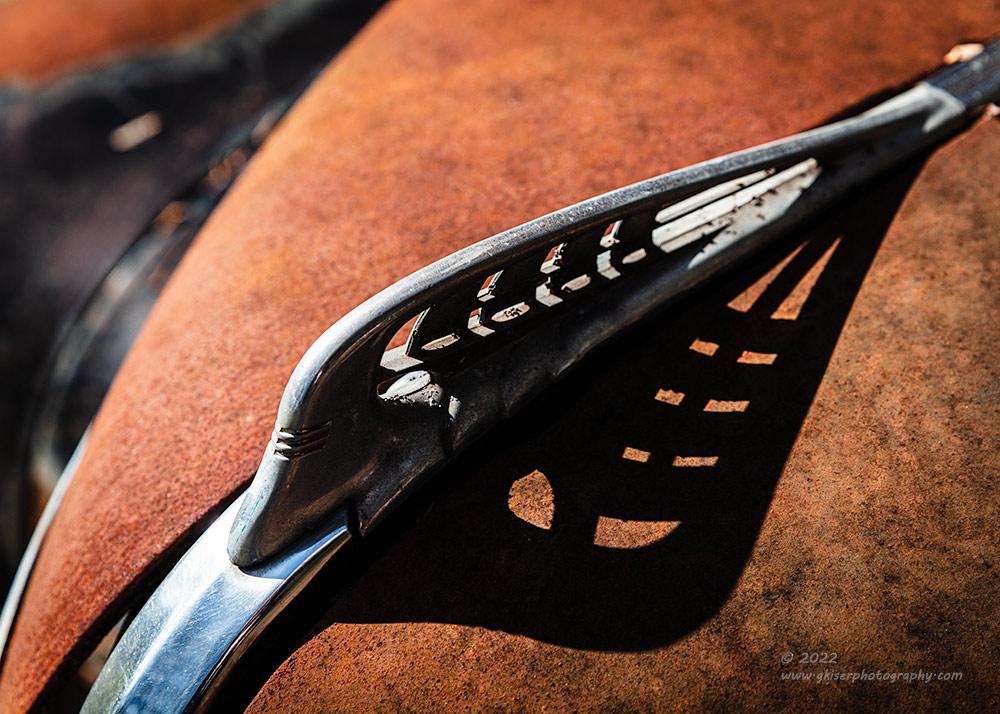
Here we can look at another one of my photos that was directly impacted from what I have learned with portraiture. Since my studio has no natural light in it, I have been forced to learn studio lighting which means that I have learned the importance of both light and shadow. It is the shadow that creates the shape in a studio portrait, so you have to be careful how you apply the lights. Using that knowledge of creating shape with shadows, I was able to see this image for what it was and for what it wasn’t. The shadow completed the shape that turned into the main subject of this photograph.
For this to happen, I had to work with light that I was not used to using. Certainly, you have noted that I love working in diffused light from overcast days when it comes to my decay photography. Obviously, this was not the case as I was in harsh direct sunlight. I would generally shy away from this light, but after getting used to studio lighting, I saw the sun as just a small light source and decided to use it as such. I looked for subjects that would create shadows with interesting lines instead of just an interesting subject.
Another nod to the portrait techniques I was learning was the checkerboard lighting that was used here. This is a style of lighting where you go from light to dark, to light, and back to dark again. It creates more interest in the scene and I was able to utilize that technique here not only with the light, but with the colors of the car. The painted fender works well with the rust tones as a dark to light, and then you get the chrome ornament that falls into deep shadow, but then goes to the lighter rust. These are subtle things that I doubt I would have paid attention to before my education in portraiture lighting.

Let’s break away from the portraiture techniques that I have started to use in my photography and look at another area that I will go into from time to time. I enjoy doing architectural work as well as cityscapes from time to time to break up the monotony of decay and natural forms. The draw for me is the hard lines that are present. These lines give me the opportunity to create shapes within the frame, and even use the frame itself to create a shape. These photos are some of my least engaging with audiences, but they are the ones that I feel most accomplished with when I get them right.
It is the use of shapes within the frame that I gain the most knowledge from in terms of how to compose an image. In my mentorships, I will often talk about shapes over subjects in a photograph. One of my best compositional tricks in any form of photography has come from my time working with cityscapes and architecture. It is the shapes which objects form, and the shapes between objects which I see as stronger than the individual objects. By seeing how the shapes fit together with architectural subjects, I learn how to identify shapes in nature, or in a rural scene. I can then organize a photo around those shapes rather than just shooting a photo of something.

This photo here is less about the landscape and more about how the shapes all fit together. I call this a subject ground relationship and I have composed the image taking into account the shapes involved and how they relate to one another. If you really look at the scene, there is not necessarily a compelling subject that jumps out. It is the overall scene and how each element works together. The final bit of the puzzle was the light that was added in from the low sun. That part was thanks to my understanding of light from portrait work. It was the combination of shapes, light, shadow, and color that makes this image what it is.
Even though I started out as a landscape photographer, and this was a scene that I would have shot in the early days, it is my constant evolution as a photographer that has allowed me to “see” this scene in a different way from what I would have seen it 15 years ago. By always keeping my photography fresh, I am inspired to capture scenes differently and usually better than before. If you took away the time that I had spent photographing shapes in a city environment, and my better understanding of studio lighting, this very scene would have been represented like this…

Back in 2007, I was only interested in a dominant foreground, depth of field, and following the rule of thirds. The change from this photograph to the more recent one above represents a lot of learning and exploring different types of photography. Each little technique I have learned has made it possible to improve on this scene which has kept my photography fresh and inspired. It is this personal growth that ultimately keeps the camera in my hand and new images being created.
When I’m asked how I keep my photography fresh, it really is as simple as focusing on personal growth rather than each individual photograph. I learn new things as I go which makes it exciting to get out and photograph new scenes. If I do it right, that excitement I feel will come out in the photographs. When the excitement fades, I will go off into left field and try something completely different to see if I can learn something new there. Other times, I find inspiration from a software update or a new piece of gear that will allow me to capture a scene differently.
As of the time of this writing, I have just downloaded a new update for Lightroom which has a feature I’ve been anxiously waiting for since the previous update for Photoshop. This is the ability to utilize curves within the masks. ACR introduced it with the last update, but I am not fond of doing edits with ACR because it feels more clunky than Lightroom. The editing engines are very similar, so I knew it would only be a matter of time before Lightroom got the update. With this one little update, I am excited to go out and get some new photos so that I can do local edits with the curves tool for the first time. I expect to see some pretty significant changes in the look of the photos coming out of the edits because there is one less compromise that I’ll have to make when it comes to global edits versus local edits.
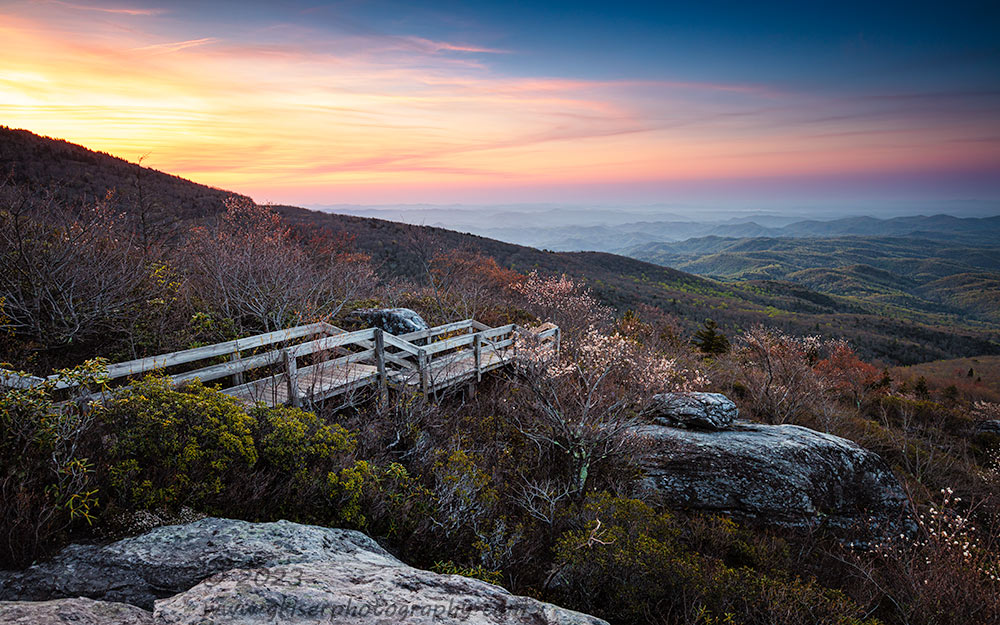
Here we can see the results of the first image that was edited with the Lightroom update. It is not unlike other photos I’ve shot at Rough Ridge, but for me, it was a very unique editing experience. I was able to do so much through the use of the curves feature localized to different areas of the photo. To be quite honest, just that simple aspect of editing inspired me to go out the following day for a sunset shoot at Doughton Park to exercise that ability one more time. There are times when I am inspired to create, but don’t feel like going out to get new photos. Those are odd times for me, but this is where updates like this one come into play as I will go through old photographs that I think can be improved on. The improvements might just come from new editing skills, or they could come from new abilities within the programs I use. In either case, working old photographs will often cause me to become inspired to create new images entirely.
What inspires you to create new photographs? Have you been lacking that inspiration lately? Photography, like all art forms is dependent on the creator’s urge to create. The minute we look at it like an assembly line we have forfeited our creativity in favor of production. Having that focus will limit the creativity even further. Look for my views on going with the ebb and flow of creativity in an upcoming Behind the Camera probably during the Summer months.
Until then….

Remember to use the code KISER10 to get 10% off your purchase