Welcome back to another installment of my monthly Behind the Camera. It is here that I will usually talk about something that has come up during the previous month, or I’ll use this time to talk about something that has been on my mind recently. This year I’ve tried to do it a little differently and so far, it has worked out. I planned out the topics around the beginning of the year when I was feeling a bit expressive about different things. Since last month I was talking about how we view the world, I thought it would be a good follow-up to talk about my personal style of photography this month. It is kind of like looking at the broad theme and then reeling it in to see how it applies directly to me. As I wrote last month, I used myself in a number of examples and talked about how my world view factored into my photography. There really isn’t a sense in rehashing that end of it here, but there was another aspect that also applies which I planned on discussing.
I’ve been trying to define my photographic style for years now and I thought I had a pretty good handle on it as we started 2022. No, there was no real “a-ha moment” that happened magically to prompt that discovery, it just kind of happened. As I was going through the significant images for 2021, I started to see some similarities between the images regardless of whether they were color, black and white, landscape, decay, or geometrical. It was those similarities that I thought were the beginning of a definition of my personal style as a photographer. Since that time, I’ve started to realize that I don’t know as much as I thought I did about my style and whether or not there will ever be a particular style that I shoot in.
I think that I need to start out by figuring out what a photographic style is supposed to be. I’ve heard it referred to as the subjects that you like to shoot. I don’t like that definition because I think that is more genre, or subject matter than style. I think that style is something that is further reaching and will cover multiple genres or subjects. I have heard that style is indicative of whether you shoot color or black and white images. That is really more of an aesthetic choice than a style. What about how you frame your photos, or the ratio that you choose to shoot in? OK, I can see that being a style, but the minute that you decide that a certain subject dictates a vertical 4:5 crop rather than a horizontal 16:9 crop, does that mean your style is different? I would think not. I’ve had a really hard time defining “style” when it comes to photography, and that difficulty has made it nearly impossible for me to actually define my own style. In fact, I’ve read more often than not that most photographers don’t really recognize their own style and don’t really try. Style is something that is used to describe a photographer by somebody that has studied their work. That makes sense to me, and because of that a couple of years ago, or maybe even more, I asked the question on social media trying to get a style defined by others. It was enlightening, but I never really figured out the answer that I was wanting.
Was I just doomed to wander aimlessly through life as a photographer with no clue what style he was shooting in? Did it even matter that I didn’t know what style I had as a photographer? Was “style” a concept that wasn’t supposed to be understood, just appreciated on a subliminal level? These are the thoughts I have when sitting in a quiet room or trying to go to sleep at night. By this point, I really should have an honorary degree in Philosophy.
Obviously, I might not be as ready to write this piece as I was expecting to be. Honestly, I have put starting this one off longer than most months because I was debating changing subjects. Then I realized that it was OK not to have all the answers, even when it comes to yourself. Photography is all about the discovery of yourself as much as things around you. I figured it would be a fun journey to bring you along on as I tried to figure out my own personal style, or if it can actually be done at all. We will see where this goes together.
“A photography style is more than an editing or photography technique. It’s a combination of every decision you make as a photographer. One of the best ways to discover your style is to look for patterns in your behavior.” –expertphotography.com
I figured that the best way to get this started was to get a working definition of photographic style. A quick visit to Google came up with this definition. It is one that I agree with and have considered in my own thinking more often than not. The problem is, it doesn’t really give a formula for figuring out a style because it incorporates so much into the equation. I make a ton of decisions every time I pick up the camera, and even more decisions before I even pick up said camera. The resulting images all turn out differently depending on how I am feeling that particular day, or what has been going on in my life up to that point. Does my style change with every photograph? Does my style change over time, or is it locked in and I’m just not seeing it? I’m going for that honorary Master’s degree in Philosophy now. Let’s start at the beginning and look for patterns in my behavior. That seems like the logical thing to do.
It was February 13th, and Mom was in labor.
OK, that might be a little too far back. But yeah, I was almost a sweetheart….missed it by thaaaaaaat much.

OK, this is more like it. The year was 2005, and I was just starting to get into photography as an art form. I had read some books on the subject and seen some landscape photos which I thought I could replicate so I took my Sony F828 camera out and commenced to making images that would wow the world. For those photographers out there, I’m sure that has a ring of familiarity to it. If it doesn’t, give it time. It was the start of my career as a landscape photographer and the goal was to create images that didn’t show the hand of man at all. I just wanted natural landscapes in front of my camera. The way I wanted to capture my digital photographs was in the style of Fuji Velvia film because that was what was used in the books that I was reading. Boy, I’m dating myself here. Film, books with actual pages…..Am I really that old? What I ended up with was usually a collection of chaotic scenes with little to no attention to detail. They were presented with awful colors, and the lighting was usually not pleasing at all. In my defense, I had very few tools at my disposal for figuring out what worked in an image. That was where experience came into play for me.

A year later, I had more tools at my disposal for figuring out my images. I wish that time had forgotten some of them though. Here we have a barn shot just a little over a year after the Salem Lake image. My idea for avoiding lots of deep shadows and clutter in the foreground was working out here. I had a better understanding of subject which was no longer the natural landscape. But I still thought that a clear blue sky was good weather. I realize that all of you out there with the “Salt Life” stickers on your cars are confused because clear blue skies are typically associated with wonderful weather. I fell into that trap and loved the blues in the sky and even used a polarizer to enhance those blue tones. Then I would bring the photo into a nifty little photo editor called “Microsoft Picture It!” to put that special Fuji Velvi touch to it. I had also read that images with warmer tones were more pleasing to the eye, so I enhanced that aspect as well. What I was left with was a mess of orange tones that almost hurt the eyes, but I didn’t see it as a problem then. I also had some issues with edge patrol as I would crop carelessly, all too often. You can see the results of that carelessness on the left side of this photograph.
As we start to look at my pattern of behaviors up to this point, we can see that I liked garish colors, poor composition, and two very different subjects. I was learning, so all of that was forgivable, but I’m still rather embarrassed to share these images with you. It is part of my journey and these images brought me to where I am today, so what is the takeaway from them? Well, I was trying to develop a style based on a film that had rich and saturated colors. I was gravitating towards the warmer hues, and I liked clear blue skies. I guess that could be my style at that point. At least that was a conscious decision that I was going for at the time. I remember it well, because that was my goal for many years.
The problem with that being “my style” was that what I was doing was trying to copy other photographer’s work and the look of a completely different platform than I was using. I hadn’t established a style, I was just copying other styles. Can a copy of a style really be your own style? I guess it could, but you would have to fully embrace it and make it your own. Kind of like that word of the day calendar you bought with the intention of expanding your own vocabulary. The words do not become yours because you bought the product, they become yours after you use them a certain number of times in regular conversation. The same thing applies to decisions you make as a photographer. You can copy somebody’s style, but until it becomes natural for you, it will never be your style and it will never look anything but forced.
Don’t worry, I’m not going to take you year by year to determine my style. That would get boring for all of us, and quite frankly, I don’t want to spend that much time looking at these old photographs. Yes, they are important to my journey, but gosh they are bad! As I progressed, I started to see things that worked and things that didn’t in the photos I was taking. The blue skies were causing problems for me because of the camera that I was using. The venerable Sony F828 was a powerhouse of a prosumer camera back in the day with 8mp worth of resolution, but it had some issues with high contrast imagery which I found was even more problematic when paired with blue skies and a polarizer. The tree limbs and leaves would halo really badly straight out of the camera and would look even worse when I performed my patented saturation boost to the image. Because of that, I changed how I shot things. I tried to avoid the sky when possible and I started to learn the benefits of a cloudy sky.
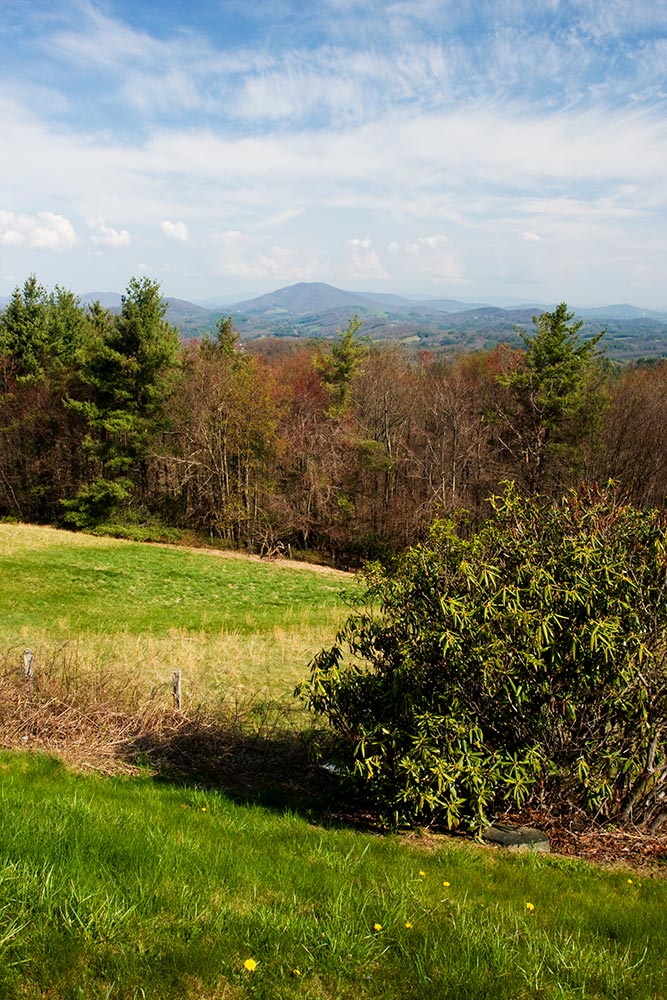
The use of cloudy skies continued even after I moved into my first Canon DSLR which was a 40D. The move to that camera also brought a change in my editing software and I started to use Photoshop for the RAW conversions since I was now shooting RAW images with this camera. We can see some changes and similarities here in this photo. I am still enjoying the landscape and was spending a good deal of time on the Blue Ridge Parkway. I still had a very rough idea of composition and fell into the trap of the rule of thirds all too often resulting in arbitrarily placed elements like this tree to the lower right third which pushed it out of the frame. The horizon was placed perfectly at that top third as well for a pleasing composition, or so I thought. I had improved a great deal in color rendition at this point and was getting away from the garish colors that I had been known for up to this point.
Can we determine a style by looking at these images yet? I don’t’ think so, because the actual style is starting to take a turn. I am still discovering who I am as a photographer and that means trying different things along the way. Are we seeing a pattern developing yet? Again, I am not so sure we can. By this point, I was primarily a landscape photographer and was concentrating on photographing the outdoors under natural light. The decay photography was starting to develop during this time as well, and it carried much the same look as the landscapes did. Maybe that was my style? But what was it?
Looking at the photos from this timeframe really yielded no set of criteria that I could use to describe the work. The colors were more accurate, yet still saturated. I was utilizing clouds more often in my images and the more diffused light that they offered. My compositions lacked a specific anchor that had meaning, but there were definite elements that fell into the rule of thirds. Looking at them now, they can best be described as the learning process which is in reality exactly what they were. I don’t think that a style had even remotely developed at this point because I was still trying out different things to see what I liked best.

Years went by and I gradually discovered Wabi-sabi which is a Japanese concept where there is beauty in everything, even in decline. I found myself photographing old cars and barns more and more, even though it wasn’t until around 2016 that I actually learned the term and what it meant. As you can see here, in this photograph it seems that I made a step backwards in my process as a photographer. The lighting is obviously terrible, and I didn’t handle it well at all. The previous image was roughly five years before this one, yet the use of lighting and color was much better in the older of the two. There are two considerations that have to be addressed with this image in comparison. First of all, I had taken a sabbatical from photography for around two years because I was just not happy with what I was creating. I came back to photography in 2013 and was determined to do it better and learn more about it. One of the first things that I had to address was my compositional abilities. That change is highlighted in this photograph because there is a clear subject which is placed well in the frame. There is a story here with the composition and it is obvious that I thought it out before making the image. I went with a vertical orientation because I wanted to make sure that the tree was included in a meaningful way as a secondary element which was balanced by the open door. There was a lot more thought that went into this composition when compared to earlier compositions where things were placed based on a rule, and not for a reason.
For all that attention spent on composition, I lost the ability to read the light and to incorporate proper lighting along with the composition. Two steps forward, one step back as they say. It is all part of the process though, but it again throws any style that I might have out the window. Here I am roughly eight years into being a photographer and there is just no chance of defining my style. I don’t even have a solid subject matter that I can identify. I was still shooting landscapes, waterfalls, rusty subjects, barns, and even cityscapes. There were occasional ventures into still life, and other studio works as well. The post processing was hit and miss for the most part. I was not good with Photoshop at all, even after all of the years I had been working with it. Most of the time, I took a perfectly good image and destroyed it through post processing trying to make it better. I was still too heavy handed with the saturation and warming aspects, and I was running into the same problem that I had back in 2011 where I wasn’t able to make consistent prints due to color management which was frustrating for me.
In fact, by the beginning of 2015 I had shelved my camera once again, but I didn’t sell it all off this time. I decided to keep it and just pull it out when I had that urge to create something. Ironically, it was a computer crash in 2016 that might have played the biggest part in determining my photographic style. With the new computer, I had to update my old version of Photoshop and the easiest thing to do was to go with the new creative suite by Adobe. That included this program called Lightroom which I had heard about, but never really paid much attention to even though it was supposed to be directly marketed to photographers rather than digital art creators. When I installed the suite, I decided to give it a try. I failed miserably and had no idea what I was doing. I went back to Photoshop which was now even more complicated to understand. I was at a stalemate and figured that I was just not destined to be a photographer.

I spent an hour one day at work watching a video by Serge Ramelli that was titled Learn Lightroom in 1 hour. It was a lot of information in a short amount of time, but I paid attention for the whole hour. When I got home that evening, I pulled out a photograph that I had shot in 2014, to play around with the program. I had not processed it yet because there were too many shadows to deal with for what I knew in Photoshop. I spent about an hour going through the different modules in Lightroom and at the end of the process, I had an image that I was truly excited about. It was so good, I wanted to print it which was a sore subject for my photography up to this point. However, as part of learning Lightroom, I had stumbled onto the issue that I was having with the printer and found out that I had not disabled the default printer driver which was at odds with the Adobe drivers that I was supposed to be using along with the printer profiles from Red River Paper. I threw caution to the wind and printed this image as a 13×19″ print without doing a proof image as I would have normally.
The photo came out amazingly well and I was so excited that I went to show Toni the result before the ink was even dry. It was better than anything that I had created to this point, and I decided that I wanted to enter it into a competition. To make a long story short, I had it framed and entered it into the Dixie Classic Fair in 2016. It won first place! Yes, that is old news, so why is it important for this discussion? Well, it was this image which I feel started to develop the style that I currently have. It represents a blending of strong composition, use of vibrant and punchy colors, a larger dynamic range of tones without looking overly HDR, and a stronger sense of depth to a scene through textures.
It seems that I might have just decoded my personal photographic style based on this one photo that took two years from capture to presentation. Can it be that simple?

Well, this is one of my images from last year. There are no colors at all, the composition is much more relaxed and calmer. There is not much in the way of dynamic range, but the textures do show depth. In fact, this photo is all about depth and texture. Would this be out of my “style?” I’ve had many people tell me over the past few years that they know an image is mine before they even see the name of the photographer. This is one of those images and it amazed me because it is not like my normal image at all. Does that mean that there is an element of the style that I just don’t recognize that others are able to pick up on?
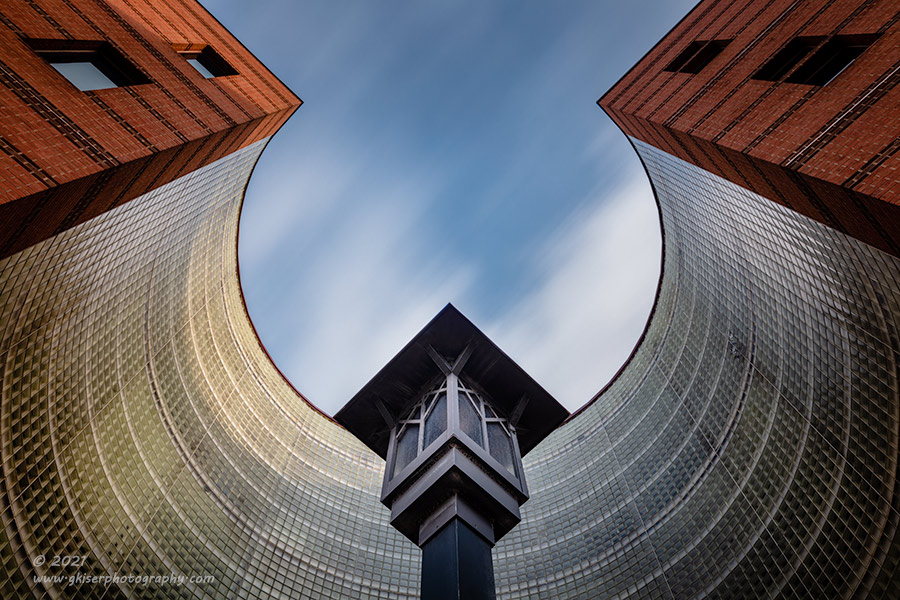
You might remember this image which was my most significant image from 2021. How does it fit into my photographic style? It is not decay, nor is it landscape. The colors are more muted and not quite as punchy. The use of texture is here to define shape rather than depth. The dynamic range here is larger than it would appear which falls into my “style,” but the perspective is something completely different. Again, it was one that garnered comments along the lines of: they knew it was mine before they saw who shared it. How can that be? I still look at this image today with a wonderment that begs the question “is that really something that I shot?”

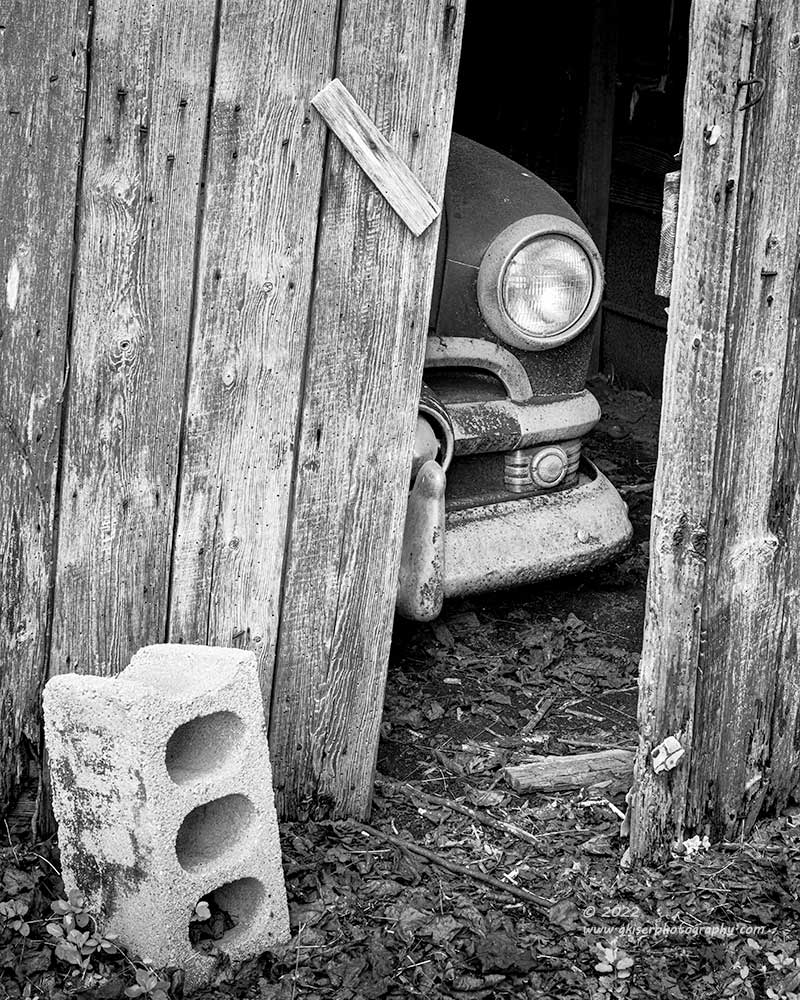
Here is another recent photo to add to the mix to confuse the issue. Obviously, this one is in black and white which negates the color connection to my style. It is the fog rather than the texture that establishes depth. The texture establishes the main subject. There is not a tremendous dynamic range here as it is more based in contrast than anything. The composition is dramatic and at the forefront of the presentation. What happened to the colors in the landscape that I so loved? Well, I’m convinced that I shoot the occasional black and whites that I do to balance out the garish colors that I would use over a decade earlier. We each only have so much color to share, and I burned through most of it in the first five years behind a camera.
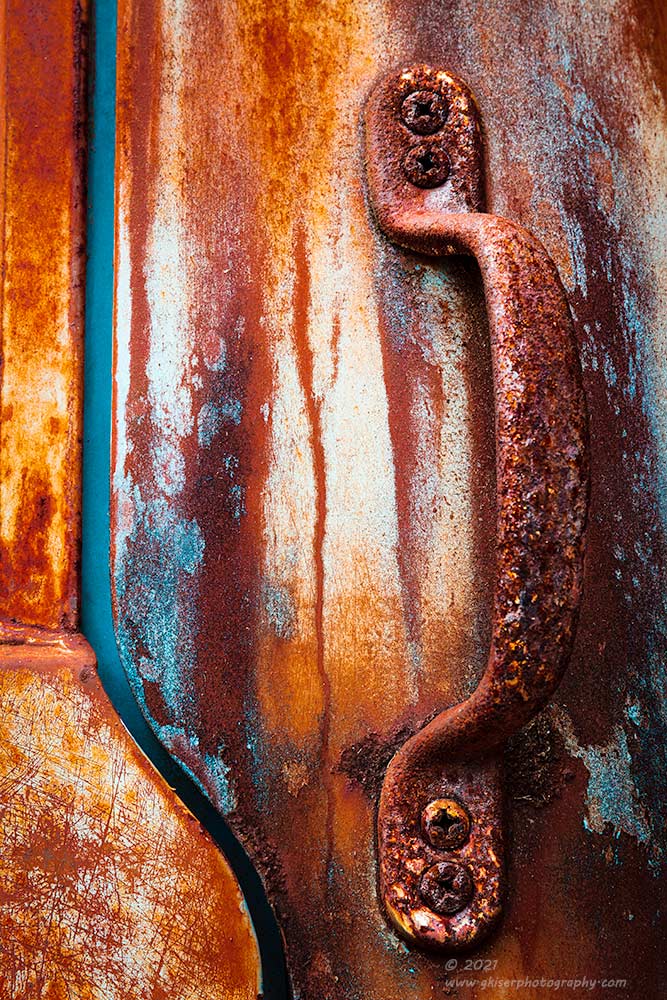
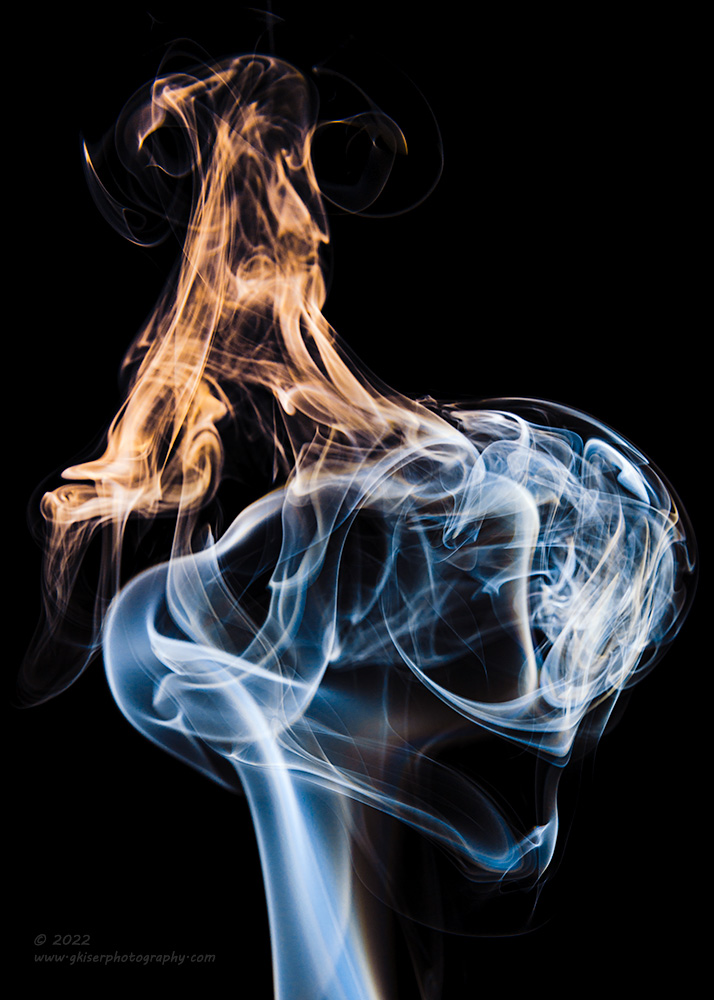
Oh wait, just when you thought that you had my style figured out, here we go again full circle. This is another very recent image and one that I absolutely love. It is an exercise in excess in many respects. I am back to that saturated look once again and I have really brought out the clarity to enhance the textures. There isn’t much depth to the image, but you can feel it. The colors are highly saturated, but they are kept in balance by incorporating color theory which is something that I’ve been learning more and more about since starting portraiture last year. This abstract breaks about all of the rules that would have established from the last few images I shared establishing a style. I took that bold and vibrant color and turned it up to 11 for this photo which suited the subject better than a more conservative approach.
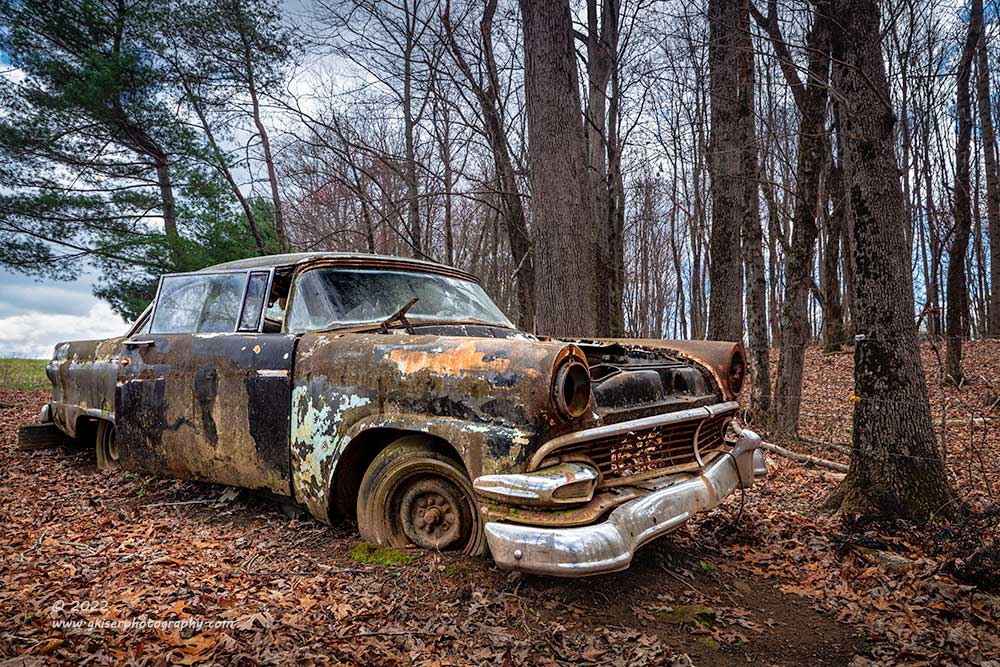
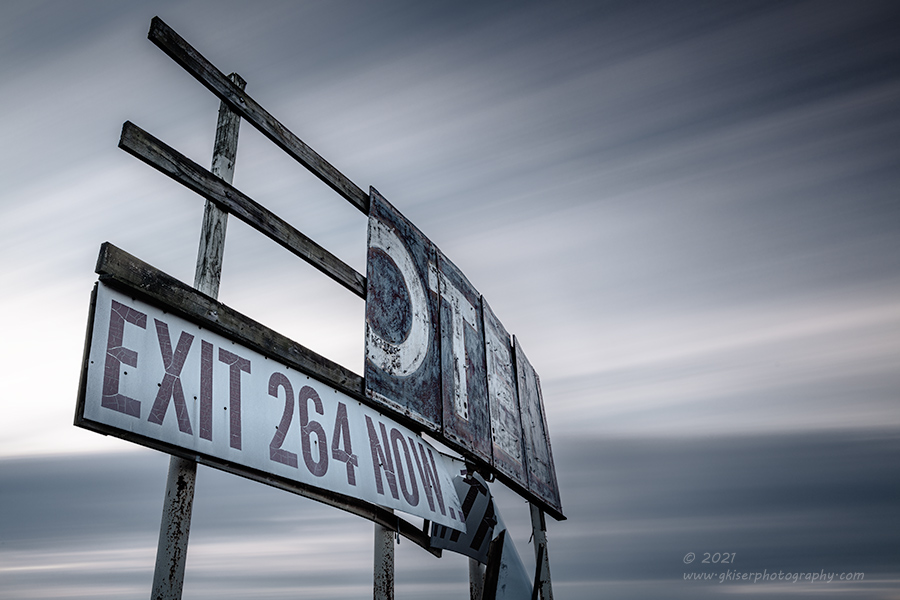
Here we have an image that was shot very recently and kind of falls into that style that I developed in 2016. I have a higher dynamic range, lots of depth thanks to textures. There are vibrant colors, but not overly bold in this case. The sky is dramatic which I lean towards these days. Of course, that can be attributed to shooting around a shortcoming with that Sony camera years before. That handicap turned into one of the traits that has remained constant in my photography since as I have embraced it on many levels. The subject matter and even basic composition are pretty much the same as that photo of the Apache which was a prize winner in 2016. However, looking at the two images, there are a lot of differences that I would think fall in the realm of style choices.
If you will recall how we defined photographic style at the opening of this installment, you will see that part of that definition says that style is the culmination of all of the decisions make as a photographer. As you look through these images from 2005 to 2022, you will see a lot of different decisions. Some of them are bad (some terrible actually) and some are good, but they were decisions that were made at the time based on where I was in my journey as well as what I felt the subject needed. This begs the question that I’ve been afraid to ask for so many years. Is having a recognizable style a good thing for a photographer? Does that style pigeonhole them into a certain type of image?
Looking back to when I started out as a landscape photographer, had I determined my personal style to be that of a pure landscape photographer who rejected the hand of man in all of his images, my shooting locations would have been terribly reduced. However, when I started out, that was a decision that I made for myself, and I committed to that thinking that it would make me a better photographer. I’m glad that I decided to look at other subject matter along the way though. I could have made the decision to only edit in what I thought was Fuji Velvia color and then warmed it up to make the photos more appealing. My style could have been a uniform collection of orange toned photos with various subject matter. Maybe I should have made the decision to reject color completely because I could never figure out how to print it accurately? Would being a black and white photographer become my style?
How limiting would that be? Photography is a creative venture, and you should never restrict yourself based on what you perceive is a good style choice. You should always be open to the different possibilities that are out there. You should embrace new theories and techniques to broaden your horizons. This is not to say that you should jump all around and be reckless with your choices when it comes to photography. I think that there might be something more appropriate in defining photography than style. Style is always subject to change and that change is usually a good thing. For instance, up until 2019 I was still wearing jean shorts. I still have a pair in the drawer but have been forbidden to wear them. I had no idea that they were out of style, and neither did Toni. That is, until a Lieutenant came up and told us one day that “jorts” were way out of date and he was surprised that Toni would let me walk out of the house with them. That was just my style, but now it isn’t. I’m still the same person, but my choice in shorts has changed to cargo shorts. I like them, leave me alone!
I think that when it comes to photography, we (talking to myself here) need to spend less time trying to identify a certain style that we feel we should stick to, and spend more time making sure that our portfolio is cohesive and carries with it a recognizable quality no matter the style that the image is shot in. What I mean is this. It is far more important to produce a consistent quality of work that evolves with you rather than trying to stick to a certain formula that has worked in the past. I feel that I have done that with my entire portfolio to this point and have brought my people pictures up to a similar level. Let’s do a quick visual exercise to show the point. Consider the following images which were all captured by me. They are all of different subject matter and even styles of photography, but there will be one that doesn’t fit with the group. Are you ready?
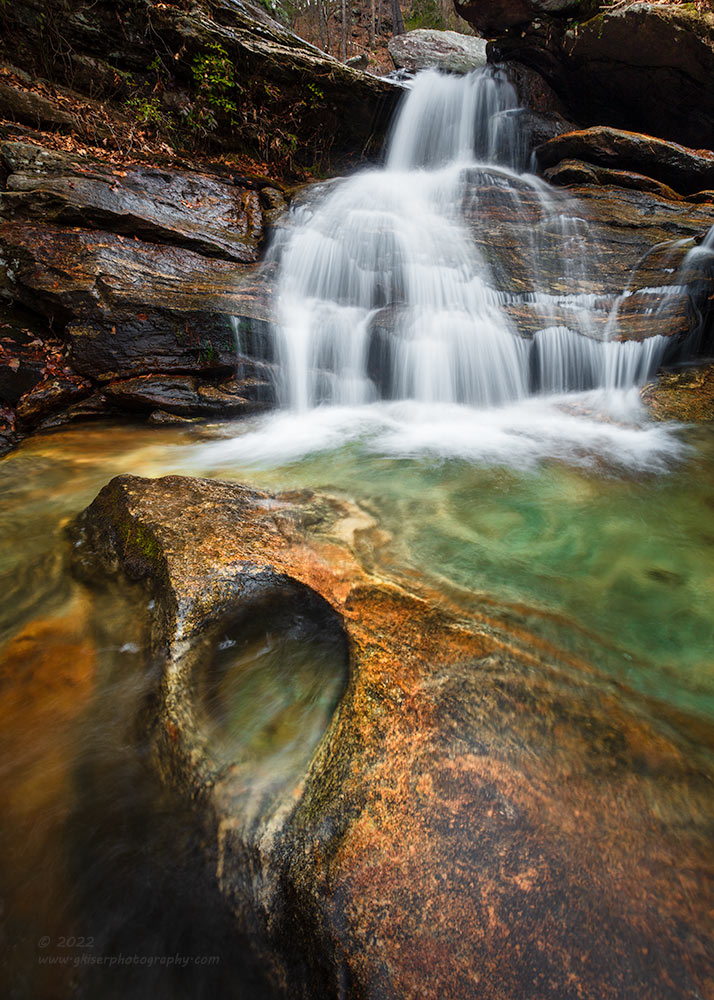





OK, so you have now looked at a collection of 11 images of mine. They span approximately three years, so they are all relatively recent. Could you pick out the one that doesn’t fit? It really wasn’t that hard as the size and caption should have given it away. It was the cell phone capture of the Fall scene in Banner Elk. The tool used to capture the image has nothing at all to do with this conversation, so don’t get that part confused. It was taken by me in conditions that I actually shot an art image in of the same subject. That is important because I want to establish that this isn’t just a random cell phone grab which would be easy to cull out of this collection. What I think is the takeaway here is that the photographic style is not really the important thing to consider, it is the cohesiveness of the quality of the images. Instead of focusing on a universal style between multiple images, start paying attention to what isn’t in the photos which is actually more important.
In this example, there are several aspects present that are not present in the other images. Power lines for one, several street signs, clutter that doesn’t help the story to the left, and a road that essentially prevents the eyes from pursuing through the scene. There is no clear subject because the structure is relatively small in the scene and the road takes up the majority of the visual real estate. The colors are good, and it is a sharp image as well which would fit in with the overall collection of images, but it is the inclusion of the extraneous details which sets this image apart from the rest. When you look at my portfolio, you will see a collection of images that have a clear subject, and a path for the eyes to follow. The presentation will be clean and tidy with proper care taken to present a high-quality image with intent. There will be a level of technical proficiency that will allow the artistic vision to be seen. These qualities have always been important to me when it comes to photography and as I get better, they have more of an impact.
So, something that I just realized here was that I might have just defined a style by concentrating on what isn’t present in my photography. By looking at my portfolio as a whole which includes many different subjects, and many different techniques in capture, you start to see a pattern developing. That pattern isn’t really apparent until you look at a photo that I also took which would not be allowed in the portfolio. That leaves us with this as a style:
The composition has a clear subject which is presented in such a way as to force the viewer to see it as the star of the image. The supporting elements are utilized in such a way as to enhance the story and not distract from it. Clutter is avoided with special attention given to the overall tidiness of the scene. While not necessarily technically perfect, there is a level of technical proficiency there which provides a clear view into the artistic intent of the photograph. Post processing is done in a way that supports the subject, the story, and the intent of the image.
Well, there we go! I think I just defined my photographic style. I told you that this would be a fun ride when we started out.

Why is all of this really important you might ask? Well, as I mentioned last month, knowing why you create the images that you do is very helpful for your growth as a photographer. We looked at how we view the world last time which gives us insight into how we might want to frame a photo, or even what types of scenes appeal to us. The main part that I was getting at last month was that, at some point in our tenure as a photographer we have to stop emulating other photographers because they might not see in the same way that we do. With defining a style, a photographer can then create a cohesive body of work through all different genres of photography. I’m starting to realize just how important that can be as I move into portraiture. That is something that I haven’t really done much of in the past and now that I am really getting into it, there is a certain benefit to staying with a particular and recognizable style. I joke a lot with some of my portrait clients that they have hired a decay photographer to immortalize their likeness. I’m going for a reaction more than anything, but there is a kernel of truth to the statement. Yes, my portrait work is largely unknown at the moment, but I am very well established in the landscape and decay field. From a marketing standpoint, it would make no sense to reinvent myself and try to be like another photographer. I’m old and set in my ways and have no interest in looking at photography as a new student. Why wouldn’t I take the nearly two decades that I’ve been at this and use that experience to springboard myself into a new arena of photography? Sure, there are new techniques and skills that am having to learn, and I’m having to learn a different mindset as well, but when it all comes down to it, there is just a photographer, the tools, and the subject. No matter what I put in front of the camera, I plan on treating it with the same care and attention to detail that I have become accustomed to with my existing photography.
Looking over my body of work, or portfolio, you will see that cohesive string of elements that I have mentioned showing up in all of my photos. It is that (for lack of a better word) “style” that has been established that has allowed me to produce people pictures of a similar caliber to what I have been producing with my landscape images. I had a 16-year head start on my landscape and decay photography before getting into portraiture on a serious level. Just think if I was having to reestablish a style with this new venture now. Can you imagine that Fuji Velvia and warm look that I thought was all the rage back in the day? The inattention to the edges of the scene, and even the really ugly lighting? I would be a total mess trying to emulate the visions of another photographer. Instead, I know who I am as a photographer and I know what I am capable of, as well as what I hope to be able to achieve. That allows me the ability to move around in the different genres of photography and still be able to keep my style intact.
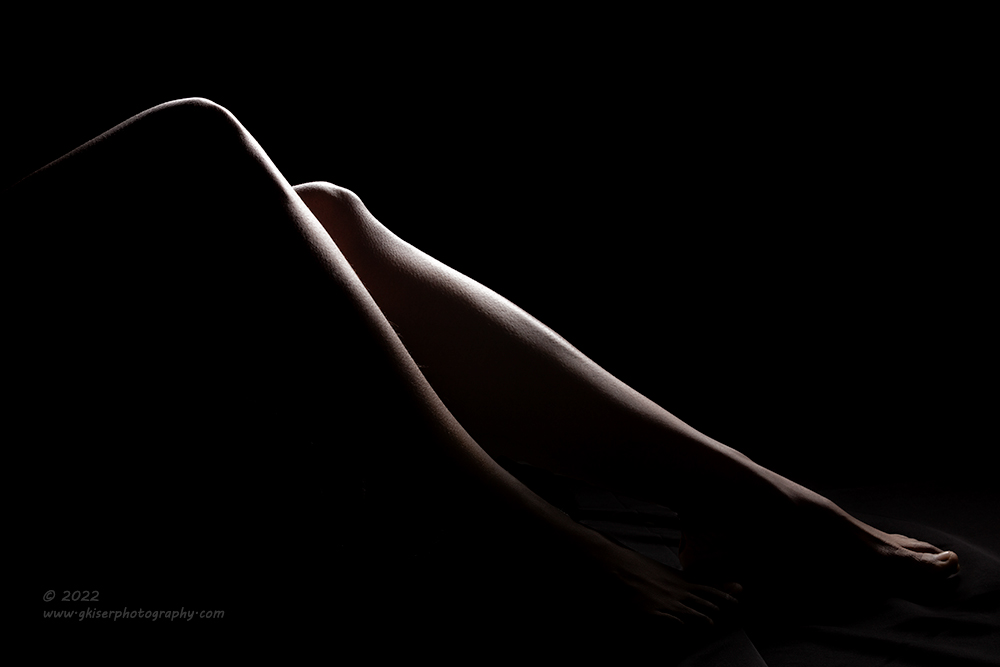
Clean, well composed, meaningful lighting, no question what the subject is. That is my style all day long, but this is not something that you have seen from me before. It is from a recent project doing bodyscapes which is something that I’ve been itching to try for a long time and finally got the opportunity. It was a completely new area of photography for me, but I was able to apply my style to it and go into the project confidently. I knew that it fit how I view the world concentrating on specific elements of a scene and eliminating the clutter around the main character. It also worked well with my love for the details and shapes. I’m not sure how much of this that I will be doing because I’m just not sure how many subjects will be interested in getting in front of my lens. I know that having Toni’s blessing on this venture is very important and she will be helping out as the Photo Wench as needed during the sessions. It is a new area of photography that I am excited to delve into and I hope that there will be more opportunities to work on my skills. There is also a very high possibility that I will be adding Boudoir sessions to my portrait offerings which is also quite exciting. There is actually a couple’s boudoir session that is in the works as we speak.

Getting back on track for this Behind the Camera, this is a photo that when you really look at it, there isn’t much difference in execution between this and a bodyscape. It is all just an exercise in where the light is hitting the scene, and it is the shadows that the give shape. These are two very different photographs, but from my standpoint, I was able to treat them both with the same style and vision. My goal has always been to have a cohesive body of work that is unmistakably mine. I don’t think that is anything too far away from what any other person might think about their art, because the alternative would be wanting to be a clone of somebody else that already existed. The way to accomplish this is to really understand who you are as an artist, or in this case, photographer specifically. Discover your voice and use it to the best of your ability. Once you do that, there will become a cohesiveness over your body of work whether you intend for that to happen or not.
Thank you for joining me for this month’s installment of Behind the Camera. It has been a lot of fun for me to go through all of this as an exercise in self-exploration. I hope that you have learned a bit about me, but more importantly, I hope you have learned some things about yourself. Photography is all about the journey, and that journey doesn’t have to be miles driven, or even how many photos you make. No, the journey is more about self-discovery and getting very familiar with who you are. Many times, it is the ones viewing the photos that you create that understand who you are better than you do yourself because art is a way of communicating something that is far beneath the surface. You can effectively communicate something that you aren’t even aware of in this fashion, but if you can truly understand what it is you are trying to communicate, that art becomes a very powerful method of connecting with your audience.
Join me again next month as I do a follow up to my tutorial on how I shoot waterfalls. Quite a while has passed since I wrote that piece, and I wanted to update some of my suggestions and techniques. I’ve actually had a few epiphanies with capturing waterfalls in the last few years. My main goal with them hasn’t changed, but the way in which I choose to photograph them has changed. It is the result of a learning process that I want to share with you all. Hope to see you back here soon!

Remember to use the code KISER10 to get 10% off your purchase