Welcome back for another installment of my Behind the Camera series! Each month, I look at different topic that has come up recently and talk about how it has impacted my photography and could also possibly impact your own. I first came up with this topic late last year but have seen several examples of it in the last month during two of my workshops. It is all about our own evolution as a photographer. You might think that evolution is dealing with learning the craft and becoming more skilled with a camera. Sure, that is a type of evolution, but that is more a progression than anything. We should all strive to get better at what we do in anything that we are passionate about.
The evolution that I am referring to here, is changing directions after we have established a framework for ourselves. This sounds complicated, but it really isn’t. Let’s take for instance my own photography where I started out wanting to become a landscape photographer back in 2005. I had dreams of photographing the wild and wonderful wilderness in a way that showed no impact of man. It was that natural landscape that first motivated me. I created a set of rules for my photography which would keep me on that path while I found the areas that I could work in which would offer compositions that fit my needs. Fast forward a couple of decades and the majority of my photos include at least a portion of the hand of man, if not centered around something that has been created by humans. That was a huge shift in the rules that I had set out for myself at the beginning and represents an evolution. Had I held steadfast to my self-imposed rules, I would never have become a decay photographer, and would have likely ended up in a completely different place than I am now.
One of the more frequently discussed topics in photography is the concept of niching down and focusing on something very specific. There is a lot of logic to that because you will get very good at one particular type of photography, and you will become known for that. It becomes brand recognition and creates a body of work that is unmistakably yours; so, what is the problem here? Well, I think that photographers are getting too niched down these days, and they are setting too many rules for what they are capturing as well as the manner in which they do so. If I was only looking to photograph large mountain vistas with lakes at the base, I would be limited in location options, as well as being forced to travel in search of that type of scene. Even if I was just looking at grand scenes at sunrise and sunset, the colors would eventually start to run together, and all the photos would begin to look the same. Over time, doing the same photo would get tiring and repetitive which would certainly take the joy out of photography for me. However, there are so many photographers out there that will stick steadfast to a singular type of photography in the name of “brand recognition.”
Photography is too big an umbrella to niche down in. Sure, we can all concentrate on certain types of photos, and that is likely what will happen as we gravitate to the things that we love to shoot. My argument is that we should never be afraid to change our own rules along the way and allow ourselves to find other creative routes within our chosen medium. I’ve done this many times over in the past couple of decades. I’ve mentioned the landscape bubble that I wanted to exist in, but even beyond that, I had a very strict policy against people photography. I didn’t want to do it. These days, I have a growing part of my business based on photographing people. I’ve gone into creative types of photography in the studio from time to time which certainly isn’t my niche, but it is fun to play around with. Each time I have ventured out and away from that landscape niche, I have learned a lot about photography in general and my overall skillset has improved. It has also kept photography fresh for me and exciting, even in those niches that I spend the most time.

I mentioned that this particular topic has come up during my recent workshops. The first one was the Art of Decay workshop at the beginning of April. There were two participants in that workshop who had largely focused on subjects other than rusty vehicles. One of them was a waterfall photographer who loved the textures in the water. The other focused more on reclamation of manmade structures back into nature. They both were looking to expand their visual language through capturing these rusty vehicles. It was a step outside of their comfort zone, but both of them benefited from the experience. In fact, the waterfall photographer has started to get really interested in decay photography after a couple of decay sessions with me. I don’t think that it will replace waterfalls for him, but he is evolving as a photographer as he finds different subjects that get his creative juices flowing.
This is a very healthy way of progressing and something that I see too many photographers resist. They will find new subjects that they enjoy but feel guilty for going off on that tangent. They feel like they are alienating their core audience or may even feel that they are cheating on something that they have pledged so much time and energy to learn how to do. No matter how you view it, this is all a self-imposed cage that we choose to exist in. When it comes to creative outlets, I would much rather live without a cage, and be free to go wherever the wind takes me.

In the other workshop, there were three photographers present and one of them had really niched down in his work. He focused on long exposures and usually with water. Of course, waterfalls have been a big part of his niche over the years, but he has ventured out with me on several workshops which didn’t include long exposures, or necessarily waterfalls. He has done the decay workshop, a couple of landscape based workshops, and the most recently, a photo walk where we looked to photograph the mundane scenes that are all around us. As part of that workshop, we had an image review and I asked that each participant share two or three of their photos with the group for discussion. I had no idea what images were going to be selected by any of the participants, but I was shocked at what this one photographer chose. Based on his email to me, he was just as shocked as I was that he picked a series of three abstract images for the review.
He had never really done much with abstract work but found a connection to it that he hadn’t expected. He worked with shadows and shapes through the day and came away with some really interesting imagery. Even being familiar with his work, this was not something that I ever expected to see from him. Even after primarily working in color, he went with black and white for two of the three submitted photos. There was no doubt that he had tossed aside all of his own rules and allowed himself to experience something completely new. Several times during the discussions, he mentioned how much he loved the abstract work and how surprising it was that he created the images that he had.
Had any of these photographers chosen to apply that popular opinion of niching down in their photography, they would have missed out on the opportunity to learn how to see in different ways while incorporating new skills and techniques in their photography. The concepts that were learned can easily be applied to the photography that they normally do, and at least in two cases has opened up a whole new world of photographic opportunities to choose from.
My position is this. I’m fully onboard with the concept of niching down in your work. It allows you to create a voice that is all your own while developing a style that is unique to your own vision. You become a master at what you do, and if somebody is interested in that particular type of work, then they are interested in what only you can provide. However, we need to look at this with a grain of salt, and always keep in mind that we should not resist our own evolution as creatives. As we learn and grow, we will be exposed to different things that might just click with us. If we resist those things because it doesn’t fit in our niche, then we are actually resisting our own evolution as photographers or creatives. That is when we do a disservice to ourselves and limit what we can actually accomplish.
Remember that I had started out as a landscape photographer, and only pure and nature landscapes at that. My definition of the landscape had to change in the early years because it is just too hard to avoid the hand of man. It was that evolution of thought that brought me to barns and old cars. Those started to become a main subject for me, and eventually took up more of my time behind the camera than the landscapes did. After a while of working those subjects, I started to get very interested in the details. All of these transitions have been a natural evolution in my photography which I have embraced.
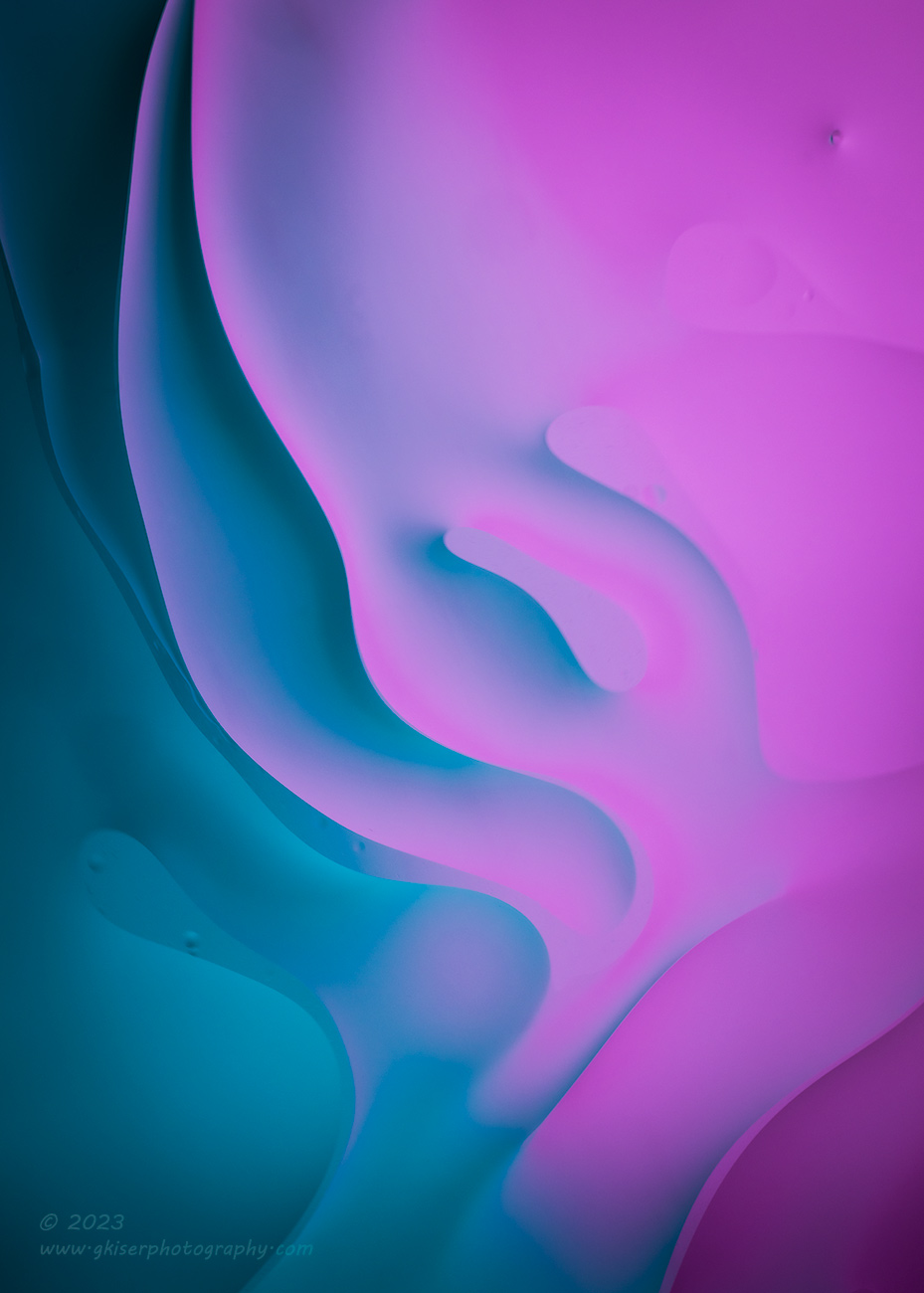
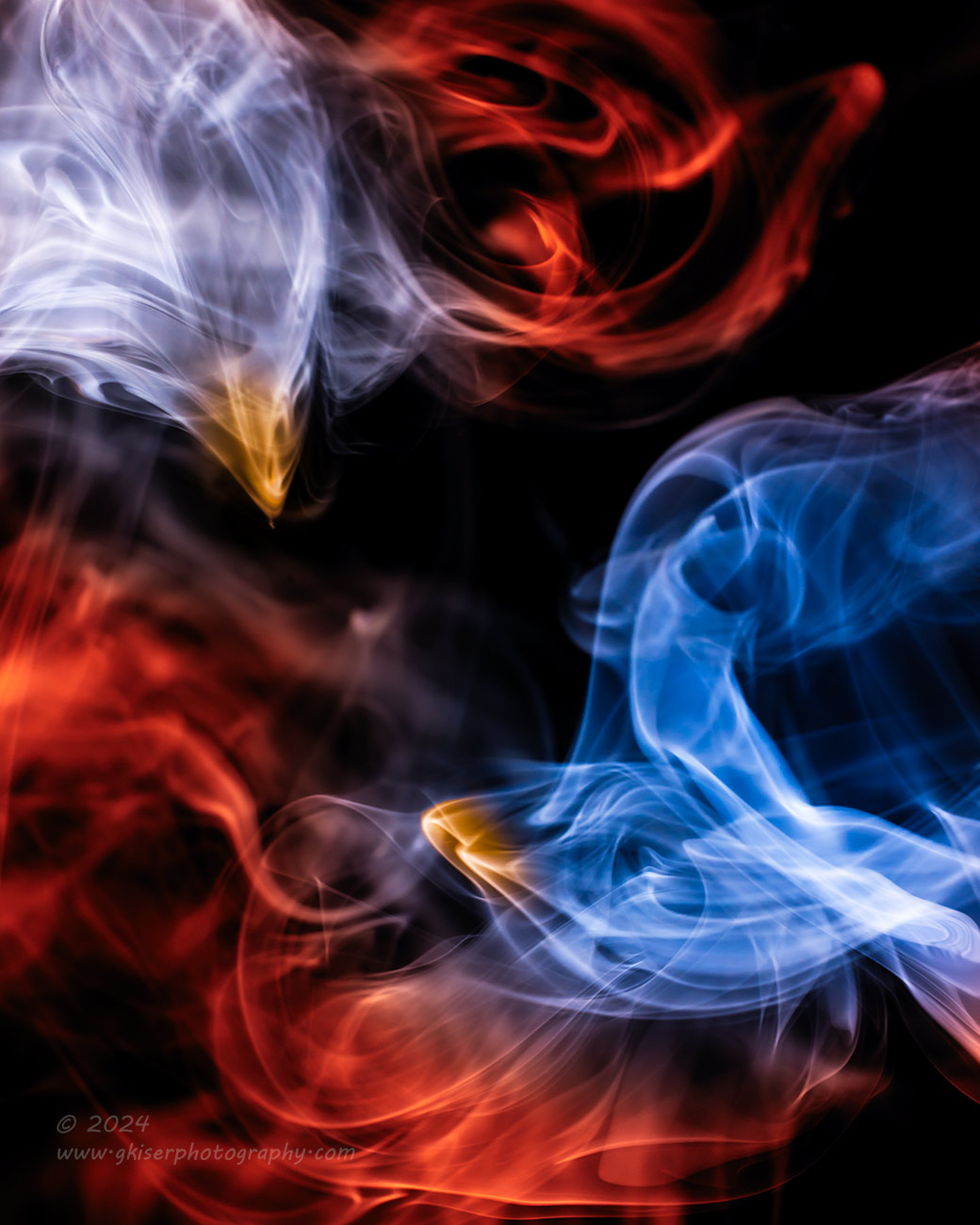
There have been other evolutions that I have embraced along the way. These evolutions haven’t become my main focuses, but they certainly have not been in my particular niche of photography. Take for example the abstract photo of the oil and water above. This was only the second time that I have shot this type of photo, but I see it as part of my own evolution. The same could be said about my smoke photography which is a different kind of abstract work. The photography of both of these types of images is more like a lab experiment than a photo shoot. The process looks nothing like anything else that I shoot and has nothing at all to do with the vast majority of my photography. I still enjoy it and have learned a great deal through engaging in these techniques. Not only have I created photos that I really like, but I have also been able to incorporate those lessons into my regular photography. That is a part of my own evolution which would not be possible without straying from my niche.

Let’s also not forget that hard and fast rule that I had starting out where I wouldn’t photograph people. I had no interest in it and didn’t want the hassle it involved. The way I saw it, a tree would never complain about how it was photographed, nor would worry about how long it took to create a photo. Thanks to Toni, I had a short venture into people photography in 2008, but after being burned several times by clients, I reverted back to my original platform of not photographing people. For many years after that, I was not shy at all about declining portraiture opportunities. In 2020, the nature of business started to change and the avenues that had been profitable for me were drying up. That forced a change, and the quickest change that I could make was to incorporate portraiture once again. It was a hard decision, but I didn’t resist the evolution this time, and went all in as they say.
I can say without a doubt that this venture into portraiture has been much more than a short-lived diversion as it was in 2008. There has been a lot of learning and a lot of building of a studio involved, but at every step, I have learned more about photography, and have been able to incorporate those lessons into my primary work. By breaking my own rules and not resisting that evolution, I have now built a portion of my photography business into a profitable area which has on more than one occasion helped to fund my primary focus. This evolution has been very beneficial to me over the years and my only regret is that I didn’t stick with it longer when Toni pushed me to start with portrait work. Had I continued at that time, I would have been in a much better geographical location for getting clients, and we both had contact with a lot more people than we do now. There is no telling where I could have been had I just allowed myself to evolve way back then. Instead, I chose to niche back down and focus on a small aspect of photography.
There is no doubt that my landscape and decay photography benefited greatly from that focus during the formative years, and it has allowed me to reenter the portrait world much better versed in the skills and techniques needed. I also recognize that many of the concepts that I have learned through doing portraiture would have come in handy with other types of photography. This certainly would have come in handy years ago as I was still learning at an accelerated pace. I just really regret the short-sighted reaction of pushing portraiture away all those years ago instead of figuring out a business model that would prevent me from getting burned as much as I did. They were all easy fixes in hindsight.

Life is all about evolution, and it is through that evolution that we grow and mature. I remember very clearly that when I started out in photography, that I wanted vibrant colors because Fuji Velvia film was all the rage then. I learned how to push those saturation sliders all the way to the right and overly warm an image. The colors would always overpower the final image, and you could say that most of what I was shooting had a certain nuclear quality to it, and if you weren’t wearing protective glasses, there was a good chance that you would receive eye damage from looking at the photos. Starting at the beginning of 2024, you might have noticed that I have been wanting to create more black and white images which rely more on composition and light than content and color. This is an evolution that I have chosen for myself. Color is far too easy to use as a crutch in photography, and I really wanted to push myself to see scenes better than I have before. It might seem counterintuitive because of all the effort and development that has been put into color photography. However, I feel it is a more mature way of seeing, and it is helping me to really see how color impacts an image as well as better ways of incorporating color.
There is just something honest about a photo with no color. You are left with only contrast and shapes to define what you are looking at. Distractions are removed and the attention falls right where you want it to be. The path that I have set myself on has caused me to really get in-depth with how black and white photography works. I am getting better at seeing a scene without color and deciding that even though conditions aren’t great for a color photo, they are exactly right for a black and white one. A completely white and overcast sky with no detail. Horrible for a color photo, even worse than a clear blue sky; but take the color out, a white sky is not a problem at all. If you have a lack of contrast in general, black and white offers more ability to change that than color does. This is an evolution of mine which has opened up all kinds of possibilities in many different types of photography.

Another way that evolution has found its way into my photography has been in my lens choice. For many years, my 24-70mm f/2.8L lens has been my glass of choice for just about everything. I used it for landscapes, old barns, even my rusty cars. It allowed me a reasonable wide angle and a slight telephoto which gave me a lot of possibilities in all types of subject matter. If I needed to emphasize a foreground, I would go with my wide-angle zoom, and if I needed the extra reach, I would go with the telephoto. It was really that simple.
A couple of years ago, I found myself in a situation where I was having a hard time finding compositions with my standard zoom. Remembering the luck that I had seen using the telephoto a short time before, I gave that another try. What I found was that the compression made all the difference in the world and the compositions started to really come to life. I had never really considered using the 70-200mm in close quarters, but it was working like a charm. From that point on, I started to consider that lens as an alternative more often than not. In the past year, I have seen a huge change in my photography as I have moved away from the 24-70mm lens for most of what I shoot. I’ve found that the telephoto matches more of how I see which makes the compositions more pleasing for my own eyes. You will see that I have used that telephoto more and more, and that is even represented in my yearly collection of significant images. Just last year, that one lens accounted for 50% of the 12 images that I talked about. That is more telling when I say that there were five lenses represented in the dozen photos with the next most popular lens only being used twice. That next most popular choice was a dead heat between my 16-35mm and the previous workhorse 24-70mm.
It is that evolution of vision that I am talking about. Had I gone with my initial resistance to the change of focal lengths, I would have validated my earlier choice of sticking with the standard zoom and would have maintained the way that I was capturing scenes. However, there was something that had changed in my brain that was causing me to see a scene differently than before which was a very subconscious change. Since I allowed myself to experiment with the telephoto lens and use it in more situations, I have found a way of capturing scenes that create natural compositions without much fuss about it. The new way of seeing has become natural with my decay subjects because I have been doing that for a while now, but I’m starting to really use it in the landscape as well now. You can see the image above which was shot from a good deal further away than I would have normally, but the focal length was much tighter than I would have considered before. The end result is a photo that I am very happy with and it is true to how I saw the scene, rather than trying to get some perspective distortion to change relationship of the tree to the surroundings.

When it comes to my decay subjects, this is one of those photos that could easily be made with the standard zoom, but thanks to having a change of heart on the lens choice, I have been able to concentrate more on the lines and shapes. The standard zoom at this distance will cause some perspective distortion which would change a lot about how the door handle would have appeared with the shapes of the window frames. By using that longer focal length, the shapes become more pleasing to the eyes. There is also a side benefit because I am much further away which will make any reflections in the chrome much smaller. In most cases, I don’t even have to worry about removing my reflection or positioning differently to make it less visible. These are all very beneficial changes and ones that I wish I had made earlier.
I had never thought to use the long lens years ago because it was not how I was seeing the scene. There was an evolution that took place within my head that prompted an evolution in how I worked. Most of our evolutions as photographers come about in a similar manner. We are making changes based on something that is happening within ourselves. If we listen to those who say niche down and perfect how you do things, we will resist any type of major change. We think we are doing the right thing because photographing a landscape between 24 and 70mm is what we are known for. Had I resisted my own evolution, we would be looking at a large collection of pure landscapes shot within that range. Not to mention the colors would be horrendous and offensive. Because I have allowed myself to evolve as a photographer, there is a lot more variety in my collection as well as directions that I never would have suspected.
Decay, in general, came about as an evolution. I felt guilty early on when I would stop and photograph as old barn because it would steal the spotlight from the surrounding landscape. It got even worse when I would shoot an old car. Once I read that the concept of Wabi-sabi accepted that there is beauty in the transience of all things, I realized that I was being drawn to the beauty of these old rundown things. I evolved my photography to incorporate those things more and more. By 2017, I was more of a decay photographer than a landscape photographer. I had evolved and grown. I continue to embrace change in what I photograph and how I photograph it. Even when I had hard and fast rule about not photographing people, I’ve found a lot to enjoy about doing just that. The education that I have had with people photography has spilled into all the photography that I continue to enjoy. The lessons that I have learned all along have all been incorporated into my workshops and mentorships so that others might benefit from concepts that are largely thought to only be applicable to certain types of photography.


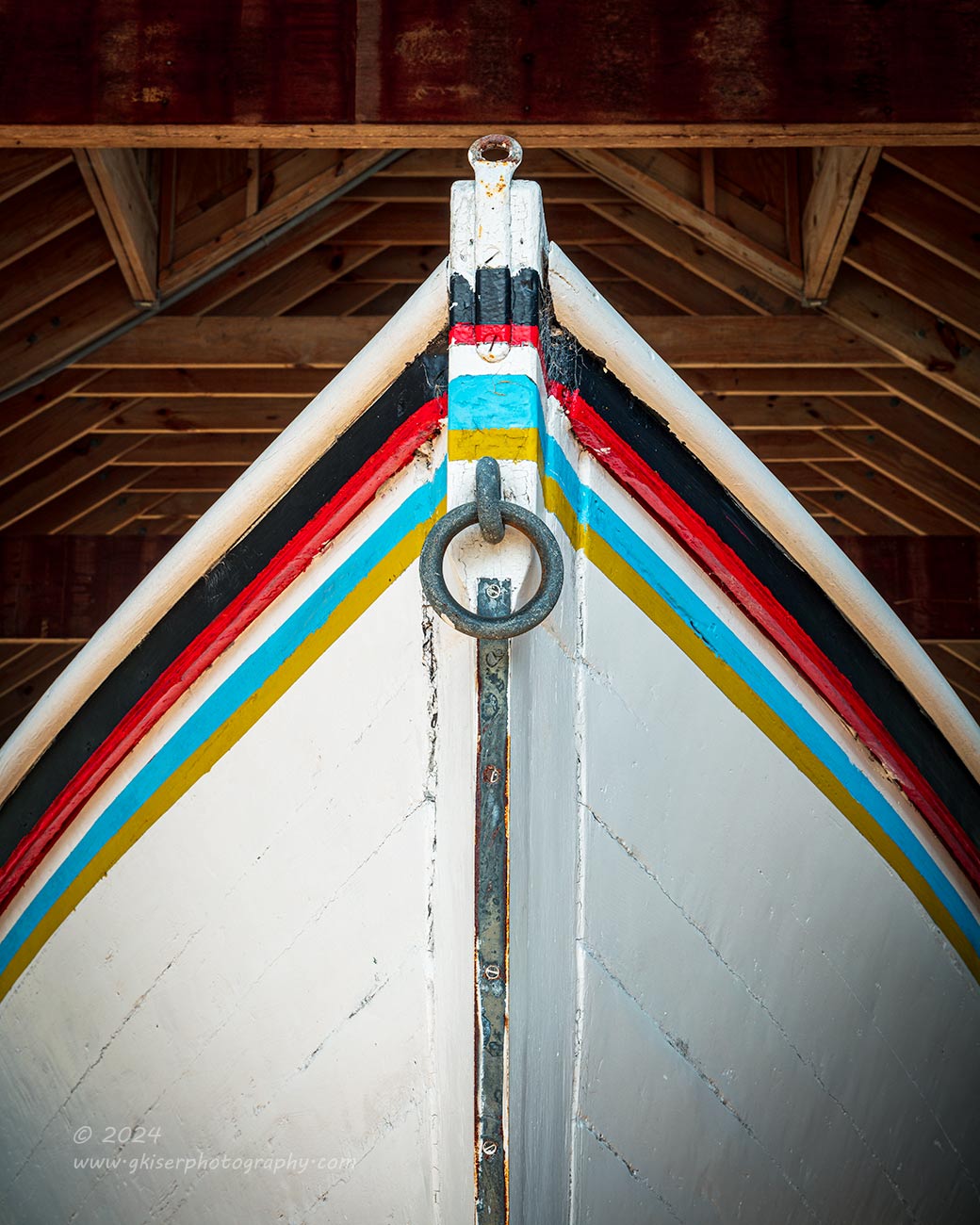
As you look through that last grouping of photos, you would be hard pressed to think that they came from a photographer that made a conscious decision nearly 20 years ago to photograph only the natural landscape and had a hard and fast rule about not photographing people. Each one of these photographs has happened because I have not resisted my own evolution as a photographer. I have allowed myself to grow, even when it is in a different direction from what I started out wanting to accomplish with a camera. None of these photos has diluted my niche or taken away from it. In fact, it is little side steps like these that have further formed my own niche in photography allowing me to find new ways of communicating through my visual language. Even if the periodic diversions didn’t result in major changes, I have learned things from each one that has made me a better photographer as a whole.

To really put some punctuation on this concept, I would like to present one of my more recent photos which was from a session last week. I’m just starting to take my portraiture into a bit of a fine art realm which is another step of the evolution. There is just no comparison to how I started out in my photography a couple of decades ago when I was just concerned with the natural landscape only. These days, I can still shoot an open field with a lone tree, but I can also capture the essence of a rusted car, a collapsed barn, and even the occasional shiny car. I’ve also allowed myself to explore photographing people in a way that I never had any interest in before. It are these changes along the way that have defined who I am as a photographer, and I couldn’t be happier with the outcome.
I would like to challenge you in your own creative journey to say “yes” more often when you have these weird ideas. Try different things, be inspired by different subjects. Look outside of your self-imposed box. Allow yourself to grow and don’t be concerned with the direction it takes. One of the most limiting aspects of creativity is feeling that we must create in a certain way. This provides a roadmap of sorts, but we will never know what the destination looks like. With uncertainty at the end no matter which way we go, why not go the way that excites us and make those turns. We might still end up at the same place, but we might end up somewhere so much better. It really isn’t possible to end up in a bad place when we are evolving because we will continue to make the choices that take us where we were intended to go. Fighting our own evolution just puts us on a miserable path that will feel like we are stuck in the movie “Groundhog Day” doing the same things over and over.
I really hope that you have enjoyed this month’s topic and possibly have gained a little confidence in your own evolution. I know that I am in a much better place having evolved with my photography than how I envisioned it going all those years ago. Photography has become much more fulfilling to me after having gone down all these little side roads. The main path has been altered from time to time, but that has been part of the joy of the whole experience.
I’m not quite sure what the topic will be next month, but I have a few ideas going. If there is something that you would like me to discuss, I’m always open for suggestions. Just let me know and I’ll try to get that worked in. In the meantime, I do hope you are enjoying my weekly Tuesday’s Tips which is on YouTube. I’m about to wrap up with the global editing tabs which will then allow me to get into some local editing tips. If you have been enjoying them, consider making a small donation (link at the bottom of this page) as these videos are not monetized. Unlike most YouTubers, I don’t get any revenue from these videos, so I am just volunteering the information for anyone that can benefit. Fortunately, it doesn’t take too much time to do these videos, and they have been a lot of fun thus far. I do know that they have helped a growing number of people which is the main reason that I have done the series. Let me know if you have benefited from them, or if there are any particular topics you would like for me to cover.
Until next time…