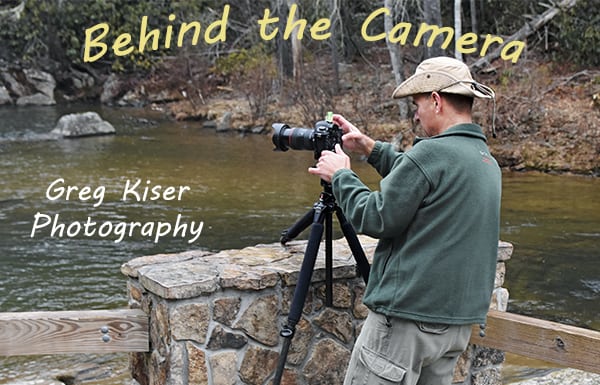
Welcome back to another month of my Behind the Camera series. I’ll be honest here; I’m going to pretty much wing this one because it is not either of the topics I had planned on doing this month. When I was getting a list of topics together for the year, I had originally planned on making this month about why it is important to ask permission before entering a property to get photographs. I’ve actually covered my thoughts on that topic several times over the past few months and figured that I would just be rehashing that same old topic. I had replaced that with a topic related to a video I had watched about whether or not photography had meaning anymore, or even if I mattered as a photographer. There was lot to talk about with this topic and I might revisit that one later on. I chose not to delve into that one this month because I feared it would put me in a rather delicate place emotionally. That seems a bit extreme, but as I was thinking about it, I was doing a lot of navel gazing and with having just gotten back onto social media again, feeding that machine, I was really starting to think about the “real value” of my photography. I realized I was right back where I was when I wrote this Behind the Camera around this time last year. I didn’t want to go down that hole again, so I looked for something else that I wanted to write about.
The answer came during a very lengthy conversation with myself that spanned roughly a month’s time. Before I introduce the topic this month, I want to give a little backstory to how I came to this point. Autumn in the NC Mountains is famous worldwide for the colors that appear for a few weeks at the beginning of the season. It is generally accepted as the favorite time for all landscape photographers. For years, I have looked forward to the month of October so that I could get out and photograph the leaves as they changed colors. I didn’t really think about it, I just went with that flow because I knew of no other side of the coin. Sure, I enjoyed photography throughout the year, but Fall certainly was the best season for a landscape photographer. It was just an understood thing that I shouldn’t question.
This year was a bit different because I started to question things, almost on the level of the meaning of life. No, I wasn’t in a funk, and I wasn’t in a creative slump. Quite the contrary actually. I had been going on some very successful treks which had yielded a ton of really good images that I was proud of. For the first time, I looked at the Fall colors as an interruption to the groove that I was already in. I then realized the stress that Autumn put me under as a photographer because the duration of it was so finite during the course of the year, I had to line up a lot of elements at the same time in order to really want to partake. I had to feel creative, want to shoot landscapes, have proper weather conditions, and accept that I was going to be around a ton of folks doing the same thing I was. All of this had to coincide with the color transformation that was altitude specific and very localized. The last bit of the puzzle was to find compositions that featured the colors and didn’t look like I just pointed the camera to the colors and said, “hey look, an orange tree!”
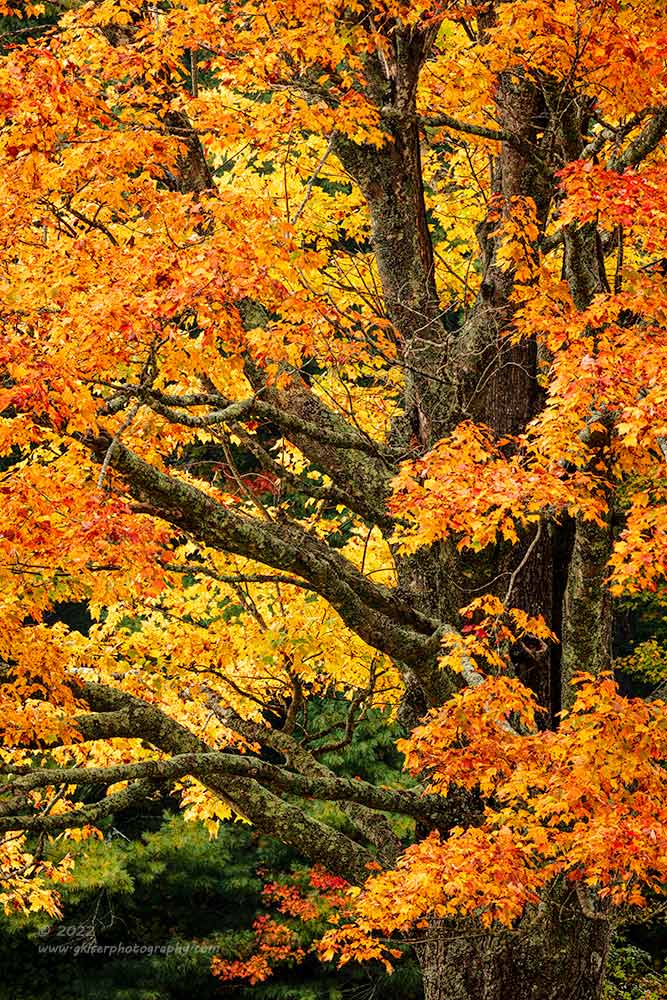
Of course, as was the case with this photo above, when I was done shooting that orange tree, another car pulled up and the passenger climbed out of the door and held up a cell phone to get a photo of the same tree. Sure, our photos were going to be nothing alike, but I had just photographed the same tree that so many others will do over the course of the week. My hope would be that my image would be better in some regards than the other images floating around, but logic dictated that my photograph was going to blend into the crowd of yellow and orange photos inundating the internet over the coming weeks. This same experience also relates to landscape photography in general. The more I thought about it all, the more I realized that landscape photography is the gateway drug into the world of photography as it pertains to non-portraiture. It is easy to find a landscape scene, and it requires nothing all that special to capture, especially if you like the photos that fill Facegram and Twitchat where there is no consideration given to the sky that ends up just being a blank slate of blue or white. If you search out videos on photography, you will find everyone and their second cousin shooting landscapes or portraits. There is very little in-between, and for the purpose of this discussion, non-people photography is largely considered landscape with grand vistas and woodland scenes. That tells me that the world of landscape photography is saturated with camera toting folks wanting to create the best images that they can.
I read a long time ago that in order for a photographer to stand out, they must do something that others aren’t doing. For the most part, my landscape photography consists of the same subject matter as countless other photographers out there. I’m better than some, not as good as some, but I’m sure that I generally fall in the middle of the road among landscape photographers. Even if I am on the upper end of that spectrum, do I stand out enough that a photograph I shoot of Linville Falls would be different enough among the crowd to prompt somebody to really look at it? I dare say that wouldn’t be the case.

So, in essence, I have been really wondering if my photography has meaning which is why I didn’t want to get into that subject this month. It was too close to me. Instead, I decided to go with a more positive spin on things and talk about the resolution I came to with my quandaries. If I am wanting to stand out from the crowd, I need to either shoot different subjects, or I need to be exponentially better at what I am photographing than what everyone else is capturing. Since there is no way to quantify how much better I would need to be, and if there is even a level of betterness that would work, I have really seen the benefit of another area of my photography here lately. That is the decay subjects that I have been shooting seriously since about 2013.
So, why decay? Well, the subjects aren’t exactly plentiful which reduces the amount of folks that will shoot this subject. They are hard to find because you can’t just Google the location of “old rusted car” and drive out to that spot. Then you have the pool of photographers that have no interest at all in junk cars when they could be photographing Mount Mitchell in early October with thousands of other photographers. If I were to stop the argument with this, the answer to the question would be too vague. Nowhere in here have I addressed a reason for shooting the subject of decay that might apply to the viewer. My arguments up to this point would apply to any subject that is not popular to photograph. I could shoot photos of trash cans on the side of the road and check off all those boxes, but my photographs would have such a limited audience that I couldn’t sustain myself as an artist unless I got a commercial contract with sanitation companies to provide marketing materials for them. Hang on while a make a quick note in my business idea book….
As an artist, my reason for photographing things is to create an image that excites me. As a business owner, my reason to create an image is to have a product that I can either directly sell, or that will appeal to other photographers wanting to learn the craft. In any case, I have to create images that stand out from the crowd, fit my style, and allow me to an ability to share something that represents me. Over the years as I have gotten further and further into decay photography, I have found that the images that I create are stronger through the story that is told than any landscape photograph I have shot.

By story, I am not really talking about a book that starts out with “Once upon a time…”. What I am getting at with the concept of “story” within a photograph is the mental trip that you take when you look at an image. When you look at a landscape photograph, you either remember being at a scene like this or not. You either think that the photo is pretty, or you don’t. The switches are just that simple. In decay, as with this image of a small shed, before you decide if you like the image or not, you are looking at it to determine what it is. Once you determine that this is a barn of some sort, you try to figure out what type of barn it is and wonder what it looked like when it was first built. You wonder about the use of it through the years which spills into the general activity around the farm. Before you know it, you have created an entire reality of activity around this scene that breathes life into the image. You aren’t just looking at the subject that is falling apart, you are considering its past, and how much longer it will be around.
“If those walls could talk…” That is the comment that I get most often on these photos. It is an old saying that goes along with old structures like this which have seen so many different people and experiences come through that it would be able to tell the stories of those things that it has witnessed. Of course, the walls will never actually talk, but when you think about it, we all know the experiences that we had growing up, we are aware of the experiences of our peers and family. Would it not make sense that by looking at these images, you could fill in the blanks and see the story unfolding by looking at the very walls in the photo which have no voice? Through the photographs, I’m giving the walls a voice to tell a story, but that story requires the audience to fill in the details. That is what makes it fun, almost like a guessing game where you can determine for yourself if you get the guess right. If not, go with a different story.

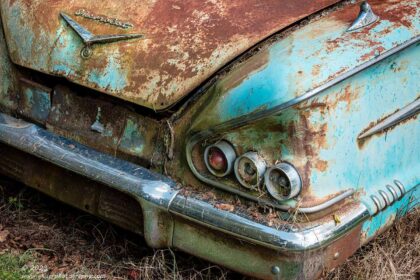
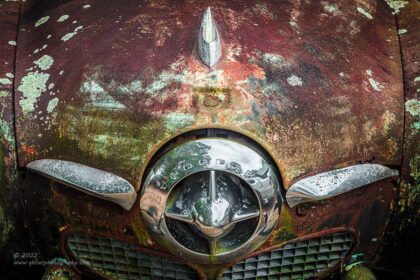
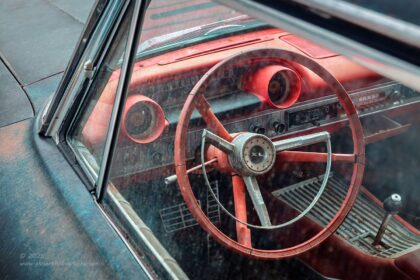
Seeing photos of rusted and decaying cars is very similar to the previous example. Here, you start off by seeing the car, which is totally recognizable, but you don’t really consider the cars in the shape that they are in. Sure, the textures and contrasts of the rust are visually interesting, but you find yourself looking at the car and thinking about when it was brand new in the showroom. It had all of the newest gadgets and there was a proud new owner coming to pick it up. They took it home and polished it up before taking a family trip to a neighboring state. At what point did the desire to keep it looking new fade? When was it last on the road? Will it be restored and live again? You have a concept of the history as well as questions about the future. Again, you are not just looking at the photo, you are creating a full story around it, and you begin to care about the subject on a deeper level.
In both cases, the cars, homes, barns, etc. could spark memories from when you were younger. Maybe your parents farmed and had a similar barn where you played as a child? Maybe you remember getting in the Ford Galaxie and playing games in the back seat before the days of seatbelts as you headed off to a Summer vacation? Once again, you are engaged with the photo because of what you are bringing to it. In this type of photography, the photographer is the least important part of the equation. Short of making a pleasing composition of some interesting subjects, the photographer has nothing to do with the story telling part. That is up to the viewer.
Not that I am trying to get out of telling a story and take the easy way out for photography, I just value the connection that I can make with my audience more than I value how I can put an image together. In the age of like, swipe, comment, swipe, I realize that any photograph that appears anywhere will only hold attention for a few seconds at best. Social media has taught us all to have a very short attention span which is a tragedy in itself. Try to remember all of the photos that you liked in your morning scrolls. You can’t can you? They made an impact, you reacted, and you moved on. Does photography really matter in 2022? If I can capture your attention and cause you to create your own story behind an image, I’ve got you much longer than had I just posted a photo of a mountain range under the clouds. My decay photos hopefully become like an earworm…or I guess eyeworm. If I do my job correctly, I lock you into the image as you imagine things that are not even in the photo.
Here is an interesting true story from a recent visit to a gallery in West Jefferson. I was checking things out there to see if it would be a good fit for my photography and if I could afford to even show there. I spent a couple of hours there talking with some of the photographers and even a customer or two. It didn’t dawn on me at the time, but the content of those conversations has found a lot of validity for me since. I spoke with one customer who was selecting two out of three waterfall images. The problem she was having a hard time with, was two of the photos were of a waterfall that she had visited and had a lot of great memories from. There were also two photos that were much better in execution than the third. One of the photos shared both qualities, but the other two only had one of the qualities each. She was having to decide between a better executed photograph and one of a subject that she remembered which was not as strong of a photo. I could tell that her only reason for wanting the weaker photo was that it brought forth all of the memories from when she had been there, but she wanted the other one because it was more well done. The more I talked with her, the more apparent it became that she was more interested in the memory than the photo and that was what she wanted to engage when she looked at the photo hanging on the wall. The better photo got left at the gallery, and she took the lesser of the three home because of that memory connection. Our memories are responsible for so many of our choices throughout our lives whether we realize it or not.
Other conversations that I had were surrounded with photos of old cars. The conversations were not about the quality of the photo, or how the photo was composed. The conversations were about the condition of the car, how we suspected it was used based on the dents and wear. We created the stories around the subject even though we knew nothing about that specific car. Months later, the relevance of that exchange is hitting home with me.

When I capture a landscape, I am relying on a connection to the actual location to find a potential client for that print. The last few orders I’ve had from Hampton House Gallery in King have been for location photos like the Outer Banks, Pilot Mountain, Western NC, etc. These were designed for commercial clients so that they would have local landscapes hanging on the wall just to showcase the area where they were at. There is a minimal connection to the actual photos in that case. They are wanting location specific images that fit a color palette for the space where they will be hung. That is all well and good, but the clients that purchase my decay photos don’t need to have a connection to a location, or even that specific subject. In most cases, the photo reminds them of the tractor that their Grandfather used on the farm, which was then passed down to their Father. My photo brings back specific memories for them. It might be a photo of an old Volkswagon that reminds them of the car that they saved up for while in college which became their first car. The emotional connection to these decay images will always be stronger than the aesthetic reaction to a landscape image.
A quick look through the comments on Facebook with my photos and you will see a pattern developing. With my landscape photos, the comments are usually single words like “beautiful,” “amazing,” or wow!” If there is any dialog in the comments, they run like this, “I love that part of the Parkway, we visit there every year.” Conversely, with my decay images, I get a lot of stories that folks tell me about their first car or learning to drive a manual transmission. Childhood memories of playing hide and seek in the barn, or they remember their Grandmother cooking in the kitchen of a house that looked just like the one I photographed. The reactions are usually not based on the look of the photo or even the specific subject, but rather the emotional response that comes up when they see the subject. This is the connection that I want to make with my photography. I want to engage the mind, the heart, and the memory. I want folks to look at the image and wonder about the life of that particular subject and wonder about what comes next.
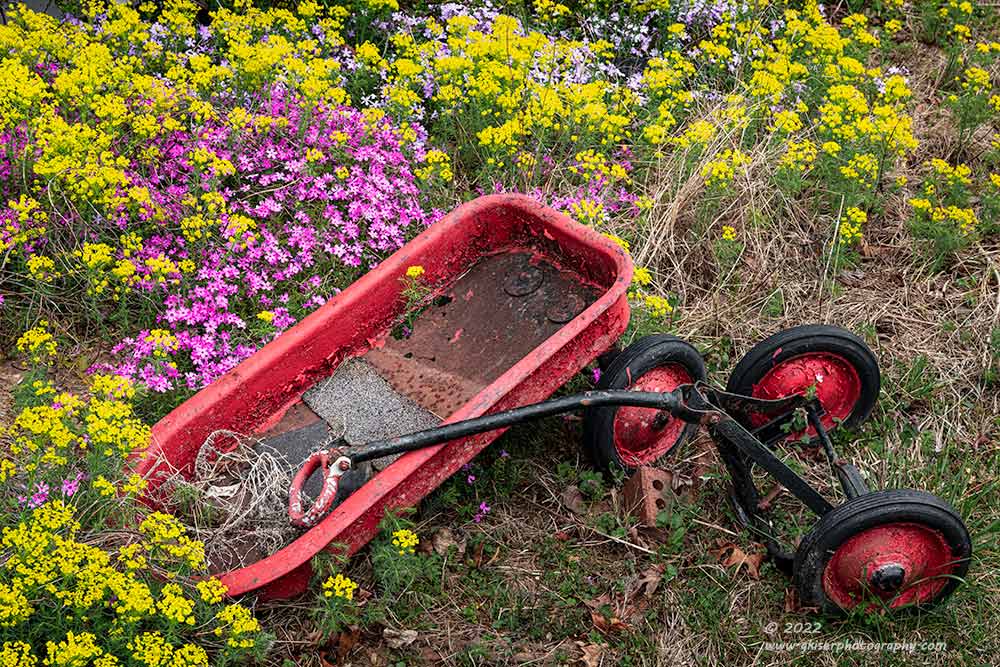
One of the comments that I repeatedly receive on Facebook with this type of photography is something like this. “Oh, how sad! I can’t believe somebody would let this happen. Can’t you get it and restore it?” While I do love creating an emotional response with any of my photography, even if it is a sad response, I don’t quite understand this reaction. The implication of it is that the subject of the photograph is no longer beautiful because it is old and damaged. Somehow it is not worth anything unless it looks brand new and is fully functional. I see this comment a lot from the older generations which is equally confusing to me. The older I get, the more I seem to appreciate old and broken things because, well…I am slowly becoming old and broken myself. If I dismiss a subject because it is no longer new, I am dismissing myself?
Take for instance this photo of the little red wagon. When I was a kid, I think it was a requirement to have one of these. It was a toybox, a car, a tank, transportation to the sandbox, a fort, among numerous other things. It got banged up from use, and I’m sure eventually ended up just like this wagon to some extent. When I see this, I don’t see a broken wagon as much as I do my childhood, which is long in the past. I don’t want to see this restored. I think that this is totally representative of the 45 years that has lapsed since I had one of these wagons. It doesn’t make me sad at all. It makes me happy remembering those days when I used the wagon, and I even think to the days after the wagon was no longer one of my favorite toys. I think about my life.
I’ve talked about Wabi-Sabi for many years now. I first heard about the concept in a book by Harold Davis titled Creative Landscapes. He defines the term very well, but basically, he is saying that this is a Japanese aesthetic view that says everything passes and there is beauty in that transience. That was powerful to me, and it gave me the ability to photograph this type of subject without reservation or guilt. I had always liked looking at these subjects, but I thought it was too out of the realm of reason to consider it beautiful. It gave me the strength to say that there is beauty in the decline, and I could photograph it just as effectively as I could that coastal scene.
Not long after this revelation, Toni started to study Buddhism and meditation. this was actually quite interesting to me because one of the core values is that there is no sense in getting upset because something breaks because everything is already broken, we just have to wait for it to happen. That fit so well with the photography that I was starting to create, but I still had a real hard time accepting it when something happened to things I owned. I’m slowly changing this reaction in my own life though. It has allowed me to keep the 4Runner after a bolt fell out of an overhead sign and dented my A pillar in the first six months of owning the truck. Normally, I would have gotten rid of it because the repair would be painting the entire side of the truck for a quarter sized dent. Nearly six years later I still have the truck and it still has the dent, but the continued decline is unavoidable. As the Buddhists would say, just enjoy it while it lasts. Look at that, photography has brought me to a life lesson that nothing else had opened me up to until this point.
If you aren’t quite tracking on this concept, think about your Grandparents as you were growing up. Did you only find value in them if somebody was willing to restore them? Were they too wrinkly to love? Some of my fondest memories were going out to play tennis with my 60 something year old Grandfather after he retired. He wasn’t quick, but I loved the time I got to spend with him during the Summer while Mom was at work. As he got older, I valued his experience and knowledge. I never was concerned about his age, or the fact that his body was getting frail. Now that I am a Grandfather, I have an even better understanding of the way life goes. My body’s check engine light has been on or a few years now, but I still have so much to offer. I have gray hairs, spots, and wrinkles but I’m not ready to be forgotten. I know at some point I will die, and I hope to be considered “beautiful” and enjoyed until that point and then remembered fondly afterwards. I can ask no more or less from the subjects that I photograph. Age just makes the story richer.

Decay is an interesting topic for a photographer. Whenever I tell folks that I am a decay photographer, I always get the same look and question. What in the world is “decay photography?” They think that I am out there taking photos of rotting fruit, or that science experiment in the fridge. This is not to say that these subjects don’t work as decay because after judging a photo competition a while back on this very topic, I judged a still life of rotting fruit as the best of show across all categories. That is just not quite my style, nor the subject that I want to work with. When I let people know what my working definition is of “decay” and the subjects that I like to photograph, I’m usually met with a response of “you really want to take pictures of that junk out there?” By this point, they are more worried about my mental health than whether or not I’m a threat to them or their property. They will usually let me go out and do my thing, and occasionally, they will follow me around as I work the compositions. The fact that I will start talking to myself to work through the images just adds to their assessment of my mental health. Photographers are just not OK in the head.
More often than not, I’ll show them what I am seeing with their “junk”, and you can see their expressions change almost immediately. After seeing the photos, they get what I am seeing, and I think they even have a greater enjoyment of having that “junk” on their property. I’ve compared the decay and landscape genres of photography quite a bit here, and I’m going to go back to that for a moment to illustrate a huge difference between them. It is generally understood what makes a beautiful landscape, and most viewers looking at a landscape photograph will just imagine being there and they aren’t all that impacted by the actual photo. Again, look to Facebook and see all the superlatives that are left below a snapshot image with a blown out white sky, no real composition, and an arbitrary look at an overlook. You might get that glass sphere that adds a gimmicky touch to the photo by making it look as though a crystal ball has captured the landscape, but the viewer will love it. Even if the processing looks like one of my nuclear fallout landscapes from years past, they are the next best thing since sliced bread. We have seen so many landscape photos that the actual construction of the photo is no longer important to your enjoyment of it.
Decay, on the other hand, is something that most people are not immediately familiar with and that takes a minute to absorb. You have to look at the photo, and the first question you ask is why was this photo taken? As you start to try and come up with an answer, you are studying the composition, and reading all of the clues that are included in the photo. Your answer might not be the same reason that the photographer had for shooting the scene, but you have come up with your own reason and therefore a connection. You have to look to the photo for the answers because you haven’t seen nearly as many photos like this as you have a view of a tall mountain. I’ll even go so far to say that in a landscape photo, you don’t even see the entire image, you just see what excites you because you are used to looking out over a scene or seeing similar photos. You just fast forward to the action in the movie without paying attention to the character development. With decay, you have to understand the characters, so you spend the time paying attention to all the parts of the image. I truly believe that this sets decay photography apart from landscape photography these days.
What this means is that to shoot decay, you must have a clear idea of what you want to accomplish, and how you want to go about getting there. It takes a certain amount of talent and understanding of the subject to convey the beauty from a subject that most would consider an eyesore. I’m not saying that I’m particularly talented, or at some lofty level of photography. I am just saying that I possess a minimum level of talent, skill, and creative vision to pull this type of photography off. It is a lot harder than working a landscape photograph but coming from that background has allowed me a set of skills that I think breaks me apart from other decay photographers.
When you look at photographers that focus on decay, or some call it abandonment, there is a certain look that is usually associated with it. It is an HDR look with a heavy processing overtone. The compositions are sometimes cluttered because they are from inside of buildings where they have been used for storage or have been vandalized in the past. Photos taken outside generally have very little concern for the surroundings or the sky. They are very much subject driven, and distractions are generally accepted in the photograph. Coming from a landscape background, I have learned that the overall lighting, sky, and organization of the elements is key to a composition. I bring this knowledge with me to my decay photography. I look at the whole scene to determine when the right time to capture it will be, or if there will ever be a right time.
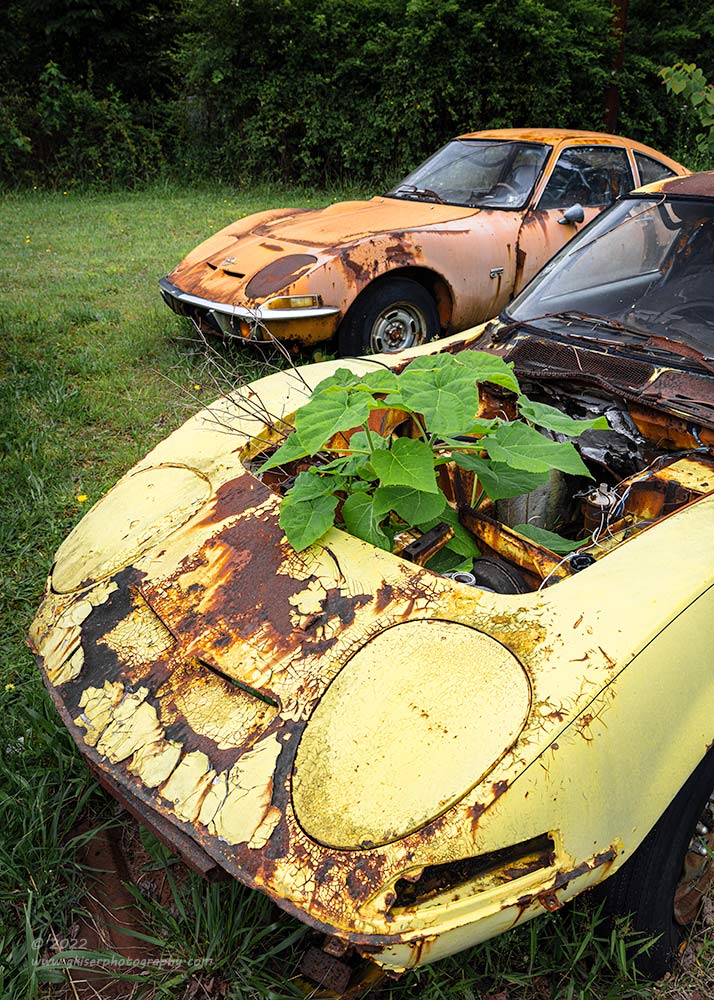
Here is a perfect example of what I am talking about. I’ve been passing by this pair of Opel GT’s for a number of years now. They are parked in front of a shop and are in the middle of a lot of other cars. There is a late model Civic to the right of the frame, an 80’s Suburban blocking them in the front, and a late 80’s Ranger just beyond view to the rear of the cars. These surrounding vehicles did nothing at all for the story of these two cars that I wanted to isolate from the distractions. With that isolation in mind, I needed something to tell the story of the environment. When I passed them by on this particular Spring day, I could see that there was a large weed growing from the engine compartment. That added a very important element to the scene, and I saw that the colors were all very analogous which would aid in the overall impact of the image. This was my landscape nature coming out, and I was looking at the entire scene for continuity before even trying to get the photo.
This photo took years to happen because I didn’t want to go up there and hold the camera at eye level and capture part of a Suburban, a Civic, and a Ranger, hoping that the viewer would be able to tell that it was the Opels that I was wanting to capture. I could have done some post processing tricks to make it work, but that would have changed the scene from what I was seeing. The image had to work in theory before I bothered setting the camera up. A great subject doesn’t make a great photograph. A great photograph utilizes a great subject as just one of the elements in the frame surrounded by other elements that support the story. This is how a landscape photographer evaluates a scene and creates an image. That is what I bring to the table with my decay photography, and I think that is what sets me apart from the others.
It is safe to say that I have a style that sets me apart from other photographers whether we are talking about landscapes or decay. The difference is, I can stand out in a population the size of a local high school, or in the population of the entire United States. If I’m Waldo, I want to be seen waving from the top of a barn that is starting to fall apart, not in a sea of other Slim Shadys. That is why I am really getting into my decay photography these days. I feel like I haven’t made the mark I intended to with my photography just yet, and if I am going to do that, I need to create work that stands out from what others are doing. I need to make my voice heard above the others, and my best bet is through my decay photography.
Decay is, after all, what caused Singh-Ray Filters to notice me about five years ago. At the time, I was one of only a handful of photographers that were shooting these subjects in the way that I was. I think that largely still holds true. To put this into context, a good percentage of the photographers that Singh-Ray works with directly are National Geographic photographers. They actually develop filters that nobody else has at the request of these photographers. They have been around for a very long time, and I remember reading magazine articles while learning about landscape photography that showcased photographers that happened to be using these filters. Now, many years later, that company has noticed me in the same way that I once had noticed them. That is a pretty big deal, and something that I am very proud about.
Decay photography has opened doors for me when it comes to doing presentations with different photography clubs as well as a couple of Singh-Ray webinars. I’ve been able to show a different kind of photography that has captured the imaginations of viewers and photographers alike. I had the honor of doing a presentation for a camera club and then being asked to come back more than a year later because they were doing a photo competition based on the presentation that I had given on the topic. I’ve conducted basically the same decay workshop numerous times over the years that has been so well received that I have offered it twice in a single year, and also had to add another one for a different photography club that wanted me to do one just for them after I did a presentation on the topic. I can’t say that I’ve had the same response to my landscape photography over the years, but that is to be expected. It is all about Waldo standing on top of that barn with a flare gun getting noticed.
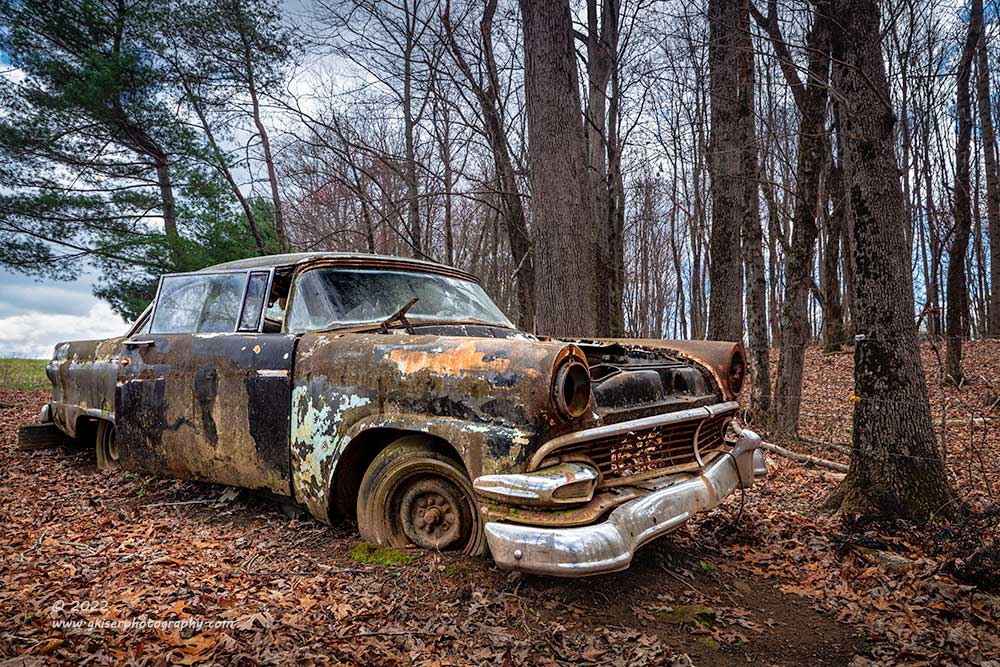
This isn’t to say that I am not going to focus on landscapes much anymore. That would be silly on my part. Doing landscape photography is what has taught me the skills I need to do decay the way that I have done. It is also a chance for me to get away from everyone and spend time in nature enjoying the peace and quiet. That is a time to recharge for me, and I still enjoy it as therapy for myself. Decay photography more often than not involves talking to folks and interrupting their activities. In some cases, it involves firearms pointed in my general direction. There are just times when I want to capture photographs, but don’t want to see anyone at all. These are the times that I will gravitate towards the landscape. I’m at peace with that situation and I can thrive creatively. I think that distinction identifies why Fall is no longer my favorite season to engage in photography. What I love about the landscape is ruined by the masses. I can’t get into my personal flow and my creative space with all that extra noise around me. I value the solitude of winter for that aspect, and I think that is my favorite time of year to photograph things, whether it be landscapes or decay. Ironically, I don’t get nearly as many photographs made during that season because the days are much shorter, and frankly, I don’t function as well in the cold as I once did. I do still really enjoy the peace of it all when most people choose to stay indoors.
Thank you for joining me for another installment of Behind the Camera. I wasn’t sure how this was going to turn out since it was kind of a last-minute decision to do. I’m sure at some point I’ll come back to whether or not there is value in photography because I still think that is a valid topic at this point in history. I just want to be a little more levelheaded when I tackle that one. I’m planning on talking about the transition from a DSLR to Mirrorless next month. It might not be what you are expecting, but I have used the R5 enough now to feel like I can have a qualified opinion on things. You can also start looking forward to my yearly Significant Images compilation that will happen sometime after Christmas. We will then start off the New Year with my annual wrap-up where we look back on 2022 and see what happened.
Until next time…

Remember to use the code KISER10 to get 10% off your purchase