Welcome back to another installment of my monthly Behind the Camera feature. For those that are new here, this is a chance for me to talk about something related to photography that doesn’t necessarily fit into the narrative of one of my treks. Last month I talked about some of the things that go into my choice for doing color or black and white photography. I’m going to change gears a little bit here and talk about another distinction in my photography. I’m going to get into the differences that I’ve noticed between landscape and portrait. As few as five years ago, when I would look at that sentence, I would say that the difference is simple, and hardly worth writing about it. Landscape oriented images are horizontal, while portrait oriented images are vertical. That was what mattered to me in my photography and I made that decision with each composition that I shot. It really wasn’t rocket science at all. That is also not the distinction that I’m wanting to discuss here today.
Just a few years ago I started to really consider branching out into people photography, or portraiture. For years I had looked at doing people photography as kind of the basic photographic pursuit and it wasn’t nearly as complicated as the landscape work that I had been doing. I had dabbled in it off and on at Toni’s request, but never really found an interest in it. After becoming a full time photographer, I started to recognize the need for some added income sources, and since I wasn’t sponsored, or an online influencer, I had to earn my money through my actual work with a camera (imagine that). I had the time, and more knowledge to pull from when it came to learning different styles of photography which made moving into different genres more appealing to me. I had the opportunity to do a client session for some headshots which she was looking for and decided to jump at the chance. Long story short, I realized that I was well out of my element with both the equipment that I had in my bag, and the knowledge of how to use what little I did have. The session was rough to say the least, and the preparation leading up to it showed that I wasn’t as ready for this as I had thought.
How could that be though, people photography was simple. It was a matter of identifying the subject, pointing the camera, blurring the background, and pressing the button. When it came to lighting, I knew that you didn’t want direct light on their face, but that was about all that I knew. In the weeks leading up to the shoot, I spent time learning what I could quickly off of YouTube about how to use a speedlite most effectively and how to properly shoot a headshot. With each video I watched and with each new technique I tried to learn, I started to feel like I was learning photography all over again. I didn’t like it, not one bit. I imagine it was something akin to what I felt as a teenager when I thought that I knew it all, yet I was being told by adults that I was doing it wrong and needed to learn. Yeah, I just rolled my eyes and said, I can do this, it isn’t that difficult to take a picture of a person. Kind of like that teenager learning a hard lesson on their own instead of taking the advice from others, I got knocked down a few pegs really quickly during that first session.
Embarrassment aside, I managed to make it work, but barely. I learned a valuable lesson that day, and for the Game of Thrones fans among us, you will appreciate this lesson. There was a little voice in my head that said rather forcefully “You know nothing Greg Kiser.” You know what, that voice was right. I realized that I knew absolutely nothing at all. The one highlight of the day was my first real use of off camera flash which allowed me to capture the eyes as pin sharp elements which was something I had never been able to do handholding a camera before. That really opened my eyes for the use of flash, and I wanted to learn more about that. The biggest negative that I came away with was a deep feeling that I actually wasn’t suffering from imposter syndrome, and that I actually was an imposter in the field of photography. Could I really have missed so much in what I thought that I knew? Was it possible that I really was a button pusher and had no idea what I was doing?
Those doubts hit me hard, and I spent the next six months or more trying to figure out if I was a photographer after all, and if I would ever be able to do portrait work. What I realized in that time was that when it came to landscape and decay, I was pretty solid in what I could do. I was able to deal with the technical problems in the field when it came to lighting, composition, and framing in order to create a pleasing image. I was still teaching others how to do what I was doing with great results. I started to feel more confident again about my bread and butter photography, but I kept running headlong into a wall when it came to people photography. The more I tried to learn about it, the more I found out that I didn’t know. Sure, I got the technical end down pretty quickly because I knew the basics of photography. It was figuring out lighting patterns, how to create them, and how to find them in the field that threw me for a loop. There were also things like color theory that came into play in a very serious way which I had never given nearly enough thought to. What I found was the hardest part of the whole thing was the posing and getting the story right in the image. That’s right, I can nail a story when it comes to landscape or decay photography, but in the portrait world, it was a completely different thing.
I’ve been at this for about two years now and have realized something rather profound. I owe an entire section of the photography community a huge apology. I have spent probably 15 years completely dismissing those portrait photographers out there. Now, I have not voiced my opinion on this, and have never belittled portrait photographers to other photographers or my clients. I’ve just simply said that I don’t photograph people and would point them in the direction of those that I knew did. In my mind though, I was thinking I don’t want to divert my attention away from “real” photography and water down my very methodical approach to getting the photo. For those thoughts, I am deeply sorry, and could not have been more wrong. And for those that think that the term “wrong” is an absolute and not subject to gradation, I submit that it really is. It is wrong to say that an apple is an orange, but it is more wrong to say that an apple is a suspension bridge. I was guilty of the latter version of wrongness.
What I’ve learned is that portrait photography, or people photography in general is a completely different skillset from what I had been doing for the previous 15 or so years. It requires different techniques, a different mindset, a much different pace, and a fully different expectation on outcome. I’ve identified some areas where landscape photography (including everything that I normally shoot outside) is vastly different from portrait photography (photography including a person or people as the primary focus). This is what I want to talk about in this installment. I hope that it goes a long way to making things right with those portrait photographers that I thought were not nearly as talented as they actually are.
The Landscape Photographer
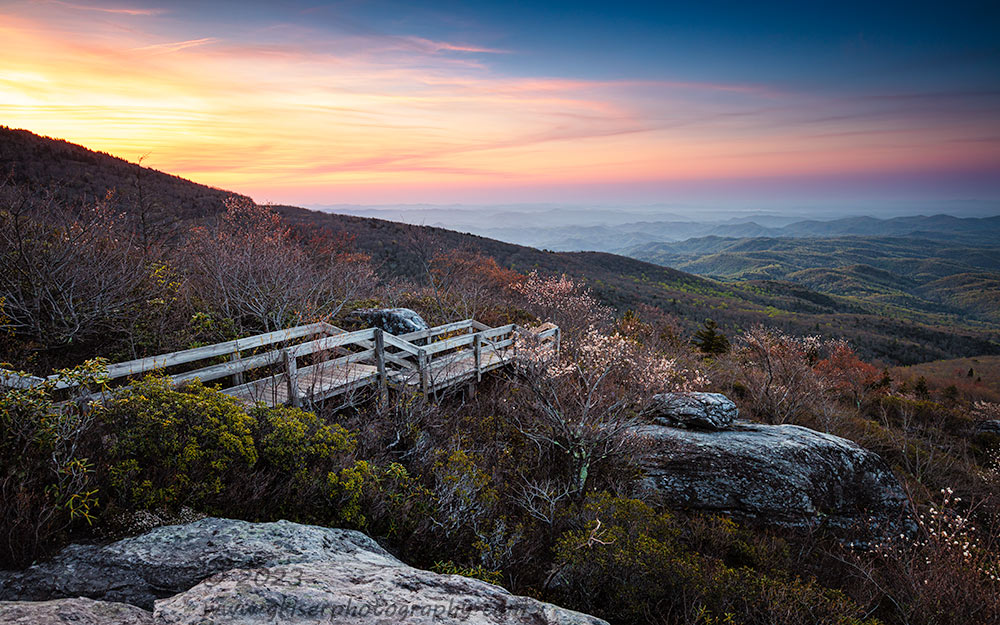
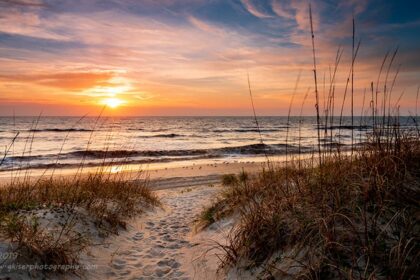
It is images like this that I have spent most of my photographic career learning how to capture. It is by no means an easy task, and it takes a long time and a lot of practice to figure out how to do it well. I have read countless books and magazines on the subject to build my toolbox. I’ve shot way more images than I can count to ultimately develop a style to my photography. In short, I’ve put in a lot of work to learn how to do what I do. I really thought that this was the epitome of photography and I had some very valid reasons for that thought.
With landscape photography, you are dealing with natural light, and you can’t really control it. It is what it is, and you have to be prepared to work with what you have. This means planning shoots around weather patterns and seasons. You don’t get the luxury of going out in the middle of the day after you have read the morning paper (does anyone still do that?). You have to decide when the sun will be on your side and not working against you. For some views, you have to plan around the time of year because the sun will move a great deal North to South depending on what season you are on. Since you can’t move the landscape, or the sun, you have to plan for everything which can take months, or years before you get the shot that you are after. The same thing goes with the foliage. Depending on the time of year, you might have green trees, multiple shades of reds and greens, or a full palette of warm autumn tones. You might even have times of the year when the trees are bare. All of these things have to be taken into consideration because in landscape photography, the landscape is the subject.
Knowing this, landscape photographers become very proficient at dealing with what they have in front of the camera. We can adjust our expectations based on the existing light and conditions in order to create an image that works. In short, landscape photographers are reactive to a point. I’ve taken this a step further in my work in that I pride myself on shooting it like a find it. This means that I will rarely, if ever alter a scene to make a better photograph. If the photo isn’t there, I just don’t shoot it. This came from having a landscape photographer’s background and in most situations finding myself unable to move anything at all. Take the above photo for an example. It would be kind of hard to say that the walkway was a distraction to the scene, and it would be better if I just moved it slightly out of the frame. Of course, there was no way that I could relocate that element, any more than I could move the sun just a little more to the left. What I could do, was find a place to situate the camera that allowed for the elements in the scene to fall into place in a pleasing construct. This is what I mean by reactive shooting. Landscape photographers are faced with all kinds of snags in their compositions which require careful thought of how to either incorporate those elements, eliminate the elements, or minimize them within the frame. No matter who you are talking about behind the camera, those are all issues that they face when composing an image.

Take a look at this example. For our argument today, this is a landscape image, with a decay subject. There is very little in this frame that I can move, other than myself. What you are not seeing are the houses across the road, and the house just out of frame to the right. Just below the grass to the right is a parked vehicle. The only thing that I could do here to simplify the scene was to move my position and use the focal length of the lens to change the scale of the car. This allowed me to block a good bit of the background with the main subject and created a composition where I could crop in close to the edge on the right to eliminate other distractions. There was a lot of working around this subject to land on the final composition. It would have been so much easier had I been able to move the car forward about 15 feet or move the houses out of the background.
Another area where landscape photography is challenging is the part after we are all set up and have that perfect composition. Now we have to sit and wait for the light to change. As the sun moves, or the clouds move in the sky, the shadows change across the landscape. Learning to read the light is important here and takes a lot of time in most cases. This is why I can burn through 20 exposures of the same composition in order to arrive at a single frame that “works”. Each click of the button is hopefully going to capture the best combination of lighting, but there is always that urge to try and get better, so we wait. This is the part of photography that is much like fishing, I imagine. We keep throwing the line out and hope that the big one bites. We usually end up with a bunch of bait fish in the bucket though.

That last point brings us into one of the biggest aspects of landscape photography and that is the speed at which we work. Unless you live in California and have earthquakes as often as you charge up your electric car, the landscape doesn’t really change much. With landscape photography, we get there early and get set up and wait. We wait between shots, and we wait for the next composition to reveal itself. We generally work on tripods for that extreme depth of field resulting from a tighter aperture. We use filters which nibble away at the existing light entering the lens, all of which forces a much slower shutter speed. We go after long exposures for waterfalls and for showing motion in the clouds or removing motion from the water. Very little about landscape photography is fast paced, unless you are in perfect light and have the opportunity to capture a multitude of subjects and compositions. Even when this happens, we are still taking the time to set up the camera and tripod while attaching filters.
This is one of the main reasons that I love landscape photography so much. It is a slow process and one where I can methodically work out a photograph. I can pay attention to the details and try different things. It is great for a perfectionist, but at the same time shows me that perfection isn’t possible. At least I am given the time to try in most cases. Even those times when I try and try, but still ultimately fail to get the image that I was after, I can chalk it up to a learning experience and try it again another time with the same scene.
For years I have always said that I loved landscape photography because trees never complain about a photo that I capture of them. Never once has a tree complained about the bark looking too rough, or the trunk looking a bit shorter than they imagined. Waterfalls don’t worry about which rocks are poking through the surface, and my old cars certainly don’t care about that missing fender. Every mistake is forgivable because there is usually no expectation when you start on the composition. You just try until you get the right combination of ingredients. This is a relaxing aspect of photography to me, and I did recognize early on that when making images of people, there were now at least two invested opinions in the outcome. Of course, that was a big stressor for me over the years and what I thought was the only reason that I never ventured into people photography.
The People Photographer

When I talk about people photography, I am making that a wide swath of photography to include portraiture, headshots, family, boudoir, and couples. For the sake of this argument, I am excluding the street photography genre, which is largely people centered, but in a completely different way. I am by no means an expert in the realm of people photography, but after two years, I’ve learned enough to know that there are some pretty serious differences from what I am used to. This goes much beyond having a different subject matter, and really changes the core principles of what you are trying to accomplish. Sure, the idea is to create a photograph that is well exposed, well composed, and represents a creative vision which will be appealing to an audience. That is all pretty much standard across the board. I’m talking about more about what leads up to that final image that checks all those boxes.
As I mentioned, landscape photography is all about being reactive to your environment. More times than not, when I get to a location, my original idea doesn’t really work and I have to alter it based on the weather, lighting, or even distractions that I hadn’t counted on in the planning stage. I shoot the scene as it is and find a composition that works within those limitations. In portraiture, for the most part we build the image from the ground up. Since the main subject is now something that we have total control over, we can construct what is in the frame with relative ease. If the sun is in the wrong direction, we can change our angle and the direction of the subject. We can alter wardrobe to fit the story as well as the colors of the scene. Poses can be used to add interest or direct the eyes. We have the ability to embrace the background or blur it out so that it is just color and texture.
In the studio, the photographer quite literally goes from a totally black screen. A set is built, or a background is chosen. The subject is then introduced with a wardrobe that fits the concept. Then light is applied to the scene to light up exactly what we want to be seen, and with the intensity that we are looking for. A pose is created that fits the story and then an expression seals the deal. None of this happens because it is already there and I’m only needing to position a camera in the right place to capture what is in front of me. Every portrait comes from a concept, and then finding the elements to build the scene. Only then can the camera come out and we find the last little details to add into the scene.
The funny thing is, I have taught for years that photography is a subtractive art form because the success of the image deals primarily with what you omit from the frame. This really isn’t the case with portraiture as much. In many cases as in the example above, I started with nothing and had to decide what I wanted to include in the frame. There wasn’t much concern about what to exclude because I had total control over what the light hit and where I was cropping. Does that make portrait photography an additive art like a painting? It would stand to reason that would be the case since portraiture got its start with paintings centuries ago. Of course, the argument could be made that landscape photography shared that common start as well. The difference was that the painter was able to remove distractions by just not including them in the scene.
With the idea that the photographer builds the photo from the ground up by introducing a movable subject into a scene, you would think that this genre of photography would be so much easier than the landscape genre that I came from. I mean, having total control over your image must be easier than having to work with a bunch of elements that can’t be moved. Well, I thought that for years until I had to actually do it. I realized that I had trained my creative mind to react to what was in front of me. I could make an image of an old car sitting in front of an old barn with no problems at all. I could shoot a landscape under a golden hour sun easy enough. In these situations, I was responding to the scene and finding the beauty that was already there. It is true that the scene would change quick enough thanks to the lighting and weather changes, but I could see the photo before I set the camera up. With portraiture, either in the studio or in the field, everything that I see is merely a background, or a part of the story I am going to tell. The subject is a person, or people (referred to as the sitter) that I then introduce into the scene. The story that I am wanting to tell here is something that is created in concept and then executed in front of the camera by placing the sitter in the chosen environment and coming up with a pose and expression that suits the narrative.
There is so much creative freedom when it comes to portraiture, and I think that is part of the draw for me. It is really exciting to have a concept and then work it all out without having to necessarily wait months for the seasons to change or wake up at 3am to travel to a sunrise location. I can even work out a concept and shoot it in a studio where I have complete control, or I can go anywhere that has a background that might fit the idea. The sky was the limit when it came to creative portraiture, and I could build up an entire story based in fiction while my landscape photography was all based in fact, with maybe a little creative license to spice it up.
With freedom comes responsibility though. I had trained myself to recognize a scene for what it was and capture a photo of it with a creative idea behind it. I was a reactive photographer. In terms of police work, I was in the field, responding to 911 calls. I would deal with the situation when I got there. In portraiture, a new level of creativity was needed in order to capture the photos. I was building something that wasn’t there to begin with, and capturing it in a way that satisfied both myself and the sitter. In police terms, I was now in crime prevention. It was up to me to come up with tactics to prevent crime in an area in order to create safter neighborhoods. In retrospect, this was kind of the path that I took as a police officer. I spent approximately 3/4 of my career as a call answering field officer while the last quarter was spent as a Community Resource Officer in charge of crime prevention in my zone. I had to think outside of the box many times and come up with ideas to reduce future crimes which became my focus. It was creative policing, and it took me a while to find my methods. I see the similarities for the first time now that I am writing this out, and surprisingly it is making me feel better about my journey in portraiture.

One of the biggest hurdles I am facing with portraiture is creating a scene that never existed. If you look at the photo above, the background is a landscape that would not have been a photograph as it sat. There was nothing at all interesting about it from a photographer’s standpoint. However, during this engagement shoot, I needed a background that looked natural, and would help direct the eyes to the couple. This completely blah landscape turned into the perfect backdrop for the portrait. The light was in the right direction, and the trees on either side helped to direct the eyes and keep them in the frame. The pose was used to balance the scene, and I positioned the camera so that the trees provided the separation that I needed to keep the attention in the right places.
There was no time to set up a tripod and get things organized and then wait on the light. That was a luxury reserved for a landscape photographer. There was no such time for that here because it was nearly 90 degrees in the sunshine, and we were all hot. I needed to get lots of variety in the photos which meant that I couldn’t just sit here and nitpick the one composition. Nope, I was hand holding the camera and we were moving around quickly. So, not only was portrait photography an additive, and creative type of photography, I was having to create image concepts quickly as well as capture them quickly. Coming from a genre of photography when the process can easily take 20 minutes to create a single image, I was coming up with a concept, location, pose, and exposure in a matter of minute or two. The pace of a portrait photographer was much faster than anything that I had done before and really tested my creative ability. Now, I’m not saying that I was spraying and praying with the camera. The images that I shot were considered photographs and I pressed the button with the intention that each of them would be a workable image. These different compositions happened at a very quick rate though. Where landscape photography feels like a therapeutic session of relaxation (with some exceptions), a portrait shoot is more like an aerobic workout.

Of course, the studio is a bit different, and I have found that I like working in the studio a bit better than in the field. It fits into my more meticulous workflow that I have perfected in the landscape. The slower pace isn’t so much at the time of capture because I’m still working quickly as poses change and expressions change. Where things are a bit different, are for the most part, the creative end of the session usually happens before the sitter even gets here. I have a concept and work out the set and lighting to go along with that concept. I have plenty of time to work through different ideas and fine tune them before the sitter even arrives.
In the example above, I had a loose idea of what the client was wanting and was given creative freedom to work a photo around the wardrobe choice of a black and purple motif. Wanting to keep everything simple and impactful, I chose to gel the background to bring the purple color into the frame while leaving it feeling very low key. I built the set with a gray seamless backdrop and added a gelled light down low to add the purple tones to the background. I then brought in another light with a diffused beauty dish modifier as a key light. For a bit of separation, I added a third light, camera right in the background with a gridded stripbox for a kicker light. Knowing that I would want to soften the shadows a bit and add some visual pop to the hands, I added a softbox down low for fill on a fourth light. It took me about an hour to put this all together and get the lights balanced.
When the clients got here, all they saw was the gray background, but I had a surprise in store for them. By having complete control over the lighting and what was visible, I was able to get several rather amazing shots right off the bat. It was the benefit of the planning and preparing for the shoot that allowed me to do that as efficiently as possible, but it was very much a different experience than being reactive in the landscape. This was one of those photos that really got me excited about portraiture because it was something that I knew that I had created from the ground up exactly as I had visualized it. If you remove the elements that I have added here, you would be left with a dark gray wall with a couple of framed photos hanging. Of course, technically, if you remove everything that I added here, you would be left with a totally black frame because every bit of the light that you see here is light that I have added.
One other area where portrait photography is vastly different from landscape photography (at least for me) is in the ability to practice. When I was learning landscape photography, I could go out just about every weekend and practice different techniques. Even to this day, if I want to go and try something new, I just have to hop in the truck and go. I really took that for granted over the years. These days, I realize just how wonderful that aspect of learning has been. When it comes to portraiture, there is a key difference. When I want to practice, I need a sitter to be in front of the lens. Toni has come through more times than I think she was really willing to. Most of my practice has been with her, but to be fair, she doesn’t really like to be in front of the camera and gets bored quickly with it. This comes out in her expressions many times. I appreciate her efforts more than she knows though. I’ve had a few other test shoots, but these have been rather difficult to organize. I don’t have a lot of friends or family to call on, and there are very few upcoming models in the area looking to build portfolios which greatly limits my ability to learn through doing which is how I learned landscape photography. This is one of the aspects that I failed to really take into consideration when I got started learning portraiture. Not having to rely on other people to learn my craft for 15 years spoiled me. Now, in order to shoot, I find myself at a loss of subject availability which means no session. This is really making the learning process much longer than it should be, but I am still adding concepts to my toolbox which I play with now and again when Toni is willing.
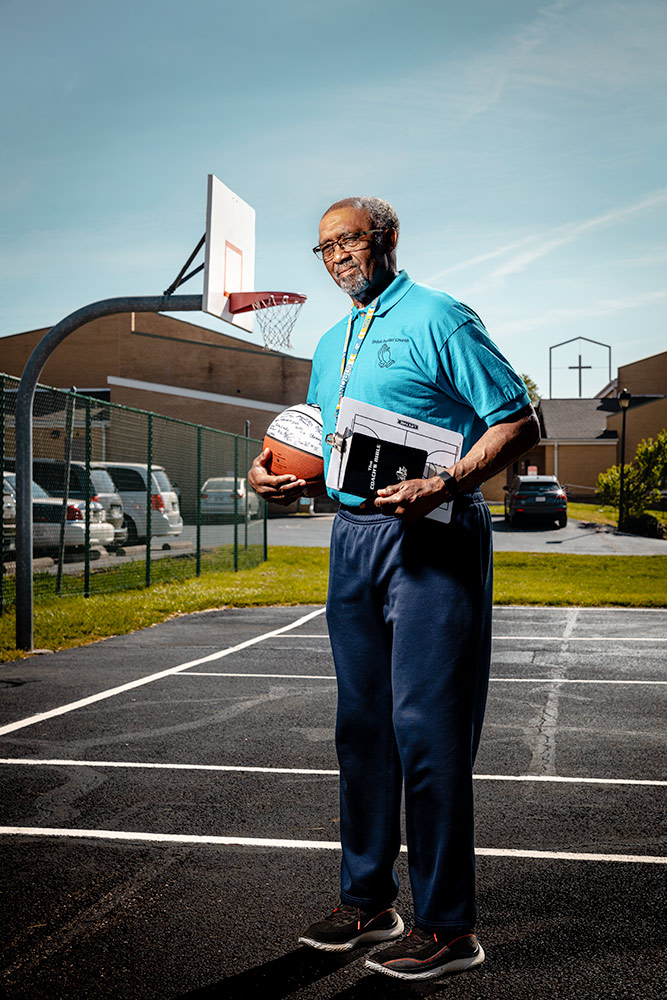
When it comes to the difference between portrait and landscape photography, I really think that it comes down to how you see the scene. Portrait photographers have to be more creative in their work because they are seeing things that aren’t there yet. All they can look at is a potential background if they are working in the field. If they are in the studio, they really have nothing at all to look at as they have to build it all. With the landscape, the photographer just has to look at what is there and imagine different lighting conditions or weather conditions. They can visit the location many times over to see it in those different conditions as well. When they are convinced that they have the right formula in mind they pull the camera out and wait for that to version to happen. Portrait photographers, on the other hand, will build up a visual story out of nothing at all based on how the sitter interacts with the background. Having that freedom of posing the sitter opens up so many possibilities which both makes portraiture easier and harder to do.
Something that I have noticed enough to say that I can make a generalization here, is that the landscape and portrait photographers occupy two distinct different camps. You can think of them as different poles, and the better that they are at one, the more they struggle with the other. There are many photographers out there which are the jack of all trades and do both with a reasonable level of competence, but if they excel at one, the other usually isn’t up to the same standards. For instance, I’ve been following many portrait photographers on social media for the last couple of years, and have seen amazing work from most of them. Some of them will occasionally do a landscape image, or possibly a real-estate image which just falls way short of what they would normally create as a portrait photographer. I can recognize the same tricks that they would use as a portrait photographer like limited depth of field, sun flare, or overexposure. On the other hand, I have seen quite a few landscape, or automotive photographers that I think are wonderful in those genres which will do some portrait work. In most cases, these images fail to rise to their established level of art. Again, I see the tricks of the landscape photographer coming out in their portrait work with much more care given to exposure values, and wider depth of field. I will also see more careless use of focal lengths when the cameras are turned towards people. Landscape photographers tend to love wide angle lenses and those are much more tricky to use with people because of the distortion they can add.
For me, I have recognized the pitfalls of crossing genres and have gone out of my way to prevent those things from happening to me, although, I’m sure that I will still fall into many of the traps along the way. One thing that I have done is to limit my use of zooms when doing portrait work, which forces me to see at the more appropriate focal lengths (35mm, 50mm, and 85mm). That is training my eyes to see the scenes correctly. I do carry two zooms for studio work, or times when I have to work very quick in a small space. The 28-70mm f/2L was chosen not only for the fast aperture, but because it limited the wide end to keep me from going over the top accidentally. I am very aware of the focal length of that lens when I am using it and try to avoid the wider end of the spectrum unless I am in a situation where it will be beneficial for me. I’m still getting comfortable with shooting at very wide apertures which is an odd feeling for a landscape photographer. I’m used to wanting everything tack sharp near to far, and for portrait, a certain softness is a better choice. In order to make that transition easier for me, I went with the EOS R5 for the Eye AF function because at f/1.2, the focus is critical and I was missing it with my 5DS R too many times which was forcing me to stay at f/2.8 or tighter. I’m much more comfortable with shooting at a shallow depth of field now, and I rarely get the perspective distortion that I have been trying to avoid in people photography. Even my editing has changed up a good bit. I’ve learned new styles of editing that fit some of the “looks” that my clients might ask for, especially the warmer and washed-out look that is so popular these days.

I will say that the new techniques that I have been learning with my portraiture have pretty much all impacted how I approach my landscapes. I’ve learned new ways of seeing things, and new ways of editing. Most importantly, I think I have learned a great deal about color theory and how to use it in my photographs. Of course, much of what I have learned in the landscape genre has made learning the portrait end a bit easier. I spoke a bit about the difference between the technical aspects and the artistic aspects of photographer a while back. I established that there is a sliding scale between artistic vision and technical proficiency and the most successful photographers find themselves more the middle of the range than at either end. I think that the same holds true for portraiture. A big difference here is that I started as a landscape photographer with more of an artistic vision and I added to my technical toolbox as I needed to figure things out. Some 15 years later, I find myself with a rather full technical toolbox, and having to expand my artistic capabilities to learn to capture meaningful portraiture. This is alien to me in a lot of ways and has caused me a lot of difficulties in the learning process. It will always be easier to teach the technical end of things, than it is to teach the artistic end. Teaching creativity is possible, but quite difficult, and I’ve found that learning creativity is not an easy task either. I’m working on bringing more creativity into my portrait work so that it is more effective and able to put to use more of the technical end that I already have.
A final thought for this entry is a personal struggle that I am having with people photography that may or may not apply to others. I am an extreme introvert, and while I function very well around people, I have to mentally prepare for it, and I have to understand that it wears me out afterwards. I have noticed this difference so much in learning people photography, because actually talking to people is a huge part of the process. For all the time that I have photographed the landscape, I have not really had to talk to the trees, the clouds, or the sun…but I do regularly. I plead with the existing conditions to change just a little bit for the photo that I am after. I know that it has no effect, but it makes me feel better to try. When photographing people, I need to be able to do the same thing, but in a more appropriate way. This is difficult for me, and it always seems strange for me to say shift that left shoulder down a little bit. Let’s move that right hand up just a little bit. Soften the fingers and close that gap at your pinky. Now talk to me through your eyes and think about your dog. While I understand that those requests are necessary when capturing an image of a person, it usually comes out as…well, I can’t find the words and I feel like Raj Koothrappali on Big Bang talking to a girl. Yep, this is something that I need to get over, and I have made huge strides with it over the last two years. I don’t think anyone will ever appreciate how much effort I put into being that jovial photographer that makes everyone comfortable during the session. It is very much a necessity though, and I have to be able to communicate with the clients in a way that keeps the session going while providing great photos.
I hope that you have enjoyed this Behind the Camera. It is one that I have looked forward to for a while since my brain is always going back and forth between the two genres of photography. If I’m lucky, the distinctions that I have made between the two genres had gone a long way towards righting the wrong that I committed towards those portrait photographers over the years. I really have a newfound respect for the work that you create and understand that it is much more difficult than it would appear. I’m always working on improving my craft as a portrait photographer, and if you would like to volunteer for a test shoot, contact me and let’s work something out. Depending on the nature of the shoot, I will probably be able to deeply discount it, or even do it as a tfp (time for pictures) shoot which will cost you nothing at all.
If you haven’t already done so, be sure to subscribe to this blog either on the side bar of this entry, or on the front page of the website near the bottom. By subscribing, you will never miss an entry and you will be among the first to see the new photos in my collection. If you are interested in building out your own kit of gear, pay attention to the links at the bottom of the entry here and see what types of gear I am using. By using these links and purchasing anything within the site during that session, I will get a small kickback without it costing you anything at all. This helps to keep this website going and allowing me to write these blog entries for your entertainment and education.
Join me again next month as we talk about something new. I’m not sure of what the topic will be just yet. If you have any suggestions, I am open to topic ideas which are interesting for my readers.
Until next time….

Remember to use the code KISER10 to get 10% off your purchase