Welcome back for another installment of my monthly Behind the Camera. Each month I will use this forum to talk about something that has come up during the month, or just talk about something that I’ve had on my mind. This month I’m going to discuss something that occurred to me when watching a video on YouTube earlier this year. I wish that I could remember where that video was because I would like to share it here, but alas I can’t find it at all. The premise of this video was that the bad photographs are more important than the good ones, and I was really interested in why that was. I’ve been pondering the idea for a while now and feel that it is something that I want to discuss here today. I’ll admit, part of the reasoning behind wanting to do this right now is that I am currently involved in two different Advanced Mentorships with photographers at two different points in their journeys. Both of them feel like they will never achieve the level that they are hoping to achieve, but both have come a very long way in short amounts of time. They are also comparing themselves to other, more accomplished photographers which can be daunting. I fully sympathize with them in this plight because in my own journey, I am looking at photographers who are much more accomplished than I am and thinking that I will never get to that point. I’ve just described three different photographers, all of whom share the same desire to get better. The finish line for each is a different target, but that target is ever moving, much like a carrot on a stick. The scale itself is a fluid scale and depending on the perspective, these three photographers can be separated by a great distance, or nearly overlapping. It all comes down to establishing a starting point and an ending point which is very hard to determine. The point is, all three of these photographers are on a journey that very well may have no definitive ending point.
I’m using myself and my two mentorship clients because I think that we all represent a great majority of photographers out there. You are probably wondering what any of this has to do with the title of this entry, or even my inspiration for writing it. Of course, you recall I’m talking about our bad images, not about our journeys as photographers. Wouldn’t the journey be made up of your successful images at each stage that you are learning? Those are the milestones, right? When we are looking to improve, it is the good images that make the difference and the ones that we should consider important. All three of our photographers in this story are comparing their best images to those that they want to emulate, so why are the bad photographs important?
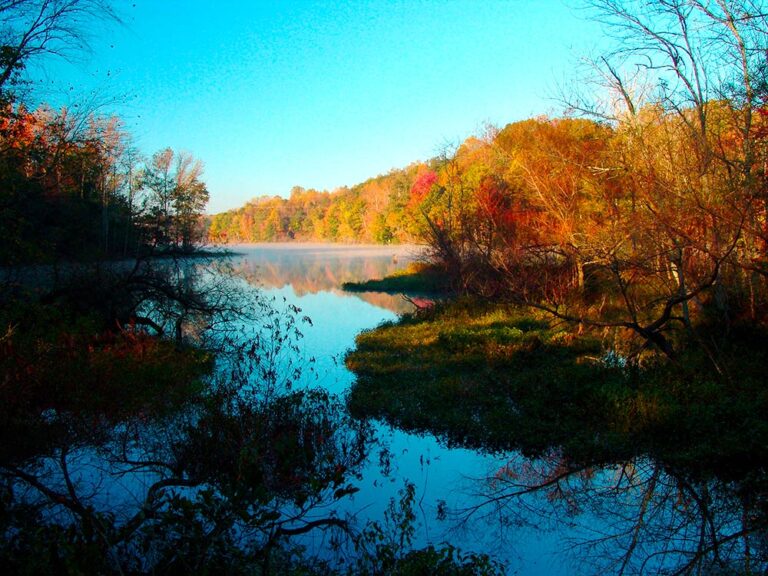
Well, to put it bluntly, I’ve made many more bad images than “client 1”, and “client 1” has made many more bad images than “client 2.” We just don’t get to see the bad images like we do the good ones. Take for instance the opening image here of Salem Lake. We’ve talked about all the problems with this image in the past, but at the time I thought that this image was really good. This image represents about a dozen or more variations that were ultimately trashed because they weren’t as good as this one. Now, 17 years later, this image would get trashed…if I even hit the button on the camera in the first place. Over my tenure as a photographer that has spanned almost 18 years at this point, I have shot more than 60,000 frames. I don’t know for sure because I don’t have them all saved, but thinking back to when my counters rolled at 10,000, I know that I’ve shot at least 60,000 on DSLR cameras alone. My original Sony F828 probably had 20,000 or more over the first three years of my learning process. Of these, only a fraction are what I would consider good, and have been saved. Of those good ones, only a fraction of those ever makes it into my portfolio. In my mind, I still have so far to go in order to achieve the level of mastery that I want with a camera which will make all of my current photos not so great. “Client 1” is trying to arrive at my level of composition and image editing, while “client 2” is still working on mastery of exposure and the basics of composition. The only difference between the three of us is the number of bad photos that we have taken and the time that we have been at it.
This is the part that we tend to forget about, when we are comparing our best images to those of photographers that we admire or aspire to be like. We aren’t comparing our bad shots, and nobody remembers the bad ones from Ansel Adams, or Henri Cartier-Bresson. It was all of those bad shots that brought them to the pinnacle of their craft during their time. Granted, mistakes were expensive in the days of film, so we have to account for the reverse inflation of learning here. With digital, each image can be a throwaway, so we end up treating them as such. In the days of film, without the instant feedback from an LCD, there was a lot more care placed on when the button was pressed because that represented money. That care represents a lot of failed images that were never shot in the first place because the photographer saw problems before they pressed the button, or they waited for a specific moment. Regardless of the actual count, the photographers who we strive to reach have spent more time behind the camera and working out what doesn’t work more than they have working out what does.

I’m going to leave my two clients alone for a while now and concentrate on picking on me because I’m sure I can take it. If I embarrass myself, I’ll just have to get over it. Here we have another photograph from 2005 which was the year that I started seriously in photography. There are quite a few reasons why this image is not good. The horizon is centered, the main focal point is centered, it is framed by elements that further focus the eyes into the center of the frame. I missed my edge patrol on the right as one of the tall grasses is floating along the top right edge, and there is a fence post on the left side that touches the edge as well. We won’t even talk about the tall grasses that just escape right out of the top of the frame. Opposite of that fence post is a bit of surf that pulls the eyes out of the frame to the right. There is no visual pathway through the image, and honestly there is not a lot of interest in the photo to begin with. At the time I shot it though, I was terribly impressed with it because I got a good exposure, and the colors were good. I thought that I had used framing to the best with the elements. I thought it was so good that I made it a limited-edition photo. Within a few months, I was comparing my photography to other much more experienced photographers and found that mine had a lot of problems. I wasn’t necessarily ashamed of this one, but I realized that it wasn’t as good as others out there, and by default, I wasn’t as good a photographer as the others out there. Even months later I remember comparing this limited-edition print to some of my newer pieces and found that the newer photographs were far better. It just added salt in the wound that I had made this a limited-edition print because I had far surpassed its success as an image in subsequent attempts.
It would have been too easy for me to hang up the camera and move on to something else creative because I was never going to get as good as these other photographers. I’m glad that I didn’t, but the part I was missing was that every photographer that I admired had shot images such as this one…or even worse. The difference was I was comparing my bad image to their good images. The only difference was, where they were in their own journey. I talked about this being a sliding scale and that is very true for this part of the discussion. The photo that I shot was indeed better than the others that I had deemed good before, just as later ones were better than this one. It made a lot of my previous good images bad in one quick click of the shutter. If I had compared my first real photograph with this one, I would have felt like I would never be able to achieve that level of photography. In a larger forum, what was good enough for me to make a limited-edition photo, failed to rise to an average photo among photographers that I admired. It made me feel bad about my photo, but I wasn’t taking into consideration that I had only been at this for a few months and that I was comparing it to photographers that had been doing it for decades. I was also comparing my learning photos with those that were deemed portfolio worthy by more accomplished photographers.
What this good photo turned bad does for me though is it gives me an opportunity to learn from it and determine why it doesn’t work as well as I thought it did. I constantly picked it apart from the basic composition to the edge patrol, to even the lighting. I figured out why other photos were better than mine and I learned how to adjust my thinking to fall in line with what I considered a successful photo. This is part of the learning process, and a part that we don’t see behind the photographers that we enjoy. We just see images that amaze us or inspire us. They had to have learned their craft at some point though.
The funny thing is, many of those photographers that I aspired to be like in the early days aren’t all that special to me now. I’m not amazed at what they have created, and I no longer try to do similar things because I have matched or surpassed them. In no way am I trying to sound conceited, so please don’t take it that way. I’m just saying that from where I had originally set my bar, I have risen to that point which has opened me up to a much larger group of photographers that I now respect and admire. I have my doubts that I will reach that goal, but I’m going to keep trying. No matter where I am as a photographer, there will be others out there that have made more bad images than I have which will make their good images much better than mine.
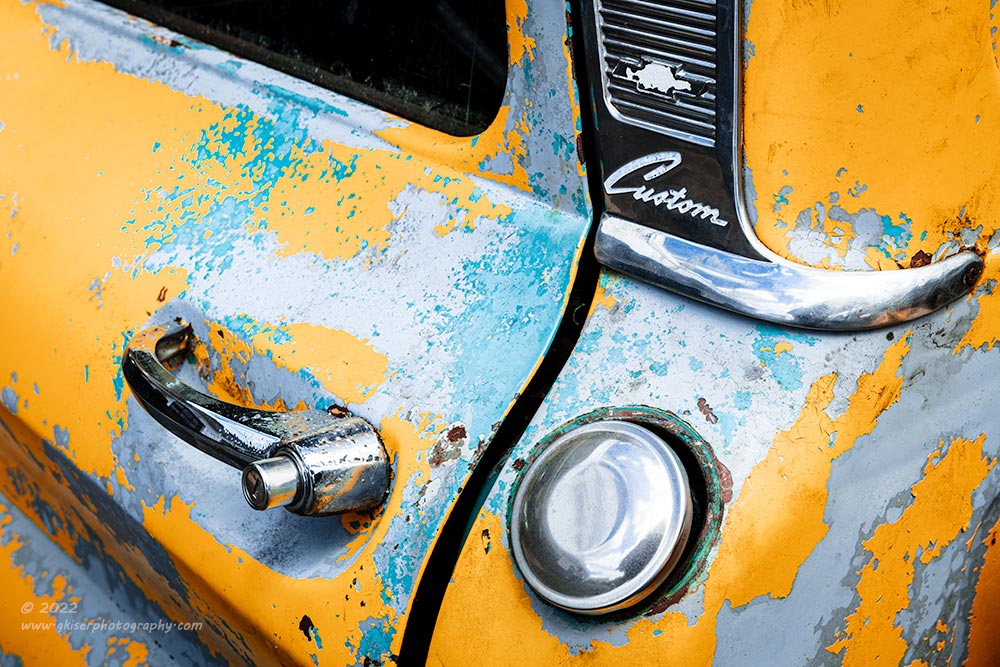
Comparison between photographers is a natural thing and it pushes us to get better. As long as we strive to improve, we will extend the possibilities in front of us. While frustrating, if we learn to look at all of our photos as steppingstones on the journey instead of the destination, we will always be open to improving. Even when I am completely happy with an image, I know that I can still improve on it. I know there is another level that I can achieve with it. This is a recent example from a trek which represents a constant urge to improve on automotive isolations. It incorporates a different angle than I would have usually attempted which brought in diagonals more than I had used in the past. I used color theory to spot the subject and then I edited it to enhance the colors to fit the way I needed them to. I used the existing natural light to sculpt the lines of the truck when I might not have given that much thought before starting my portraiture photography education. I love this photo, and it is in the running for one of my 12 most significant images of the year. Even though I love it, my hope is that in a few years’ time, I’ll look back on this one as a bad photo because I’ve improved far beyond it.
The further along in photography you go, the smaller the disparity between your bad and good photos get. Early on, you make big mistakes that are easy to see. As you get better and more consistent, the difference between a bad photo and a good photo might be one small detail. In the case of this isolation of the truck, the small detail was the inclusion of the edge of the chrome trim on the right. In another version, I had cropped in to omit that tip, but the resulting image lacked continuity between the upper pillar and the cab corner. By giving it just a bit of space, the eyes can move between the two areas freely and it makes a more cohesive composition. For the average viewer, that detail wouldn’t be consciously noted, but there would be an uncomfortable feeling when looking at the photo. It was that small detail that made the difference here. There was another one that I shot after making that adjustment where the shadow at the bodyline was deeper due to a less diffused sun. That shadow made the bottom feel too heavy while the more opened version had a better balance. Again, the composition was the same, but it was the light that made the difference between a bad and a good image.
Another way of looking at this example is by saying had I stopped at the first attempt, that would have made a good image. I would have been happy with it for the most part. However, by looking at it and seeing what could be improved, I made a better image, and another better image on top of that one. This single image represents two failed images and one successful image. Had I not paid attention to those “bad” images, I would have never arrived at the “good” image you see here. I’ve mentioned this several times over the years, where I expect a good day to have 10% keepers. That means one out of every ten images becomes one that I am happy with. On average, it takes nine bad images that lead to corrections to come up with one good image.
It is through experience with what doesn’t work in a photo that has allowed me to figure out what does work. If “client 1” or “client 2” were to have gone out and tried to recreate this photo, those little nuances might be overlooked causing them to be disappointed in their photos when compared to this one. What they might not realize is that their photo might be better than the other two that I did of this truck. I’ve just shot more bad photos than they have so I know the little things to watch out for better than they do. After another 50,000 bad photos I’ll look back on my favorite images in the gallery currently and be able to point out what makes them bad images and should have been improved on. This is the basis of the growth of a photographer in my opinion.

This is a recent capture that represents my first attempt at photographing this particular barn. I am really liking how it turned out and I owe its success to many of my not-so-great images that have failed in the past. Because I have shot quite a few barn photos over the years, I have had the chance to experiment with different compositions as well as weather conditions. I have failed more times than I have succeeded, but it was the experimentation over the years which I was pretty sure would yield a bad photo which led me to understanding different ways of creating compositions that actually worked very well. What I mean is this, don’t be afraid of creating bad photos. If you only try what you know to be a good photo, that means you are only doing what you have done in the past. We grow by stretching our boundaries and part of doing that means we fail from time to time. In fact, we fail more often than we succeed, but when we succeed, it opens up new possibilities for us.

I have gone through the many reasons why this photo is bad in previous Behind the Camera installments, so I won’t bore you with those reasons here. However, it does represent a learning process for me because over the years I’ve thought about why it doesn’t work. Part of that was I realized that I didn’t need to include the entire barn in the frame. There was no rule that said I needed to establish the entire shape to show that it was a barn. I just had to capture what was important about it. When I shot this, I really felt that I needed the whole thing which caused me to squeeze in the left side which showed the house behind the barn. That was a distraction, and there was no reason to include that corner. In the more recent barn photo above, while I was working out compositions, I used that lesson from a bad image to consider a different way of composing this new photo.
Knowing that there are times that including the whole subject is a distraction and brings in negative aspects, I considered picking the area that had the most visual interest to establish what was being seen. This was helpful because the barn was connected to another barn which wasn’t photogenic to the left by the walkway. I was going to have to cut the walkway at some point which made sense to the composition in order to separate the barns. By doing that, I threw the balance of the composition off when I included the entire barn. Knowing that the viewer didn’t need to have the whole barn in the frame to know that it was a barn allowed me to cut about half of the barn out of the frame forcing the attention on the parts that I deemed most important.
The difference between the old photo and the new one is huge. In this situation, they were both taken by the same photographer. Consider if you will, Greg from 2006 shooting the neon barn and being thrilled with the capture because of the state of decay which was represented. He was happy with the colors (he must be partially blind) and composition. It was a favorite photo of his at the time, but he happened to look at this black and white photo of a different barn shot by Greg from 2022. Immediately, 2006 Greg starts to compare the images and realizes that his photo is not even remotely the same caliber as what 2022 Greg has produced.
The part that 2006 Greg is missing is that 2022 Greg actually took that very same bad image and learned from it in order to develop the skills needed to create that black and white barn photo. Nobody picks up a camera and starts creating their very best work, and then continues to only make award winning imagery click, after click, after click. Nope, no matter what photographer we are talking about, they have failed more often than they have succeeded in capturing their images. The longer they are at it, the more failures they will have, but they will learn from those failures and ultimately create wonderful works of their own.
You will actually learn more when figuring out why a photo doesn’t work than you will by looking at one that does. To illustrate this, I’m going to talk about my portrait photography. When I get a successful image, it is easy to say that it is good. It is not as easy to know why it is good, or specifically what I did to make it good. It is through looking at my bad images that I can start to problem solve and say, “had I done it this way or changed that it would have been a better image.” When I have a bad image, I don’t just trash it, I explore it and think about what I needed to do to make it better. It is this routine which I am doing with my current photos that makes me be able to make those changes quickly on the fly during my portrait shoots. My bad images teach me a lot, and those lessons are beginning to bring about some really positive changes in the way that I do people photography. Of course, I am still comparing my images to those of other photographers who make it look so easy and that makes me feel less than proficient about what I am capable of doing. I just have to realize that those photographers have been at this type of photography longer than I have and have made many more bad photos than I have. Looking back, I have probably less than 2000 bad people photos under by belt at this point. That is a drop in the bucket for this type of photography where a session can be 500-1000 frames.
As with the example of the barn photo above, I have come a very long way in my portrait photography after having started it in the Spring of 2021. I had been happy with the results of that first session, but looking back on it now, I can see all the errors that I made. My most recent session was leagues ahead of where I started and if that photographer from 2021 was looking at examples from 2022, I’m sure I would have said that I would never be able to achieve that level of success with a camera. As we know, this is the same photographer, only a year apart with the only difference being that I have so many more bad photos under my belt than I did last year.
Bad photos are not really a bad thing. They are a part of life, and no matter what you are learning to do, it is the bad examples that provide the springboard for improvement. Show of hands…how many of you fell the first time you started walking as a baby? That bad performance didn’t define us as mobile creatures. It was just a normal part of the process to get where we are today. There was no sense in looking at your parents after falling that first time and thinking you will never be able to walk, run, or jump because they had fallen just like you had.
Your bad photos are more important than your good ones because the more bad ones that you have, the more truly good ones you will be able to create. This is why they say the best teacher of photography is to just get out and shoot. You are gaining experience with each exposure, and you are learning what works for your vision and your style. Don’t feel disappointed because something didn’t work, learn from it and figure out what you can do differently next time. Learning anything is really that simple.
Thank you for joining me this month. I hope that I’ve provided a bit of hope if you are feeling down about your own photography. We’ve all been there. Just remember that your bad photos are just as important as your good ones. Learn from them and figure out why they don’t work as well as you wanted them to. Be sure to join me next month when we talk about something that has recently been occupying my mind. I’ll leave it at that in case I change my mind about covering that one.
Until next time….

Remember to use the code KISER10 to get 10% off your purchase