Greetings, and welcome back to my monthly Behind the Camera feature. I imagine that by this point, you are getting a little stir crazy if you are a seasonal photographer. I’ve talked to more than a few photographers over the winter who have expressed the difficulties they are facing when it comes to going out and getting photographs. Even in the portrait world, unless you have a studio, it is hard to get out in the Winter for great photos. I even watched a video the other day where the photographer talked about the “doldrums of Winter” in relation to how little he gets out in the field to capture photos.
Believe me, I get it. I’m enjoying being out in the cold less and less, but this is the time of year when I can get less obstructed views of the subjects that I like to capture in the decay arena. The lack of vegetation makes a huge difference, and the bare trees help to tell the stories many times where the vibrant greens tend to change the mood to something else. I’m fortunate in the fact that I love decay photography and Winter is probably the best time to work on that. However, I know that there are many more photographers out there that don’t like the monotone look of Winter, and if you are in an area that doesn’t get snow that often, there can be very little which is visually appealing in the drab landscape around you.
So, where does that leave us as photographers during the Winter? Well, I’ve talked about ways of working photography throughout the year by changing what you choose to photograph, or by changing your way of viewing certain things. Hopefully, you have tried these things and have managed to get out more often than you would have normally. There is the possibility that none of my suggestions have helped which leaves you sitting by the window hoping for that first bit of Spring color in your area. If that is the case, or even if you are motivated to go out to get photos, but can’t come up with anything to shoot, we are going to look at other alternatives today.
I think that the main takeaway from this entry will be that you don’t need to actively capture images with a camera to remain creative, but you do need to engage in creative endeavors during times when you can’t go out with the camera. We are going to assume for a moment that all photographic options have been exhausted and you’ve even tried photographing foaming blue shaving cream on an orange CD case with a macro lens. Yes, I did that once. We are going to assume that this isn’t an ebb in your creativity which will happen from time to time. The situation is bleak, you want to get out and shoot, but there is nothing there that you want to photograph regardless of what season it might be. What can you do to stretch your creative muscles?
Well, let’s go with the obvious one to start out with. You have probably amassed a bunch of photos on your hard drive. If you are like most, you have kept everything that you have shot which means you have thousands of photos that have never been edited before, just sitting there on your hard drive. Even if you don’t, you have photographs that were edited long enough ago that you have learned many new techniques for editing since they were shot. In either case, one of the best ways to exercise your creativity is to open up the image editor of your choice and go back through some old photos for another look.
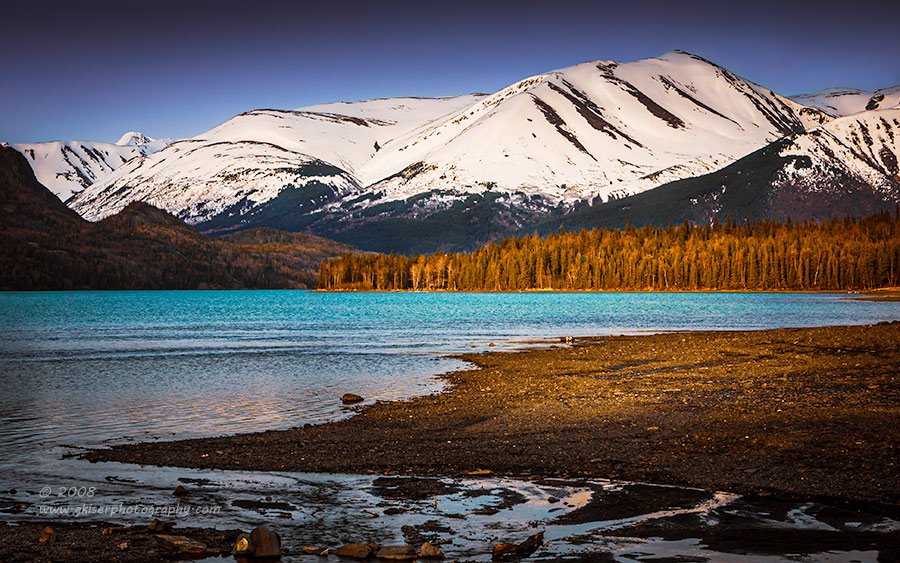
Back in 2020, when Toni and I were gradually moving into the new house and getting it all prepped, I knew that there was going to be a long time when I wasn’t going to be able to get the camera out. To combat that, I spent a few days doing some fresh edits on some photos from Alaska that were shot in 2008. Back then, I was only using Photoshop, and I use the term “using” loosely. I was a mess with it and really didn’t know how to utilize the features that were available to me. The edits that I did were workable, but not that great. Twelve years later, a lot had changed, and I was using Lightroom which made more sense to me. I had about four years of experience with the platform and felt that another run at the Alaska images would be warranted. I believe it was 19 images that I imported and did fresh edits on. Some were done completely different from what I had visualized before, and others were just more polished versions of the image like the one above.
The differences in the photos were night and day in most cases and I was very much impressed with how they turned out. It even breathed new life into the gallery room that I have dedicated to Alaska. It was more than just re-editing the photos though. This exercise was very beneficial to me from a growth standpoint. It allowed me to see just how much I had grown as a photographer when it came to image editing. It made me feel better about the photos that I had shot more than a decade before because what had been holding them back wasn’t my photography, but the edits that I had put on them. I even learned more skills doing these photos because I spent so much time working through them to make them as good as I possibly could which meant lots of local adjustments to control the light in the scene.
Having removed myself from the time of capture allowed me to visualize the photos independently of the actuality of the moment. This gave an artistic freedom that I really enjoyed. What started out as an exercise in creating blog content for the months that I was going to be out of play, had turned into an opportunity to breathe fresh life into photos that had been nearly forgotten. It was also a learning opportunity for me because I pushed my editing skills and molded the RAW images to a new story in many cases. When I was done with this project, I was more motivated than ever to get out and make new photos.
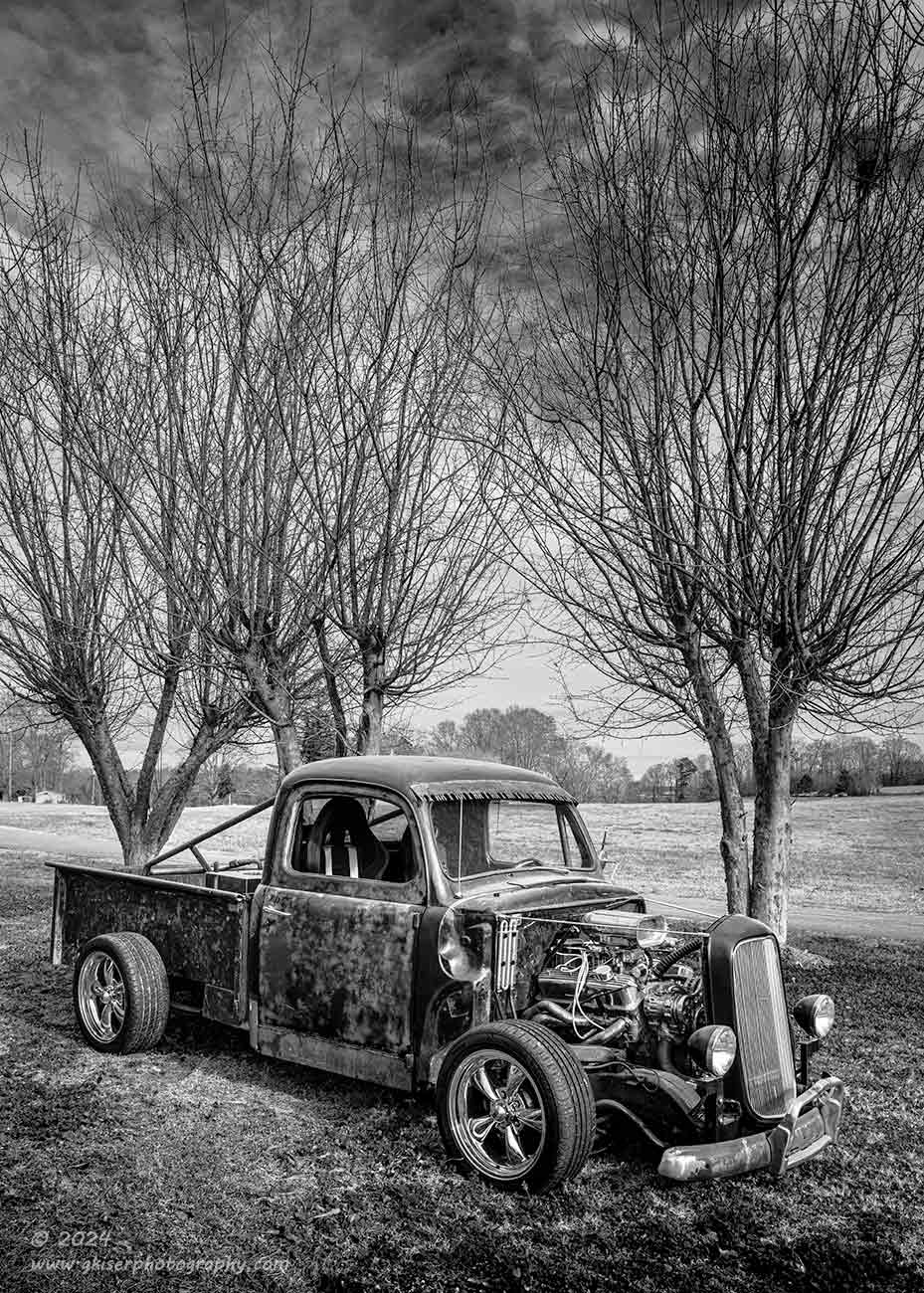
What if you haven’t been involved in photography for all that long, maybe just a couple of years, or even just a few months? We are always growing as creatives (if you are doing it right), and that means that with every time we make a photo, we learn something new. Just recently, while looking at how I am editing black and white photos, I went back to some old photos and started making some fresh edits. One photo ended up catching my eye which had never been edited in the past, but I had seen potential in the composition. This photo was only two years old at this point, but there were several aspects that were working together to allow me to create something great from this photo. First of all, my editing skills had improved, and the Lightroom software had also been improved many times over that two years. These two factors alone changed what I was able to do with the photo in the first place. Second, I was very much into doing black and white photography which had not been the case when I originally shot the photo. This gave me a much different direction that I wanted to go with the edit. The last big difference was that I was removed from the scene and the actual capture. I learned that with the Alaska images and knew that when I can look at a photograph just for what it is, I can let a certain amount of creative license come into play during the edit. This is hard when you can remember the actual scene from just a few hours before. You tend to keep the photo very true to the vision at the time, not necessarily what the photo could truly become.
I think that all too often, photographers forget the power that editing has over their photos, and when you are unable, or unwilling to go out and capture new photos, you really can work on this particular skillset in a much different way than when you are looking at editing through 100 frames from a day. You kind of become an editing conveyor belt in a lot of respects. When you pick a single photo out from an entire collection that you have already spent time on, you have a new mission in front of you. You become connected to that single image in a way that had not been possible before. You will spend more time on it and try different things. The pressure is off at this point, and you are allowed to be completely creative. The worst case is that you learn what works and what doesn’t with an image. The best case is that you arrive at that same conclusion, and you now have a new, or significantly different iteration of an image to share. In either case, you win as a photographer. There is no downside to revisiting photos from the past with a new eye and skillset.
Something else that you can do during those times when you just can’t get out and shoot is to address a problem that you might have figured out while looking for an image to re-edit. It is very easy for the photos to pile up on our hard drives, especially if you don’t delete the vast majority of the photos that you capture. I’ve talked to many mentorship clients over the years who keep everything that they shoot for those times that they want to re-edit something. Yes, that can be helpful and there are times when advancements in software and skill can really benefit a photo that you just can’t make work. However, do we really need 35 photos of the same waterfall from roughly the same angle, on the same day? If this is what you are dealing with, it is time to clean out those drives. Go through your files, and systematically delete photos that are out of focus, where the composition isn’t quite right, and those that are just plain not interesting. Leave the ones where the composition is good, and the lighting is good as those are the ones that will make for the strongest edited images. Get rid of the files that you know will never see the light of day. This is something that I do after every trek because I just don’t want to have to deal with the clogging of the computer from files that have no merit.
This could also be a good time to work on your system of organization with your files as well. This could mean indexing things by keywords in Lightroom if that is how you store your images, or it could mean creating your own filing system. This is one of those tasks that every photographer must do at some point because let’s face it, we end up with a lot of photographs as the years go on. I could take you through my filing system easy enough, but that would start to get kind of heavy for this particular entry. I will say that I have a system of folders set up with original RAW files as well as master files in a .tiff format which is what I use for any export or printing purposes. I keep the current year and the previous two years’ worth of photos on my desktop hard drive, while I keep the entire catalog of images since the beginning on five external hard drives. Yep, I have my images stored with a tremendous redundancy here locally so if I have a hard drive crash, it really won’t affect me. I could realistically have four crashes and still be OK. Starting last year, I have created cloud storage for my entire collection of master files which stays automatically backed up. This all keeps my computer running as fast as it can considering its age and allows for safety in redundancy for the photos which means that the chances of me losing everything is almost non-existent.
If you have found yourself in a place where your storage has gotten out of control, this might be a good time to address how you go about storing your photos. It is not as fun as doing fresh edits, but it will remove the stress of where to put the edits when you are finished with them. Removing stress is a great way of boosting your creativity as we have discussed recently. Regardless, this is something that has to be addressed before it becomes a problem, so why not do it while you are not able to go out and capture new images. Who knows, going through some of your old files as you are moving them will remind you of places that you want to return to for new compositions.

Something else that you can do when there is nothing else to shoot is to learn about a new kind of photography. If you have ever had an urge to do something different such as macro photography, or maybe still life photos, this is a good time to start that research. You can read books, watch videos, and get in your mind what you will need to make it happen. If this is something that you can do inside, you might have just found the excuse to get the camera out and give it a go. If you still have to wait for a while to actually do the photography, you will still be in a creative place as you start learning the techniques that are involved in the type of photography that you are wanting to learn.
What I have learned over the years from trying different types of photography is that all genres of photography are related in some very core ways. When I started learning portraiture, I learned so much more about lighting than I ever had with my landscape and decay work. The lessons that I learned dealing with how to light a person have paid huge benefits in my other photography. The same goes for doing the oil and water photography like you see above. No, it wasn’t the use of light, although, I was able to put an LED constant light to work with great effect. What I learned here was more compositional. I really honed my understanding of subject/ground and overall visual balance with this session. Those lessons have been put to use here recently as I have been focusing on isolations with my decay subjects.
Learning a new type of photography, whether or not you intend on pursuing it will always be beneficial. Even if you have no interest in doing it, just understanding the core principles that are there will open up your own knowledgebase for those endeavors that you really want to pursue. I was the world’s worst at shrugging off photography that wasn’t based in landscape. I would push away opportunities to do “people photography” which I am still paying for today. I have never wanted to do street photography, or sports photography in the past. However, each of these genres of photography offers new ideas that can be incorporated into landscape photography, and I include decay in with that since I handle the two very similarly. As I mentioned, the crafting of light in portraiture has really opened my eyes to how to harness the sunlight. I’ve learned more about focusing the viewer’s eyes through doing portraiture. Heck, I’ve even learned so much about color theory by engaging in portraiture.
Of course, I’ve taken on portraiture as another line of work behind the camera, so it stands to reason that I have learned a lot in relation to it. How about with street photography and sports photography? These are not areas that I have done anything with in practice. You are correct, but I have researched the concepts that go into these genres during times when I was not out shooting. I’m sure there is still much to learn by doing, but I have figured out a lot with how to use shadows by looking at street photography. I’ve learned a lot about timing of the photo if there are elements that are moving within the scene. I’ve learned different ways of creatively cropping a scene that really work by viewing street photographer’s work. Sports photography has opened my eyes to the power of freezing motion, and how to really focus the eyes on a small aspect of a photo while turning the background into a valuable element within the scene. There is something to learn from every type of photography, so why not study it when you aren’t out creating your own work?
Those times when there is nothing to shoot, make for great times to go scout. Grab your camera with no expectations for photos. Go to an area that you haven’t been before and just look around. See what is there, and what excites you. There will always be interesting subjects tucked away in plain view, but it might be the wrong season for the photograph. On the other hand, it might be the right time to capture it which is why I would recommend bringing your camera. This is usually not the case though, and you will be only scouting. Don’t worry about the light, just look for an interesting subject or scene. Think about composition and how you would want to frame an image. Once you have a composition in mind, think about what kind of light would work for the subject and what season might be best. Pull out a notebook, or something to jot down the idea so that you can come back to it.
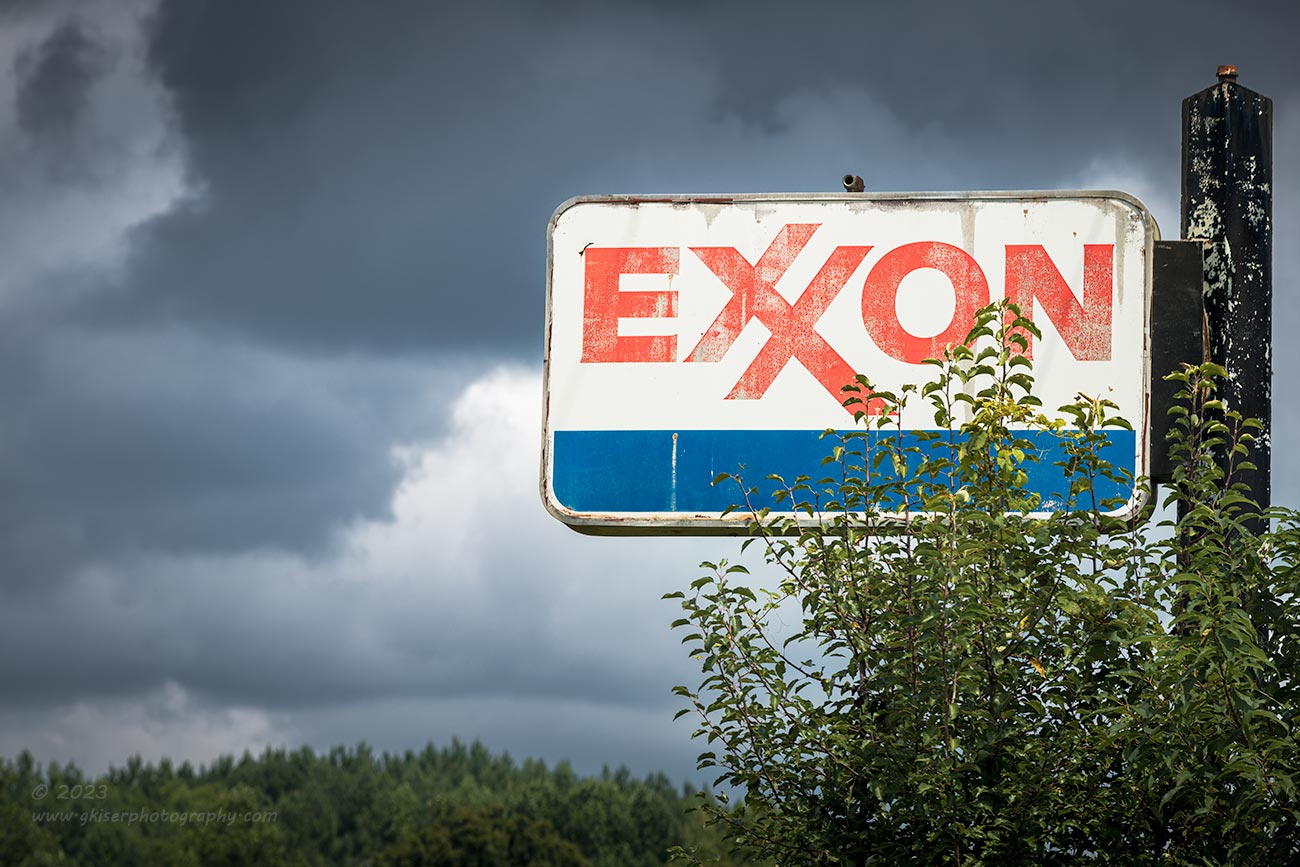
A great example of this kind of concept is this Exxon sign that is located near Lenoir. I had seen it when I was out scouting for photos years ago, but it wouldn’t work at the time. I had figured out a composition that would work, but again, it was not all that interesting because it needed more overgrowth of the vegetation. It was on a chance passing recently where I saw the vegetation had grown up around the base of the sign which was an element that I had already decided that it needed. A few days later, the weather was such that it filled the lighting needs for the composition that I had in mind. All that time spent scouting and thinking about this subject paid off because once the conditions were right, I was able to jump on the idea and create a photograph.
Just because you can’t get out and actively photograph things doesn’t mean that you have to put your photography on hold. Get out there and find things that you might be able to capture at a later time. The homework will pay large dividends when you are able to get out more often for photography. If you do the leg work during the off times, you will be much more prepared to take advantage of great conditions when they arrive.
I hope that you have enjoyed this installment of Behind the Camera. It is all too easy to think that being a photographer is easy and the photos flow one after another. The reality is there are just times when you can’t get out to capture photos either due to conditions or other factors. As you can see here, there are things that you can do to scratch that creative itch even when there are just no photos to capture.
If you have any suggestions for topics that you would like covered here, let me know. I’m always wanting suggestions for topics that interest you. I’ll be back next month to talk about how I listen to the landscape in order to capture it. Of course, if something else comes up in the meantime, I’ll come back to that topic later on.
See you next month!