Welcome back for the second installment of Behind the Camera for 2022! I will usually take this opportunity to discuss something that has been on my mind recently, or to answer a question that has been posed during the previous month. This month, I am going to talk about a question that came up during a recent Decay Workshop from December that I thought was an interesting topic to discuss here. Of course, I wasn’t able to do it last month as I was wrapping up 2021 in a single post. I’m almost positive that you are about finished reading that one by now, but if not, I’ll wait a little bit longer.
Wait…. so, you are only half through that one? OK, I’ll have to start without you. Just click back over here when you are done. This one won’t be nearly as long…. I promise (I hope)
Anyway, as I was getting ready for the workshop, I sent out my typical questionnaire for the participants where one of the questions was “What do you hope to get out of this workshop?” That is a simple enough question and one that designed to get me on track with what I need to be discussing through the day. The answer from this particular participant kind of caused me to stop and reflect for a moment. He stated simply that he was looking to create competition level photographs. I honestly wasn’t sure how I was going to approach that through the workshop and decided to do a little more digging to find out just what he was after with that question.
The long and short of it was he wanted to up his game and create more impactful images that looked as good as he envisioned them. OK, that cleared that up for me and reduced my stress level quite a bit. We ended up having a great conversation about the concepts behind competition level photography as compared to artistic photography. What we determined was that he was striving more for the artistic realm much more than the competition style of photography. The more we discussed it, the more I found I had a lot of opinions on the subject (big surprise there) and thought that it would be fun to hash it out here in Behind the Camera.
So, what is the difference behind competition and art photography? Is there really that big of a difference? Let me ask a question of you to get this started. When I ask you to think of a competition worthy photograph, what comes to mind? What qualities are you looking for? When I ask you to change gears and think of something that you would consider an art photograph, what then comes to mind? What qualities do you expect to be present in that piece? You are all thinking at this point, and I have no idea what those thoughts are, but are you thinking about the same photograph? I certainly don’t when I go through those questions with myself. To be honest, I can only put my images in one of the categories that I mentioned with any level of confidence, and I don’t expect to get any awards for any of them if that clues you in to which camp I think I am in.
I’m not going to climb up on any high horse here and say that one type of photography is better than the other. That will always be in the eye of the beholder with what they are expecting to look at. I would also venture a guess that each type of photographer envies the other type to some extent and wants to incorporate those elements into their own work. I think that those photographers that arise to the top of the field are probably those that can seamlessly blend the two types of photography the best out of all of us.
Boy, it sounds like there is a huge difference in competition photography versus artistic photography, so what is that difference? The more I thought about it, the more I came to realize that the differences are kind of night and day between the two on a fundamental level, but they can come together beautifully in the hands of the right photographer. I have no doubts that my photography falls on the artistic side more than the competition side and I’m fine with that. In that light, I will start off by talking about the competition side of photography and what makes it unique.

I felt like a photograph was warranted at this stage of the story, and this was the closest that I could come up with to illustrate the points that I want to make about competition photography. What makes a photograph competition quality? Above all else, it would be the technical aspects of it. This is where every minute detail is looked at through the entire image. Each element is critiqued down to the pixel level in many cases. A true competition piece is one where the technical aspects are the primary reason for the image. You are truly in competition with other photographers and a larger part of that competition is comparing your technical skill with the other entries. In short, the purpose of this type of photography is to excel in the textbook criteria of photography.
You may have guessed it. The origins of competition level photography will generally come from a classroom setting. Those that learn photography from a technical standpoint first and foremost will generally gravitate towards technically perfect images because those are the types of images where they received the most reinforcement. They spent their learning years striving to master each aspect of photography from exposure, to focus, to composition. At times, the subject matter was completely arbitrary and wasn’t material to the lesson at hand. There are times that I wish that I had that kind of technical mastery behind the camera.
There are plenty of elements in this photograph of mine that are not technically perfect. If you look at the reflections in the glass, they mess with the symmetry of the composition. There are places that have brighter highlights than others which would destroy this in a competition. The depth of field is perfect, as is the exposure. The processing is clean, and the lines all work together. These are just some of the things that are looked at with competition level photography. They are meant to be torn apart and dissected by the viewer to find issues with the overall photograph. In short, competition level photography is a nice way of saying that you are looking for “perfect” photography. At a competition stage, each image is picked apart which then turns it into a checkbox type of comparison rather than an emotional reaction from the piece.
Now, I know that we are all looking for “perfect” photographs every time that we press the button, but if we are honest with ourselves, do we ever really achieve that perfection? Trying to find that perfection is a dangerous road to travel as well. There are so many technical aspects to a photograph that have to be looked at to arrive at that perfection. Most of these aspects have nothing to do with what is being captured as they are all dealing with the “how” that subject is being captured. In the quest for perfection, you will sometimes miss that human connection with your photograph, which is why I fall more on the artistic side of things. I don’t want to be so driven by technical perfection that I toss an image because the corners are a bit soft because I was shooting at a very wide angle. I also don’t want to toss an image just because there is a little digital noise in the shadows. Of course, I try to minimize that when I can because I am aware of the technical aspects that make a successful image.
Going back to the image that I added above, when I saw the scene in front of me, it was a bucket list photographic idea that I had been considering for quite some time. The strong geometrical lines and contrast drew me in. I knew that a big portion of this shot was going to be the technical end of it, as I had to watch for converging verticals and had to get the balance just right. The processing was going to have to be a certain way as well. I was dealing with a very narrow focal length, so depth of field was going to be a huge consideration and I had to mitigate the reflections as best I could. I was very fortunate that the lighting was fairly steady as I worked out all of the above concerns before I could capture the image.
Is this a competition worthy image, not really because the reflections mess things up quite a bit. I could have gone in a done some Photoshop work to the glass in hopes of getting to that point, but it was the reflections in the glass that gave the image soul and a personality. It is that human element that it needed for my vision. The idea behind the photograph here was to introduce a scene that connected with the audience on a level where they didn’t see a building as much as something kind of sci-fi or industrial. Not only that, but I was concentrating more on the art than on the technical aspects with what I was wanting to produce. I should also mention the composition, which really doesn’t fall into one of the “rules” of photography, although it loosely follows the rule of thirds with the deck feature across the lower third of the image. Short of that one element that adds visual tension, the composition is largely symmetrical.
So, what makes forming an artistic photograph different from a competition level photograph? I’m glad you asked!
You are still creating a photograph that you want to be good. You are using what you know to capture a certain aesthetic quality to essentially create a photograph that connects with a viewer. It starts with an idea which is then fleshed out with the use of the tools at your disposal. What sets this apart from the competition level photography is that the emphasis is not on the technical merit, but rather the subject matter and concept. The execution of the photograph can fall secondary in many cases because there is more latitude in art which can be very subjective while technical proficiency is rather objective.
The artistic spectrum of photography usually stems from a different origin than that of the competition level photography. Here, the photographer spends there time early on with seeing the world around them and figuring out how certain things look when seen in different ways. For me, this is a more organic way of learning photography because you start out by seeing things that you want to capture. You then spend time learning the parts of photography that you need in order to successfully make an image out of that scene. At least in my case, I took things very slow and created my own path of learning that answered the questions that I had as they came up. I didn’t start off by enrolling in Photography 101 and going through a bunch of extra learning steps that would teach me how to photograph anything. I just went right for the specific types of photography that I wanted to learn. I’ve talked to so many photographers that have gone through school and heard what they had to learn in order to get through the classes. As a landscape photographer, shooting digital, I had no need to learn how to use a handheld light meter, but that is a big part of going to school for photography. Ironically, some 15 years later, I’m having to learn how to use a light meter for flash exposures because that is where I’m at in my own personal journey.
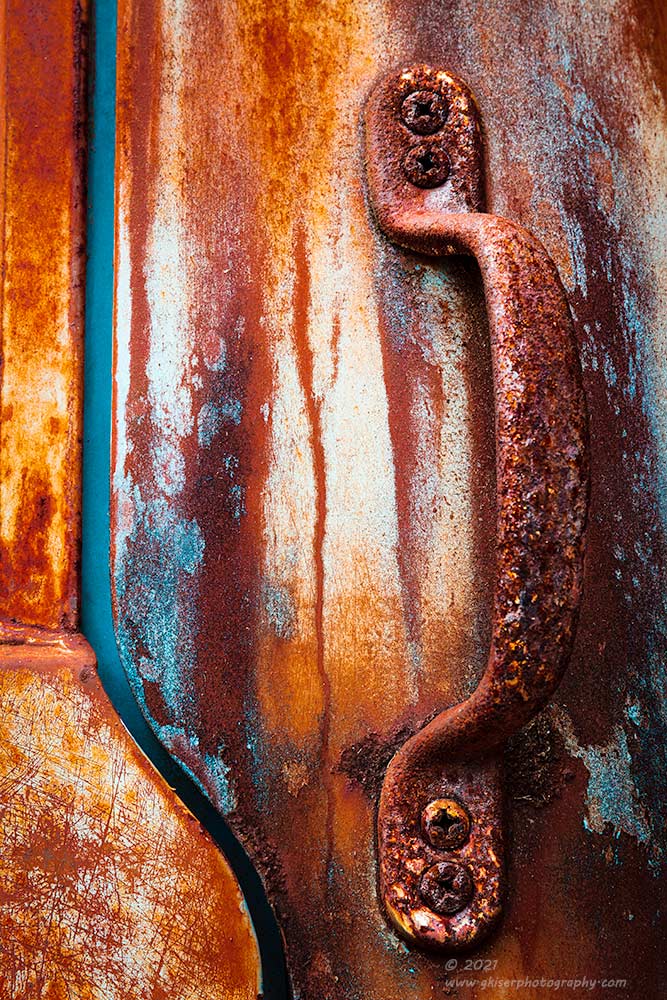
Back to the comparison. I’ve chosen this image because it falls much closer to the art end of photography than the competition end. What makes this one different is that I created this image based on an aesthetic concept dealing with color theory. When I saw the warm orange tones of the rust matched with the blue of the truck cab, I knew that I had a good combination of colors. From there, I looked for a composition that would work but still highlighted those two colors in a way that made sense. By working with the jamb of the door, I found a very clean example of the original paint, and by working my way up the door, I found a door handle that mirrored the shape of the seam. I framed this as an abstract shot but did it in a way that you kind of know what you are looking at. If nothing else, you see the handle and you can just about feel the texture of the rust which has overrun that handle. You can see the patina of the metal compared to what it used to be. This draws you into the image and makes you feel a certain way, even if it is just a tactile memory that you have of touching a very rough surface.
Technically, this image is probably sub-par in a competition field because I have flipped the image from left to right to get a better flow, so it is no longer true to the original scene I captured in that respect. The image is heavily processed to bring out the details of the rust which made them much more prominent than they actually were which brings in certain artifacts into the pixel level of the image. I’ve even changed the hues of the colors slightly to better fit my vision of the scene. All of this would probably be frowned on for a “competition themed” image.
It is a good thing that I wasn’t going for a competition quality image here, but rather an artistic image. I strongly feel that an artistic image is one that creates an emotional connection with the viewer more than anything else. You are capturing a moment and a feeling with your camera with the hopes of sharing those feelings with the viewer who never saw the scene in person. It can be messy, and it can have issues like a blurred weed that should have been rendered absolutely still. There could be a little bit of blur in the background because you didn’t quite have the depth of field you should have had. Maybe the composition doesn’t fall within the narrow “rules” that photographs are often judged by. These little idiosyncrasies fall by the wayside when you are evaluating an artistic image because you are going for something based on your gut, not based on a photography manual.
As I spoke with a couple of the participants during the workshop about this concept, we started to see that they both were wanting to learn more about how to capture that gut reaction and to have a connection with the audience. It isn’t that one is better than the other, and please don’t get me wrong on that point. I’ve seen it many times though when folks think that they want to create competition level photographs they tend to forget the reason behind the photograph in the first place. So much time is spent on settings and focal length that they overshadow the feeling that they are going for. Think of it this way. There is a scale to photography, and you will always be able to choose which side of the scale you are wanting to strive for with your photographs.
Technical Perfection <————————————————————–> Emotional Connection
Competition /\ Artistic
When you look at that scale, try not to view it as an on/off switch. The correct answer will never be either/or in this discussion, but rather a blending of the two. Personally, I think that the most successful photographers out there have a way of blending the two right down the middle where they match their artistic qualities with their technical prowess. I would love to say that I am there, but my photographs usually have a stronger lean to one side or the other with the vast majority going towards the artistic side as seen by the arrow above. I hope to achieve that perfect balance between the two at some point in my career, but I’m happy as more of an artistic photographer than a technical master. I do spend a great deal of time considering the technical aspects and do teach those regularly. They are looked at as a means to an end while the focus of the photograph is the subject and the story.
The pitfall is at either end of the spectrum. Those that concentrate on the art of photography and capturing that emotional connection without any regard to the technical aspects of it, are doomed to create photographs that don’t convey what the photographer was hoping for as they aren’t considering how the camera sees things and how they need to control the camera in order to capture that emotion. On the other hand, is the technical master that has taken all kinds of classes and read lots of books but doesn’t have that instinct to recognize a scene for what it is. All of their pictures will be perfect in exposure, focus, depth of field, and composition, as well as processing, but the subject matter will be uninspired and won’t connect with the viewer. Neither of these polar opposites will have a successful body of work as you have to understand both sides in order to create meaningful images that work.
An interesting concept has hit me at this stage that I think is beneficial to our conversation. I think that in most cases, the photographer will enter the craft with a much stronger lean on one side than the other. The successful ones will understand which side they fall on and will try to grow on the other. for instance, when I started out with photography, I was much stronger on the scale for the artistic end. What I mean was that I knew the scenes that I thought were pretty, but I had no idea how to capture them. I grew as a photographer by learning how to capture those scenes effectively and figuring out what equipment and skills were needed to get there. These days, I find myself looking into the realm of people photography and finding out that I am on the opposite side of the spectrum. I now have a much stronger background in the technical end of photography and I’m having to develop my skills from an artistic side in order to create the images of people that have that emotional connection rather than just a sterile photograph.

For a photographer to be truly successful, they have to continuously grow in both directions, all the time. It can’t all be about shutter speed and depth of field, and it can’t all be about the scene before you either. Take this recent image for example. I have shot this scene several times over the years and each time it has looked different. That is partly because the waterflow and the foliage have been different each time, but more importantly, I have been growing as a photographer. On this most recent trip, I understood more about what I liked about the scene and why the composition worked. I have learned more about how to set the camera up to capture scenes like this. With the water moving very fast, I knew that I wanted to get the texture which was a function of the shutter speed. I’ve never really worked moving water at this fast of a shutter speed before, but knew that technically, it was what was needed to convey the power of the water and to elicit that emotional response from the viewer. To support the composition that I had in my head, I knew that I was going to need to have a very wide depth of field which meant keeping the aperture stopped down which normally would force a slower shutter speed. To combat that, I had to raise the ISO which was going to add noise to the image which I was then going to have to deal with on the post processing end. Essentially, to get the artistic vision across to the viewer, I had to have a good bit of technical know-how. This is one of those images where I think I fall closer to the middle of the spectrum between art and competition which is a very good thing. Each part plays a very strong role in the success of this image.
Had I not had the technical end down on this image, the water would not have appeared as it does and that would have changed the feeling of the image. The depth of field might not have been deep enough to bring your eyes back to where the warm tones of the bare trees in the sunlight introduce that much needed color contrast to the scene. Even worse, the focus could have been more to the back of the image while leaving the all-important foreground to go soft and reduce the impact of the opening portion of the photo. Without the artistic view of this scene, I wouldn’t have noticed the arch of the trees that frame the secondary element of those warm trees in the background. I wouldn’t have seen the angle to connect the flow of the water with the background for a cohesive image, even though it only loosely follows the compositional rules.
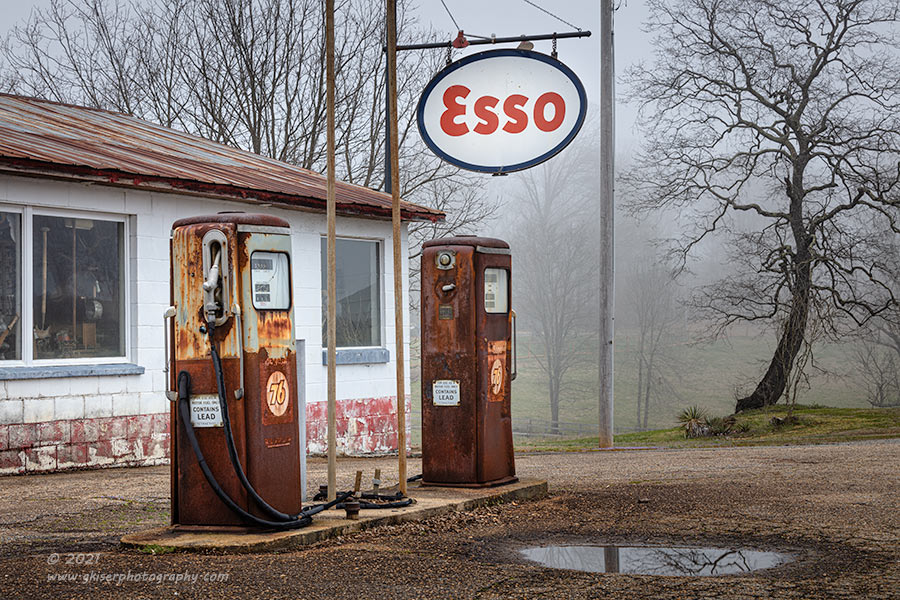
Here is another example of a recent image but the scale is tipped more towards the artistic end of things. This is all about emotion and connecting with the audience. There are some considerations here that would inch the image away from being a competition level photograph. Sure, the technical end is in pretty good shape with this one. The focus is right, as is the depth of field. The exposure is great as are the colors. The composition works to tell the story, but it is the composition that starts to fall apart when looking at it from a competition standpoint. If I were judging this in a competition, I would be knocking off points for the lack of interest in the puddle’s reflection since the contents don’t add to the photograph. I would gig it for the pole that is just on the inside of the right window leaving a sliver of the window visible. I would even point out the fact that the right post was not fully overlapping the post that holds up the sign. These are all minor quibbles, but for a competition level entry, I would have to consider those aspects since the image would be in competition with top notch photographs. I actually did consider these shortcomings while I was in the field which is why I was able to rattle them off so quickly here. As I tried to fix those things, other problems popped up, and the more I tried to get those aspects right, the more that the soul of the image got lost. I had a string of compositions from here as I tried different things, but what was better technically, was not as good artistically. I was wanting an artistic rendering of the scene, so I accepted some technical errors in favor of how the image felt overall.
Now, you as the viewer probably didn’t even notice those little things that I pointed out. If you did, that is great, you have a very technical eye and that will serve you well. For the most part though, those minor issues don’t matter to the viewer nearly as much as the feeling that they get when they are looking at an image. It is that connection with the viewer that I am always striving for and how I teach photography. For me, it is the impact of an image that is most important and keeps the photograph alive in their mind while a technically correct image might be a little sterile and lack soul.
That was where I really had a hard time addressing the want to build competition level photographs into his portfolio during that workshop. It was going to start with gear, and he was going to need to invest in much higher end equipment than he was currently using to satisfy the pixel peepers that would be evaluating his photographs. He was then going to have to learn to use that gear to the greatest extent possible. He was going to have to have a complete understanding of the features of his camera and how to make them all work together perfectly, while knowing how to process an image with the least amount of artifacts being introduced. In short, we were talking about relearning photography from the ground up with zero emphasis on subject matter. It was all going to be identifying the boxes that needed to be checked, and then figuring out how to check them off one by one. This is what that would look like in practice:
Find camera with the best technical specs X
Get the highest quality lens with the sharpest glass considering distortion, falloff, and vignetting X
Use a shutter release on a very stable tripod X
Organize the elements in the scene based completely on a compositional rule X
Make sure that there are absolutely no distractions in the frame X
Select an aperture that allows for the perfect depth of field, while not introducing diffraction X
Find your focus point that achieves that depth of field X
Set a shutter speed that addresses the movement in the image X
Find an ISO which will work with the above two portions of the triangle while not introducing too much noise X
Realize that you are going to have to make a compromise on one or more of the above because this can’t be perfect X
Take the image X
Edit the image with care down to the pixel level X
Constantly look at the image at 400% resolution and make minute corrections until it is absolutely perfect X
Does that sound like fun? Where is the effort spent on the subject? You will end up with a technically superior image but will likely have missed the point of the photograph. If you are striving to be just an artistic photographer, your checklist will look a lot different. This is how it would most likely look:
Ooooh, that is a pretty scene, I want to photograph it X
Pull out whatever camera you have with no regard to framing X
Press the button as you slightly jerk the camera causing camera shake to blur the image X
Keep on walking X
Post on social media to collect likes X
Ok, this sounds like a lot more fun, doesn’t it? It definitely isn’t a stressful way of looking at photography when compared to the technical master above. However, imagine the photograph that would result from this approach. The purely artistic photographer with no technical ability is nothing more than a snapshooter that recognizes beauty but doesn’t know how to capture it. I’ve said it before that a photographer becomes an artist when they take steps to improve on their photograph beyond the snapshot. Here is your opportunity to truly become an artist with your camera while striving to move towards that middle of the scale between competition and art photography. That is what I strive to teach since that is where I’m most comfortable with photography. Here is what the checklist might look like when you are concerned with the middle of the spectrum. Although, this is more instinct than anything and the list has no real order to it. You will also notice that there are a few more steps here, but you are bringing more into the mix by working in the middle of the spectrum. The more familiar you are with either camp, the more automatic those steps will be.
Hey, that looks like a pretty scene X
Walk around and look at the angles to find a composition that works X
Consider the perspective you are using and where the emphasis is for the viewer X
Figure out what lens in your bag will work best for the scene and put it on X
Are there any filters that might help the scene? X
Figure out which of the exposure triangle is most important and find the best compromise you can X
Set your focus point to arrive at the most logical sharpness in the image X
Use a tripod if your shutter speed is too slow, or to just ensure a tack sharp image X
Check your edges to make sure that nothing pulls the eyes out of the frame X
Shoot and repeat if you want to change something X
Evaluate the photo to make sure that you are getting an emotional connection to the scene X
If not, play around with the steps until you achieve that reaction X
Would there be a better time of day, or different season that would work better for the subject? X
Edit to enhance the intended mood of the image X
Call the photo done and hope that others like it as much as you do X
With this chain of thought, you are more interested in how the photo feels than how it looks from a purely technical point of view. You see something that excites you and you put whatever tools you have in your possession to work to capture that moment. You don’t need the highest quality equipment to do this because we aren’t worried about staring at the pixels as much as we are looking into the image and seeing the emotion behind the photograph. You do still need to have an understanding of your equipment and how to make it work best for you. You just don’t have to have a PhD in photography to get to this point. The point of photography is to have fun with it more than anything else. If you are a gear nerd and love the technical aspects, then concentrate on that. Spend time reading reviews and looking at technical specifications before buying your equipment. Just don’t get so caught up in that to the point that you forget to go out and make photographs. Shoot what excites you and in a way that is true to yourself. If you don’t want to be bothered with all that techy stuff, pull out your cell phone and capture the images that strike you. Keep it in auto mode but pay attention to the zoom and frame the image with thought. If you fall somewhere in the middle, then you are like the vast majority of photographers out there and you are in great company. Embrace both ends in order to arrive at the images that you are most proud of. It is those of us in the middle that get to learn in both directions and stretch out boundaries as both artists and technicians with our cameras.
It is fine for art to be messy and not as polished as maybe it should be. In the name of art, you can let a lot of the technical things go which makes it more fun to create and also to look at. It is that messy quality which is a reflection of the person that captured the image. It gives the photograph soul and an energy that a perfectly technical image will lack. However, the further you stray from the technical end, the less compelling an image will be, since it will have a hard time presenting the vision in the way that it was seen by the photographer. This brings us to an interesting point in the discussion between art and competition images that I haven’t even touched on yet.
That point is what images work best for competitions? When I figure this out, I’ll be the first to let you know. I have yet to figure it out on any sort of reliable basis. You would think that an image that excels in the technical end would do the best in competitions, and that is certainly the case many times. However, the one competition that I have had the best luck with has been with images that are stronger on the artistic scale but dealing with a very narrow type of image. This is rare and due to the venue, which had the photography competition as just a small portion of the overall exhibit. When you get into more dedicated photographic competitions, even including camera club competitions what wins will usually be the one that exhibits the highest level of technical prowess. I mean it is a competition between photographers and that means comparing skills more than anything. The images that are selected for competition are usually the ones that are perfect in as many ways as they can be. The one that wins is usually perfect in the majority of ways. Now think back on photo competitions that you have seen and try to remember what has won. I bet you are struggling with that one. Now think back to the last photograph that you saw that made you stop and look. I bet that photograph is still a detailed memory and that is because it touched you emotionally. I also bet that it wasn’t perfect in all areas.
As photographers, we each have an ideal where we want to end up. Some strive for those perfect photographs where every pixel is considered at the expense of the emotion. Some just go on gut and throw the technical aspects to the wind. Both of these methods can see some level of success, but when the two come together, you get an image that has no glaring discrepancies and also captures the attention of the viewer while connecting through emotion.
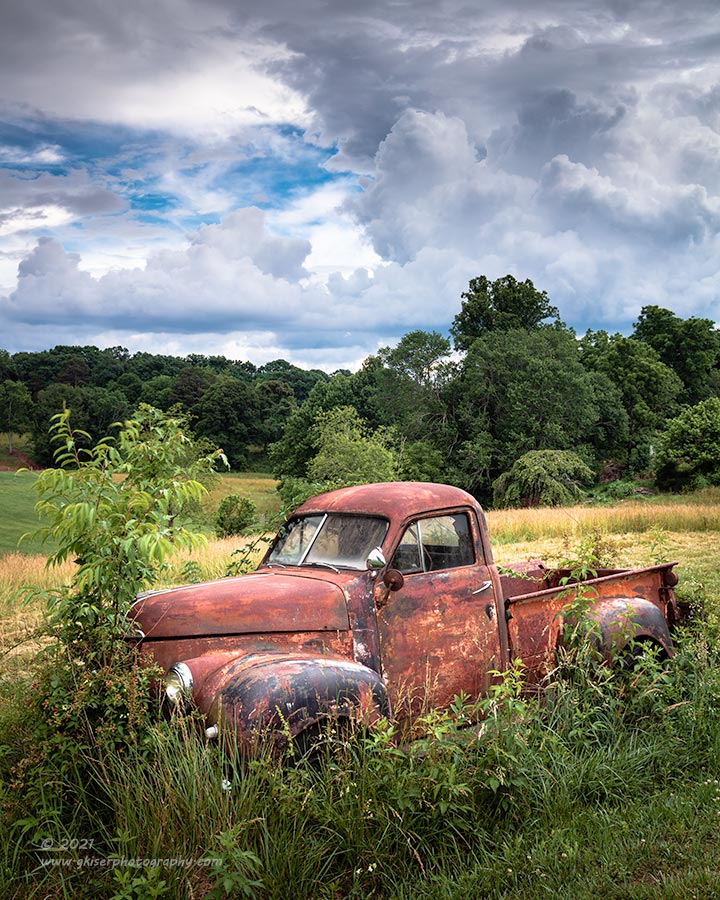
For me, I’m happy with creating images that might have a few irregularities like a weed not perfectly still or having a little bit of diffraction but have a stronger connection to the audience. I want to create those photographs that cause people to stop and look at the scene and then bring their own thoughts, memories, and emotions into it to complete the story. Sure, the photo could be ripped apart from a technical standpoint at least in the details, but I really don’t mind since the reason for the photograph is the connection. As long as I can achieve that with an image, I have achieved the success that I was after.
Thank you for joining me for this month’s installment of Behind the Camera. Barring something else coming up between now and next month, you can look forward to a more detailed introduction of my new Mentorship Program. This is something quite new for me and I wanted to take a little bit of time to really talk about it and what it can do for you. Of course, if there is anything that you would like me to discuss here at any point, please let me know. I’m always looking for engaging topics that will get your minds going.

Remember to use the code KISER10 to get 10% off your purchase