But….yours are better, in their minds.
Welcome back to another month of Behind the Camera. For those who aren’t familiar with this feature, I will pick a topic each month to discuss dealing with photography. Some months it is very personal to me, like this one. While other months it is more generic to photography as a whole. This month I’ve chosen to talk about a concept that I was introduced to last Fall if memory serves. It is something that I really hadn’t considered on any deep level, but when I heard it, it just clicked with me.
Essentially, the statement went something like this: Face it, other people’s photographs are better than yours. However, your photos are better than theirs from their perspective. How’s that for a non-committal statement. if you read it fast, it just sounds like a bunch of double talk without actual reason to it. Once you go back through the statement a couple of times, you really start to figure out what is being said. I’m here to tell you that this statement is very true in many ways and it is worth discussing a bit here.
I’ve talked about imposter syndrome in several different blog entries as well as many time in the Behind the Camera feature. I’ve felt it more than once, and probably more than a hundred times. It is one of those sensations that I think that every creative will feel from time to time when they think they are not as good as they thought they were. The next thought that will come to mind is that others don’t really like what they are producing. It is easy to feel this way because it is human nature to compare yourself to others. As they say, comparison is the thief of joy…yet another quote that is worth hanging onto.

Think about it, while you are scrolling your favorite social media outlet, or if you are old school and you are out and about in public looking at, say, wall art, you will have a reaction to every photograph that you see. The same can be said about paintings, sculptures, etc., but for the point of this entry, I want to keep it specific to photography so I can keep it succinct. The reaction goes beyond the fact that either you like it or you don’t, especially if you are a photographer yourself. As humans, we are hardwired to compete on a base level, and our reaction to any photograph that we see will include that comparison. Sure, there are times when you feel that your work is better in some respects, but more often than we will give credit to, we feel that the work that we are seeing is so much better than anything that we could come up with. We start trying to go through our own catalog of images to try and determine if we have anything that can directly compare and then we look at the amazing image in front of us and wonder how they did so great at capturing the subject.
We are missing a big part of the equation when we look at it like this. On the face, there is no doubt that the other image is far superior to our own. The images that we have selected in our mind to compare with what we are seeing all have flaws and issues which we wish had been dealt with differently. They are nothing like this perfection that is on display in front of us. What is there to miss? A photograph is just that, a recording of visual data from a small snippet of time. It is what it is, and makes no excuses. It seems pretty straightforward and if you look at a photo and determine it to be better than yours, it must be.
I don’t think that it is nearly that clear cut though. What you see from another photographer is a final image that has been culled from several variations and then post processed to bring it as close to the vision that prompted the photo to be captured in the first place. You are seeing the polished result of a series of attempts that might have taken place over many years as the photographer waited for the right conditions to appear. That is where your response is based, but you are missing all of the uncertain decisions that the photographer went through. You don’t realize that the photographer is looking at this same photograph and wishing that there was something different either in the scene itself, or something different in the way that they approached the composition. They see the “fixes” that had to be done in order to get the exposure to look right, and certainly remember what the photo looked like straight out of the camera before any processing had been done. They might even look at the photo and know that there are new techniques available that would have much more efficiently handled part of the processing and would have resulted in a higher quality end result.
What you see, and what they see are usually two completely different things. You are in awe of what has been created, yet they see all the areas where they want to improve, or should have done better at the time. Who is right? Well, I know that I am my own worst critic and will beat myself up over the silliest of oversights in a photo. I have to imagine that every creative falls into that description more often than not. For those creatives that create work to display, I have to assume that they are creating at least in some regard for the reception of an audience. In other words, the creation of the image is done in hopes that an audience will like it. Therefore, if the audience loves the work, then I think that is probably the best metric for a response in the eyes of the photographer. This doesn’t mean that the photographer is wrong to feel like they do about their work, it just means that they are driven to improve while the audience is able to just enjoy what has been created.

What about the other side of the coin? For all of you who are tough on yourselves like I am, there is hope. Even if you have imposter syndrome 24/7/365, I can promise you that there is somebody, somewhere that will look at your work and be amazed at what you have created. More than likely, there are a lot of people like that. We tend to forget that by the time we are comfortable enough to share our work, we have spent some time learning something about photography. That has brought us to a place where those who are just thinking about starting, or who just enjoy looking at photos will like your photos quite a bit. There is a huge pool of folks that know nothing about photography other than whether or not they like the photo. That is the only criteria that matters to them, while us as the photographer look at all of the nuances that we understand which goes well beyond “the photo.”
These are the easy ways of looking at it, but I want to step it up a bit and talk about peers, or near peers. I’ve witnessed this first hand through my workshops and it is something that I would love to study more if given an opportunity. To set the scene, I offer workshops because I have 20 years of experience as a photographer that I really want to share with others who are wanting to learn the craft. I’ve paid my dues and I’ve put a lot of time and effort into growing within the craft of photography. I market my workshops to photographers of all different experience levels with the hope being that I will be able to kickstart a long relationship with photography for somebody. The ones that will usually attend my workshops are those that are self-described enthusiasts and a fair amount of seasoned amateur shooters. I end up spending a lot of time with all of these photographers during the course of the workshop and within the past year, I have been concentrating more on seeing the final edited images from the day as well. I’ve been inside of the photographer’s head as I help them work through compositions while I listen to how they are actually seeing the scene. I’ve seen the images that they have come up with in the camera and then a fully edited, final product. There are more times than I can count that I am wholly impressed with what I am seeing and have thought many times over that they saw the scene better than I had. I’ve even gone back at later times to some of the locations and used their compositions as inspirations for my own images.
It isn’t just during the actual workshops that I feel that way. There have been several clients that have signed up for my workshops that I have even asked them what they could possibly gain from attending that particular workshop because I felt they were far ahead of the curve for the group that I was targeting. In a couple of cases, I’ve even said that they are even better at that particular type of photography than I am. These are not just empty praises designed to foster confidence in my clients. No, I am speaking the truth and I’ve had a lot of clients, even repeat ones that I feel are on the same level as I am, if not better in some regards. Yet, they keep coming to my workshops and paying me for what I know.
I’ve asked why this is to a number of them, or paid attention with great interest when they are talking about what they gain from the workshops. Without exception, these photographers, who I view as stronger photographers than myself say that they always learn very valuable information from me. From their perspective, I have knowledge, skills, and ability, that exceeds what they think they have. In all actuality, I would say that a good portion of my workshop clients are at the very least near-peers to me and we are functioning on the same level. There are just some aspects that I might be able to help them figure out which is why they attend the workshops. I’ve said many times over, that I learn as much from these workshops as I teach. This is because those in attendance also have great ideas that I haven’t considered before, or maybe they have figured out how to do something better than I have. A good workshop will always be a give and take and I want all of us to be enriched from the experience.

Consider social media for a minute, especially if you are a photographer that is still learning. You spend a lot of time researching different skills and techniques while constantly shooting new photographs. You put yourself into a mindset that everyone else’s photos are better because you are looking to everyone else for inspiration and pointers. What you don’t spend enough time thinking about is the fact that your photography is constantly getting better and better. While you are striving to achieve and feeling like you will never get there, you are actually creating images that other photographers are looking at the same way you are looking at other’s work. Sure, there will always be someone who is better, but there is also someone who just isn’t where you are yet. I think that it is important to keep that in mind as we constantly compare our work to the work of others.
It is far too easy to get down on ourselves because we are looking at photography that is better than our own. We don’t tend to spend much time looking at photos that aren’t representative of what we want to create because that serves no purpose unless you are wanting to demean the photographer. If all we do is look at work that we wish to achieve, we are left seeing our own photography as missing the mark. This is where imposter syndrome really comes from I think. We discount all the progress that we have made and only look to what we still need to learn. Here is the cold hard truth of that. In photography as in so many other crafts, there is no end to the learning. There is no finish line. There is always something else to learn and a better way to do what you have been doing. Where you are on that sliding scale is a guess for anyone. If you have put in the work to learn your craft and have practiced it, you have earned the position that you are in whether you see it or not.
One of the things that I have found fascinating over the last few years is in watching YouTube. This is something that I started several years ago to help learn about photography as much as I could. Of course, by this point, I had a strong foundation thanks to books and magazines…you know, words that don’t rely on a power source or internet connection. I started out looking at landscape photographers and was able to learn a good deal from them, but as time went on, I started to get bored with the videos, or would just watch for the entertainment value. A few years ago, when I started out in portraiture, I hit the videos hard as well as many books. It was time to learn a whole new discipline of photography that I frankly knew very little about. I would pay very close attention to everything that was said and tried to commit it to memory as well as putting the tips into practice when I was actually shooting portraiture. The learning curve was very steep, but eventually slowed down. These days, most of what I watch falls into the entertainment category, or something that I half listen to in hopes of getting that next little trick that might help.
Looking back on this phenomenon, I have been able to deduce that in the beginning, I was looking at these photographers as representations of where I wanted to be with my own work. Slowly over time, I rose to their level in enough respects to where I didn’t have that same hero worship that I once did. Did their work trail off and get worse? Absolutely not! Mine just got better and I have been having to find other avenues of learning which are more advanced than what I am seeing on my favorite YouTube channels. However, I still see my portrait capability as being sub-par. When I compare what I am creating now, to what I did when I started out, I’m miles ahead of where I was. I’m also at a level where others are wanting to strive to achieve. Yet, I am still feeling like a total beginner in portraiture. This is at the crux of what I am really talking about this month.
It is a good practice to check yourself when you start feeling that way. Look back at what you were producing when you started out. Go through the years if you have been doing it that long and compare to yourself. You will see improvement in all aspects along the way. This is what you want to see, and with that growth, you are achieving goals that have been set by yourself along the way. Enjoy those successes and understand what you have gone through to achieve them. Also understand that what lies ahead of you had been totally out of reach when you started out. The only comparison that matters is the comparison to yourself.
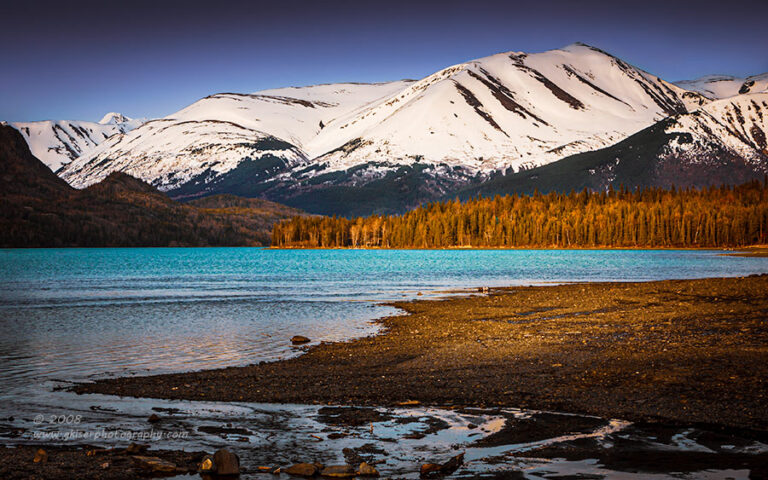
There is yet another point that I want to make in regard to seeing other photographer’s works as being better than our own. We’ve all heard of a “picture perfect scene”, right? Well, there is such a thing, and while that is subjective, there are certain places that you could set a self timer on the camera and throw it in a random direction and get a spectacular photo. For a very long time, in my opinion, this location was Alaska. I was truly amazed at the scenery and I loved seeing photos of the place. In fact, it was grand landscapes like this which got me interested in photography to begin with. I would look at those photos, and ones of similar landscapes and then do the inevitable comparison with my own photographs from the Blue Ridge Parkway. There was no comparison at all, though it didn’t really have as much to do with the actual photographer as it did with the location.
When I was starting out, places like Alaska were out of the question because they were very cost prohibitive to go to since I lived in North Carolina. We don’t have landscapes that look like Alaska, or the Faroe Islands, or Iceland, or even Colorado. Looking at the images that I had been, I was left thinking that I would never be able to create photographs that looked like that. No matter how good I was, or would be, those photographs were better than mine.
It was probably 10 years or more after those thoughts started to become regular occurrences in my mind that I realized the flaw in that whole thought process. I wasn’t comparing my skills, or photographic technique. I was comparing subject matter which is something that is completely different…but yet holds the same reality. While I was looking at these pristine aqua lakes with snow covered mountains and wishing that I could photograph places like that for the same awe value that I assigned it, there were photographers that lived in those places that felt the same way about the Blue Ridge Parkway. Think about it for a minute. No matter where in the US you live, and pretty much anywhere in the world, you have heard of, and seen photos of the Blue Ridge Parkway in the Fall. It is an iconic destination, and has been dubbed “America’s favorite drive” for a reason.
The Blue Ridge Parkway is a destination for photographers from all over and it is because the photos that are available of the location inspire many to visit and get their own photographs. Here I am, 15 miles from the Blue Ridge Parkway in two different directions. I can go up there any time that I want to now that we have moved to Western Wilkes County. I’ve photographed many scenes in all seasons along that stretch of road, yet when I see photos of Alaska, I see the Blue Ridge Parkway as something closer to a city park in comparison. Why is that?
Well, familiarity breeds boredom with locations if you aren’t careful. I wasn’t giving enough credit to the fact that those who live in the areas like Alaska long to photograph the Blue Ridge Parkway. We both share the same reasons behind that want in that the locations are different than what we are used to. By no means am I saying that you should pack up your gear and fly to these epic locations, though there is nothing wrong with that. What I am saying is while you are looking at the other photos and thinking that they are better than yours, there are photographers that live in those epic locations that are seeing your photos as being better than theirs simply because your subject matter looks so much different to what they are used to.

Speaking of epic locations, I’ve talked about how shooting local is a great thing for your photography, as well as perfect training for when you do visit those epic locations. In the context of this month’s discussion, we want to keep these things in mind as where we shoot has a lot to do with our own reactions to the photos. Looking back over my collection of images, I can compare these two landscapes that feature prominent mountain ranges. One of them is from Alaska, which I view as an epic location, and the other is from Beacon Heights which is maybe an hour from home. Images that I see from Alaska and similar landscapes will always be awe inspiring to me while the more local landscapes that I shoot seem to fade away from memory kind of quickly.
Since I shot both of these images, I can talk quite frankly about them. When it comes to my memory, the one from Alaska stands out more and I haven’t forgotten about it in nearly twenty years while the panorama from Beacon Heights is one that I tend to forget about much more easily. There are a couple of things a play here, and neither has to do with the fact that one is better than the other. When it comes to the pano from the Blue Ridge Mountains, I have been to this location many times, and shot the same composition a number of times in different conditions. The first time I went there, I did this same composition and that result is hanging on our living room wall in the form of a 5′ long canvas print. I love looking at it, and it is still a strong photo. However, the more recent version is a better execution in a lot of regards, but since I don’t see this photo as often, I immediately remember the one that I look at every day. The fact that I have been to the location many times also makes this a forgettable scene for me when compared to the photo from Alaska that was shot when I was just really beginning in photography.
What makes the Alaska photo so memorable? Just the fact that it is a location that I have only been to once, and I don’t have many photos from there. Is the photo a better one than the one shot locally. No, it is by no means a better photo, even with the fresh edit that was performed on it back in 2020. This is what I’m talking about when it comes to other photographer’s photos are better than yours. The photographer that I am today is very much different from who I was in 2008. I have a much deeper skillset and understanding of the craft and have much better tools by which to create with. The photographer I was in 2008 would look at the photos that I am creating now in total admiration, feeling like he would never be able to achieve these kinds of photos. I know this to be true, because every year I can see photos that I’ve taken that I thought would be out of my abilities just before shooting the image. Yet, when this current photographer looks back on the Alaska photo, I’m in awe of the beauty that was captured and wish that I could create something like that. Spoiler alert, I did create that photo, so many years ago.
Is the Alaska photo something that I should strive to create now? Not really. I’m doing much better work now, and if given the chance, my composition would be completely different as would the conditions that I would prefer to work in. I’m still proud of the photo, and really do like how the updated edit turned out, but it is not something for me to strive towards in the future. It is the location that I am envious of which explains why I look at this photo and compare myself unfavorably to it.
We are all doing this with our own photography when comparing to other photographers. We need to understand two things. The first is that this comparison will always happen as it is human nature. The second is that we realize where the negative reactions are coming from and that we can appreciate other photographic works without them making us feel like ours are sub-standard. We all see the world around us differently, and that impacts how we choose to photograph scenes and present the final images. Only after you arrive at those conclusions can the comparisons that you make be beneficial to your own photography. See the small details that you would like to include in your own photos and figure out how to make that happen. It is part of our own growth, and rest assured that the photographer you are learning from could also learn a thing or two from you.
Thank you so much for joining me for today’s discussion. I would love to hear your thoughts on this and possibly your own experiences with comparison. If you have been on a workshop with me, or will be joining me in the future, just know that you have knowledge already that other photographers might not and that makes your work special. By embracing what makes us all different and learning from those differences, we get better and better at our craft. There will always be those that aspire to create in the way that you do, and there will never come a time when you feel like you are at the top of the creative food chain. Imposter syndrome sucks, but it can drive us to continually improve in the hopes that we deserve whatever attention that we might be getting.
We will be back here again next month with another topic, though I’m not sure which one it will be just yet. If there are any topics that you would like to see me discuss, please let me know. I’m always happy to share thoughts on things that are pertinent to my readers.
Until then….