Welcome back to another installment of my monthly Behind the Camera feature. For those that are unfamiliar with this feature, it is a time each month that I step away from the treks and talk about things that are going on behind the scenes with my photography, or use the platform to answer a question that might have come up during the previous month, I’ll also use it as a teaching platform for those that want to learn photography. In short, it is just a chance for me to talk with you outside of sharing a specific trek or set of photos. This month, I’m going to pull a lot of information together and hopefully create a direction for my photography in 2026.
I first teased this “goal,” or New Year’s Resolution at the conclusion of my list of most significant images from 2025. It was actually while making that list that I came up with the idea because of what images I felt were most significant from the year. The majority of the top images were all abstract and detail shots that seemed to be something that I had been drawn to through much of the year. Seeing those images together in the list kind of prompted me to really explore those detail shots a bit more. I find that they are truly unique and really require a vision while an overall composition is a little more direct and obvious in most situations. I like to be unique and try to stand out in the growing crowd of photographers these days. The second part of that realization was that I had used my wide-angle lens to better effect during 2025 than in years prior. I had also used it with subjects that I didn’t typically think of wide angles with, especially after having had a renaissance of sorts with the telephoto lens in years past. These two realizations with my photography are actually at opposite ends of the spectrum with wide focal lengths and abstract details, but I could see that I wanted to explore more in both of those directions.
Just a few days after that top 12 list came out, I was doing the year-end wrap-up for 2025 that took kind of a negative turn at the end as I was forced to look at the reality of the business of photography, at least in my individual experience. After what had been probably the most active year for me behind the camera, I was left feeling very much let down with the first year in a while that I had taken a loss financially through this creative endeavor. That is always a risk in the arts and for those that choose to make a business out of it. It just gave me a bit of a gut punch and prompted me to look objectively at what I am doing since I am a full-time photographer and have been since 2019. I started to look at what parts of photography I could phase out in order to streamline my business and make it profitable again, but that brought about a whole basket of issues based on what was bringing in the money versus what I’ve built as the core of my photography. There were so many questions raised during that entry, and they were questions that I have been revisiting for several years now without a resolution.
The answer came to me in time for the second Behind the Camera installment of 2026, when I decided to do photography for the love of it, rather than the income. I’m still keeping the business alive so I can legally sell my services and art, but that is no longer the driving force behind the art. I’m now here for the love of it, and I will do it in a way that makes me happy beyond any other consideration. This means spending less time on marketing and caring less about what others are saying about my work. I just want to make art that fits who I am at the time of the creation. I want to have fun with it and if I find folks that love it enough to buy prints or hire me, that that is just the icing on the cake.
With all that being said, you can certainly see that I have been doing a lot of soul searching about photography over the past few months. This has been a rather all-encompassing process as I’ve been looking at both the art and the business of photography. With the business end of it pretty well sorted out, I wanted to really look into the creative or artistic side which will be more of a process through the year than anything. I had set two goals for myself at the end of 2025, and I wanted to get into that a bit more with you this month. At least this will be a positive entry, or at least I see it that way. I love learning new things and after being a photographer for better than 20 years, it is rare that I can really dive into a new concept that has the chance of changing how I see the world. The last time I had something like that happen was when I started to see new ways of using my telephoto lens to capture details rather than just objects that were off in the distance. This didn’t change how I saw anything, only it gave me a new tool to express what I was already seeing. Before that, we saw a start to the portraiture side of my photography. For the first time in roughly 15 years, I changed my tone from I don’t photograph people to actively looking for portraiture clients. This was a huge change in my photography and one that is still developing. These kinds of changes are few and far between after so many years as a photographer, but I’m looking at having another one of those big changes and this time, I am trying to recalibrate how I actually see and interpret what is around me.
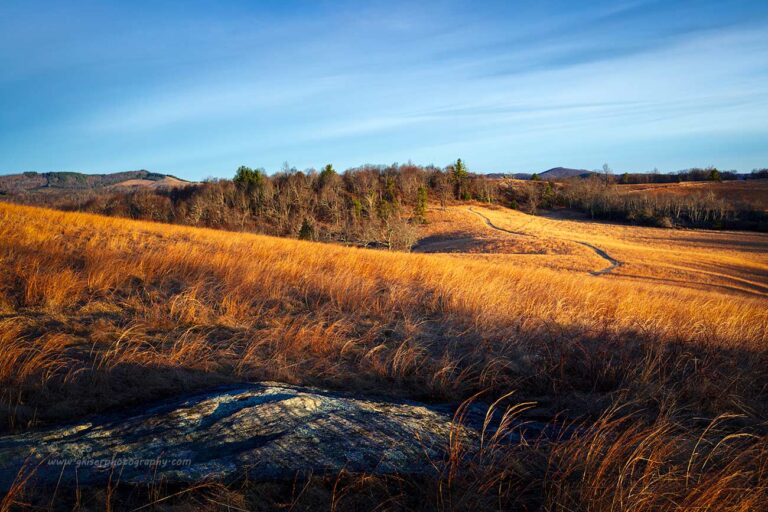
The first part of my resolution of sorts is to get more versed with a wide-angle lens. This is one of those lenses that I am comfortable using, but don’t really reach for all that much. I’ve talked about this before in that I typically see the world in detail, rather than the broad view. When you look at my landscapes, you will usually see a dominant feature that is the anchor for the whole scene. This is the detail that I have spotted and chosen to photograph. Something that I am not nearly as good at is grabbing a large expanse of the landscape and organizing it into a photo as you see above. This shot is from a landscape trek that I did early in the year at Doughton Park. On this particular trek I set out with the purpose of restricting my options and part of that was restricting lens choice to only my 16-35mm lens. To be fair, I did cheat a bit and used my 14mm prime as well, but that still counts as a wide-angle lens so I didn’t mind. It was a conscious decision to limit myself to that lens knowing that I have shot here many times with a standard and telephoto lens. I needed to look at a very familiar place through a different lens to see just how different things could look. It worked very well, and I could see a lot of benefit to using this lens in ways that I didn’t typically consider it.
In images like the one above, the lens gives a sweeping view of the landscape so that the overall shapes and even the way the sun dances across the landscape become the subject. The rock in the foreground is just there for a bit of detail and texture, but it is far from a focal point. It is the light across the meadow and the trail snaking through the grass that becomes the photo. It is a small area of the frame, but because of the surrounding landscape, it takes on a much stronger importance as it is allowed to stand out on its own, not just because I have focused the attention of the viewer on it. With other areas of the landscape visible, there are places for the eyes to explore which keeps the viewer engaged longer with the photo. There is more of a sense of setting in this composition because of the wide-angle which is another benefit that I might have been missing out on in the past.
This is just not how I see the world, and I know that about me. Ironically though, it is photos like this that got me into landscape photography so many years ago because I do think that they make for beautiful photos. I’m just not naturally proficient at seeing on this kind of broad scope. While I didn’t understand that back in the day, I fully recognize the differences in how I see the world, and I also know that I can make myself see in different ways when it comes to helping mentorship clients with their compositions that aren’t necessarily the ones that I would choose. This is a type of maturation as a photographer and knowing that I can go beyond my own limitations. Because of that, I am now comfortable enough with seeing in ways that are not natural to me to really want to explore those options in my own photography.
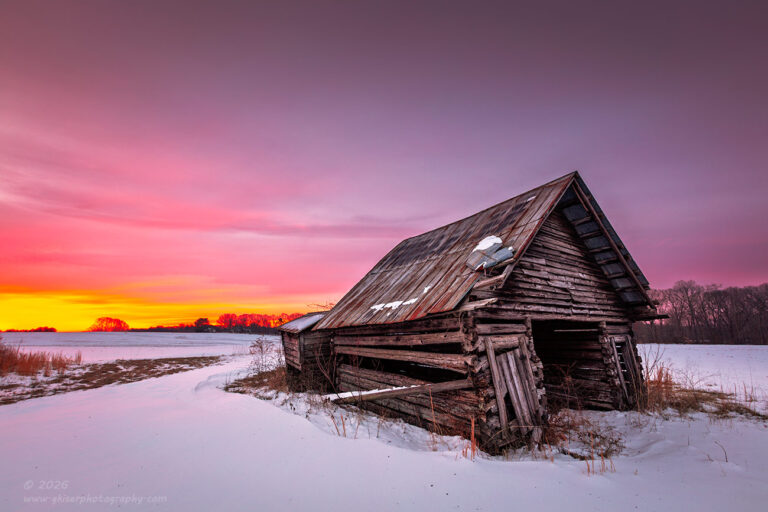
I know we are just a couple of months into the new year, but I have been using my 16-35mm lens way more than I have in the past. The strange thing is, I’m starting to realize that I can use that lens to great effect even when capturing a single focal point which is my usual style. Take for instance the photo above which was shot in the early part of February. This was another one of those instances where I decided to limit myself to that single lens while I would have typically reached for my standard zoom in this situation. The standard zoom would not have been a wrong choice, but it would have been the safer choice creating an image where the falling barn was a bit smaller in the photo in comparison to the surroundings. This would have created some other issues that I did not foresee when I spotted the barn. It was still dark when I found it and I had no idea that you could see houses in the distant background. It wasn’t until the sun had started to come up that I saw those houses, and with a more comfortable focal length, say around 50mm, those houses would have been much more visible. The barn would not have stood out as well against that background. Since I was using the wide lens, I was already in a perfect situation to minimize those houses in the background because of the depth that this lens will create. The barn was small, but the lens allowed me to have it appear well above the horizon to give it that sense of importance even though the sky was the brightest portion of the frame where the sun was coming up.
There is no denying that the lens choice was what made this photo very special and created the “look” that it has. It seems like an obvious choice by looking at the frame, but I’m here to say that unless I was actively looking for ways to use the wide-angle lens, I would have limited myself to the standard zoom in this situation and would have missed out on the perspective seen here. The widest that the standard zoom goes is 24mm and I shot this photo at 16mm which is a bigger difference than you might think. By forcing myself to shoot with a lens that I have only used in certain circumstances, I am really seeing a lot of other ways in which that lens can help me depict what I am seeing while giving the photos a much more dramatic look.

Something that I didn’t see happening was how my learning to use the wide-angle lens in different ways was going to merge into my other goal for the year. When you think wide-angle, you rarely think of intimate details and working with abstracts. The whole point of a wide-angle is to give context to your scene by including more of the story with the background. It is a great lens for making a small foreground element appear larger, but I’ve never really thought about doing detail shots with a wide-angle lens before. While at Outlawed Restorations in the early part of the year, I was working with the wide-angle lens because this is an environment that I don’t usually find reason for that lens. I got several overall compositions of many of the cars but started to look at the details as well. One of the vehicles that grabbed my attention was a Chevy truck off on the side of the property that I had shot many times before. I wanted to do an abstract detail shot of it and knew the exact place to capture. This area on the passenger side, right at the intersection of the cowl, fender, and hood which is one of those spots that I have composed images around for years on similar trucks. I have shot it with the standard zoom and the telephoto lens. I’ve done it straight on as well as from angles on either side. I thought that I had done this shot just about every way possible and because of the unique color combination with this truck, I’ve done them all with this particular truck over the course of time.
Here is where actively seeking to change how you see things can come into play. I wanted to work more on my abstract and detail shots, but this particular spot on the truck was old hat for me. However, I was also wanting to learn more about how the wide-angle lens works. I had never really looked at using it in this situation before and it would likely give me a whole new perspective on the composition. I decided to give it a try and found two different views that worked very well with this truck. It actually gave me a very different look for the composition that I have shot more times than I can count. The change in lens and how I interpreted the scene made all the difference. The resulting photo was still very much true to my vision, but it was executed in a way that I would have never considered. I had just unlocked another use of the wide-angle lens that I had never seen as a possibility. While this lens is usually a great tool for storytelling and including more of the surrounding, the perspective that it introduced close up added to the abstract nature of what I typically photograph with very little change to the perspective. The year wasn’t even a full month in play yet and I had figured out something that I am sure will be of great significance going forward.
So, you can see with some real-world examples from the beginning of the year, I am well on my way to learning how a wide-angle lens sees things. I think that I can absolutely incorporate that tool into the subjects that I like to photograph. I see it as being as flexible a tool as the telephoto lens which I had to explore in a similar fashion to really understand. This is much more than just wanting to get my money’s worth out of my gear, this is another way that I can add variety to my images and create photos that have a very different perspective to them while still being true to what I enjoy photographing. That is only a part of the equation for the year though as I also really want to work more on the abstracts and details that I capture.

You might remember this photo which almost made it to the top slot in the 12 most significant of 2025, or from the trek when I captured it during a workshop. It is one that has remained a favorite of mine ever since it was captured. I love the colors, textures, and shapes of the image. I also love that you can’t really tell what you are looking at. This is a wonderful example of an abstract image based on those rudimentary art design principles. The subject is no longer important; it is just the visual impact that it possesses. This is what I am wanting to work more on through the coming year, and it does really seem to be in opposition to learning to see better through a wide-angle lens. In a way, the two are completely different, though I can argue that I can capture both concepts in a single photo as seen above with the Chevy truck photograph. Vintage Layers, on the other hand was captured with a telephoto lens which is really good at pulling those details out of a broader scene. That is where these concepts appear to be polar opposites, but in a way, because they exist on the fringes of “normal” photography (think documentary style with the nifty 50), they are similar in concept. I’m looking to get stronger in the extremes of my photography. In that light, my two goals are actually related, and it makes sense to work on both at the same time.
Think about it, when faced with a scene, we are seeing it with human eyes that are something akin to 50mm. We are seeing it from eye level, unless you are Toni’s height, in which case you are seeing it from knee level. This is the standard perspective that we see in, and our brains interpret it based on that information compared to how we are predetermined to view the world. This is where most photographers, myself included will revert to capturing the scene. This year, I am wanting to expand that vision in either direction in order to create something really different from what I have in the past. This could mean going for the wide shot that includes much more of the scene or boiling it down to just an abstract detail. There is also absolutely no reason that I can’t work both angles on the same scene or subject to get even more photos out of the opportunity.
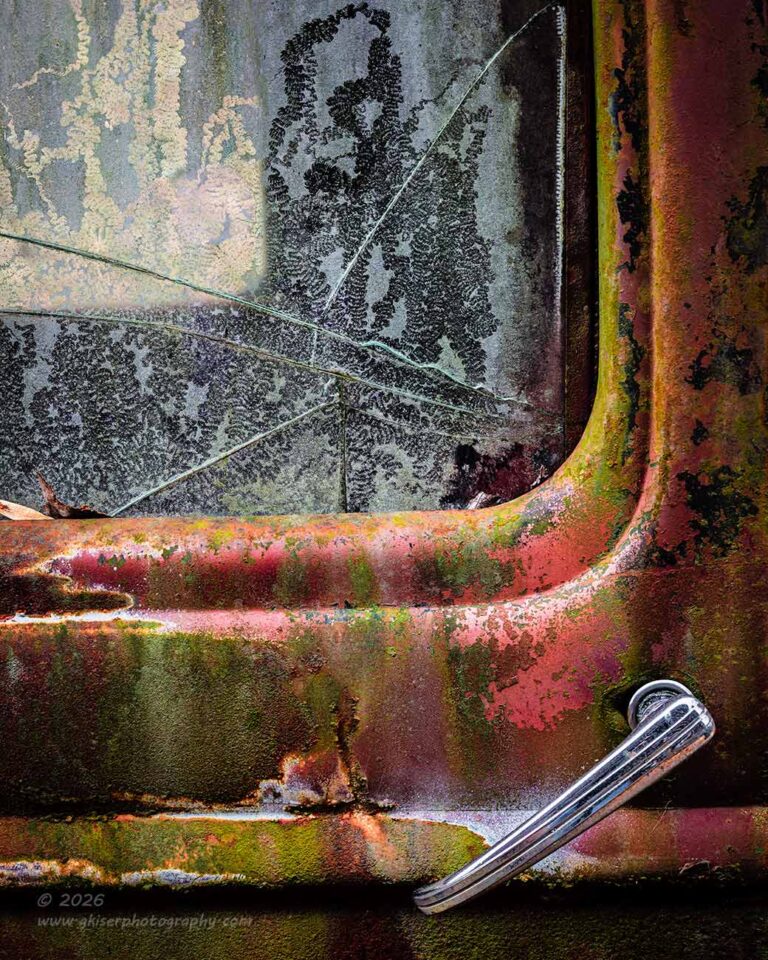
Here we have a newer photo from this year which was taken at Outlawed Restorations in January. It is from a ’30’s model Chevy truck that is parked beside a barn. I’ve photographed this truck several times both as an overall subject and concentrating on the details. I’ve even used it during workshops and mentorships to teach basic composition, as well as delving into the art of decay. I only say that because I want to be very upfront in the fact that I have captured this truck many different times with different mindsets as well as seeing it through other’s eyes. It also comes to my attention that I have never photographed it like this and had never had a client see this composition before.
How this one came to be is a little bit accident, and a little bit conscious thought all wrapped up into one. I was looking for something different to capture with this truck which was not the easiest thing since it was just a cab on a frame. Much of the trim and details were missing from the cab as well. I was just looking around to see what I could see and what drew my attention. After a few minutes of looking, I was drawn to the broken glass on the driver’s door, but that wasn’t anything unusual. This is something that I have shot both on this truck and plenty of other subjects. I didn’t want to fall into that trap, so I started to look for a different way of seeing this aspect. I looked around at all the angles and tried to figure out how I could capture the broken glass with a bit more visual interest.
The more I looked around, the more I was finding that the glass was losing the visual weight, and I was seeing more of the door. The handle was now the main element and that was also something that I had done many times before. I needed something different, and I was looking deeper into the scene. As I was moving the camera around to see how the frame was coming together, I saw something that I had not even considered before. I was seeing the opposite side window lining up almost perfectly with the nearer window. This gave a repeating pattern and alternating light and dark to amplify that pattern. The body lines that were visible also went in that same pattern and gave the scene so much depth. The shaded portion of the window made the cracked glass more visible, and it became a more important part of the scene once again. The handle that had taken over became a foreground element and the only other diagonal element to support the cracked window. It was that break in the pattern that made this photos work, and I had landed on it by accident, but only because I was searching for a different way of seeing and interpreting the familiar scene.
It is in working with these familiar locations that I find it much easier to figure out different ways of seeing. In fact, after starting this entry, I happened to watch a YouTube video where the concept was actually spelled out quite eloquently when they said, “return to a place enough times that it teaches you how to see.” That resonated with me and I fully intend on doing another Behind the Camera on that statement alone. It does validate what I am doing this year with going back to familiar places with the goal in mind of seeing thing differently. I’m releasing my preconceived ideas of the locations and the compositions that I know all too well and letting myself see it again as a child. The awe and amazement of the locations are long since worn off and what is left is a real desire to create different photos from the same scenes I’ve worked many times before. This is where the familiarity will begin teaching me to see because I’m really looking for what is unique about the location and not just what strikes me as a pretty picture.
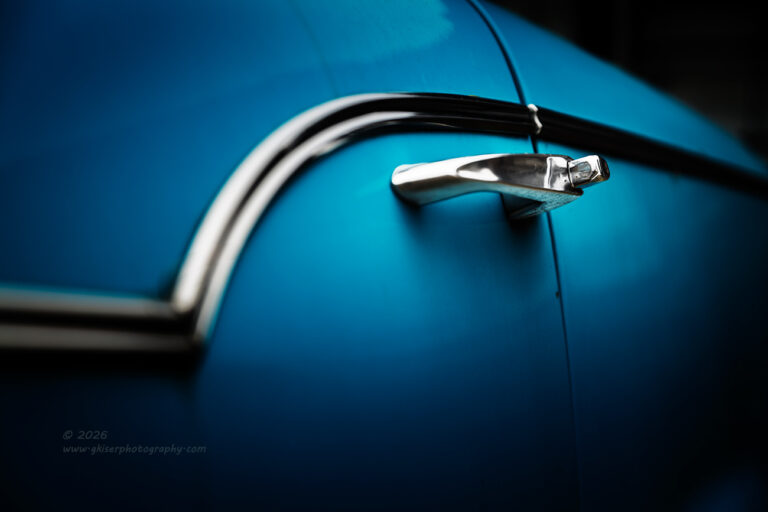
This is kind of an example of the opposite end of the spectrum as this was the first time that I had photographed this particular car. I was also distracted by the owner having a conversation with me. While I think that the photos turned out well enough, I wasn’t truly seeing this car in a different way. The setting determined that I was going to do a lot of detail shots and I wanted to exercise that abstract end of my photography to do that. I’m not saying that I could have done better, but without having a history here, I was left fitting this car into compositions that I knew would work and then relying on a few tweaks in post processing to give it more of an abstract look. I do like the way that the colors came out in this composition, and the lighting was really nice for what I was going for. Could I have gone further with it? Absolutely, and if given additional chances I know that I will come up with some more variations that are a little more difficult to “see” when examining the car. Time and familiarity are key when it comes to learning to see differently because you have to get past that initial sense of “new” with a subject.
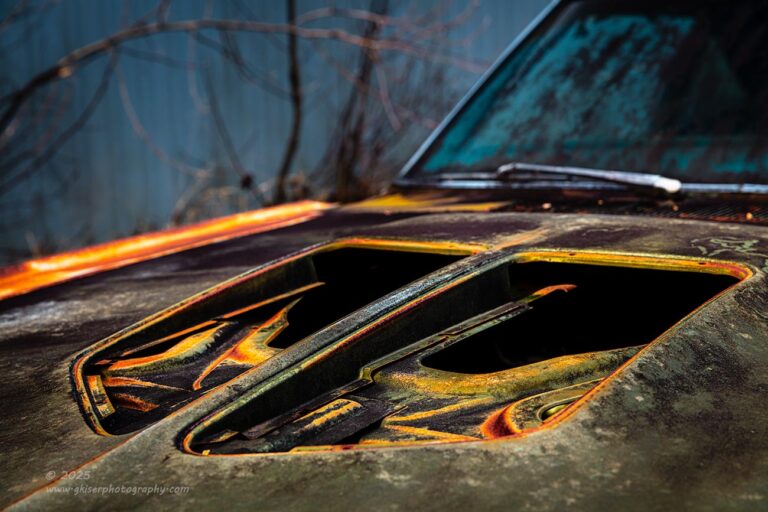
This is a great example of dialing in how I see a subject. This is the second time that I have been out to this location to shoot, and I’ve spent a good bit of time with this particular Dodge both times. The first visit I shot a composition around this hood that really and truly surprised me. It was so good, in fact, that the photo made it into the 12 most significant images list for the year in the number eight slot. I really loved how it came out and the abstract quality of it was just amazing. I really didn’t think that I could improve on it which is one of the reasons it stuck out to me so well. That was in the Summer, but the second time I went out was in the Winter right at the end of the year. I didn’t want to let the new image overshadow the older one just because it was newer, so I didn’t make the substitution in the list. However, the longer I live with both photos, the more I am liking this version which was shot well after the first.
Maybe it is less abstract, or maybe it is more so. I’m not quite sure, but I do like the additional elements in the frame and how the colors work together as well as the textures. The open section of the hood is just as important in both, but this one feels more engaging. What I do know is that it was not how I had seen the subject the first time and had only focused on the more impactful part of the scene. Now that I was more familiar with it, I felt like I could experiment a bit more with it and came about this composition which had not even occurred to me the other time. Who knows what I will be able to create here the next time I go out while actively looking for different ways of seeing familiar subjects.

Wanting to improve on my abstracts and detail shots is not going to be easy. The reason that I say that is that I regard my abilities in this realm to be quite proficient already. Why would I want to improve on them if I’m already proficient? Well, I’m starting to realize that my abstract and detail shots are starting to blend together too easily. Take for instance this shot of a tractor that was done toward the end of the year. It is a detail shot of the emblem, and I have used the surrounding elements to form lines and shapes with color contrasts that give it an abstract place to live. Of course, there are plenty enough clues here to show that the subject is a tractor and there is scale involved. I do really like the photo, and it might be my favorite from that day, yet it is not as effective an abstract as I would have wanted it to be. This is where I am wanting to improve. I want to be able to take the context out of the frame and leave the viewer really wondering what they are looking at.

This is an example where I got a lot closer to the abstract realm that I am after for the coming year. It takes but a second to realize that you are looking at a wheel and tire, but at the same time, your mind struggles with the flow of the image thanks to the fact that the tire is folded over. We are not used to seeing the tread flush with the wheel, and only seeing portions of the overall, it tricks our minds. I love photos like this, and they are everywhere if you look close enough. This is where teaching myself to see differently will come into play here. I want to be able to spot scenes like this without having already found a point of interest and taking the time to search it out with the camera to my eye. Something like this needs to resonate with me on a more organic level before I can claim to be fluent in capturing images like this.
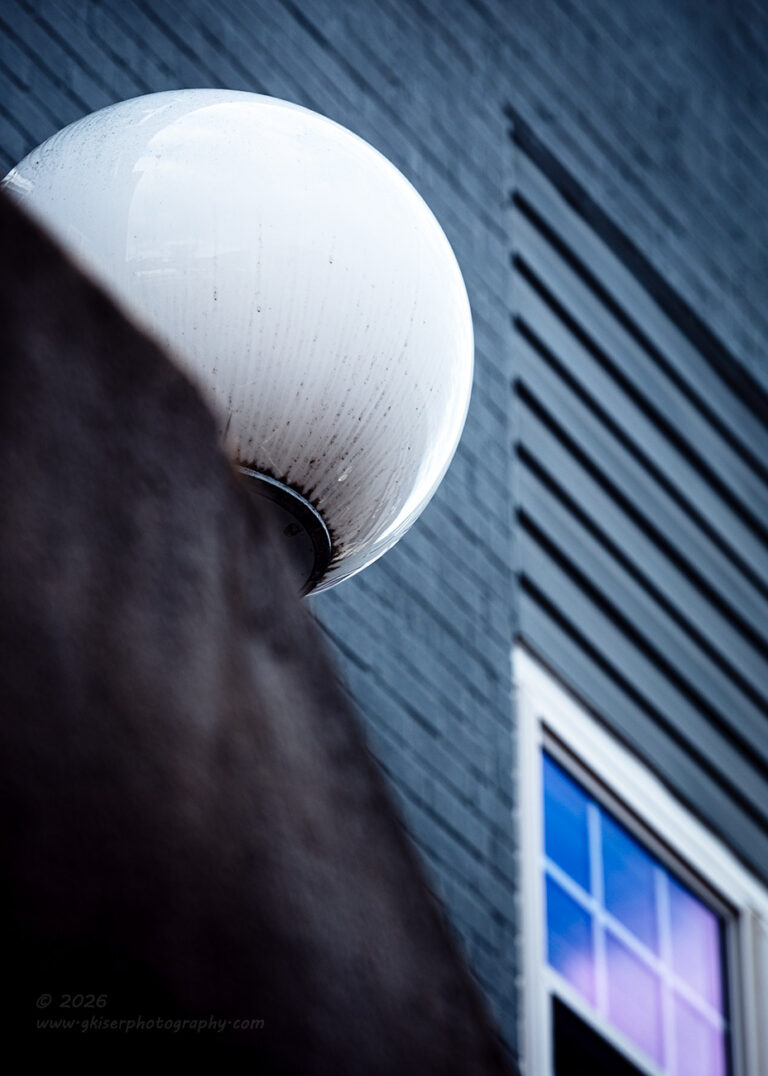
In this image that was just recently shot during a photo walk with the express purpose of finding abstracts to shoot, I concentrated on shapes more than context. The only element is the lamp globe which would make it the main subject. However, a good portion of the lamp is blocked by the concrete wall, and the post that the lamp is on is hidden as well. This takes a lot of the context away from that lamp and leaves you with a shape which your mind will complete. The other shapes in the frame either frame or point to the main shape, but nothing about this scene says that the in focus shape has to be a lamp of any type.
This is the type of abstract shot that I am really going for. I don’t want the viewer to look at the subject and take it for what it is. I want them to see it for what it can be or simply as a shape or texture. Abstract photography is not about the subject, and it is not a time to give that subject context. It is about questions, and visual interest. The story is purely an aesthetic one not based on reality. That is the draw for me, and where I want to take my abstractions from this point forward.

I’m finding that this kind of photography while something I am quite familiar with is very difficult to actually get proficient at. I keep wanting to photograph the subject and try to take it out of context. I have realized this after doing a little impromptu photo shoot with my Miata in the garage a few days ago. I tried a number of compositions, but the most successful in terms of abstractions came from the daytime running light in the bumper. This only works as an abstract because of the fact that this is not something that is immediately recognized, nor is it something that anyone pays particular attention to. By removing the colors, that takes more of the context away and the use of the brighter LED elements within the light pulls the eyes to that part. Without any sense of scale, you are left wondering how large or how small this scene actually is. Could this be a modern building with the LED elements the different offices or apartments? Is it just an optical illusion under water because of how the sheen on the paint shows up while being polarized? It is an interesting photo and one that begs you to look further into it while asking what in the world it is.
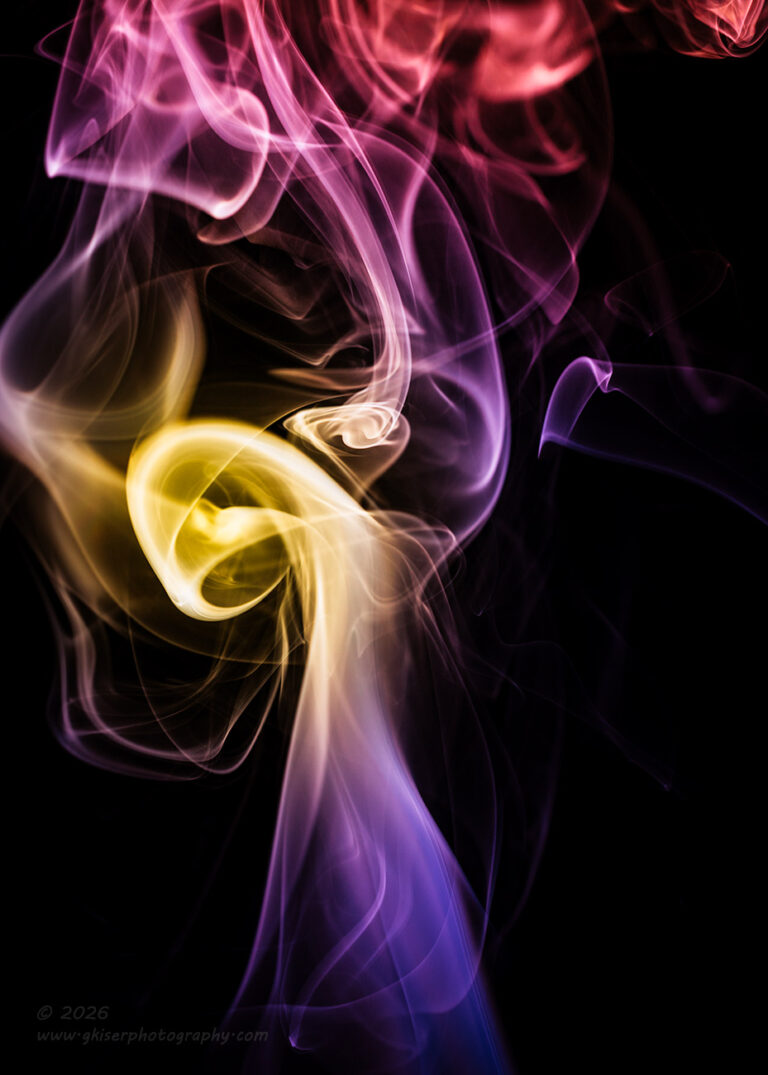
Speaking of the question “what in the world is it?” That brings me to the core of what I consider abstract photography. I want the viewer to be engaged enough to actually ask what they are looking at. There is one technique that I have a lot of fun with that is purely abstract in nature. That abstraction comes for a place of uncertainty each time the shutter is pressed. This is smoke photography and is a great chance for me to practice seeing things in ways that are not based in reality. What the camera captures is completely abstract and by chance. I cause the smoke to waft slightly causing a disruption and I photograph that disruption. The captured shapes are all abstract and created purely by chance and timing. Now, as the photographer, I then go into each photo and try to find something that isn’t actually there. It could be a scene, or a feeling that is captured in the shapes. I will then go in and color the image to support what I am seeing within the frame. Essentially, I am taking random moments in time and causing them to represent something to myself and hopefully others that are looking at the images. Every one of these photos is of the same subject….smoke. However, each one comes across very differently and is received differently which makes this subject very abstract and subject to interpretation.
I’ve gotten very good at my niche’ photography over the years and certainly have a recognizable “look” to my images whether they be landscape or decay. I’m comfortable there and have found that I am producing variations of images that I have been doing for years now. This is good in a way because it gives me a chance to improve on what I have already seen success with. However, there is a real risk of stagnation when I am just running new scenes through the old formulas. I would rather concentrate on the same old scenes but figuring out new and different ways of capturing them. This will add so much to my repertoire so that when I find new locations to shoot, I will have many more creative ideas in mind and can previsualize the scene in countless different ways. Anything that provides variety in my work will be welcome and as I get more and more comfortable with different ways of capturing scenes, I will certainly develop my favorite ways and those will become my next evolution as an artist.
That is really the whole reason for an artist to create. We are not looking to revisit what has already been done, either from our own history, or from other artists. We constantly create to try and improve on what we already can do and find new and different methods for communicating our ideas. Even when you look back at the masters in the realms of painting, you will often hear of the work being divided into “periods” where the artist would use different techniques or even change up subjects. They weren’t interested in the algorithm of Instaoil, SnapEtchings, or Brushbook…or whatever their chosen social media was of the day. No, they were looking to grow as artists and stretch their own creative voice to keep themselves from just doing the same things over and over. I’m starting to really understand that mindset after doing photography for more than two decades now. I don’t want to spend my time reinventing the wheel, I want to spend my time exploring the art that I have chosen. There are so many ways of doing photography that I’ll never expose myself to all of them, but I can certainly spend time with the techniques and methods that interest me.
As I mentioned earlier, I am now in this for the sake of the art and not the business. Not everything that I do will work, and that will be fine. The definition of what works and what doesn’t will be based on my own decisions based on what I am wanting to create. I’m not worried about what the masses say about my work anymore. I’m not here for the likes, I’m here to leave my mark on the world of photography in whatever small way I can. It is now the experience, more than anything, that I am interested in and there is nothing more freeing than that.
Thank you for joining me for this latest installment of my Behind the Camera series. I hope that this one has been informative and that you have a clearer idea of where I am wanting to go through the course of 2026. I think that I am off to a great start so far and can only imagine what is in store for the remaining ten months of the year. Of course, I am not on a schedule of any sort, and this might only need to go on for a few more months before I am proficient in my new goals. I also might need a lot more time to arrive at the level that I am looking for. Who know? Does that even matter? No matter what, I’ll be creating and making new photographs and that is what it is all about.
Until next time…