Welcome back to another installment of my monthly Behind the Camera series. It is here that I will pick a topic each month and discuss it for a bit. My goal is to give you an insight into the creative forces that drive me as well as potentially giving you some encouragement in your own creative path. Last month I talked about the fact that I have really been struggling here lately to be creative. I’m slowly coming out of that phase which I expected to happen at some point. With that looming in the rearview mirror, I can go back to some of the topics that I have had planned for the year such as this one. As it turns out, I’ve been talking about this very topic with some other photographers as well as with myself over the past couple of weeks which makes this the right time to cover the topic here.
In photography, we always hear about the rules and what makes a good photo. You include a foreground, midground, and background. You place the elements within the right portions of the grid to follow the rule of thirds. You choose the precise aperture to give the appropriate depth of field to your photo, while checking for the proper location of the horizon. You make sure that the space above and below your subject is correct, and then you go through an edit using the step-by-step guide from your favorite YouTube personality. If you do all of these things, undoubtedly, you will have an award-winning photo. Of course, we have all checked the boxes as we have gone through the process only to find that the photos are somehow less than good, and in many cases, they can be quite bad. What is happening here? Aren’t the rules meant to be followed and if followed, allow us to create art which is rooted in centuries of concepts started by master artists?
Well, here is the rub, and I might just be the only one that thinks this way, so take it with a grain of salt. When the painters of the Rennaissance were making their portraits that followed the golden ratio, and utilized things like Rembrandt lighting, I’m pretty sure that that they weren’t looking at the Idiot’s Guide to Oil Painting and checking off boxes so that they would be assured to create a masterpiece. Nope, Rembrandt looked at lighting as just…well…lighting. He positioned the sitter in such a way that he thought the looked the best. Only well after his time did we know of a thing called “Rembrandt lighting” because at the time, he just saw it as lighting that fit his vision. All the stuff with the rule of thirds came after many artists chose not to center their subject and certain recipes were applied to what they had done so that folks could understand how to repeat it. Initially, the artists would just go with how they felt the piece would look best.
There is a phrase that I have heard many times over while learning photography, “No matter what you can think of in photography, it has been done before. All photography is at this point is a culmination of previous concepts that are being repurposed.” Consider that statement for a minute. The insinuation is, that nothing in photography is original and we are just using each other’s ideas. There is a lot of truth to that, and we all take inspiration from different sources and put our own spin on things, but the concepts are all well established in history. Essentially, everything that we are creating has been created before, and one of the most dangerous things that we can do is create based off of a checklist. If we are doing that, what we create will end up looking just like somebody else’s work and then will just blend into the onslaught of imagery that we are seeing in our daily social media consumings.
What I am suggesting here is not necessarily a solution to this, but a way of accepting this fact and embracing it. All art is based on a connection with the subject, a reaction by the artist to what they have seen. With that in mind, when we see something that strikes us as beautiful or interesting, we have an immediate reaction and our heart skips a beat. If we are going to create a photograph (or other piece of art) from that scene, we have two options. The first is that we start applying all of these rules to the scene and we set the camera just so in order to follow those rules. We think about every aspect of the photo, and obsess over every little thing. After several minutes of fiddling with the gear and exposure settings we are ready to shoot the photo. We do so, and then get it home where we put it through the editing process based on presets, or a certain combination of manipulations to arrive at a “style”. We look at the finished photo and think how great it all looks, but then wonder why it hasn’t captured the original reaction we had to where others can see it.
Our other option is to create our photograph based on the reaction without nearly as much thought. We apply the basic understanding of composition, and we frame the photo to show exactly what we were seeing in the moment and more importantly, how we were seeing it. We make best guesses at things like aperture and shutter speed, but our main goal is to capture that moment surrounding that scene or object. When we get the RAW file home and start to edit it, we just play with the sliders to get the photo to look like it felt to us at the time. We have no concern with applying a certain look or style to it, and certainly won’t trust our pixels to a preset made by somebody that doesn’t know who we are, or what our connection was with the particular subject. In short, we let instinct and emotion drive our choices from start to finish.
The two options that I have talked about kind of remind me about the arguments that I made when I was talking about the difference between a photograph being artistic and one being technically perfect. My thoughts on the topic would suggest that a technically perfect image might just appear a bit sterile and without soul. One that is artistic, might have some minor glitches to it, but the message will be much clearer in terms of what the artist wants to convey. Of course, without some understanding of the technical, the artistic will not translate at all. I’ve had some very meaningful experiences with both ends of this spectrum over the last couple of months which has brought me to this point where I want to talk about following our gut when creating photographs.

When I am in the zone, I don’t think about things like rules and camera settings. I just see something that hits me in a certain way and then I pull out the camera and get to work. I experiment with things until I find the right combination to suit what I am feeling from the scene. One of the last instances of this happening was a trek that took me into the area of Booneville back in early April. I had been looking for something to photograph and after several failed attempts, I found this car. It was a difficult subject to photograph, but one that I really liked. I can remember how the process went and while there were some struggles in getting the right angles because of the proximity to other cars and houses, I was kind of on auto pilot during the experience. I wasn’t concerned with things like compositional rules, I just wanted a visual balance to the scenes. When it came to exposure settings, I just let things happen naturally without much of any thought being given to it. I was leaning on years of experience and just letting the scene dictate how I shot it, and what parts got included. It was a totally cathartic experience for me and one that was truly enjoyable. These are the times that I just love being a photographer.
Shortly after this trek, things started to take a turn and my creativity started to wane a little bit. I could tell that I was having to think through the process much more than I like to do. Nothing was automatic, and I found myself thinking about the shots more and more as I went. Fortunately, I have a plethora of information in my head that I can pull from when forced to think through things like compositions and exposure settings. Each time I went out, I found that I was going through those boxes more and more until eventually, I was even looking for subjects based on what boxes they checked off. I wasn’t involved with the scenes anymore and the entire process became an exercise in doing what others have done before.
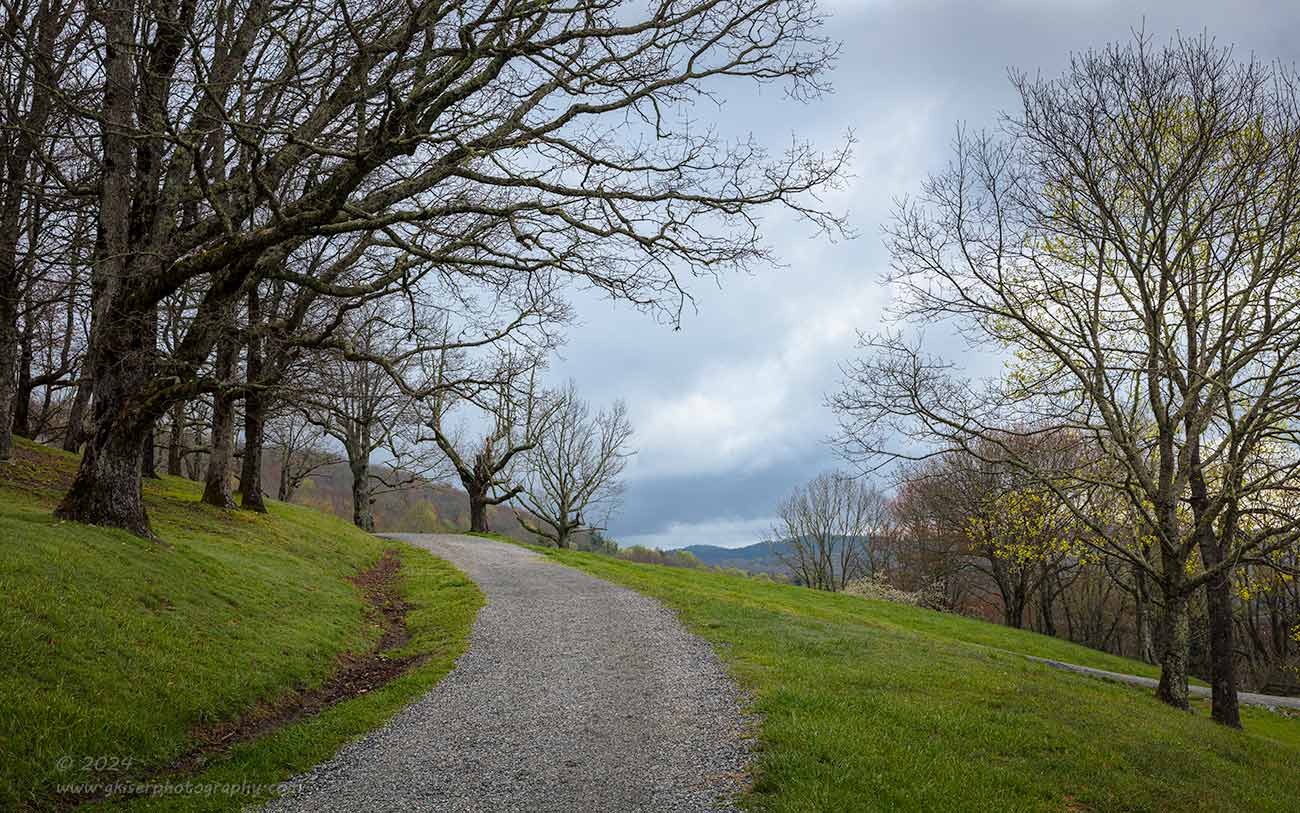
A good part of that shift was that Spring was happening and I felt like I should be focusing on landscapes more than anything else. The above photo is one of those examples of a scene that I shot because it had a good leading line, an interesting sky, and the trees in different states of bloom. The scene checked all the boxes and I remember thinking through the exposure options and carefully working out the depth of field. I even paid attention to how the scene was framed based on what I knew would work. I wasn’t connected to the scene, and I was overthinking it which caused the photo to miss the mark. I’m not saying that it is a bad photo, it is just not one that I feel rises to the level that I am accustomed to with my work.
The struggle was really starting at this point, and I tried to push myself further and further into a landscape mentality. The problem was that was not where my mind was at the time. I was trying to overrule what I was really wanting to shoot with something that I felt that I should be shooting. By doing that, I removed the most important part of my creative self from the equation. My heart was just not in it, and while I realize that the heart is just a muscle and has no bearing on thought, I knew that there was a part of my soul that had been disconnected from the photography. All that was left, was looking at things analytically which has a really bad habit of creating photographs that just add to the noise of all the photos that we are seeing on a day-to-day basis.
What I was missing was the ability to create images that captured how I felt at the time. Feelings don’t go by rules, feelings go by gut. We never think about a situation and say “hmm, we should feel this way about it.” We feel exactly how we feel, and to try and change that is doing ourselves a disservice. If I look at a scene and I don’t feel something towards it, I can’t capture a feeling with the camera. At best, what I can do is apply rules to the scene and check boxes in an attempt to make a pleasing photo. When I do that, I am removing the one part of the puzzle that I am uniquely able to bring to a photograph….me. Everything that I have learned over the years and have practiced is all based on what other photographers and artists have done. I’m well versed in these approaches, but every bit of that has been done before. If I apply those techniques and concepts, I’m just reliving past work. If I can bring my own soul into a photo, that is something unique to me, and something that will express a specific communication.
When Rembrandt was positioning a sitter for a portrait, I’m pretty sure that he didn’t refer to a lighting manual and read the chapter on Rembrandt lighting to get the face positioned just so resulting in that triangle of light under the opposite eye from the light source. No, he just went with his gut and how he thought the person should be lit. Why do photographers resist the urge to follow their gut so much? Why is it that we feel like we must follow a certain recipe to achieve a good photo? The one thing that we bring to the table which has a chance of setting us apart is our soul, yet that is the one thing that we keep trying to overwrite because we have to make sure that the rule of thirds, or the sunny 16 rule is followed.
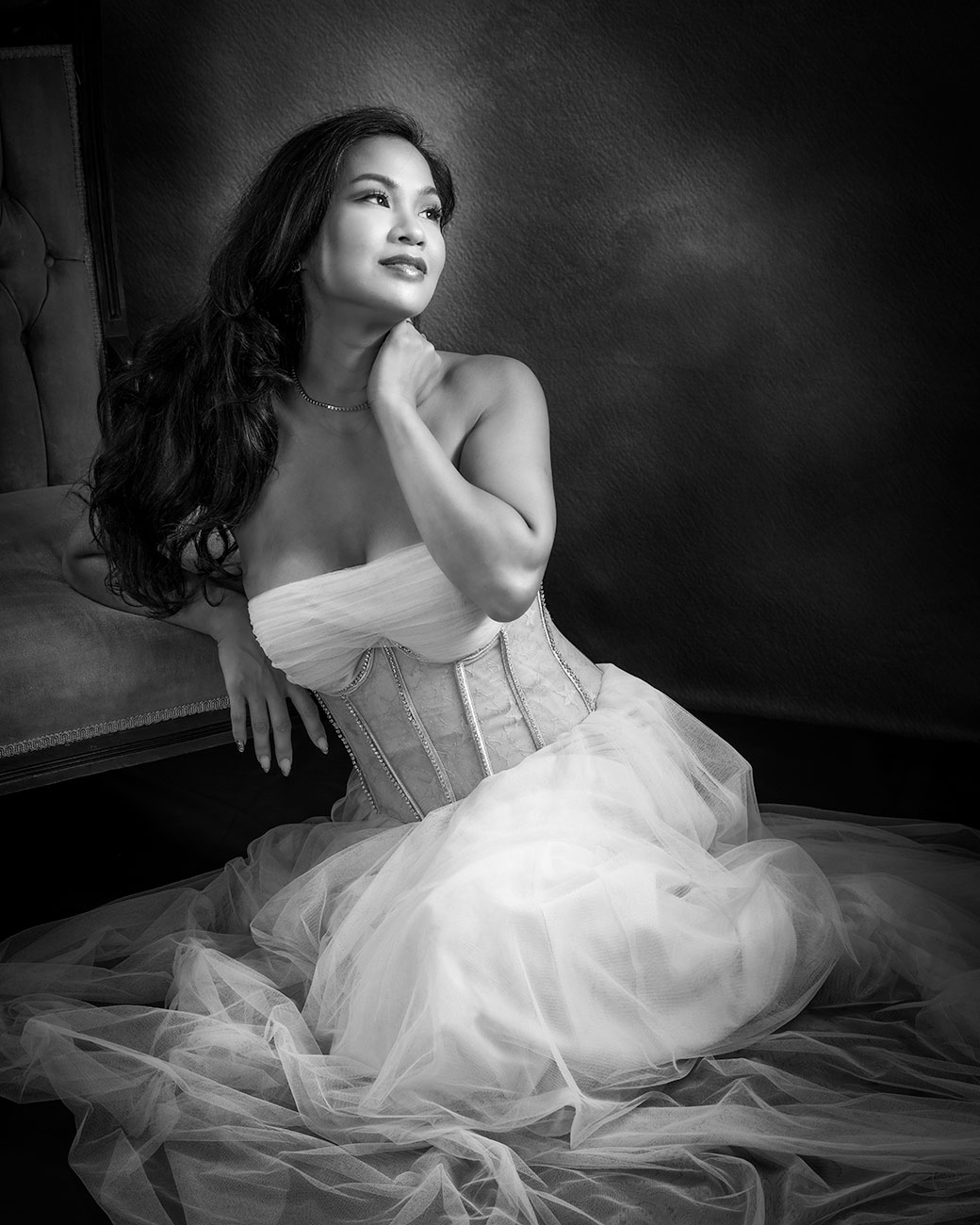
Oddly enough, where I first started to reconnect with my subject was when I was photographing Michelle during Memorial Day weekend. Yes, I had struggled with building the set and figuring out the lighting, but when it came time to do the shoot, things started to fall into place for me. I wasn’t thinking nearly as much as I was shooting. It was all just like the camera was an extension of myself. After so many times of having to think through every aspect of a photograph, it was very refreshing to let go and just let it happen. It was an unexpected reaction to the shoot since I feel that I am still very much learning this end of photography and I still should be thinking about it a lot more than I was. There was no denying it though, I wasn’t thinking during this shoot, or at least not like I normally would have been. I just reacted to what Michelle was doing with her poses and didn’t overthink anything that I did. I didn’t go back and look at the photos every so often to try and improve on them, just kept pressing the button and making photos. I would only stop and look at the photos when it looked like Michelle needed a break, or she was changing up her base pose.
Unlike trying to photograph the spring landscape, I was connected and invested in this shoot. I had been putting a lot of energy into it for months and I had something that I wanted to produce, not just something that I wanted to check off boxes with. The difference between the two shoots was miles apart, and while I have so much more experience with shooting landscapes, I can remember the frustrations that I had at Cone Manor as I tried to find appropriate compositions and working through all the creative aspects. A couple of months later, I was in a much less familiar setting, and just remember being overwhelmed with the rate at which the shots were happening. I was fully invested in the moment and saw no struggles, only creative possibilities. I was so much in the moment that I completely overlooked the use of a fan for motion in the hair and dress, and the possibility of a dress toss. Those two things are in my head as tools for this kind of shoot, but at the time, I was running on pure instinct and wasn’t thinking about the different things that I could do, I was just in the moment and capturing those moments that I connected with.

In June, Toni and I took a trip to Charleston, SC, where I had planned on doing a good bit of photography. It was a new place, and I was looking forward to getting some different scenes in front of the camera. It wasn’t as easy as I thought that it would be though. I struggled the entire time I was there because I just had no connection with the place and what I felt about most of it was not enjoyable for me. This really killed the creativity, but more importantly I knew that if I was going to try and make photos, it would just be a matter of following recipes that I have learned from other photographers and that there would be no meaning behind the photos for me. Instead of forcing it, I chose to wait until I found a connection to a scene. The closest that I came to connecting was to the Spanish Moss that was growing on the trees that I found quite beautiful. This was the springboard for the one day that I managed to get some photos from the area. It was still forced, and I still didn’t have that gut reaction that I wanted to have. The photos that resulted were OK, but nothing that I felt excited about. What I remember was the extreme effort that I had during the process to make the photos work. Nothing was instinctual, everything was considered which makes me feel disconnected from the photos even knowing that I was the one that shot them.
It is times like these where I start to intimately know just how important going with one’s gut can be to a photograph. No matter what I am photographing, I am always the same photographer with the same skills and talent. There are just some very large shifts to what I am producing which I can relate to just how connected to the scene that I had been. That same concept came out during a mentorship session a couple of weeks ago.
I’ve been working with Dan who is out of state through a series of virtual sessions where he will send photos to me for critique while we work on improving his compositions while shooting lily pads and their flowers. There has been a lot of back and forth with the compositional options that I think that he should be looking at to make the photos more engaging and allow him to convey his story better through the photos. One of the last photos that he sent me was one where there was a frog on a lily pad slightly offline from one of the flowers. It was very well composed, and I could easily tell that this was a fleeting moment and one that he reacted to rather than took time to overthink. While there could have been some small adjustments to the composition from an artistic standpoint, there was no denying that I knew exactly what motivated him to shoot the photo. I explained that much to him and applauded his ability to react to the scene.
In his response to me (all of this was via email), he let me know that he had spotted this scene while working other compositions and carefully got in close enough to photograph the frog, while gently talking to him in an attempt to keep him in place. Hey, I’ve done the same thing with horses and cows, so I’m not judging at all. He only had a brief time to get the shot which he executed very well. This account told me a lot about the other photos that we have been working on. As he tries to overthink things, the compositions deteriorate a bit. When faced with very little time to react, his instincts are actually quite good, and when he has a specific connection to a scene, the visual communication is much more direct to the viewer. Having been familiar with this concept in my own work for a while, it was recognizing it in another’s work that really convinced me that this concept has a lot of merit to it.

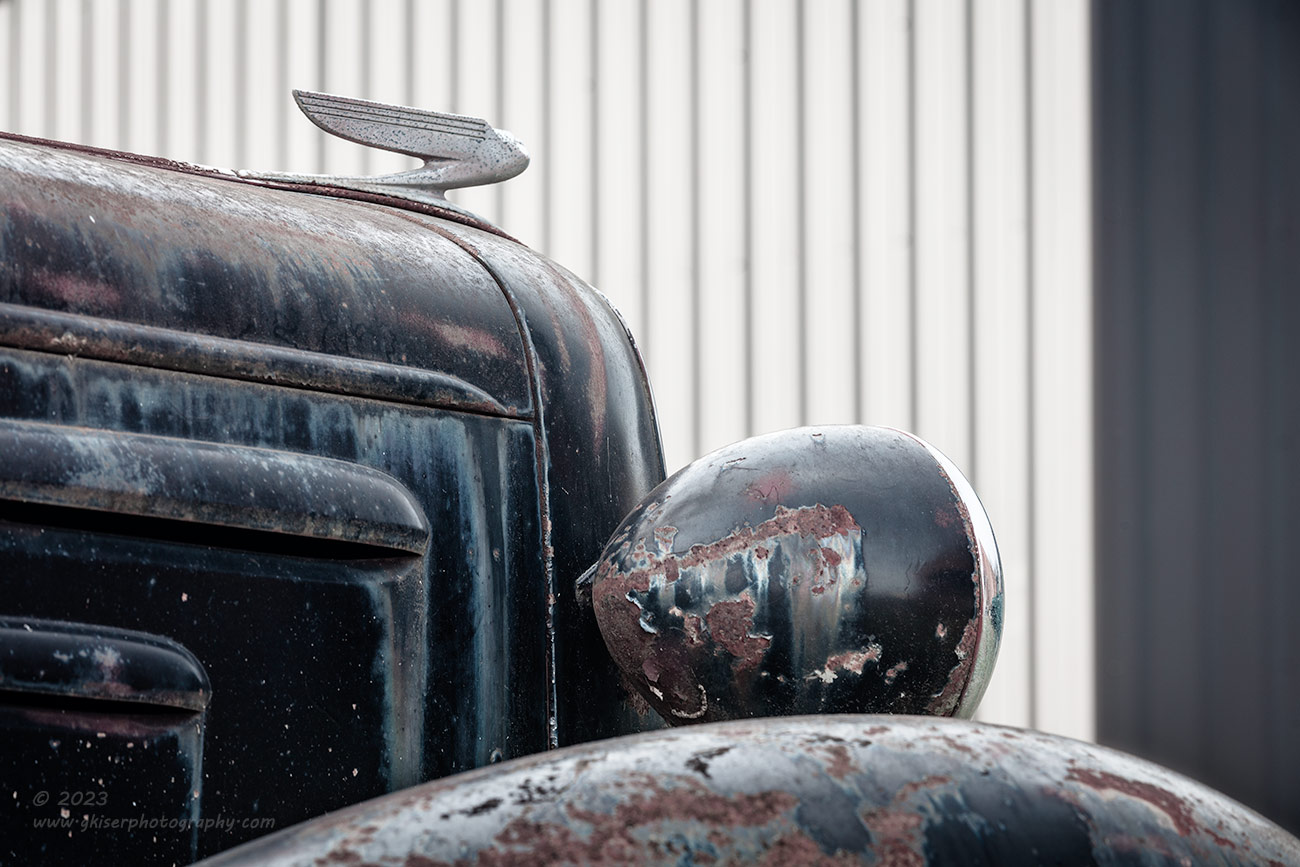
On a very recent trek last month, I decided to photograph a Dodge that I have passed for a few months. The setting had never really jumped out at me before which was why I hadn’t stopped to shoot it until this point. The session was kind of slow to get started, but things started to come to me much quicker as I moved through the first few images. I was feeling a connection with the car, and I was starting to sense the stories with it. My last shot of the day broke a lot of my own rules for photography because of some of the elements in the background. The little voice in my head convinced me to stick with it and find a composition that incorporated all of those elements into a story that made sense. The end result is a photo that I think works incredibly well, especially as a visual story piece.
It was one of the first photos in a while where I could see my soul within the frame. I wasn’t checking off boxes, and quite frankly, I wasn’t thinking too much about the technical end of it. I was connected with the scene, not the camera. Dial settings became unimportant as I spent the time focusing on how I framed the scene and making sure that the light on it fit the mood. From there, I spent more time working out exposures between traffic to give that desolate feeling to the scene. I can remember more about how I felt about this scene than I can about the heat I was experiencing in the sunshine. All the decisions with the camera were left up to my instinct, much like Dan photographing the frog. What I was aware of was the feeling that I was capturing before me.
Even with the edit, I just let it develop as I went. I had a basic gameplan of what I wanted this to look like, or feel like, but I didn’t have a clear understanding of how the edit needed to go. I hadn’t even made up my mind on the power lines along the top of the frame yet. Again, it was just instinctual as to how the edit proceeded. I started by removing the power lines to see if I could make it look convincing. Then I found a color profile that I liked and went through to get the contrasts just right. In the end, the photo exceeded my expectations which is one of those rare things that makes a photo rather significant to me. Will this one be in my yearly collection of significant images? I don’t know yet, but for right now it is the most significant photo that I have shot in a while because I was able to go with my gut rather than checking off boxes as I have been for months prior.
I think that the big lesson here is that we should never pass up on the opportunity for a photo. If all you are doing is checking off boxes, you are still building that muscle memory and establishing that skillset which you can draw on when you are shooting on instinct. Where I think most folks fall short is that they won’t take that photo that comes from their gut because it might not fit the rules. I would suggest that if you have a connection with the scene, shoot that connection first while the moment is still there. Once you do that, and only after you have done that, start fiddling with the scene using those rules and begin checking off the boxes.
When you go about a photograph in that manner, you will have the instinctual frame captured which might just be the best. As you tweak that photo and fit it into some of the rules, you might make it better, or you might not. That is for you to decide, but you will have the options at that point thanks to shooting it both ways. As you gain experience and start to understand the difference between artistic photography and technical photography, you will start to realize that the rules have been given too much authority by too many photographers over the years. Checking off the boxes doesn’t make you an artist, they just make you someone that is familiar with successful concepts.
You will start to go beyond the masses when you start to photograph by feel and reaction while having a deep-rooted understanding of what works and why. When you know the rules, you can understand how they can improve an image, but you also understand when it is beneficial to break the rules or combine different rules. This is one of the most freeing ways of photographing that there is. You let the scene dictate how you photograph it, and you start to develop your own sense of balance and negative space. Eventually, you will develop your own style which is about the only way that you will stand out as a photographer among so many other photographers.
In time, you will find that you are thinking less and creating much more meaningful photographs. Many of the rules are there, but they are locked in the subconscious and applied as needed based on the particular subject or scene. Everything becomes fluid and what you create becomes truly your own. Who knows, the next rule that is being followed by the upcoming generation of photographers might just be the Kiser Balance Rule…it could be a thing. More likely though, this will be the Achillies heel of Artificial Intelligence when it comes to creative works. The one thing that a machine can’t recreate is a connection based on emotion or feeling. That same machine can certainly apply artistic rules to a set of elements and create a photo that is technically perfect (though it might have seven fingers on the center foot of your subject). As photographers, the only thing that we can bring to our photos that makes them unique is ourselves.
Focus on that part of your photography more than you do following the rules and trends. Don’t be part of the noise, be the star on stage. This is all part of your own visual voice, and it is the connection that drives all the other choices that you make at a given scene.
Thank you for joining me for this slightly upbeat Behind the Camera. I hope that you found it interesting and helpful as well as providing a little more insight to what makes me tick as a photographer. I’ll be back here next month with another topic. If there is anything that you would like me to cover, feel free to make a suggestion.
Until then….