Monday, February 23, 2026
If you saw the thumbnail for this blog entry, you will know that this is not going to be a normal trek. It is something completely different from my norm, but it is something that you have seen from me before. It has just been a while since I’ve done any of this kind of photography. Since it was rather cold and windy outside today, I didn’t feel like going out for photos, but after yesterday’s photo walk in North Wilkesboro, I was feeling energized for more photography. I already know where I want to go and feel pretty sure I will be able to get permission there. The only thing is, it is going to take some time to work through, and I am really needing some cloudy skies which I certainly didn’t have today. It will also be nice to be able to feel my fingers while I am working, so I want it to be at least above freezing which it wasn’t today. My hope is that tomorrow I will be able to head out there and get that location shot.
In the meantime, I just wanted to do something to fill a few hours and stretch my creative muscles a bit. I figured that working down in the studio would be a good plan, but without a person to photograph, my options are a little bit limited. This time of year, the studio is a bit too chilly to have folks down here, so I don’t try to plan a lot of studio sessions until the ground temperature warms a bit and the chill leaves the space. That leaves me with still life photography and a number of creative techniques that I have worked on through the years. One of my favorites, and one that is pretty easy to set up and take down is photographing smoke. I started this technique after reading about it in a book shortly after starting photography in 2005. Back then it was a bit more confusing because I really didn’t understand flash photography and what it meant for the exposure settings in the camera. I can remember shooting at f/8 for several seconds in the dark with a speedlite firing off to the side. It was clumsy, but it worked out. Since then, I have learned a great deal about off camera flash and how to understand the different exposure language when using a flash. These days, the settings aren’t nearly as confusing as they once were. In fact, I just use my standard studio exposure settings for this type of photography with f/11, 1/200 of a second, at ISO 400 for a very clean photograph. The flash is a simple speedlite still, and I had it set to half power with a set of barn doors on it. That was it, nothing at all to it.
When it comes to setting things up, I just need a black backdrop, a table, an incense cone, and a tripod for the camera. I also need to turn off the HVAC system so that the air is very still for the smoke. This is an important aspect, and one that I usually forget to do until I get started with the session. That is one of the issues that I had the last time I did this technique a couple of years ago. I remembered to turn it off this time, and I am really glad that I remembered. Now, if I could have only remembered to turn it back on afterwards. I had started at noon and finished shooting at 12:30. As of the time of this blog, it is a little before six. So, for the last six hours, the heat has been off, and I’ve been wondering why my fingers were getting numb and I was needed to sit under my heated blanket. It was 63 degrees in here when I finally remembered what was turned off much be turned back on again.

It seems that I just can’t do this type of photography without some kind of technical issue popping up. At least being cold had nothing at all to do with the photography. That isn’t to say that this was a smooth operation. When I was finally ready to get started, I lit the incense cone which is probably six years old at this point. It lit and I started to make some test shots to make sure that the flash was set right. The focus was off and by the time I started to dial that in, the smoke was gone. The cone had burned out. I tried to light it again, but that didn’t fix the problem. To avoid fighting with this cone, I pulled another out of the package and replaced it. Since everything was cold at this point, I reset the focus once again and locked it in by switching to manual focus. I was auto focusing with back button focus on the box of incense cones placed in line with the tip of the cone. Switching to manual focus was just a little insurance that it wouldn’t be moved during the session.
Oh yeah, I forgot to mention that for this kind of photography, I routinely use my R5 camera body which is usually my portrait camera. The only reason for this switch is that I really like using my 100mm macro lens to fill the frame, and that is an RF mount lens. I can; and have shot this with the 5DS R body and the 24-70mm lens that allows close focusing, but I usually end up cropping into the frame much more than I really want. The macro lens allows me to get in much closer for a better chance at filling more of the frame with action. The image quality is the same between the two cameras, so the final result is not really all that different, but the resolution is a touch better without the cropping that is needed with the older camera.

Now that I had things ready and set to go, I lit the new cone and started to make exposures with the smoke. There is really no sense in planning out compositions as every shot is something different. What I ended up doing is a variety of techniques to disturb the smoke. I would tap the table that the incense was on, waft the air with my hand, or simply blow from either side. This would cause the smoke to become disturbed, but hopefully not so much as to move out of the frame. It did take a few seconds to get the rhythm down for being able to time the shots for when the smoke was interesting in front of the camera. All too often, I would be too late, or would speed through a couple of shots which would prevent the speedlite from recharging. Fortunately, I was able to see how the smoke was looking on the back of the camera even though it was quite dark in the studio.
When doing flash photography, you usually want to have complete control of the lights meaning that without the flash firing, your exposure would be such that the room lights wouldn’t even register to the camera. I am sure that with my settings that would be the case, but I wanted to make absolute sure that there was no ambient light sneaking in to soften the smoke or add extra light on the background. What I had in the studio was a desk lamp and a small table lamp over my CD player that was spinning a Metallica album. Other than that, there was no extra light in the space. The camera was still able to pick out the smoke so that I could see what things were looking like in real time. While you might think that made it very easy to capture the images, it was still a guessing game on timing. I had to anticipate what the smoke was going to look like because if I waited for it to be in the right place in the frame, my reaction time would cause me to miss the action every time.
The human bran takes 3/4 of a second to respond to stimuli which means that once I see what I want to photograph, at least 3/4 of a second has passed before the shutter release button is pressed. Since I am dealing with maybe two to three inches of space, that 3/4 of a second is enough for the interesting part of the smoke to clear completely out of the scene leaving just a straight stream of smoke. At least some of those straight streams of smoke were interesting to look at as well.
This whole process is all about chance and you just never know what you are going to get with each frame. In fact, even though the smoke is in the frame, you might still miss it if the smoke drifts closer to the camera or further away from it. This chances the focus plane and even at f/11, I don’t have much room for error to still get the smoke in focus. When you add in the missed recycle time between flashes, you get even more missed frames because without the flash firing, there is nothing but a black frame. With all of these aspects working against you, it is not uncommon for at least a third of your images to be complete misses. It is all a matter of chance as to how many of the remaining two thirds will actually be interesting and or usable. There is a certain aspect related to the thrill of the hunt with this type of photography.
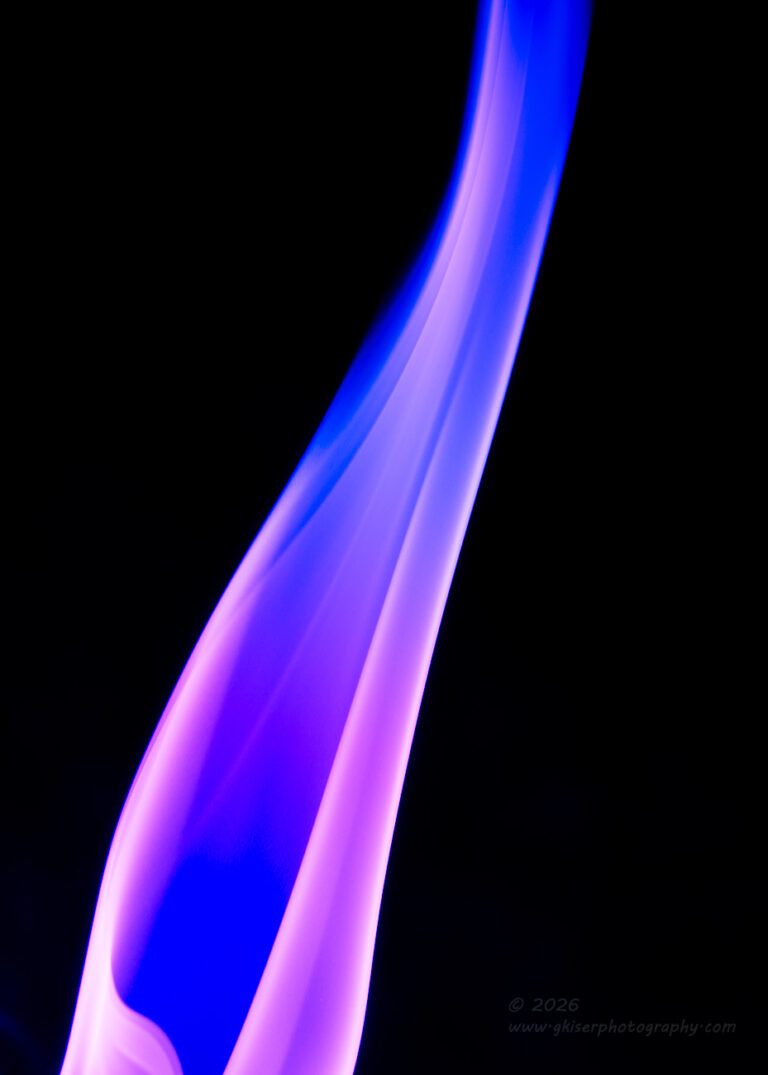
I’ve gone through whole sessions before and come away with a very small percentage of keepers because the focus was missed, or the flash wasn’t bright enough, or something else that I didn’t do right. This is a huge letdown for a session like this, not because it is hard to set up, but because after 30 minutes of incense burning, the room starts to fill with smoke and the contrast is lost. This means that after that 30 minutes is up, you need to let the room clear of smoke before you can try it again. I don’t think that I have ever done two different runs with the incense before. If I miss it the first time, I will salvage what I can and move on with the day. That 30 minutes will usually result in several hours of work in Lightroom for the way that I like to process these images.
Speaking of processing, that is the part of the whole thing that is probably the most impactful to the entire process. Sure, if I don’t get the photos captured with the camera, I won’t have anything to process or show from the effort. However, that is still the easy part. The hard part is the processing, but I make it that way on purpose. When I first started doing smoke photography many years ago, I would do either a black background which is the natural look, or I would invert the photo for a high key look. I would adjust the global color to give it another layer of excitement because smoke on a black background is white, or light gray. When it is on a white background, it is a dark gray. By changing the color temperature and tint, I was able to make the photo a bit more colorful.

It wasn’t until a few years ago that I started doing local adjustments to the image files to arrive at color variation. This is a mix of linear gradients and radial gradients with a few brushes mixed in for detail work. I will go with a split toned image, or will work my way up to triadic or quadradic color harmony depending on the image. Now, to determine how the image will take color, I have to understand what the image is looking like to me, and what seems to make sense for the physical appearance of the structure. Once that is determined, I will go to the color wheel and determine the shades that I will want to bring into the image. There is a process to all of this, and it is quite creative when I am so used to taking colors at their face value with what I usually photograph.

Every scene that I decide to keep reminds me of something, or a specific feeling. It is my reaction to the image that plays a large part in determining the color scheme that I will use for it. There are times that I am very literal with the colors that are chosen and other times when it is bit more subjective. There are times when I start out with a color combination in mind that I end up changing up at the last minute because I see another variation on the color that makes me feel better about the image. Once I get the colors figured out, the saturation levels start to come into play as I find the balance that I am after.
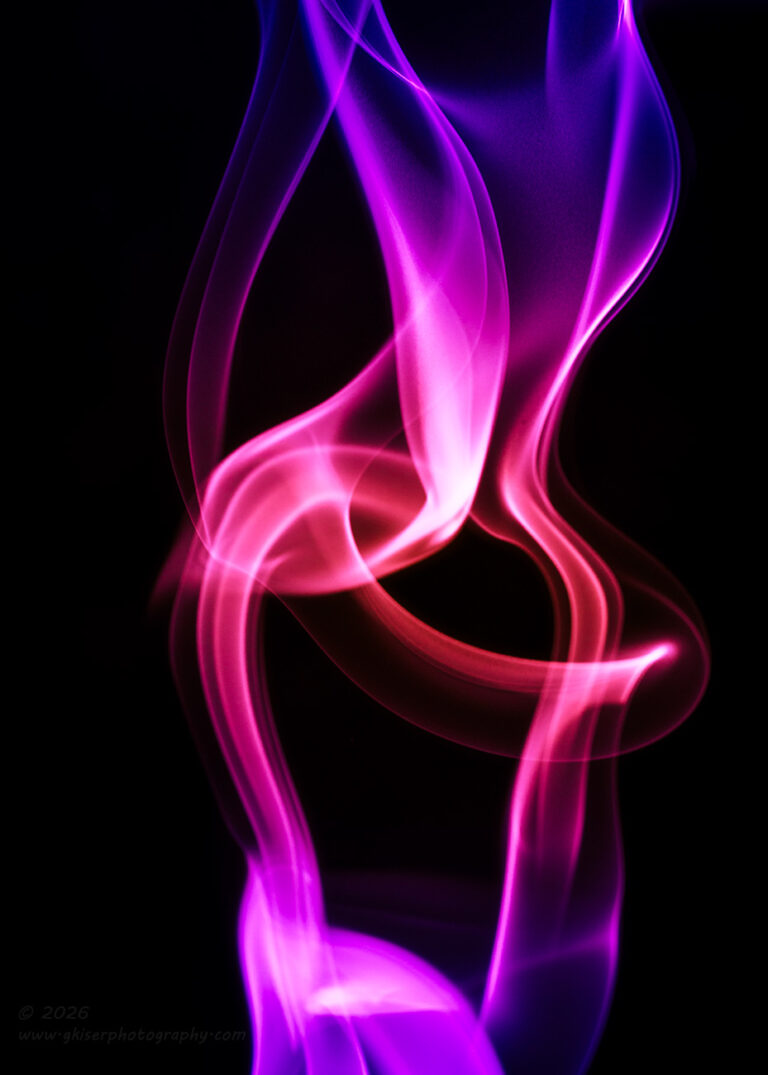
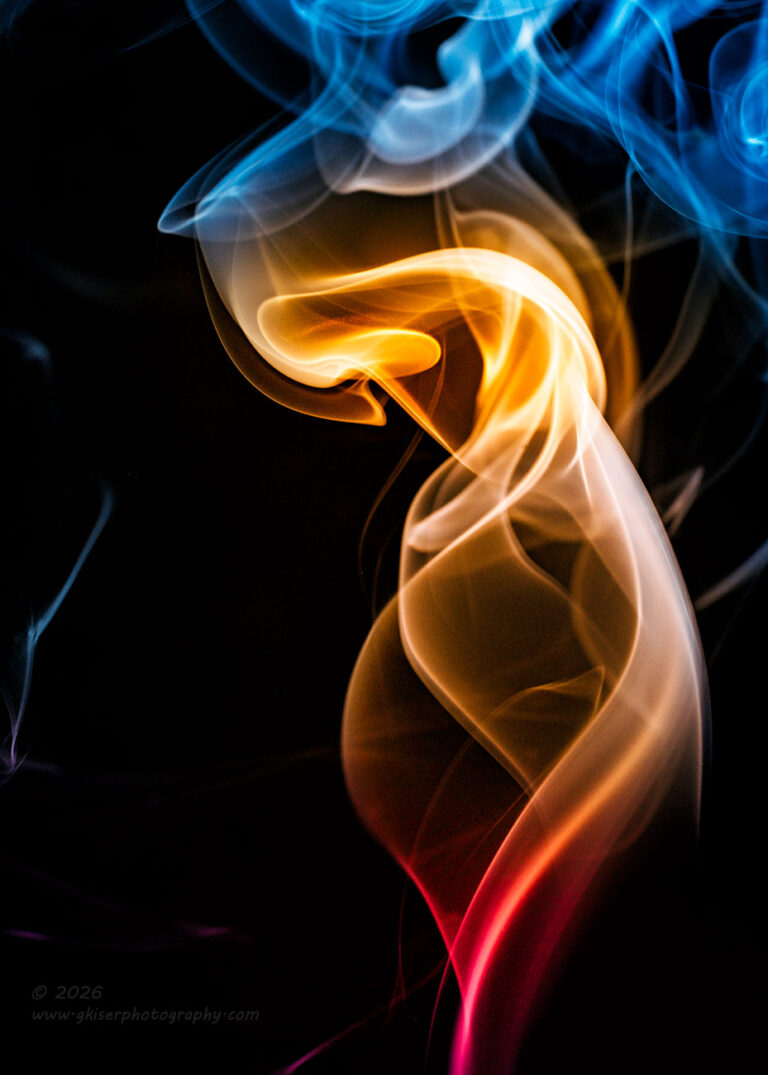
I’ll even use warm and cool color tones to bring in depth to a scene. There isn’t much depth in the smoke as it is pretty much all on the same plane. However, I can use cooler tones to make portions look like they are receding while I use warmer tones to pop portions out towards the viewer. Everything is done with a specific purpose involved and the colors are all chosen for that purpose. I’ve had a lot of fun working with these multi-colored smoke images since I started doing them. They bring another layer to this kind of photograph that most photographers don’t do. It doesn’t really take that much more time to introduce into the photo, but it surely adds to the interest exponentially.

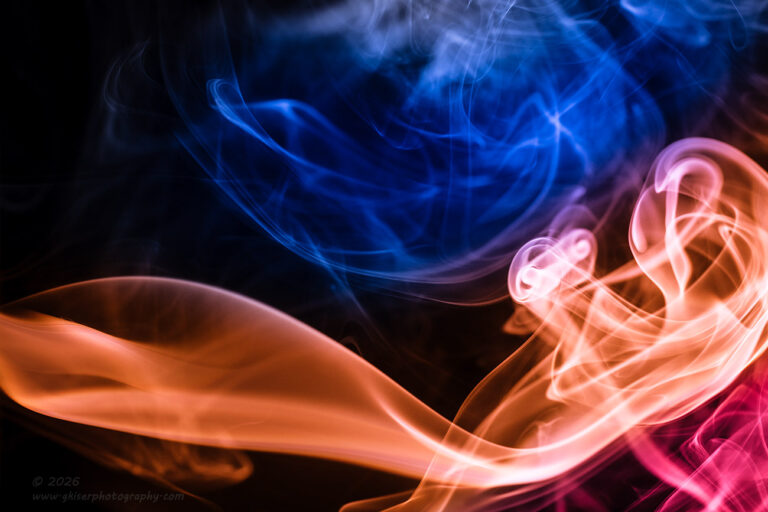
Take for example the image above. Without the color variations, this would be a very complex photograph to look at. I love it for the abstract nature of it, but at the same time, I want the viewer to have some semblance of order when they are looking at it. By doing several different colors, I’m breaking it up into sections based on how I am reacting to it. This helps the viewer share my interpretation of the structure. I’m certainly not locking the viewer into my assessment of the photo but rather giving them a roadmap to follow that includes gentle transitions through the frame. It simplifies the disorder and makes it much easier to take in. This is the goal with this kind of photography as some compositions are very simple on their own, while others lack order and need a bit of calming down. By choosing the number of colors in a photo, I get to take control over that aspect quite efficiently.
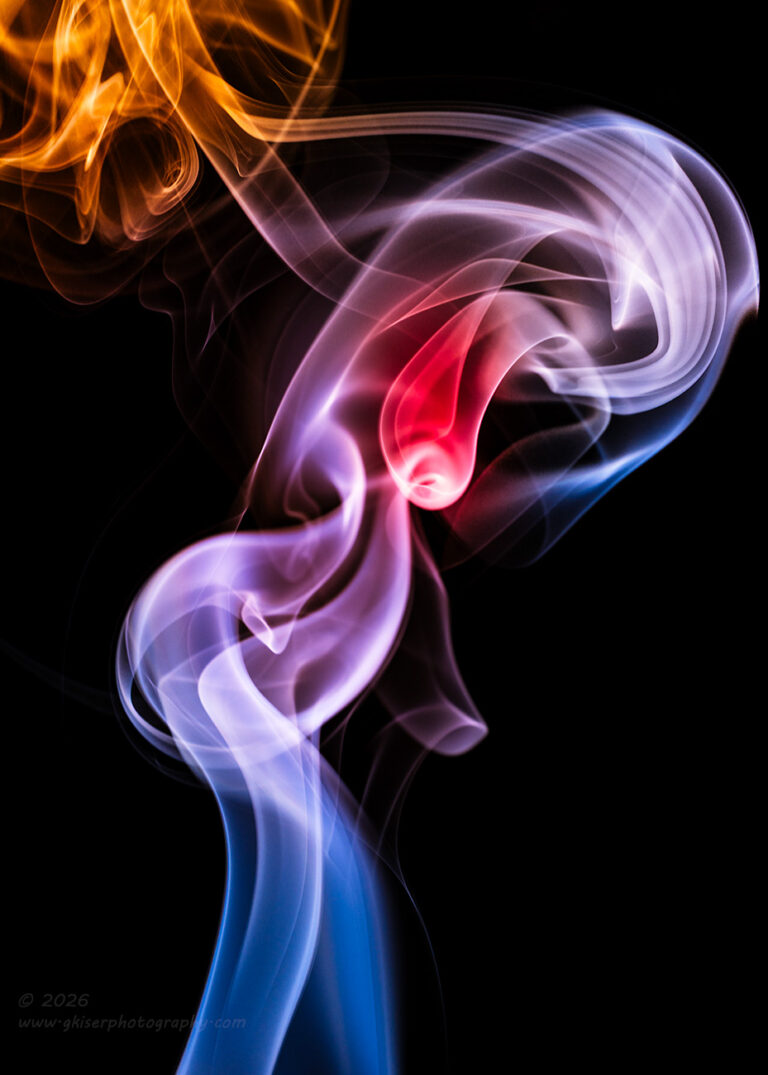
For me, the real artistic interpretation comes about in the post production. Everything leading up to that time is left up to chance and timing. I never quite know what I’m going to get when I am behind the camera. Only after I have picked out the RAW images that I like can I start to decipher what it is that I am seeing. While doing this, I can’t help but imagine AI trying to do this whole process. This form of photography is just very human and relies on too many human traits and responses. It is not about composition and perfect technique. It isn’t even about rendering a perfect photo at the end. Smoke photography is all about chance, about random shapes, and how a person interprets those things. I could go through all of these photos again tomorrow and come about a completely different way of seeing things which would yield very different photos. AI is just too limited in its understanding of the concepts to venture too far away from that which has already been done before. It lacks the whimsy that I have as a photographer.
I can hear you laughing at me Toni. You can stop now.
No really, you are going to hurt yourself if you keep laughing like that.

I don’t think that anyone would describe any part of me as whimsical and I accept that. I am very regimented and like things to have order and to make sense. However, I have to throw all of that out of the window when photographing smoke. There are just too many variables, and nothing will ever be perfect. I just go along with the flow and let the photo tell me what I wants to be when it grows up. That is kind of the reason that I chose to do this kind of photo shoot today. There is always a reason behind me doing a studio session like this and it is usually when I am wanting to really play around with colors or feel like I want to really stretch what I am capable of doing in Lightroom. Those are all valid reasons for doing this kind of photography, but that wasn’t what brought me into the studio this morning.

As you well know by this point in the year, and if you aren’t aware, my next Behind the Camera will catch you up, I am working on seeing things differently. This is coming in two different flavors for this year as I want to get more proficient with my wide-angle lenses and I want to really explore more abstract compositions. I’ve been having very little trouble in working with the wide-angle lenses so far this year and I feel that I am already shooting way more wide shots than I have in previous years. That was supposed to be the more difficult part of my learning process because I typically see in detail rather than in the broad scope. What I thought was going to be the easier task has turned into a bit more of a challenge. Seeing the abstract is proving to be more difficult than I had imagined.
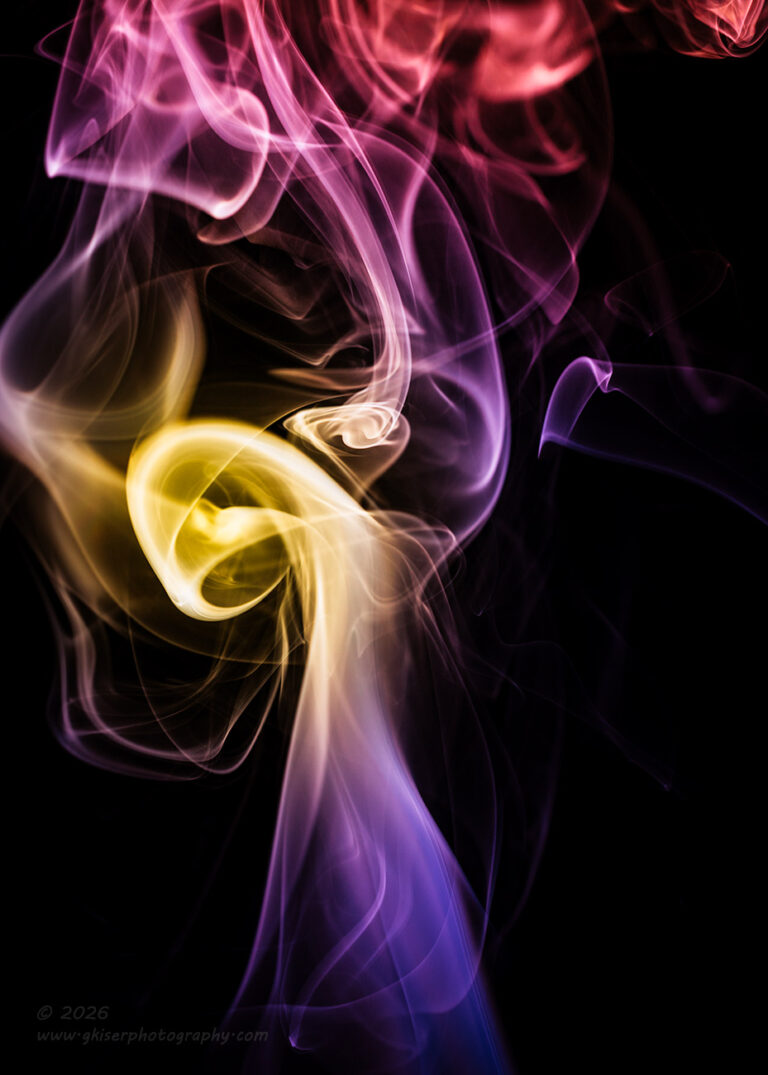
It is not so much picking out the details as I am quite well versed in shooting intimate details of subjects. Where I am finding difficulty is in taking that to the next step and making the details abstract while still managing to see structure and composition within those abstracts. I tried looking for some abstracts to shoot during that recent photo walk and even worked on shooting some abstracts at Outlawed Restorations earlier in the year, but I just couldn’t pass that last hurdle. I want to get past being able to see the subject and start to see something else entirely. That was why I chose to shoot smoke this morning more than anything else. Not a one of these photos looks like regular smoke, so you are not actually seeing the actual subject in these photos. What you are seeing is my interpretation of the subject as it takes on a different form.
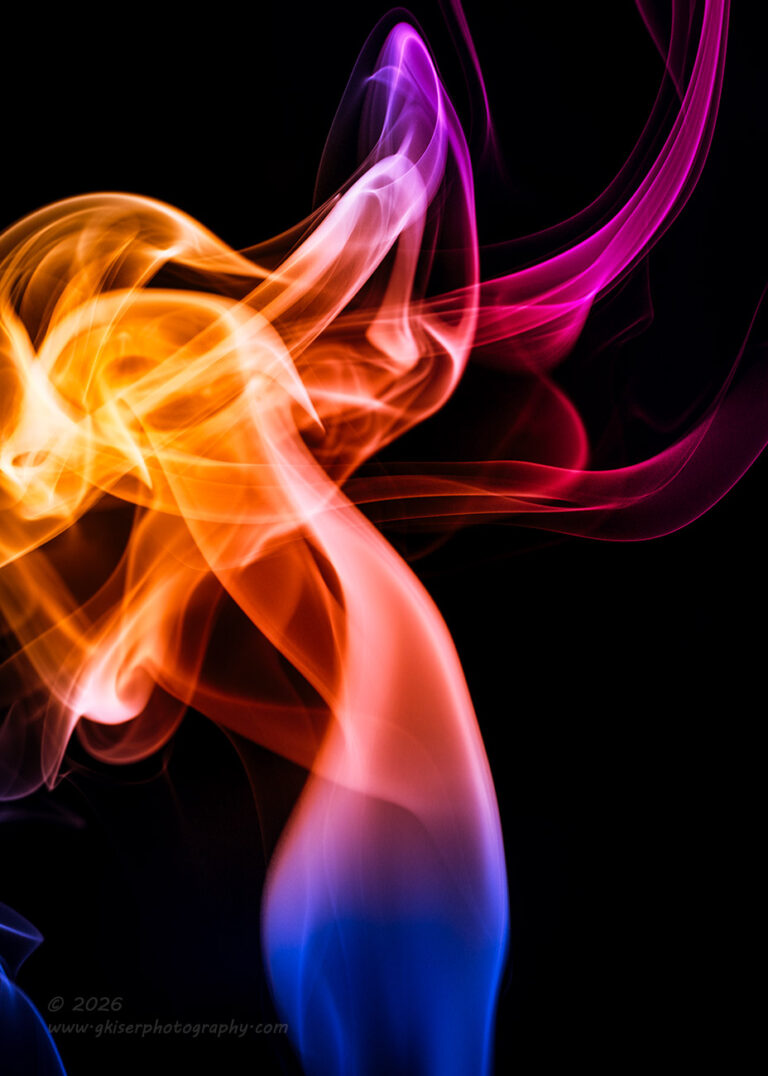
For me, that is the definition of abstract, and I really wanted to run through the paces of doing this in order to arrive at a better understanding of abstractness in photography. If all goes to plan, I’ll be putting this to use with some old cars tomorrow or Wednesday where I try to go further than just the detail shots and look for structure that would indicate something other than what the viewer is actually looking at. It is a different kind of visual language and one that I have done successfully many times, but I can’t do it as easily as I would like to. I want to become fluent in the abstract and it is exercises like this which will allow me to be able to do just that.
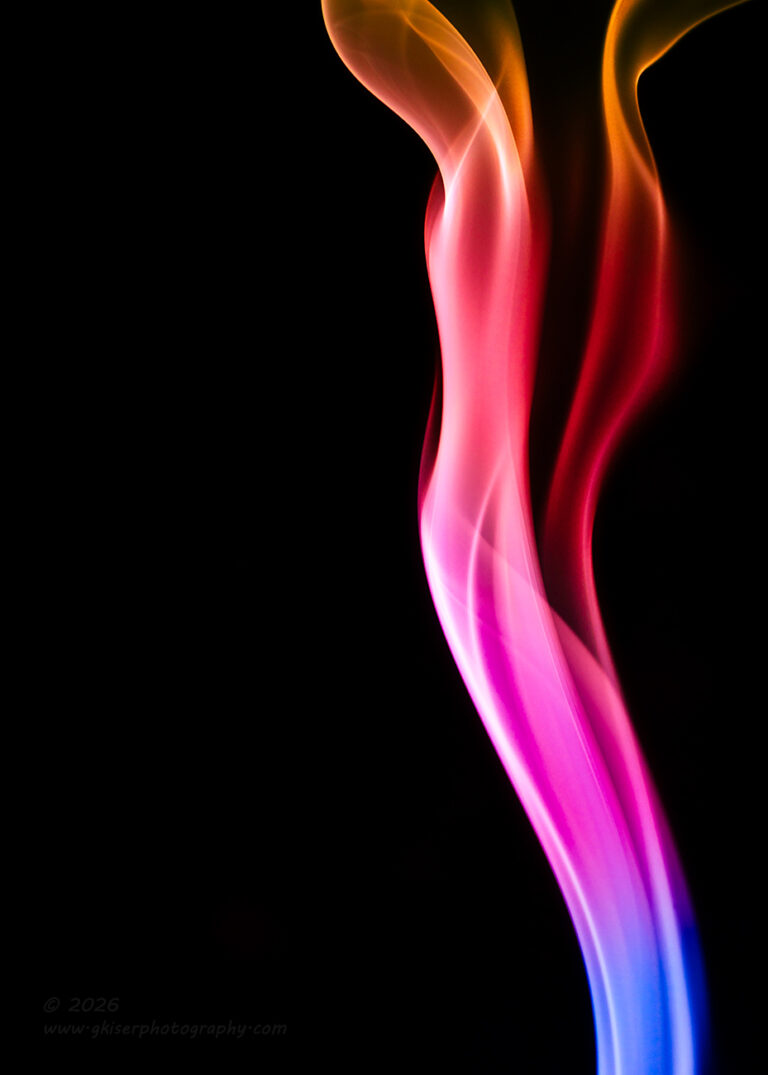
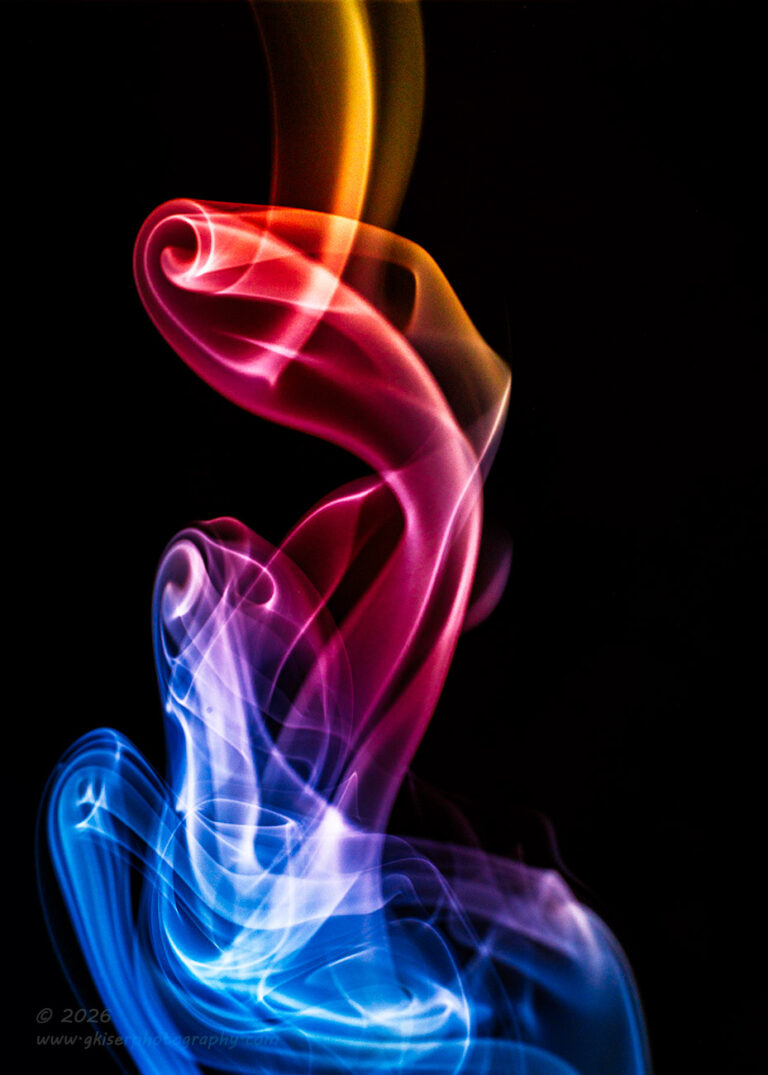
Let’s take for instance this photo above. It is a pretty simple composition that shows a structure that is pretty well unmistakable for smoke. If I had left it gray, you would have no doubt what you were looking at. Now, I’m not saying that I have managed to hide the real subject and have visually replaced it with something else. What I have done here is changed how you perceive the smoke. Knowing how human eyes read through a scene, I have forced the way you look at this by the colors that I have chosen. You will read this one from the bottom up and see the stream split at the top. Having warmer tones at the top makes that section appear broader and closer than it actually is, and the colors are similar to flesh tones. I chose that because for me, the two prongs at the top look like arms reaching above. The colors clue you in on that if only subconsciously. I’m seeing something that is just not there but photographing and presenting it in a way that would help others to see it in a similar fashion. That is how I want to be able to work abstract photography in the future. This is great practice for me.

In dealing with the colors, I have mentioned that I can do these either in the native low-key look, or I can invert the colors and give them a high-key look. Originally, this was a simple button press in Photoshop, but that has long since disappeared from the tools. These days, I do the same thing by working with the tone curve adjustment. It is pretty simple to do by switching the left and right anchors on the corners. The only thing that I have to keep in mind is that by doing this, exposure adjustments are now reversed. It allows me the opportunity to give these photos a completely different look. Ironically, this was the way that the smoke photos looked in the illustrations that got me interested in doing this kind of work, but I’ve developed a fondness for the natural low-key images over the years and don’t usually do the high-key versions anymore.

For me, the low-key look gives the image more richness in the colors and it fits with my overall style a bit better. I’m realizing as the years go on, I prefer images that are a bit darker than what would be considered “correct” exposure. I don’t like overly bright images as the colors tend to wash out, and when it comes to landscape shots, I can’t stand a white sky. I like having some color there and typically that is a product of having the overall exposure a bit lower across the entire image. This usually conveys the mood that I am after quite a bit better than a brighter image. Regardless, I know that I need to stay proficient with brighter and high-key images because there are some subjects that call for that and when it comes to client work, I have to be able to do that style when asked. Personally though, I much prefer a darker and more serious image which is why the vast majority of my smoke images will appear on a black background as shot. The difference being the colors that are introduced.
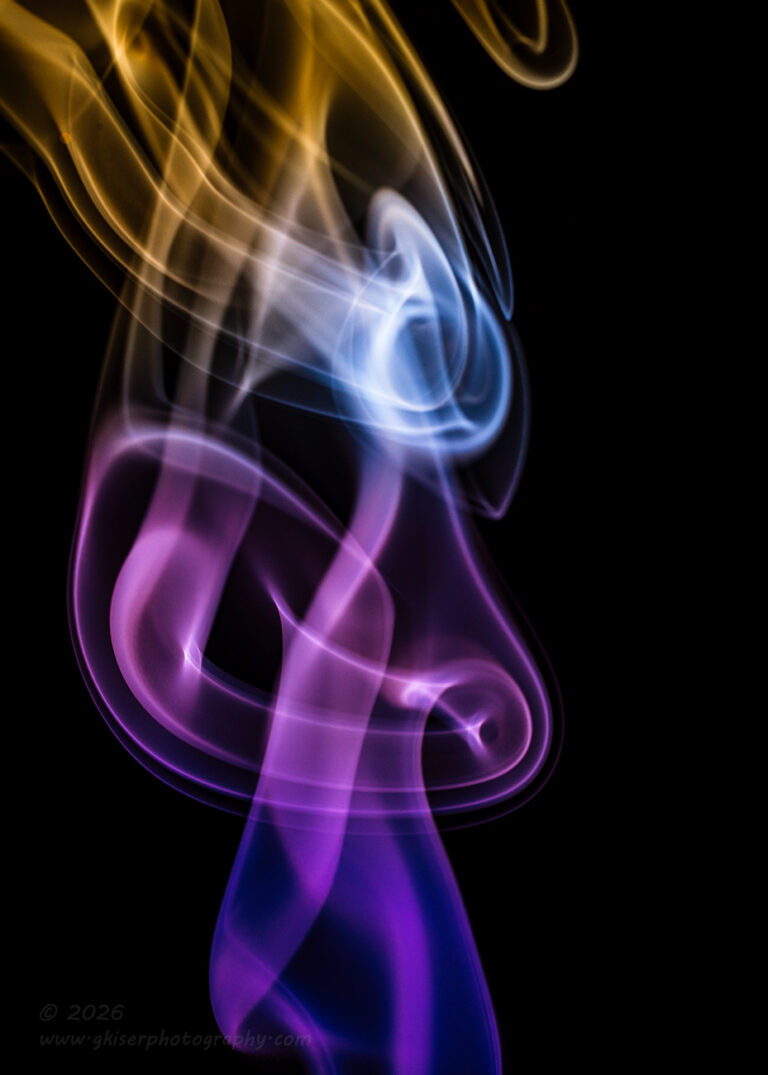
Beyond the colors and the choice of high or low-key, I love the randomness of the designs of the smoke. Every frame is something very different from the last which makes it all quite interesting to photograph. When you compare it to a landscape, a barn, or an old car, there are only so many different compositions that you can come up with. You can capture frame after frame of the light changing, but the core photograph and composition will always be the same. When it comes to smoke photography, that is just not the case. During the course of a half hour or so, I fired off 139 frames with the camera in the same place, pointed in the same direction. The flash was unmoved and stayed at the same exposure. Nothing about the camera settings were changed once I locked in the focus correctly, so it was just a matter of pressing a button while manipulating the smoke. I could have done this for five hours, or 24 hours, or a month straight and wouldn’t have captured the same image twice with the exception of the total black frames that happen on occasion.

The real beauty of the randomness is that the longer you go, there is really no change on your actual hit rate. Once you dial in your timing for wafting the smoke and anticipating the composition 3/4 of a second before it happens, your chance for getting keepers is the same no matter how long you go at it. That is why it is easy to stop after the incense is burned up because you aren’t going to get anything any better than what you have, you will just have more good ones to work through.
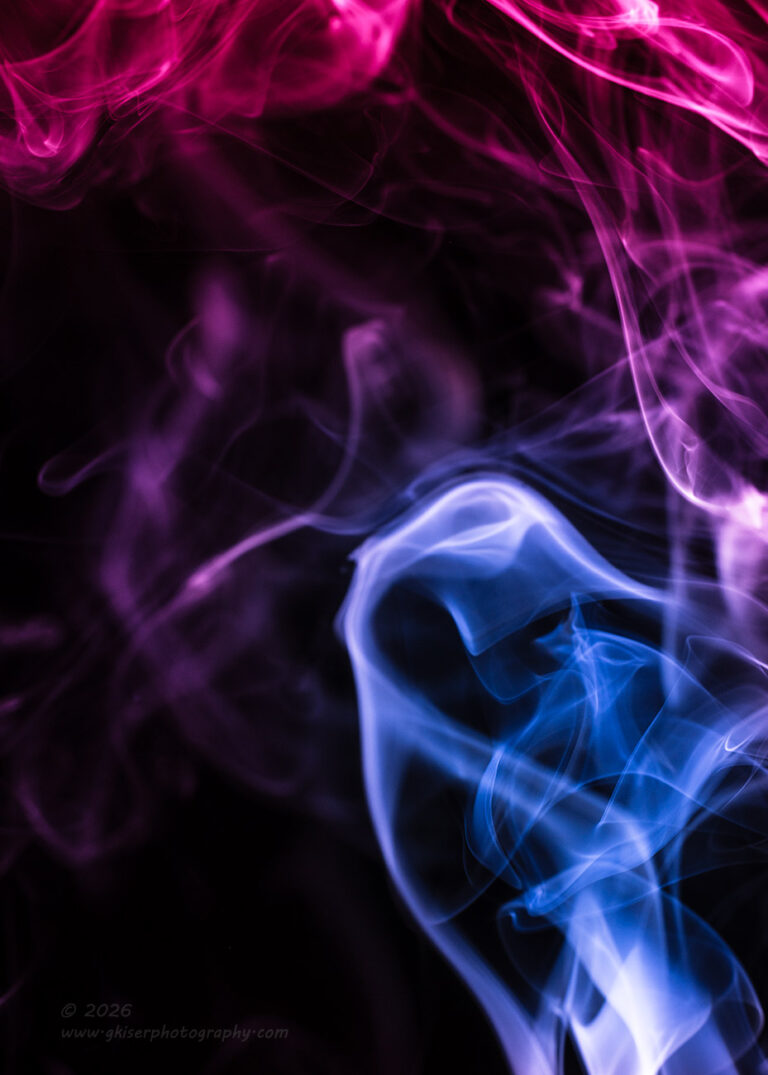
Now, I will say that most of the time when I am doing smoke photography, I will get roughly the same number of frames for the session, but this time was one of the more successful times in terms of hit rate. I ended up with the 21 keepers that you see here in this blog which is roughly a 15% hit rate. I don’t think that I have arrived at that before, but I also have run into problems that affected the quality of the smoke before. As I mentioned earlier, the last time I did this, the HVAC was left on and when the fan was on, the smoke lost a lot of structure. There was another time when I used my studio strobes for faster recycle times but forgot that there was a cooling fan for the unit. This created all kinds of problems in tracking the smoke as the fan cycled on and off. There were other times that I missed focus slightly while keeping too shallow a depth of field that limited sharp images. I’ve even misjudged exposure before and had to struggle to get the smoke as bright as I wanted it in post. This was probably the most technically problem free session that I have done. The only issue that I ran into was the dud incense cone that didn’t stay lit. That took place before the photography actually started so it didn’t affect the final outcome any. After that, it was smooth sailing with the exception of the slow recycle time on the speedlite which might have been mitigated by using fresh batteries.
With success from a studio session like this comes some negatives as well. What I set out to do was to get myself a little more prepared to see abstracts and to give myself something inside to do during this cold day. My plan was to have this blog done by dinnertime and be able to sit back and start to plan out the trek for tomorrow. Instead, I was in Lightroom much longer than I anticipated and with that many images, I was left typing for several hours. I would have preferred to break this up into several chapters, but I figured that there really wasn’t enough narrative to support that as there wasn’t much excitement in the setting up of each image like with my normal treks. I set things up once and just went with it for the duration. I just can’t draw that out over several days’ worth of blog entries. I thought about just doing a quick introduction to the blog and then just leaving the images to speak for themselves, but that felt like a cheat that I didn’t want to do. The compromise is what you see here with a little bit of talking about what this is as a technique, how I do it, and why I chose to do it today. This feels like a good way of doing the blog entry.
By the time it is all said and done, the heat has warmed the house back up and I am still under my heated blanket. Toni has returned home from work and I’m about ready to go up and start planning my next trek. I’m hoping to be able to focus more on abstracts during my time there, but since it is a new location, I will be getting some more standard compositions as well. This means that I will likely come home with a bunch of new photos and likely will have a multi-chapter blog entry for that one. Of course, I might be completely wrong and not get the nearly the images I am suspecting that I will get. I still don’t have a definitive agreement on being able to photograph out there, only the request to come back when he is not going out to lunch to ask. I’m assuming that I will get permission to be able to work the area, and I’m looking at getting started relatively early just in case he pulls the plug on me for his lunch.
Keep your fingers crossed that this turns out as good as I’m hoping. If things go well, you should be hearing something from me either tomorrow or Wednesday. If you want to make sure that you get notified, be sure and subscribe to the blog so that you will get an email notification of every new entry. That way you are sure to not miss out on any new photos or reading about my adventures.
Until then…