Friday, February 23, 2024
Black and white, that has been the focus for me over the last couple of months. I’ve really enjoyed it, and I’ve learned a lot about how to effectively work in a style of photography completely devoid of color. I fully intend on continuing with the theme throughout the year because I really do want to get much better at it than I currently am. Therein lies the problem though. I started out as a color photographer, and I have worked in a colorful environment for many years which tends to become ingrained in one’s mind. Concentrating on everything but color has left me feeling like there is something missing from the whole process.
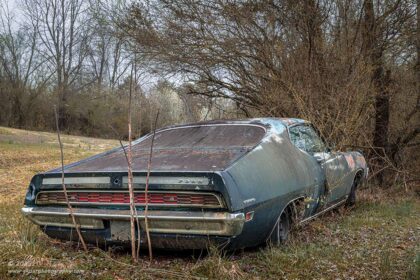
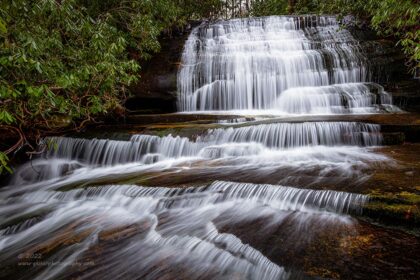
For the last couple of years, I have been working on learning color harmonies and how to massage the colors in an image to help tell the stories that I want. It is kind of hard to turn that off, but it seems that more and more I’ve been photographing scenes that have muted colors at best like the light blue Thunderbird from last week. When there have been colors, it seems that the scenes are largely monochrome like the muddy waterfall that I shot with Toni last month. This time of year, the colors are not all that bright anyway which makes it difficult to find those colorful and punchy scenes. Ideally, I would like to do some portraiture and work with some colors in the studio, but that always requires a sitter in front of the camera. Here of late, there hasn’t been much portrait work to be had, and it has been a very long time since I’ve had a test shoot.
The question has become what to do about that? I actually needed to put some of the studio gear through their paces to make sure that everything was still functioning as it should. I needed to check batteries, and just reacquaint myself with the strobes that have been in the cases since October. While thinking about what I could do, it occurred to me that it has been a while since I’ve done my smoke photography. I’ve found that the best lens to use for that is my 100mm macro which happens to be an RF mount which makes the R5 the body of choice. I needed to get that one out and working to cycle through the batteries, so that was a plus. I also needed flash to freeze the smoke, and that would allow me to check on the one studio strobe that has been in storage the longest, as well as pulling out the flash trigger and the light meter. I could also go through my support stands to mount the black background that was needed. I was going to be able to pull out everything that I needed to check on with the added benefit of making some photographs.
When I got done with my morning office work, I started to pull out the gear. The first thing that I did was roll the table over to an area of the studio that would be least affected by the heating vents. I could have turned the heat off, but it stays cold down in the studio and the thought of no heat for even 30 minutes was not a fun idea. Fortunately, the space is large enough I can move well away from the vents for when the heat kicked on. I went through my stack of incense cones and found my candle lid which serves as the surface for the incense to burn on. Then I erected the black pop-up backdrop on one of my tall light stands with the magnetic holder mounted to the top. Next it was the studio strobe mounted to another light stand. To that, I added a 7″ reflector with a 10-degree grid inside of a set of barn doors. The flash was aimed to the side of the incense cone and I ran it at half power to overcome the grid and the distance. Something I found out the last time that I did this type of photography is that the studio strobes have a cooling fan that will affect the smoke. Ideally, I would have just used a hotshoe flash which doesn’t have that problem, but I wanted to make sure that the studio strobes were still functioning correctly. By doubling the distance, I was able to avoid the pull of the fan, and still had enough power to light the smoke at two stops overexposure.
Now, all I had to do was grab the tripod out of the truck and mount the R5 to it with the macro lens attached. I made sure and used the lens hood to protect against any stray light from the strobe which would have caused reduced contrast over the entire image. The last part of the setup is the most difficult in my opinion and that is locking in the focus. I went with an aperture of f/11 to make sure that I had some wiggle room for when I was blowing the smoke around as I wanted to have this as sharp as possible. I used a ruler on the same plane as the incense cone to get the focus manually dialed in. My thought was that the smoke should waft straight up from the cone and that is where the focus was set. It was going to be too dark during the shoot to be able to use autofocus since I only had a desk lamp lit behind me.

Once I got everything all set up, I turned off the overhead lights and lit the cone. I adjusted the camera slightly to get the smoke in the frame and shot a test exposure. It looked like it was in focus, but the smoke was way too dark. Since I was running the strobe at half power, I didn’t want to increase it any more which left my only option as boosting the ISO. I knocked it up two stops to ISO 400 and shot another test frame. The exposure looked better, but it was still very dim. Something wasn’t adding up here.
I took a look at the incense which was only sending off a very little bit of smoke. It was actually going out from all appearances. I struck another match and tried to relight it. It caught for a second or two and then went out once again. Not wanting to fiddle with this one anymore, I got a fresh cone and put it in the approximate same spot as the original one. I used the ruler and set the focus once again before lighting the new cone. Of course, the first match broke with very little pressure, and I started to think that this was just not meant to be. Not wanting to give up that easy, I went for the fourth match of morning to get things “fired up.”

That match worked, and so did the cone. With the smoke flowing again, I did a quick test exposure to make sure that everything was going right at this point. The focus looked good and the exposure was pretty close to right on the money. This is when I started waving my hand and doing quick puffs of air with my mouth. These different techniques would yield different patterns which I could barely see in the LCD. I could see just enough to kind of plan when I would press the button on the remote shutter release. It was working out pretty well considering smoke is completely random which made it very hard to compose and capture the right moment.
For the most part, I was holding the camera with my left hand which allowed me to pan left and right on the tripod to adapt to the position of the smoke. My right hand was holding the remote release which I would fire whenever the smoke looked particularly interesting in the frame. It is kind of hard to get the compositions when I am about 8 inches from the subject with a 100mm lens that gives a very small field of view. I was making it work and getting better at it as I went. As I was looking at the quick image reviews that popped up, I realized something rather humorous about this endeavor. I was doing this because I was looking forward to working with bright and vibrant colors once again; yet I was looking at white smoke on a black background.
Just like that it hit me that I have been taking colorful images here lately and removing the color to make a black and white scene. Now, I was taking a black and white scene with the intention of adding color to it in post. There is something wrong with this, but I didn’t care. I knew how I would be editing these photos, and I was excited to see the frames click by as the incense burned. When I started doing this type of photography I would add color, but usually just one hue would be added and any deviation from that would be from the smoke color tones that were present in the original. When I revisited smoke photography a few years back, I started adding different colors to different portions of the image by way of masks in Lightroom. My abilities with this have progressed over the years and every time I go through the editing process, I get a little more detailed with the colorations.
One thing that I was looking forward to was the fact that I now have the ability to manipulate the tone curves within the masks which was going to make things so much easier than they had been in the past. My ability to change the colors had been kind of limited in previous versions of Lightroom which had forced me to use the hue adjustment as well as tinting different masks. Now, I was going to be able to work within the tone curves adjustments in the red, green, and blue channels. This made things much quicker and more precise. I just couldn’t wait to get in and start with the edits.

There was no reason to rush the shooting though because I only had about 25 minutes before the cone burned out. Because of the smoke that started to fill the studio, I would not be able to run another cone for quite some time. This limited my shoot to less than 30 minutes which was plenty, but I needed to take advantage of every bit of that time because I knew that the culling process would eliminate a ton of the image because every one of them was a purely chance composition based on how quickly I could recognize an interesting shape and press the button before it was gone. There were plenty of shots that were just randomly done because I saw the smoke looking active. It was all chance at the end of the day, and that is what makes this type of photography so much fun.
When the incense finally burned out, I had shot 154 frames which made me think that I hadn’t formatted the memory cards before getting started. There was no way that I had shot that many frames, but a quick check confirmed that I had. I guess I had been having so much fun that I really wasn’t keeping an inner count on how many button presses I had done. It mattered not because I knew that the vast majority of the frames were going to be worthless and destined for the trash. I was only looking for a half dozen or so to play with in Lightroom to scratch that color itch.

Without even breaking the set apart first, I pulled the memory card and took it over to the computer to import the images into Lightroom. They started to pop up one at a time but looked really blah with light gray smoke on a black background over and over. Some were out of focus, and there were a few early ones that were underexposed as were a few of the latter ones as the smoke was dying out. I started at the end and worked my way to the early frames as I gave ones that showed promise a single star. I then went through those to find the ones that were in focus and had a composition that excited me. Those were given two stars. When I got to the two-star field, I realized that I had 15 photos selected which was right at 10%. That really surprised me because the hit rate is never that high when shooting smoke like this. Instead of culling any further based on my reaction to the black and white photos, I decided to start playing around with them and see where it went.
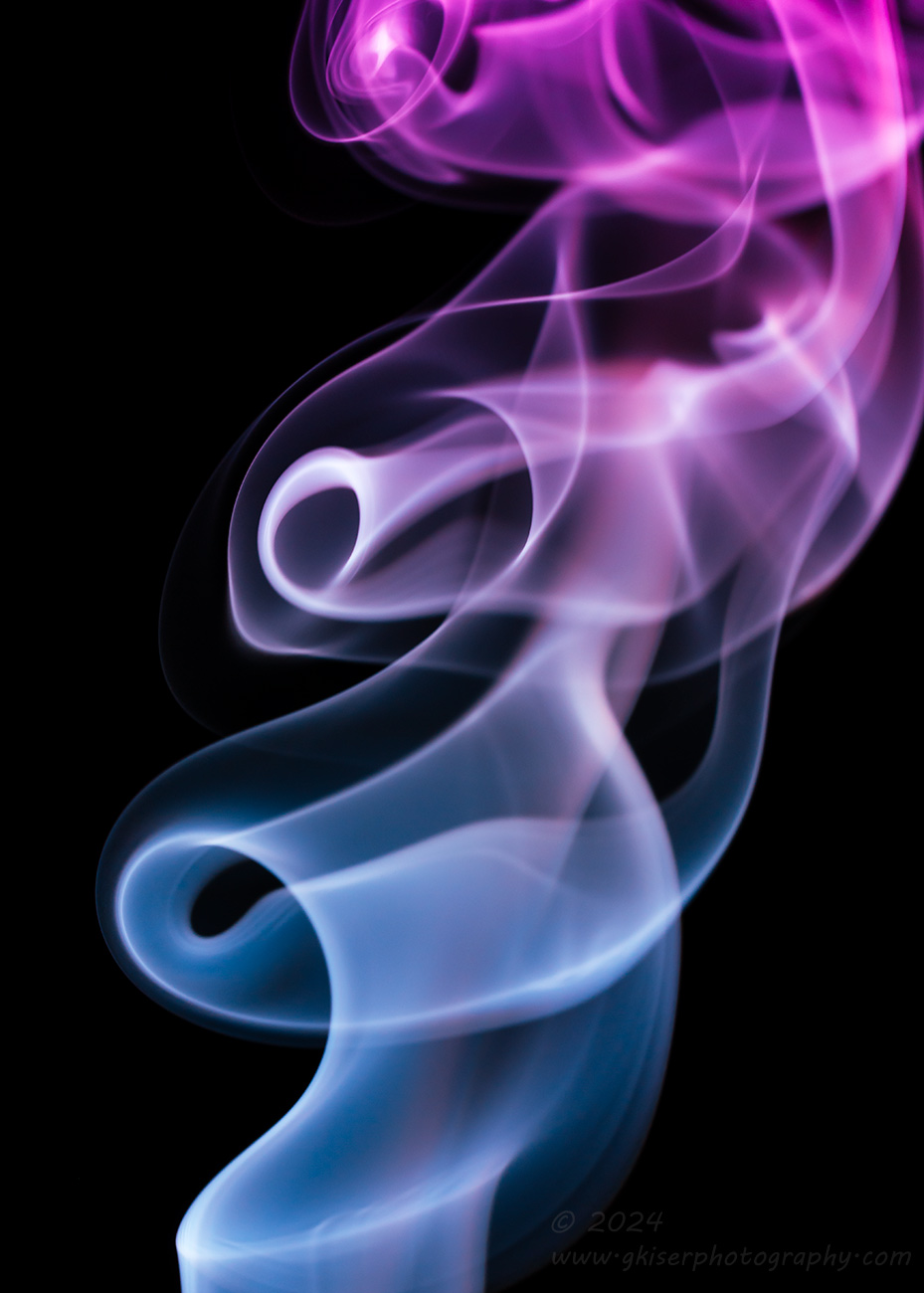
I started out with some of the easier ones to work with which were more simplistic in composition. I established how my basic edits would go, and then I started to work in the masks with the color. This is where the images started to really come to life. For me, the editing process is more fulfilling than the actual capture which makes this a very unique type of photography for me. Usually, the edit is something that I do to get the photograph closer to my previsualization. In this case, I don’t really have a previsualization of the image because I really don’t know what I have captured until the exposure is finished. The pattern of smoke on the screen will usually dictate how the edit will go and what story I want to tell with it.
Yep, you heard me correctly, there can be stories with random smoke as well. When looking at the RAW files, I start to look for shapes within the smoke much like looking at clouds. I try to find what I’ve captured and then I decide how I want to present the image in terms of post processing. This is where crops and colors come into play. I’ve found over the years that I can really establish the shapes that I see by choosing colors that go along with what I see. It is a very artistic process with no foundation in reality, but my hopes are that our memories will start to see connections.

As I worked through the edits, I started to see more and more potential in the photos which prompted me to go through quite a many RAW files. I started edits on all of the 15 images that had been awarded two-stars, but then started to cull those down for the final edits. At the end of the process, I was left with nine keepers from the morning which was exceptional. Something that I noticed was that I had not done any high key renderings on any of the preliminary edits. This is not a hard thing to do as it only requires switching the ends of the tone curve, but I just wasn’t feeling the smoke on a white background this time. I really loved the rich colors on the low-key background which is what I ended up going with for each of them.
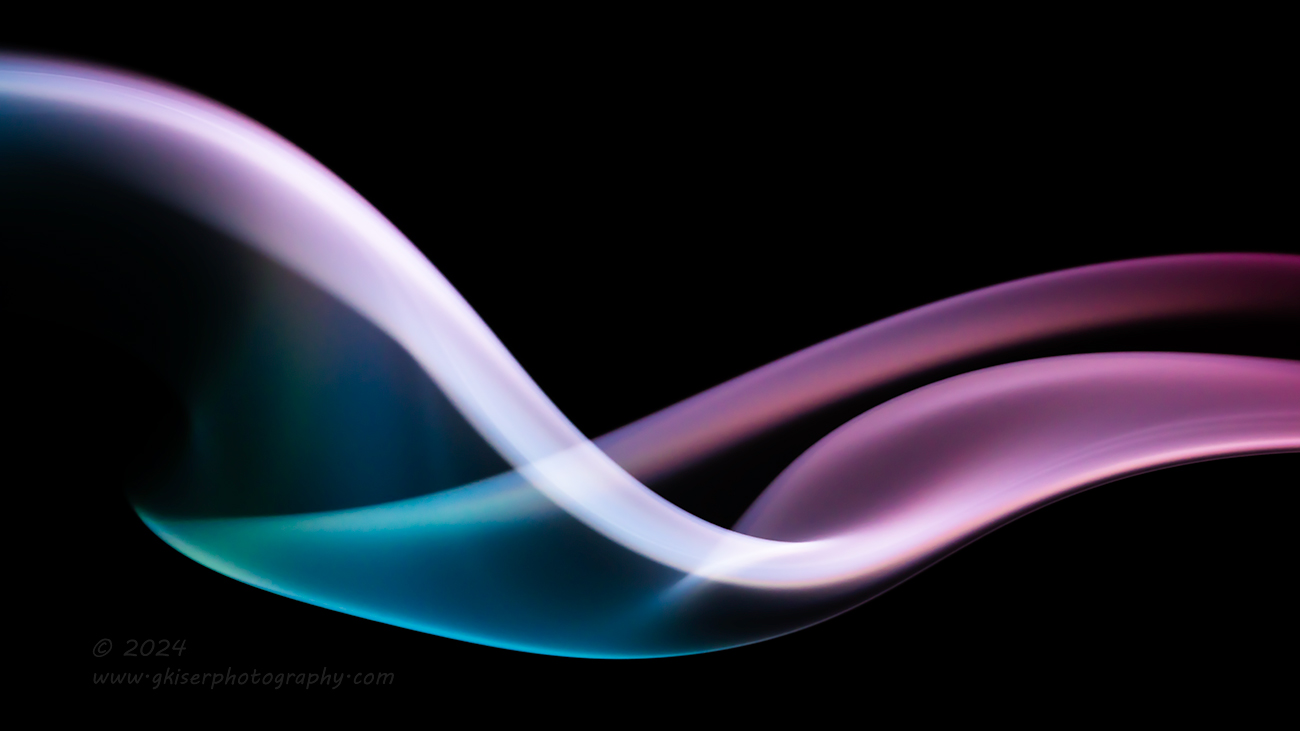
The photos that I picked can be divided up in to three categories. The first one is that of a very simplistic composition such as The Glide. In this type of composition, the smoke wasn’t doing much at all save for a small buckle in the flow. I liked these minimal compositions for the elegance of it all. The second type of composition was one where the smoke had the scroll like detail that is usually the hallmark of this type of photography. You will see this type of composition in the photos like Roll Up and Random and Rhythmic. These are still simple compositions but there is a bit more going on within the frame to keep the attention a little longer. The third type of composition is one that I am appreciating more and more as I do this style of photography. It can be seen as a confusing mess as the smoke is totally disrupted and usually fills the frame. There is not necessarily a direction through the frame in terms of how the smoke progresses, and it looks very random at first glance. These are the photos that I would trash when I started this type of photography because it didn’t fit the “look” that I thought smoke photography should have. Disappointment is one of those types of compositions where there isn’t any structure to the smoke at all. I would look at the frame as a waste and move on to the next one to see if I managed to salvage some smoke structure.
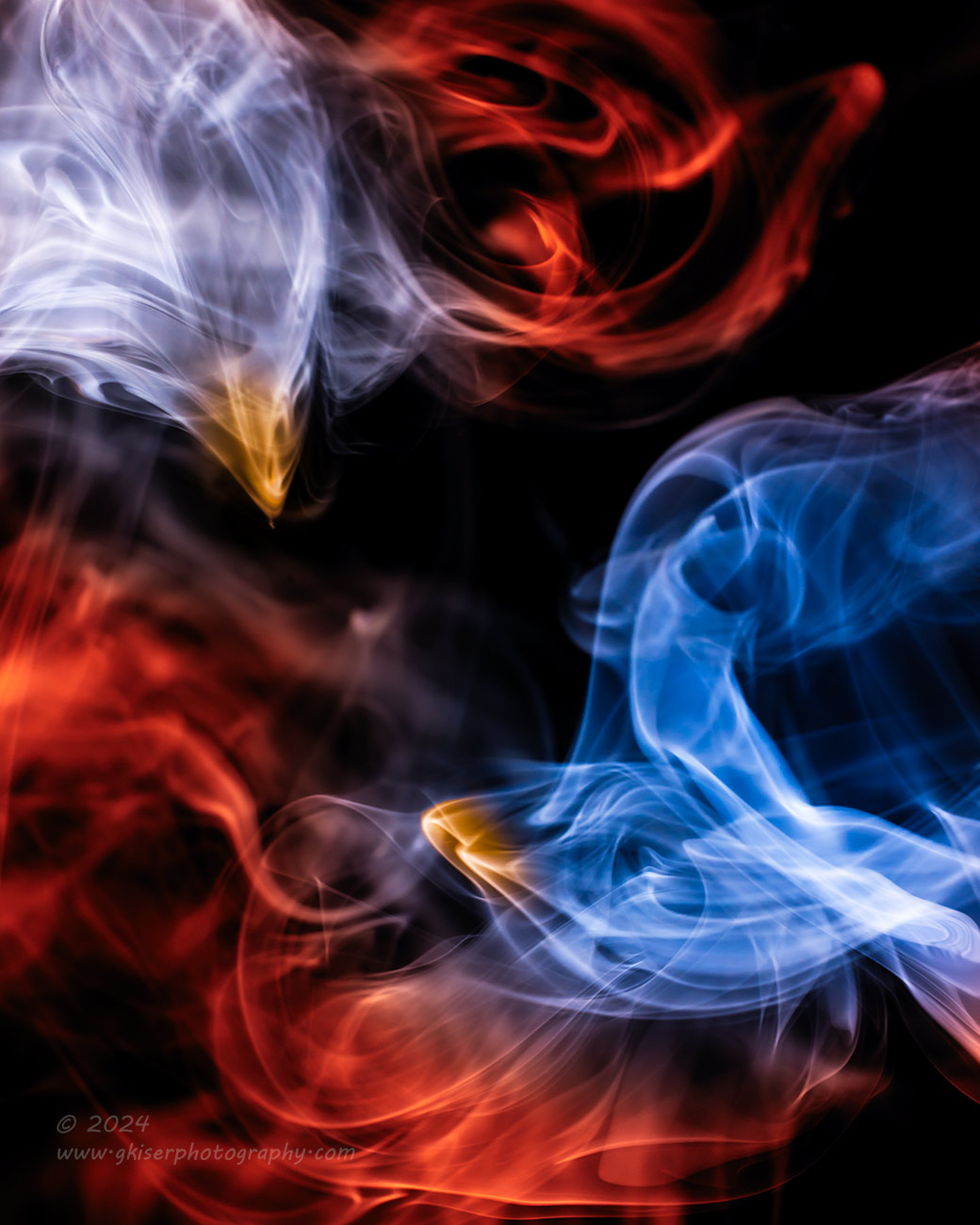
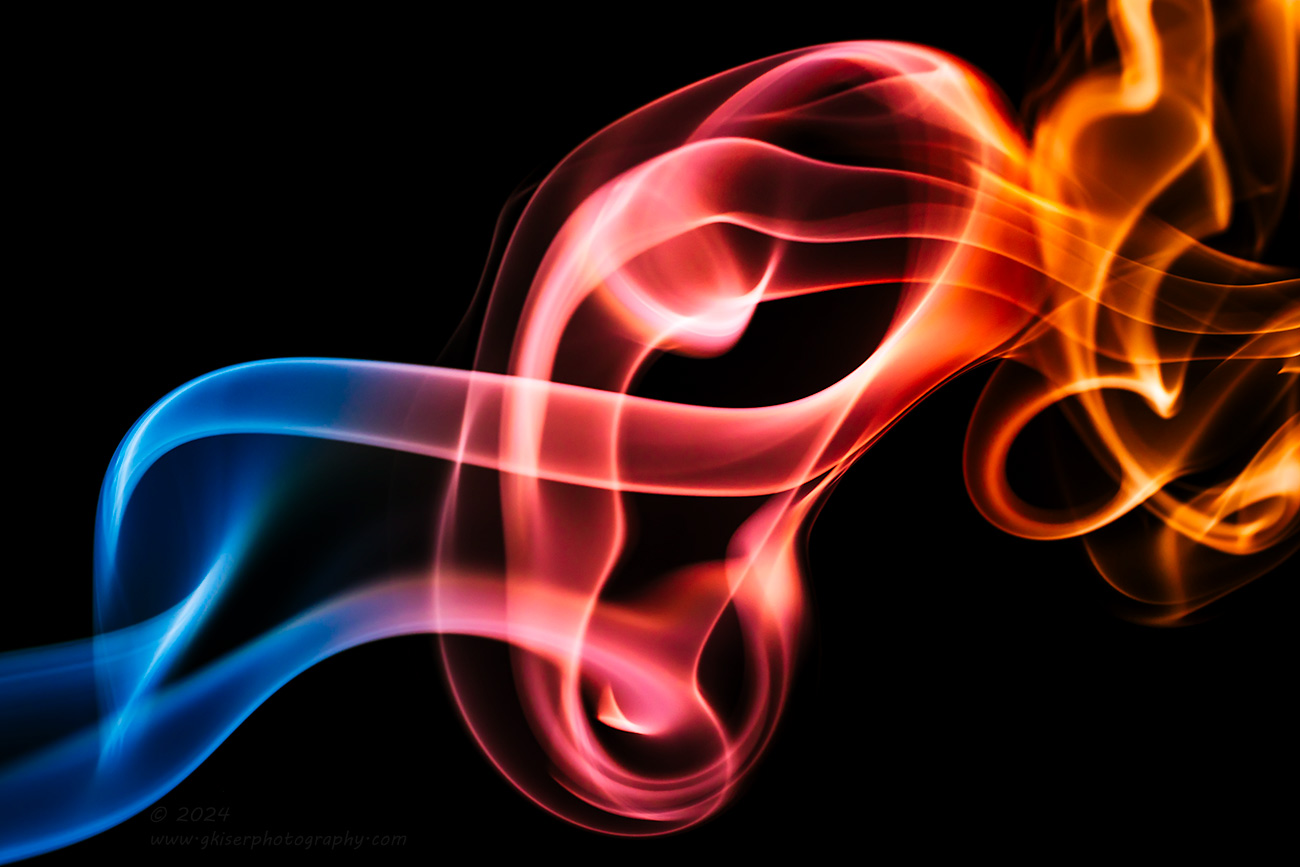
I’m not sure where the blame might be for my change of heart, but I have a feeling that when I started doing different colors within the frame my eyes opened to other possibilities. Take the image directly above for example. As I mentioned, this is one that I would have tossed aside years ago. When I went through the second round of culling this time, I started to see the head of an Eagle in the upper left and the body of a small baby bird in the lower right. There was a positioning between the two that indicated a relationship which was what I decided to bring out in the edit. There was no sleight of hand needed, and Photoshop was never touched until it was time to resize for uploading. What you see here is the product of bringing colors into the frame to support what I had seen in the random structure of it all. It took a while to get the colors and the gradients all set, but in the end, I had the story that I wanted to tell, and this very random pattern of smoke turned into my favorite photo from the day.
You know what I saw when I looked at this, but I’m not going to fully tell you the story that I came up with during the edit. I want you to think about it for yourself and see what you come up with. The chosen colors have a lot to do with the story as do the objects that have been identified through color. The fact that I was able to get so much out of 1/250th of a second worth of exposure and probably 1/1000th of a second worth of flash capturing a random whisp of smoke from an incense cone just amazed me.
In fact, as I look back through these photos, I’m left with a sense of awe that I have created a way of doing smoke photography that I have yet to see. I’m sure that I am not the first to do it this way, but since I have not seen it done, I can take credit for creating the ideas behind it on my own. To come up with something new in photography is kind of unheard of because it has all been done before. This may very well have been also, but this really feels like something unique to me and that feels really good.
Abstract photography is very beautiful I think, and I don’t do it nearly enough. It is not the easiest to find abstract subjects in the areas that I photograph, but when it comes to smoke photography, abstract is king. The same can be said of when I photograph oil and water like I did a few months ago. I have to be in the right frame of mind to embark on either of these journeys, but they are very rewarding when I do. I hope that you have enjoyed the photos from my half hour shoot earlier today. Don’t forget that if you connect with any of these photos, I would love to help match you up with a print to call your own. Abstract work like this can go in any number of locations and just imagine the conversations that it could start.
If this is something that you would like to learn how to do, let’s talk about a mentorship session to get you started. You never know what you could unlock about yourself and your art until you start to create from absolutely nothing. I’m here to help you along on your journey wherever you happen to be at the moment.
Until next time….