Welcome back for another installment of my monthly Behind the Camera. If you are new here, this is a feature where I talk about different concepts in photography or discuss some of my thoughts behind the scenes. I try to make this an educational feature and one that provides a bit more insight into the creation of photographs for those that enjoy looking at the photos that they see on a daily basis. Over the years I’ve talked about three main ingredients in photography, which include the subject, composition and light. I’ve picked apart most every aspect in some way or another through the years so none of these elements should be a foreign concept to you. What I would like to discuss today is which one is actually the most important. Just last month I talked about why the subject isn’t nearly as important as how you shoot the photo, so we are going to automatically dismiss the aspect of subject from this discussion. That leaves us with light or composition.
Which do you think is most important to a successful photograph? I’m going to bet that you will say light, and I totally get where you are coming from. Without light, there is no photo. Photography is essentially painting with light, so without having a light source of some sort, there is nothing but a black frame to be captured. Obviously, an ingredient that impactful on a final image has to be the most important part of a photograph. Think about it, the warm light of sunrise giving that soft glow to the landscape, nice, soft, stretched out shadows for depth, and perhaps some color in the sky. That is magical light and what so many landscape and portrait photographers seek out. On the other end of that spectrum, you have a clear sky with the sun directly overhead providing very harsh light and strong shadows underneath different elements in the scene. This is the type of light that most photographers will avoid at all costs and will take a nap or grab a meal before the softer light of evening comes back.
That is the argument for good and bad light, and to listen to most photographers, that is the key to making a good image. If you only photograph during the times when you have the “good” light, you will have great images. I don’t disagree and recognize that really good light makes for some strong images, but at the same time, those photographs can be ruined because of the direction that you are shooting in, or the subjects that you have chosen to put in the frame.
Light is only an ingredient and is not the end all and be all of a photograph. It is also the one aspect that we have no control over. I don’t know about you, but I’m not leaving the success of my images up to something as fluid as the lighting conditions. First of all, I would be restricted to only about an hour a day that I could potentially shoot and only on certain days when the sky looked a certain way. I would have to plan out so many aspects of the photo to include the direction that I would face and the location that I would have the camera set up. Then, only after all that planning, I would have to wait to see if the light did exactly what I wanted it to. Sometimes it would, most times it would not.
I’m here to suggest that light, while important, is ranked right up there with the subject of the photo. The one ingredient here that I think has the most effect on the final image is the composition. For those that have attended my workshops on composition, or have taken part in a mentorship with me, will know what I’m about to say here. Out of the three primary ingredients of a photo, the only one that you have total control over is the composition. The actual, existing light is something that you have to work with even though you may have planned out what to expect when you arrive at a location. A simple cloud can change everything about the lighting and crush your hopes of a great photo. Even the subject has very little wiggle room. You can decide to capture it or skip it. Those are your two options with any given scene or subject. I would argue that you are possibly choosing the time to photograph the subject based on the lighting on that subject. This is the smart way of doing things, but you are still not out of the woods.
It is through composition that you can fully take advantage of a scene that includes a subject and a specific quality of light. Through composition, you can even make use of less than ideal light while making the subject look better than it would otherwise. Composition is the sum of all the decisions that the photographer makes related to how a subject looks in the existing light. In short, the part that you have the most control over is your choice of composition and how you utilize the existing light and the chosen subject. This works no matter what kind of photography that you are engaged in. I call it reading the light and you form your creative decisions based on what the light is doing to your subject at the times you are there with it.
This honestly simplifies the process beyond explanation. You no longer have to stress over weather forecasts because you know that you can find and capture photographs in any condition. The caveat is that you really have to fully understand composition and how light works before you can do this successfully. That takes time and effort, but once you get past that golden hour cage that photographers find themselves in, you will realize just how restrictive that school of thought has been. Once you can control your composition based on the scene and the lighting, you will find that there really is no bad light. Light is light, and while I do prefer to work in certain lighting conditions, I know that I can create meaningful images in both that golden hour and at high noon on a cloudless day. Anything in-between is fair game as well. I would even offer that thanks to other light sources, I don’t even need existing light naturally occurring in a scene to make a photograph. Through composition, I can bend the scene to my will and make use of whatever I have in front of the lens.

Maybe this example will help to illustrate the point. The basic setup was that I was looking to work with an old commercial building that I had captured before. With the Spring colors, I was looking for a different way of seeing it. I had already photographed the compositions with the pink tree to the right and was happy with those, but those photos were more about the tree than the building. I was looking around at different views of the building to see what caught my eye. The sky was clearing up quickly and there were very few clouds in the sky by this point. The sun was still rather low and giving a nice warm glow across the landscape behind me, though it was well after golden hour. That warm sunlight wasn’t falling on the building as I would have wanted which was causing me some issues. Now, if light was the most important aspect, this building would no longer be game to photograph because the light was not good at all on the building itself.
For those photographers that think that light is the key ingredient, they would have been turning the camera around and photographing in the other direction getting that warm light on the landscape. This was the area that had the most pleasing look according to the light. The problem was that the area that was well lit was not interesting to look at. It was a highway with an intersection and other buildings that weren’t interesting at all. Where the light was, there was no real interest. The building that I was working with was the interesting subject in the area, but there was no light on it by this point. That left me with figuring out a composition and that was where I had total creative control. Through composition, I found a way to capture the beautiful colors of the low sun on the landscape without the distractions surrounding it. I did this through the use of a reflection in the glass blocks that made up a window on the building that I found most interesting. That brought in the textures and evidence of decay into the photo. I knew that the fact that the building was in shadow at this point would render the color temperature much cooler than that of the landscape in the reflection which was much warmer. I liked the juxtaposition of the colors, and I really liked that the distractions in the landscape were eliminated through the distorted reflection in the glass blocks. All I had were the colors that interested me being framed by the building that interested me. Suddenly, I had an interesting photo that included all the elements that I was there to capture, although done in a way that I had not really thought about before.
Through the choices that I made in composition, I was able to take a scene that just wasn’t going to work and make it into a photograph that to this day I still love. It wasn’t the subject, it wasn’t the light, it was how I put those aspects together through composition that created the actual photograph. Had I made different compositional choices with everything else being equal, the photo would not have been nearly as strong and probably wouldn’t have made it through the culling phase of the process.
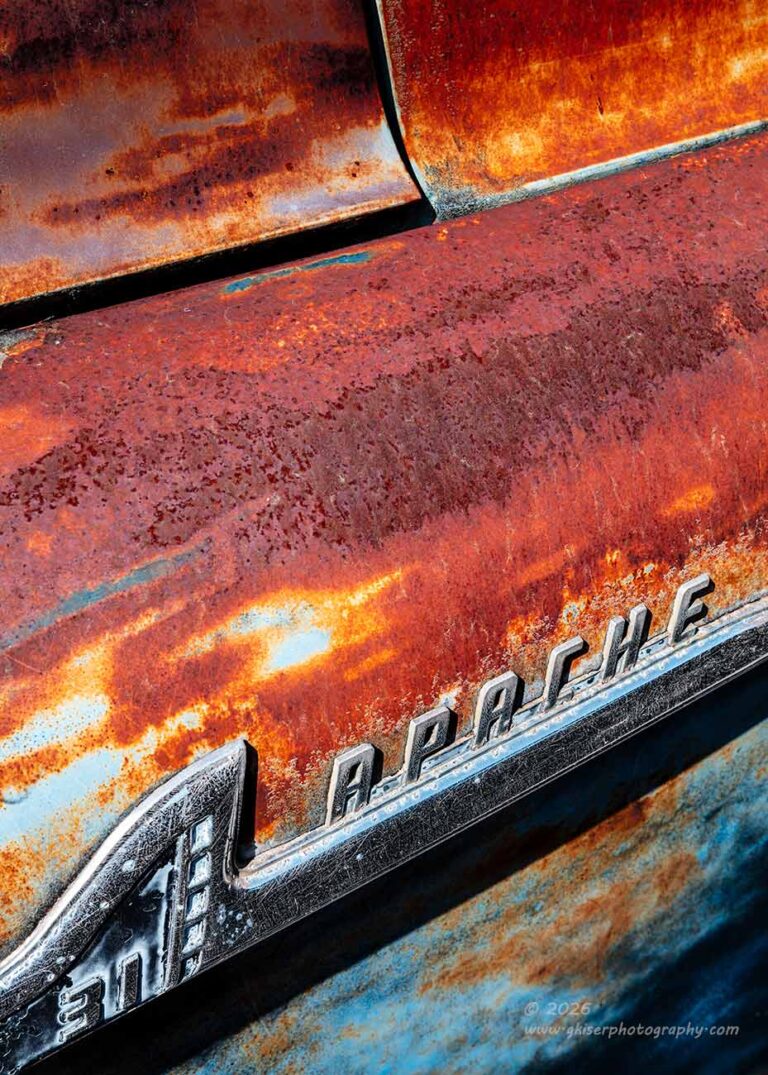
Here is another recent example that will help to illustrate what I am talking about. I happened to be feeling rather creative on a sunny day which is the lighting that I least enjoy working with. It tends to restrict my options on composition because of the shadows that are created. A nice cloudy day will reduce those shadows and allow me the opportunity to have even more creative control over the compositions. However, I spotted a Chevy Apache pickup in the parking area that hadn’t been there before. Not knowing how long it would be there, I needed to stop and try to get some photos of it while I could. With the truck sitting where it was, the light was causing some very unflattering shadows on it, and there were too many other vehicles around it to be able to get an overall and establishing shot of it which would have made those shadows a little less prominent. That was as much control as I could gather over the subject. I wasn’t able to move it at all, I couldn’t move anything around it, but at the same time, I knew that I needed to photograph it before it was gone.
As far as the light went, there were really very few clouds overhead and the sun was getting higher in the sky. Conventional wisdom was to notate the location and come back at another time. That was a risk that I wasn’t willing to take because of how likely it was that the truck would be gone the next time I came by. The one quality that the strong sunlight gave me was some enhanced saturation in the colors of the patina and a chance for some deep shadows that could possibly become elements on their own. While unflattering over the entire truck, I knew that I would be able to find some areas of the truck where the lighting made more sense and would enhance a photo. Of course, this was going to be the result of the composition that chose to shoot.
I spent some time looking around and found that I really liked the difference in patina between the top of the hood and the side of the truck on the driver’s side. The truck had been painted blue at one time and that paint color was still showing in places while the upper surfaces had turned mostly to rust. The contrast in color was what grabbed my attention and I found that contrast to be conveniently located around the emblem on the hood that showed a lot of information about the truck. There was also a deep shadow beneath the emblem that added depth to a scene that was largely flat.
The composition that developed was one that created a bit of a diagonal feeling to the image thanks to the angle of the camera to the emblem. To keep it from being just about that emblem, I extended the frame higher so that I could get some panel lines involved which would balance out the emblem which was lower in the frame. The blue tones ended up taking up a smaller portion of the frame, but enough to balance and legitimize the warmer tones. All of these choices took into account the subject that I was working with as well as the existing light on that subject. This is the power of composition over all other aspects of a photo. I believe that when I was capturing this image, it was nearly noon, and the sky was mostly clear which as I said would be the time that most photographers would go home or take a break. I used what I knew about composition to fight back and take control of the scene and create images that to this day I still really like.

Now, I’ve talked a lot about my less than ideal lighting situations with full sun and those situations make for great examples of what I am talking about, but what happens when I have my preferred lighting on a scene? That is a valid point because with the preferred lighting, wouldn’t that become the most important aspect for an image because those are the conditions that I like to work in? I still argue that composition is going to be the most important element yet again. Even more to the point, how I deal with the final look of the composition.
The setup for this shot is one that I really look for in an image. The sky was cloudy, though I would have liked to have had more texture in the clouds for more interest. Winter was still holding on so that the trees were still bare and things looked really quite dormant. I came upon this scene where the old red truck caught my eye. The light was great on it with the soft, diffused lighting from the overcast sky. I tried to get permission from the owners, but after talking with two different houses nearby, I wasn’t able to locate anyone that could give permission. That kind of left me with limited options on how to capture this truck.
Thanks to the light being so soft, I wasn’t really restricted on the direction that I shot from, and unlike the situation with the previous example, the overall lighting was pretty flattering to the truck. Yet, I still had to create an image that established some kind of visual storyline and a visual pathway through the frame for the viewer to follow. Even though I had great light, if I just framed up a picture where the truck filled the frame, that wasn’t going to cut it. I had great light, and a pretty decent subject. I could have blown it all with a haphazard composition.
I actually did several different compositions while I was out here, but this was one of my favorites. I think that I was able to successfully take into account the subject, the surrounding scene, and the lighting to create something pretty great. Because of the flat lighting, I wanted to use that mood as kind of a somber overtone to the entire scene. That meant that I needed to include all of the dormant vegetation as well as the vacant derelict buildings to build the story behind the truck. The scope of this composition took into account the way that the light was looking across the scene and fully capitalized on that aesthetic. The choice for a panorama came from a few different considerations, one of which was dealing with the sky. As I had mentioned, I would have preferred some clouds in the sky, but by reducing the visual weight of the sky in the overall shot, I eliminated the lack of texture as a concern. The sliver of sky that was present is effective at creating scale to the scene.
To take it one step further, I really worked on the colors of the image in post where I desaturated everything and shifted the tint so that the red of the truck wasn’t so jarring to the image. The processing supported the lighting that was on the scene which was all brought together through the composition. The lower saturation levels also helped with the lack of detail to the sky making it more of an atmospheric element to the image. When looking at the trio of ingredients in a photograph, I see this one as one of those times when I had all three of them in my favor which is just about guaranteed to create a really great image. I still stand firm that it is through the use of composition alone that made all of those elements come together so well.

For those that have followed me for a while, you will know about my preferred recipe for photographing waterfalls. I’m a stout proponent of working on cloudy days with diffused lighting to avoid the uncontrollable specular highlights and high contrasts on the rushing water. For me, I just like how the waterfalls look with the softer light. Does that mean that I am unable to photograph a waterfall in strong direct light? Not at all. It just makes it to where I’m not as happy photographing the entire scene because of how the highlights vary from area to the next. This is another time when composition comes into play to rescue the scene.
Let’s take a recent trek out to Brevard where I had no control over what day I was going to be there. As it turned out, the beginning of the day was nearly perfect for lighting, but as the afternoon approached, the clouds cleared up and left us with some pretty strong overhead light which is probably the worst light for waterfalls. I was with another photographer which knew the area well and I knew that he would get us into the right places for the best shots which meant that I was going to stick with the program for the day. We ended up at Triple Falls and there were crowds and lots of sunlight. Much like the Apache pickup from earlier, I didn’t really see this as a chance to come back later. It was about four hours from home, and we were here now. I owed it to myself to get whatever shots I would be able to get while I was here.
The question was what to do about the terrible lighting on the scene? I wasn’t feeling good about shooting the overall scene because of the high contrasts, but I could see areas of the waterfall where that contrast could be put to use to enhance the look of the falls. I started to compose around those areas and essentially started looking for detail shots. I exposed to control the specular highlights and let the shadows fall wherever they would. I ended up with a lot more detail in the isolations thanks to the high contrast. The photos took on a different look from what my waterfalls usually looked like which I enjoyed. It was the compositions that I chose that made use of the lighting that I found less than ideal which salvaged the photos.
In a normal situation, I would have skipped this part of the day for waterfalls altogether, but because of situation I found myself in, I chose to push through it. The only aspect that I had control over was the compositions that I chose, and that part is what allowed me to come away with any usable photos at all. Through the use of composition, I was able to avoid the impact of the crowds that were around us as well as the harsh light. The resulting photos made it look like this was a well planned and executed photo session where everything had fallen into place with the focus of the photo on the textures that were in the sunlight. The smoother textures were not nearly as bright which made them retreat into the background for more depth.
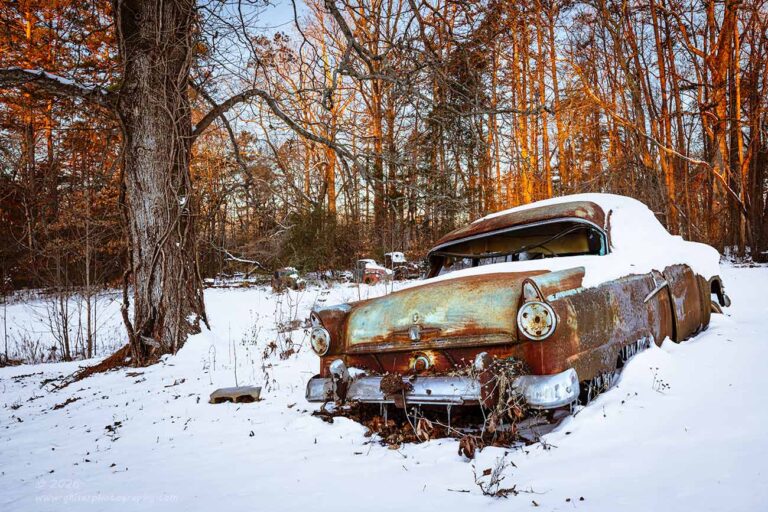
Here is another example of where light and composition are very evident in a photograph. As you can see, the sun was out and quite low which was bathing the trees in that warm glow. The sky was mostly clear at this point in the morning, and you can see that I was working with a pretty awesome subject. The part that made it all work was the composition that I chose for the frame. Generally, I would have leaned towards photographing the car from the front quarter which gives more of the personality of the car. This has the grill and headlights and more of the styling cues. However, through the morning, I had realized that with the sun coming up behind the car, I would be shooting into the sun. This would create shadows on the parts of the car that were visible in the photo while it would also blow the sky out and create bad detail in the trees. There would also be no real color to the scene.
Taking all of that into account, I started to look for alternatives to the composition that I would normally use with this car in order to take advantage of the light that was there. While walking around, I noticed how the sunlight was affecting the trees in the background which gave such a nice warm tone to the obviously chilly scene. I wanted that color in the photo for a bit more life to the scene. This meant that I had to work with the other cars that were in the far background. That element forced a lens choice so that I could get some distance between the main subject and the background. The added benefit was that I was able to get more of the trees involved in the shot. There were also other choices that needed to be made with the tree that the car was sitting next to. I wanted to include it as a balancing element between the main subject and the group of cars in the background. I even used one of the branches to point to those background cars and the trees.
This photo’s success all came down to composition, but that isn’t really the entire story. It was the compositional choices that took the most advantage of the existing lighting on the scene as well as the actual elements within the scene. This is kind of my point with the whole idea that composition is the most important part of the equation when making a photograph.
I would never suggest that you can disregard everything else but your composition in a photo and expect to come away with a winner. Far from it in fact. All that I am saying is that out of the three elements: subject, light, and composition, you have the most control over the composition. The more creative ideas that you can come up with in regard to the composition, the better you will be able to take full advantage of great subjects and the existing light whatever it might be. I’ve shown examples of all kinds of light in this entry, and the last one is that most sought out golden hour light of morning. It is the preferred lighting for most photographers, but if the composition is wrong and you are facing the wrong direction, the photo will be terrible.
How you manage the conditions and the subject is what dictates how strong a photograph will become. That management is mostly due to compositional choices like where you are standing, what direction you are shooting, and what part of the scene you are including. In a nutshell, that is the definition of composition, and it has nothing at all to do with the rule of thirds, or the golden ratio, or any of the other “rules” of composition. Those are techniques of organization which also come into play, giving you another level of control over the image.
Control is power and composition is an aspect that you can control so completely that you can take unfavorable lighting and even subjects and make them stand out. This is the creative part of photography and the part that makes some photographers artists. There is a blending of subject, light, and composition that happens in a photograph, and it is that blending which makes the image that the viewer will see. The viewer doesn’t care about the individual aspects of a photograph, only the photograph as defined by what is within the frame. That is the visual statement that the photographer is making and that is all that the viewer has to go on. How the photographer composes the image is ultimately how it is viewed.
This is why I teach composition so seriously in photography and why I will put an emphasis on reading the light when looking at a scene. I’ve done whole workshops on just composition because of how important it is. When you are looking at different tutorials online, or reading about photography, I think that composition is done a great disservice by most. It is relegated to rules and subject placement because it is easy to visualize for the student. There are even grids that can be utilized on the viewing screens of cameras to help with element placement. This is only a small part of the story, and if you don’t take into account the light and what the subject looks like, that grid will do you no favors because the photo will fail.
We have to take a much more encompassing look into the scene in order to really understand what composition will work out the best. That is where most photography education falls short in my opinion. Nobody wants to take the time to talk about reading the light. They talk about flattering light, and beautiful light, but only in the context of showing you the direction of the light they are talking about, now how they arrived at that decision. It is made to be a simple thing of go out at golden hour and the light is just beautiful. As I’ve shown here today, high noon light on a clear day can be beautiful as well, and so can a drab and overcast day. Light is light, and beautiful light can be found at any time. You just need to find the right subject for the conditions and ultimately form a composition that takes into account everything in the scene. Only then, will you start to see your photos improve.
Thank you for joining me for this latest Behind the Camera. I do hope that you have found it helpful as well as informative. I’ll be back here again next month with another installment. If there is anything that you would particularly enjoy hearing about, I would be happy to take suggestions. I just want to create a library of resources for photographers and those that are just interested in the process behind my photos. If you would like to help me out and thank me for the time that I take to share these topics, you will see a “Donate” button at the bottom of the page. This is a chance for you to virtually buy me a cup of coffee, or maybe a lunch to say thanks. Of course, if you want to virtually buy me a Lamborghini, I would greatly appreciate that as well. It is all up to you. I do appreciate you being here.
Until next time…