Welcome back to my monthly Behind the Camera. In this feature, I take the time to talk about things that I might not be able to get into completely with a normal trek and blog entry. This month I want to do something a little different. I have noticed that there are right at 100 subscribers to this blog, and I greatly appreciate you all for choosing to get notifications on each blog entry. If you haven’t subscribed, take a moment and get that taken care of so you don’t miss another entry. With all of those subscribers, I thought it would be nice to do a meet and greet of sorts. We also can’t forget those that find me through Facebook and Instagram, as well as search engines looking for photographers. There are a lot of you out there and I appreciate you all.
With that in mind, I want us to mingle around the room and meet everyone. Oh, wait a minute. I see the issue here. We aren’t in the same room, are we? Well, no matter. Take a moment to meet yourself and get to know yourself a little better.
I can feel you staring at the screen that you are reading this on and scratching your head as you try and figure out what meds I might be on…or might need to be on. In my defense, it is April 1st, so I thought that I might start this out with a bit of humor. Joking aside, I do want to talk about getting to know yourself a bit better and how that can really improve your photography. It might sound like a self-improvement seminar or possibly an early Ted Talk, but this is something that I have realized over the years and it tends to be in pure opposition to popular opinions of the influencers and those that we pay attention to when we are learning something like photography.
Think about it for a moment. Go back and look at the photographers that you follow on YouTube and those on other socials. What do they shoot? How do they shoot it? What affect has this had on your approach to photography? More than likely, the answer to that last question is very closely related to the answers to the first two questions. That is a great place to start in photography because we have to develop a baseline approach to how we go about doing things. Allow me to illustrate the point.
When I was starting photography, there was very little online about it in terms of social media posting. it was 2005, after all. My social media was books and magazines, but they served the same purpose. I paid particular attention to landscape photography because I found it to be beautiful and relaxing. I also thought that it would be very accessible as a young photographer getting started out. I just had to find some mountains, an ocean, a field, a tree, something along those lines and I would be able to create the same images that I was seeing in print. I studied what other photographers were using in terms of gear and how they composed their photos. I looked at the lighting on the scenes and tried to take it all in. I measured my success as a photographer against how closely I was able to match another photographer’s work. Essentially, I was doing my best to become a human Xerox machine where I would copy what I found to be pretty from other photographers.
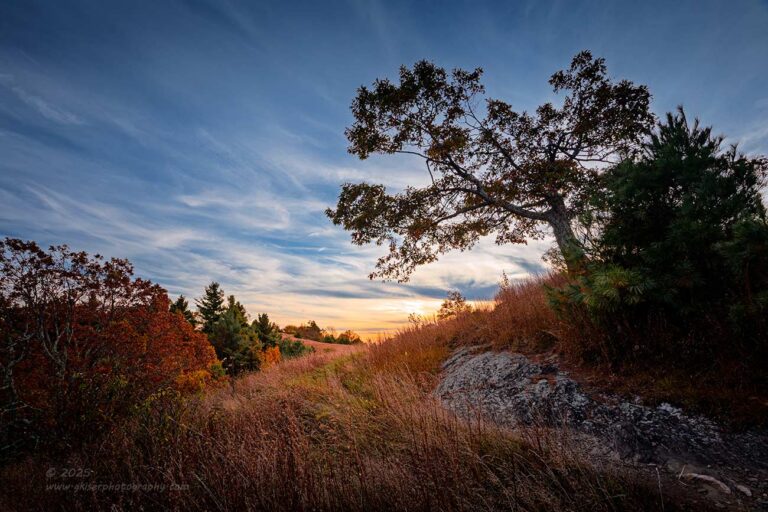
Now, there is nothing wrong with doing that in the early stages, but far too many photographers get trapped there and put their entire worth into that small bubble. They chase gear and try to find the best presets to edit their images so that they can constantly keep a few favorite photographers’ images in their grasps. Of course, this photographer will never actually be as good, or better than that finish line that has been established. This has nothing at all to do with the skills and capabilities of the photographer though. It has everything to do with where that bar has been set. If you are constantly striving to match others’ work, you will be chasing a goal that is not possible to recreate.
First of all, other photographers work is better than yours, but at the same time, yours is better than other photographers. If that sounds confusing, just click that previous link and you will see it all spelled out. Every photographer is on a unique path at a unique pace. Once you get the basic skills down, you really should be done trying to mimic others’ work because you won’t be able to do it. This is certainly not a skill issue because some of the best photographers out there don’t possess the full skillset of most camera club members who stress over things like settings and composition. What makes those photographers the best in the art has nothing to do with skill or knowledge. It doesn’t even have anything to do with location. If I were to attempt to chase photos like I see on YouTube, I would have to become a world traveler it would seem, but that isn’t the key either. The secret sauce, so to speak, is that the photographer knows what interests them and how they see the world. This is not something that can be quantified, it is an experience and something that is unique to everyone.
I firmly believe that the key to success as a photographer isn’t following trends or trying to achieve a certain kind of photo. Those things are for the muggles of the world. Seriously, if you want to excel in photography, you have to be true to yourself and understand how you see things as well as how you relate to those things. Once you get a handle on that, you can grow in your own direction free from the constraints of things that you see from other photographers.
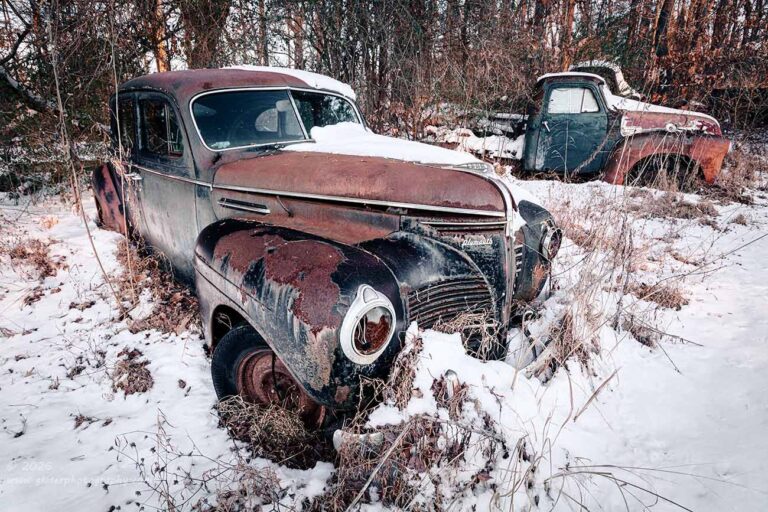
When I started out in photography, it was the landscape that drew me in. That was what I concentrated on and tried to check off all the boxes that I was seeing from other photographers. As I progressed, I started sneaking in photos of old buildings and the occasional rusted car if I could find them. These were little guilty pleasures that had no business being in front of my lens. At least that was the impression that I got from everything that I was reading which stated that Yosemite National Park was the place to go for landscapes and if you were a real landscape photographer, you would live in a tent at the entrance to the park. This thought process limited me to no end, though I didn’t know that it was at the time.
Every time I turned around, I was looking to go out at sunrise or sunset to capture that magic hour and create the images that I was seeing. I tried to find the places that I could get to which had the same look and feel as the other photos I was seeing. This only led to disappointment for the most part because the photos just lacked something instrumental. It took me years to figure out what ingredient was lacking.
After reading a book by Harold Davis that introduced me into the world of wabi-sabi, I realized that my proclivity for finding decay subjects was actually not all that unprecedented. There was a school of thought, centuries old, that found beauty in that decay and I certainly understood that. In the coming years, I started to really get to know myself because that guilty pleasure of mine was not all that kooky after all. I began to explore different ways of capturing these scenes of decay and found that many of the skills that I had learned as a landscape photographer would help me in this field as well. I loved the mating of the two types of photography and since there wasn’t much out there to really see in terms of examples of decay photography, I was left to my own devices as to how I wanted to photograph the scenes. This was a blessing in disguise because there was just nothing out there for me to compare my images with.
I didn’t know it at the time, but I was actually meeting my creative self for the first time. No longer was I out there trying to create what had already been created, though I know there were other photographers doing the same things, I just didn’t know about them. I was left with a subject and a camera and my own thoughts. There were no boxes to check, no inspiration photos to glance at. It was just me and my creative vision for the scene. I stumbled a lot in those early days with composition and trying to figure out how I wanted my photos to look. I realized that I didn’t have the image processing skills to get the look that I craved, so I had to dive into Lightroom for the first time and really start to put together a process that would yield the images that I was after.
All of this took years and I’m still developing a lot of my own creative vision. However, none of this would have been possible had it not been for taking the time to get to know myself. When I refer to that, I’m talking about really getting to know how you respond to the world around you. I had to take into account that I was an introvert, one who likes to be organized and enjoys dealing with the details in just about anything that I do. I get overstimulated by too much information coming in at once and I tend to pick out details that are important to me while ignoring other parts of the equation. I enjoy the quiet and the feeling of being alone. All of these things and more started to come to mind and I was able to relate them to how they appeared in my photographs. What I mean is that the photographs that I liked most were not the ones that looked like great photos of other photographers, but they were based on those things that were important to me. My best photos had a quiet stillness to them with a simple composition and clarity of thought for the viewer. They didn’t necessarily follow the established rules, but they were true to how I saw the scene.
This bled into the subject matter that I starting to focus more and more on as time went on. I found that I got bored with the landscape because the scenes always seemed to blend together and just add to the other landscapes that I was seeing. I was capturing them in a fashion that was true to how I saw them, but I was less and less interested in the landscape as a primary subject to photograph. Where I was finding my true joy was in the captures of the decay subjects. This was something that I felt very close to and was always very interested in seeing and working as a subject. I connected better with the decay subjects than I had with the landscapes of the past. I loved the stories behind them and the mysteries that were captured in the photographs.
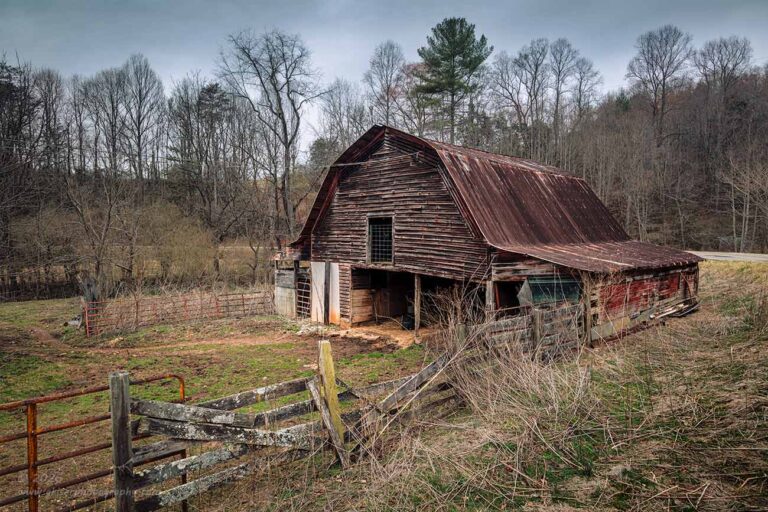
Before long I realized that my visual language was very much related to the decline of the artifacts of man. I was immersed in this subject from early on and when I finally started to understand how I wanted to capture these subjects, photographing them became second nature. There wasn’t a class that I went to, and there was nothing that I read or watched that taught me how to do this kind of photography. In fact, until the past few years, I didn’t even have any photographers to look at to emulate in how I photographed these subjects. The style and methods that I created were wholly based on how I was viewing the subjects I was seeing. It was something personal to me and not a goal that I was trying to meet.
I do a lot of different kinds of photography from landscape to decay and even studio abstracts and portraiture. I think that the argument can be made that I have the strongest reputation in the field of decay work and that is where I am most known. The largest percentage of my photography is based on decay subjects, and I have taught many photographers how I approach this subject. When it was all getting started 20 years ago, I would have never thought that this would be the case. I was going to have my photos appear in books like one photographer, in galleries like another photographer, and I was going to be a permanent fixture in several periodical publications just like another photographer. None of that happened, and in the process of trying to reach those goals, I realized that those were not my goals at all. When I got to know myself, I realized that my goals were not based in landscape photography at all. What I wanted was to really dial in my own visual language of how I was capturing the scenes that I found truly interesting whether anyone else did or not.
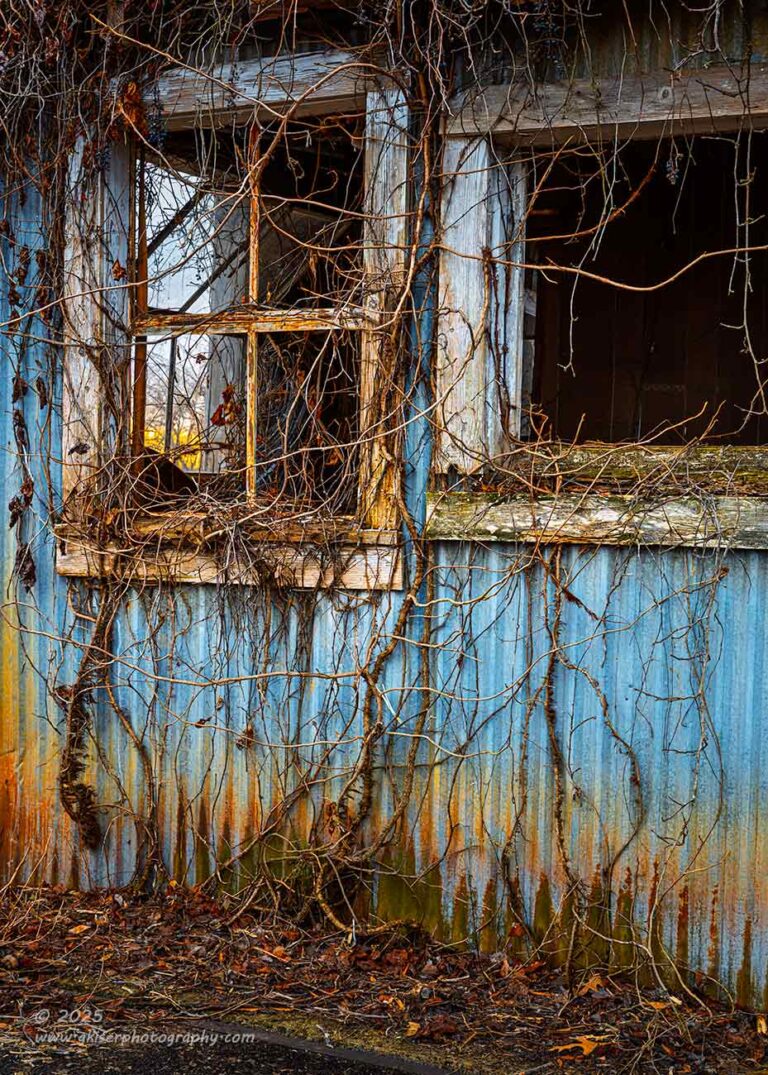
I have done a lot of talking so far this year about changing the way that I see the world. This might not be the most accurate way of describing the change that I am after. I think a better way of putting it is that I am trying to better learn how to translate what I am seeing by using the camera. Because I know myself so well, I realize that the details are very important to me. This is why I can spend 12-15 hours on a full cleaning on just one of our cars. It is the little things that drive me crazy on a car that most people never even see. That is where I want to get in my photography. Not because an influencer said that I should be paying attention to the details, but because looking back at many of my detail photos over the years, I’m seeing that there are too many extraneous details present. I want to get the image down to a very concentrated view of the subject to really point out what I love about the scene. I am doing this for myself because I see that I’m interested in even smaller details than I thought I was. This means that I have to develop new ways of photographing my subjects to be true to who I am, and how I see the world.
These things change over time and in a way, I blame photography for this most recent change. After spending so much time exploring the details, and in some cases the abstract details, I have found that the level of detail that I am starting to see has gotten even more fine. The detail shots that I used to capture just aren’t getting it anymore and I need to improve on them in order to stay true to who I am as a creative. Changes like this can only happen when you take the time to get to know yourself on a deeper level than most people will even try. I find that I am constantly evaluating the photos that I am creating and making sure that they really capture what I want them to. I’m not worried about technical things like exposure or composition; I’m looking at the concept behind the photo and what was captured. This constant evaluation keeps me connecting the dots between how I see things and how I have allowed the camera to see things. That has shown me the room for improvement that I am after during the course of this year.
It is a harder task than I had thought it would be because when I whittle a scene down to just a small detail, the compositional qualities of the scene deteriorate rapidly. This is where I am needing to focus my attention and look for more growth. I need to be able to have that one detail stand out, while still being in a composition that is pleasing to look at which supports that key detail. At this end of the spectrum, it is almost as difficult as organizing a huge scene with a wide-angle lens. Ironically, that is the other part of what I am trying to get better with this year. on another level of irony, it was just this moment where I realized the link between my goals is genuinely based on who I am now as compared to a year or so ago. The things that are important to me are changing and I am having to reassess how I am using my creative tool to capture those concepts.

Organization and details have always been part of how I view the world. They are important to me, only now I am seeing ways of getting more out of those concepts which is directly linked to who I am as a person. I’ve found that I don’t work well in niche’ photography because the things that are important to me are actually present in just about everything. Again, I don’t want to follow the advice of influencers or other photographers out there that say lock into just one thing and be the best at it. I prefer to go with my gut because in life my interests fluctuate. Because I know that about me, I don’t flinch when I decide that I want to photograph a door handle on a shiny car, or smoke in the studio. I’m also happy to do portraiture because I enjoy the challenge and the knowledge that it helps me build in things like color theory and lighting. I’m happy to entertain all of these things because I know that is part of who I am and that each of those offshoots to the norm can still possess those qualities that are true to who I am as a photographer.
My visual language is much more about who I am than what I have read or seen in a video. I’m not chasing other photographers’ work anymore and really consider myself a free agent in the art world. I create what I want to in the way in which I want to. I have full control over things, and I wouldn’t want it any other way. I hope that you can see just how limiting it can be when you are trying to be like another photographer, and how that will never really happen. The only photographer that you need to be worried about getting better than is yourself. The only way to get better is to look back at your previous work and compare it to the person that you know deep down. See if that work is true to how you see the world and what is important to you. If it isn’t, you have chosen the wrong path, and it is time for you to reevaluate your direction. Every photographer gets to that point, and it is a little scary to leave that established path and follow your own road. However, it is probably the most freeing decision that a photographer can make for themselves.
Talking about freedom in creativity, just think how restrictive it would be to be locked into a certain genre of photography and only able to capture it in a certain way. Twenty years ago, I was on that path to where I would only be able to capture scenes that didn’t include the hand of man, only at golden hour, and in places that had epic vistas. Taking out of the equation that I have never lived that close to an epic vista, I’m still restricting my photography times to about an hour in the morning and an hour in the evening, and only when the weather is conducive to color in the sky. What fun is there in that? By knowing and understanding myself, I know what qualities in a photograph appeal to me and what I have the best chance of conveying on an honest level in my own work. This gives me direction on not only what I shoot as I have already explained, but how I shoot it. It is the how that translates across all different genres of photography and gives some very different types of photos a cohesive feel when viewed together. I don’t think that there is much chance that my work can’t be recognized whether it is an old, rusted car, a black and white barn, a cityscape, abstract, or a portrait. No matter what I shoot, I am doing it with the same thoughts and concerns applied.
For me, it is no different than me talking to somebody. I can talk for hours about photography; I can also talk about my experiences as an ultra-endurance cyclist, and about my 20-year career as a police officer. You want to talk about cars and trucks and things that go (reference to a favorite childhood book), I can do that as well. If you engage me in any of these topics, you will have no doubt that the same person is telling you about the experiences. I will sound the same, my humor will be the same, and according to Toni, finding the “Stop” button might be difficult. In all of these situations, it is me that is communicating the thoughts. Why should that be different when referring to a visual language like photography?


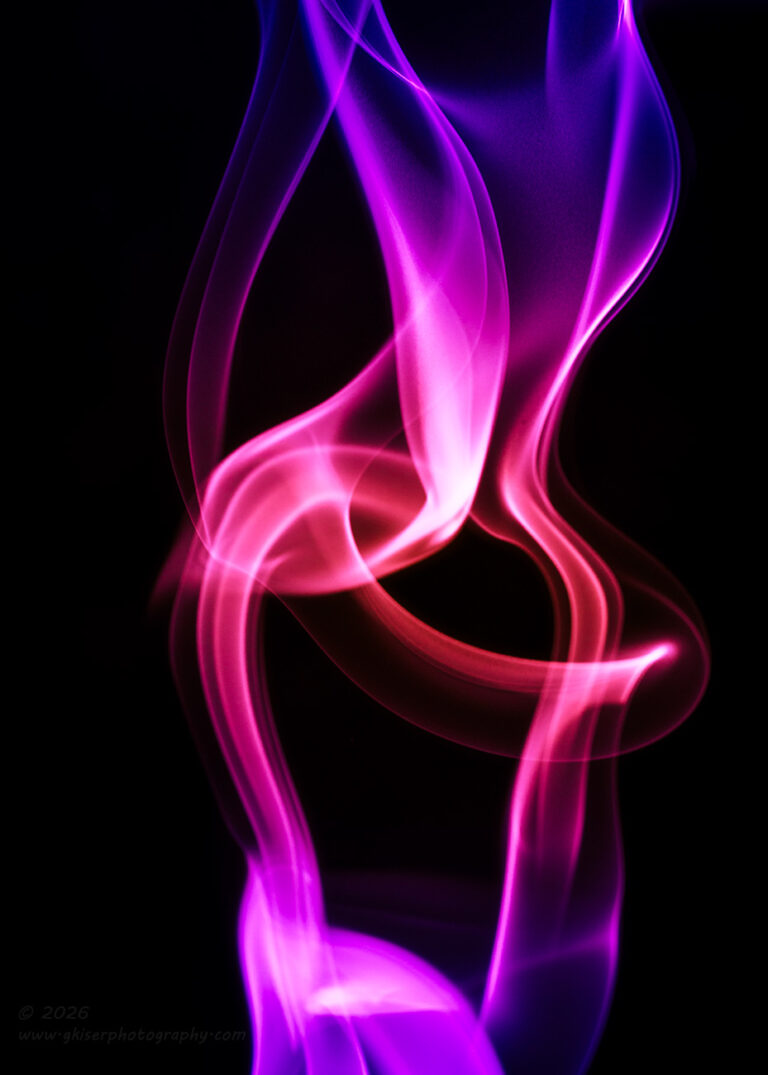

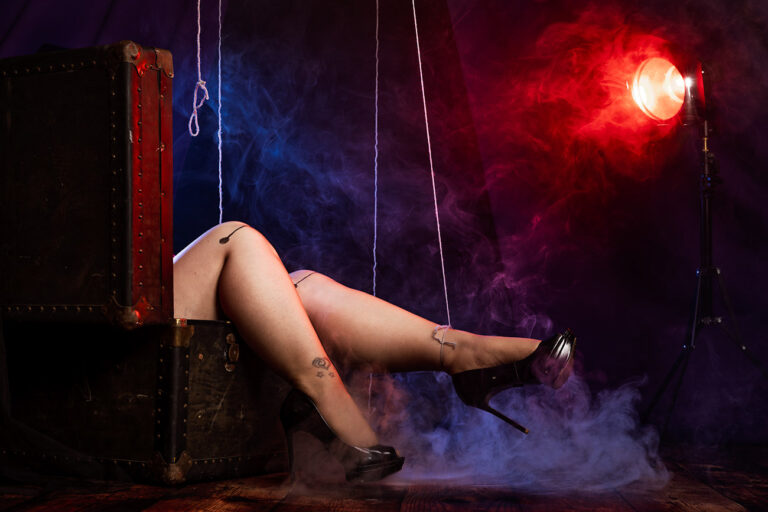
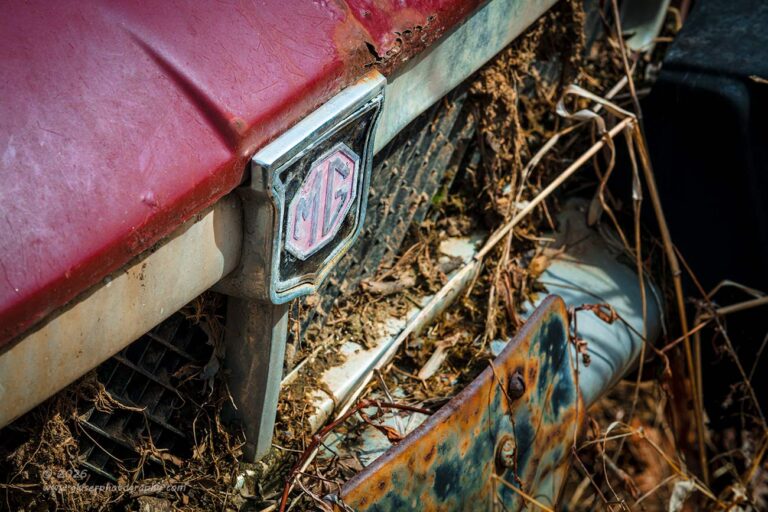
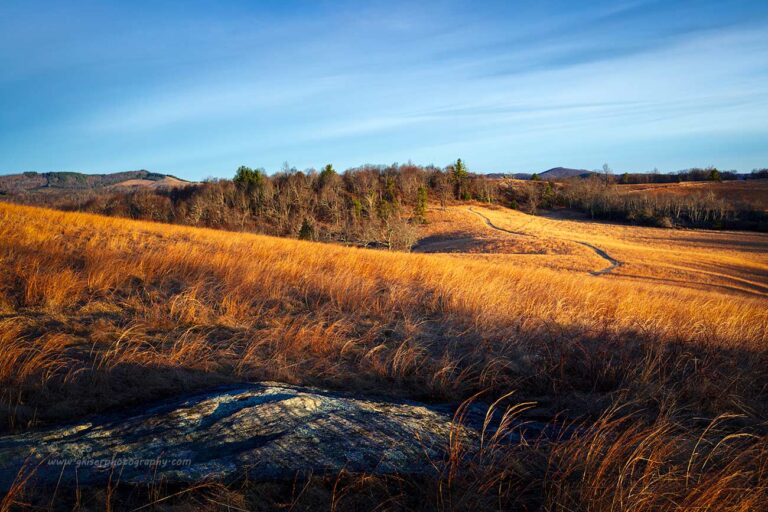
I’ve done something like this before where I throw up a bunch of unrelated photos in quick succession. Hopefully, you have looked at each of them and have realized the similarities as well as the differences. There is a wild range of subject matter seen in these photos as well as some being in black and white and some being in color. They have all come from the mind of the same photographer based on how I view the world and react to it. I don’t set out to create differently based on what I am photographing as that wouldn’t be true to who I am. I take the core values that I hold dear and apply them to the subject at hand.
This is becoming more and more evident as this year moves forward because of how I am trying to change some of my methods to match how I am currently relating to the world around me. Whether it is details up close or organizing a broader scene into something that makes visual sense to me, I am really looking at the details that appear in the frame. I’m paying attention to the contrasts whether they are color or luminance values. Each of these examples is true to how I saw the scene and decided to capture it. More importantly, each time I venture away from a specific type of photography, I learn even more about my own visual language and what is important to me. That information will always trickle down into what I more regularly shoot.
Experience and lessons like this can’t be found by following a photographer and trying to mimic what they do. You will always be working on an uphill battle. Something that I have learned during the years that I would have never expected is that we are drawn to the photographs of other photographers because they typically see the world differently than we do. As I mentioned early on, I started out loving the grand landscape photos of epic vistas. It wasn’t until a few years ago that I figured out why that was. I was drawn to scenes that I don’t get to see regularly, and I was interested in the way that these scenes were seen and captured by the photographer. The reason was, it was something I wasn’t familiar with. I was drawn to the uniqueness of it all. When I tried to copy that recipe, I failed quite miserably and it became very frustrating. It pushed me to get better with technique, which was good, but I was never able to match what I saw. I had created a creative cage around myself that limited me to such a narrow goal that I was never going to achieve it because the whole reason that I wanted that goal was because it was something that wasn’t natural to me.
On the other end of that spectrum was the photographer that I was striving to be. That photographer was established and was creating images based on their location and how they interacted with the scenes in front of them. They weren’t thinking about how another photographer would shoot the scene, they just knew how they wanted to. That is what they did, and I’m sure it went a lot like how my treks go. They saw the scene, pulled out the camera, set up the shot to capture it the way that they saw it, and released the shutter. They created a photo and they moved on, not worrying about it beyond that point. I would never be able to do that while chasing the goal that I had set for myself as I would then have to compare my execution to theirs.
Think about it, you’ve heard a stand-up comic at least once in your life. They make comedy based on their lives and observations. In general, they are funny and you laugh at what they say. You can tell the same joke to your friends and try to do it in the same way, but it doesn’t get the same response. You write it off as the timing of the joke was off, or you missed a detail in the punchline. What we never do is call it like it is. The joke was funny because it was based on someone’s observation of life and it was personal to them. By telling their joke, we are just reading a passage out of a book to somebody. We don’t have the same connection, so the delivery and content will not be genuine. We will tell the joke because we have been told that it is a joke. The comic told the joke because it was their observation of something that they found humorous. See the difference?
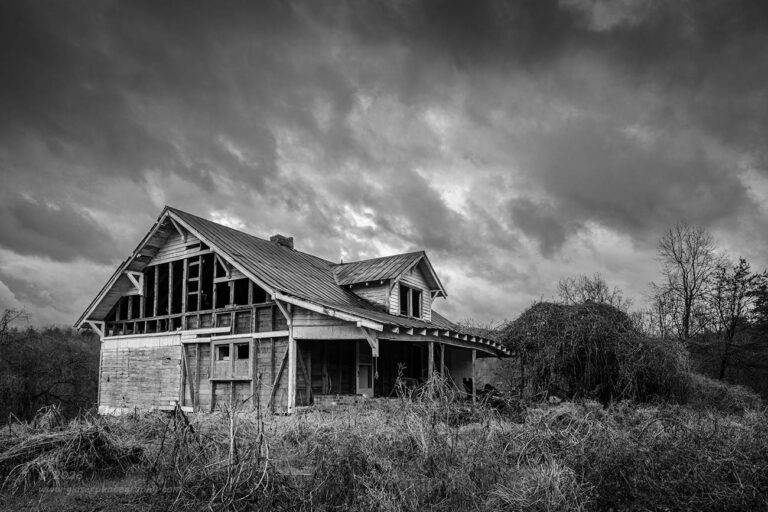
When we get to know ourselves and truly meet who we are, we get to be that comic, we get to be that photographer, we get to be that author of a book. We get to communicate something that is personal to us. What we create might not be understood by everyone. Even the comic’s jokes will fail in front of certain audiences. The photos, just like the jokes, will land and be successful in plenty of audiences and will inspire others to try and take photos like that. It is that genuine connection to the subject that ultimately dictates how things are received. Here we have a recent photo of an old house. I’m sure that in the very near future it will be torn down or used in a controlled burn by a fire department. Most people wouldn’t give it a second thought except to wonder why it is still standing there like an eyesore when it could be used for a desperately needed Dollar General. However, because I know that I am drawn to the images showing the decline of the artifacts of man, I am immediately interested in the scene. Because I know how I want to relate that connection, I wait for the perfect day with the perfect conditions to tell the story of this old house. All of a sudden, that eyesore that is standing in the way of the 20th Dollar General on the street, is now….shall we say it…beautiful.
Images like this are true to who I am and how I see the scene. Does this make this the best photograph of an old house ever created? I seriously doubt it, but it is one that successfully communicates how I saw it, and I know that it will appeal to plenty of folks out there because it is more than just a simple photo. It is an emotion, a thought, and an experience all wrapped up into a 3:2 frame. It is a story that only I can tell because it is unique to me just as if you were listening to me tell my favorite account of a bike ride from 2013.
As photographers, we need to stop trying to fit into the mold and create what is winning on social media. We need to actually meet ourselves and get to know ourselves in order to create images that stand out from the crowd. We need to be honest with ourselves about what we actually want to photograph and how we want to go about doing that. We are all unique and have very unique histories that will come out through what we create. The metric for success isn’t that everyone loves what you do because if everyone loves it, you are just creating more noise in the world of art. What you want is to have a polarizing art that some love, and some just don’t get. You will find that in those situations, the ones that you make an impression on will have a stronger connection to your work. If everyone loves what you are creating, it just means that what you are doing is safe and expected. It follows algorithms and because of that the photo will be forgotten the minute the like button is pressed. Sure, you get that dopamine hit with all the likes, but you can go back to 90% of those folks that liked your photo and ask them about it later. The chances are pretty good that they will say they don’t recall seeing that photo. You have just produced a disposable photograph. However, if you can go back to a group of folks that are strongly divided on the image, they have actually put thought into their reaction and will remember the photo much more readily. I know which situation I would rather be in, how about you?
Thank you for joining me for this month’s Behind the Camera. I hope that you found it eye-opening and educational. If you are having a hard time meeting yourself as a creative, I am usually pretty good at looking at a collection of images and figuring out what you are naturally drawn to. I’m happy to help you out as a part of a mentorship program if that is something that you think would benefit your own photography. I really do feel that this is the key to becoming the best photographer that you can become. Without it, you are just parroting jokes from a stand-up comic.
I’ll see you back here again next month with another installment of this feature. If there is anything that you would like me to cover, please drop me an email and let me know your suggestion. I’m always looking for new topics that actually appeal to folks.
Until next time…