Welcome back for another installment of my monthly Behind the Camera. If you are new here, I appreciate you dropping by. This is a feature where I talk about photography in a broader sense than I do during my regular blog entries. My hope is that the information will help you appreciate the photography that you see here on the website a bit more, or that it will help motivate you in your own creative efforts. For those who are returning, you know the drill and I’m happy to have you back here once again.
This month, I’m going to talk about that finish line in photography. You know, the point where you can say that you pretty much have it all figured out and you have mastered the art and craft of photography. Not that I’m saying I am a master photographer by any stretch, but I have been doing this for over 20 years now and I think I have a pretty good understanding of the finish line aspect of the learning process. I’m going to equate photography to cycling for a moment before we really dive into my thoughts on this. You may or may not know that I was a pretty avid cyclist back in the 20-teens. The progression kind of went like this. I was trying to teach our youngest how to ride a bike. I could do that on foot easy enough in a parking lot when Sierra could only pedal a few feet at a time. Once she got a little better and we needed to work on maneuvering and working different terrains, I realized that I really needed a bike as well because I just wasn’t able to keep up with her by running around after her. Being out of shape probably didn’t help with that either.
I got a cheap 29″ mountain bike from Walmart and that worked out well as a demonstrator for different skills that I was trying to teach her. All of this was recalled from when I was a kid and would ride a bike around the neighborhood for fun. Before long, I was wanting to get out of the neighborhood and actually go on a real bike ride to stretch my own legs. That started out with riding a couple of miles down the main street that we lived off of to the elementary school that Sierra attended. I was thrilled when I got there, but that was quickly dashed when I realized that I was going to have to turn around and go back home. At the time, those two miles represented a really far distance to pedal a bike. I made it back home and before too much longer, I had picked out routes that took me 25 miles into Kernersville and back. That was when I invested in a new bike which was designed to be a road bike. My first ride on that was 50 miles and it grew from there. I went on to do century rides (100 miles at a time) and even two different double century rides (200 miles in a single day). There were even rides that included mountain climbs into Ceasars’s Head State Park in South Carolina, as well as a three-day endurance ride that culminated in 256 miles across South Carolina. I spent the colder months on a trainer working intervals and worked on distance during the warmer months. I got incredibly fast and could outclimb just about anyone I ran into on the road. I always wanted more though, and that was part of the draw for me to cycling. There was always room for improvement. I heard a quote that rang true during that time that went a little something like this. “Cycling never gets easier, you just get faster.” Young me took that to mean that I would always put the same effort in, but the results would be much greater. It meant that doing a century ride and averaging nearly 25mph for that effort was just the baseline for the next effort after more practice. The energy used would be roughly the same, but I would continue to get faster. This was exciting to me. However, I was just on the cusp of figuring out what that quote really meant.
“Cycling never gets easier, you just get faster.” Those words stuck with me long after I got off the bike, and I’m finding the same to be true with photography. We are programmed to think that most aspects of our lives have a timeline. We are brand new to the task and spend a lot of time learning about that task. We make mistakes and figure things out. At some point we have it pretty well figured out, and it becomes a skill that we possess and are very fluid with it. There is a finish line of sorts where we reach the level of operation for the task that satisfies us. This is commonly referred to as your level of competence. I learned how to use the toaster as a kid, and I have pretty much mastered the ability to toast a bagel. There isn’t much room for improvement there. I’m pretty handy in the garage working on vehicles and I have a really good understanding of how all of that goes. I could ride a bike, and could teach Sierra how to ride it, but there was always the draw to go further, faster, and climb better. No matter how good I got at riding a bike, I wanted more. The same is now true with photography. The goals keep moving and the bar continues to rise
After more than 20 years behind a camera and taking the craft seriously, I have come to realize that as with cycling, there is no actual finish line. There is no point at which I can say that I’m done learning and know it all. Yes, I know that even with toasting bread, there is still always a chance to learn like when we switched from a regular toaster to a toaster oven. Those are little things. What I’m talking about are the steeper learning curves which yield very different results in what you do. Every time I turn around there is another opportunity to learn something significant in photography. Something that I heard just yesterday while watching a video on YouTube kind of summed this idea up. “At first, you learn photography to use your camera, then you use your camera to learn photography.”
What does that even mean? Well, at first, you have to learn the basics of photography like controlling the exposure and how to compose a scene. This teaches to be able to use your camera. Once you have those basics understood, you start to explore your own visual language. You can effectively capture a scene with the camera, but now you are starting to figure out how to express yourself using that tool. Figuring out the camera had been the goal to start with, but now you are using that tool to figure yourself out. This is where you will spend most of your creative time and will constantly be learning ways of expressing yourself. The more you learn, the more you find that you don’t know.
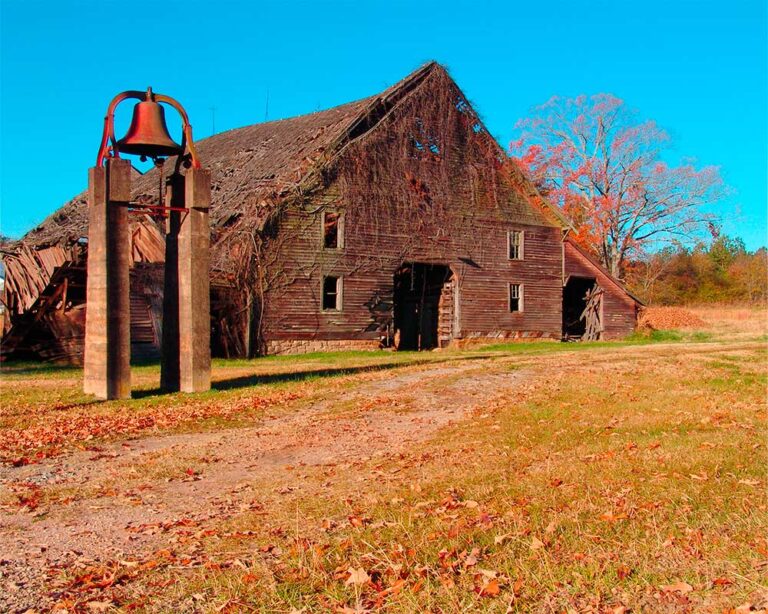
There is a huge difference in learning to work the camera and then using the camera as a tool. Back in 2006, I had only been seriously trying to become a photographer for about a year. I was still using an advanced point and shoot camera which I treated like a rare jewel. Photography was all about the camera and the filters and all the gear that I was told that I needed. I could shoot in manual mode and understood exposure. I knew the scenes that I liked, and I had an understanding of composition. Images like this one were ones that I loved to capture because they showed that I knew how to work a camera. Twenty years later, I look at this and immediately feel like a need some Pepto or a Tums. Yeah, that queasy feeling that you are experiencing is normal after looking at this barn that was obviously located in Chernobyl. I had the basics figured out and I had a camera that I felt was a great piece of kit. I just had no idea about the art of photography and how to harness that tool.
Over the next few years, I continued to learn at a very quick pace and my photos did improve a great deal (thankfully) and I figured that eventually I would get to that point where I was as good as any other photographer out there. I just needed practice. That was what I had done with a clarinet and a saxophone as a kid. I practiced until I mastered a piece of music. Surely, after some time, I would have this photography thing mastered and would be at the top of my game. Spoiler alert, that still hasn’t happened and I’m still learning…a lot. The difference is that the ramped-up learning curve comes in spurts now rather than all at once when I was getting started.
The biggest change is that I no longer view the camera as something magical or something to be cared for as a precious artifact. The camera is just a tool now and I’ve run all of my cameras in poor weather and have banged them around from time to time. I don’t spend any time looking at spec sheets or caring about reviews anymore. I’ve realized that cameras are pretty much all the same across the board and until I run into a feature that makes my life easier, I don’t worry about what the newest addition to the lineup is. This doesn’t mean I’ve reached the finish line or the end of the road learning. Actually, very far from it. I’m just learning what I can do now that I have a very strong understanding of the tool.
I remember when I was in elementary school and learning how to write cursive. I wanted a very specific kind of mechanical pencil because I thought that it would make my handwriting so much better. I treasured that mechanical pencil because I thought that it was the biggest part of writing because that was the instrument that I used learning to write. Eventually, I found that I had to pay attention to the actual words that I was writing and the sentence structure became much more important. I learned to write, and having learned that skill, I was able to learn to communicate in the written form. These days, my handwriting is atrocious and even I need a translator to understand most of it myself. However, I can communicate my thoughts in written form (preferably typed) rather effectively. I had to learn how to write in order to use a pencil. Then I used a pencil to learn to write. These days, I don’t really care what I’m writing with when I need to take a note because the tool doesn’t really matter that much. I mean, it all looks like I’m using a crayon with my left foot anyway. What does matter is the content of what I have written.
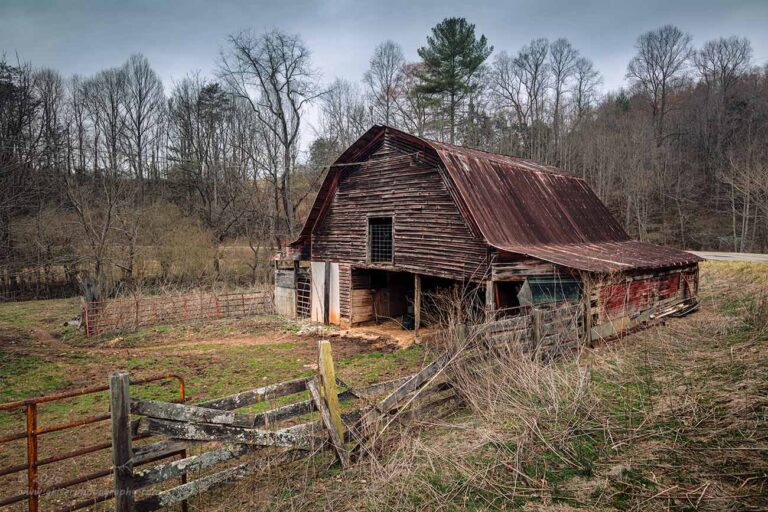
The camera has become largely unimportant to me at this point. I’ve spent time learning how to harness the weather conditions to set a mood and atmosphere in order to tell a story with my images. This is part of my visual language now and it has taken much longer to develop that than learning to use a camera. For the most part, everything with the camera is second nature and I don’t give a lot of thought to things like aperture or shutter speed. I know where I need them to be for a certain photo and dial the settings in that work for that goal. That is the easy part. The composition, framing, lighting, and overall feeling of the image is where I spent the most of my time now. The camera is just the tool that I use to create these images which I have figured out in my head.
Telling stories with my images is only one of the areas where I have expanded as a photographer. I had thought that was going to be the last part of the learning process and once I mastered that, I would be at the top level of photographers. That was when portraiture came into play. That threw a wrench into the works for me. I knew how to use the camera, and I was using the camera to figure out my own visual style. Now I was looking at learning lighting on a very different level. I was now creating the very light that was needed to see any of the elements in the image. Without my lighting, the frame would be totally black. That was another one of those steep learning curves, but one that lasted for a couple of years until I got reasonably proficient with it.
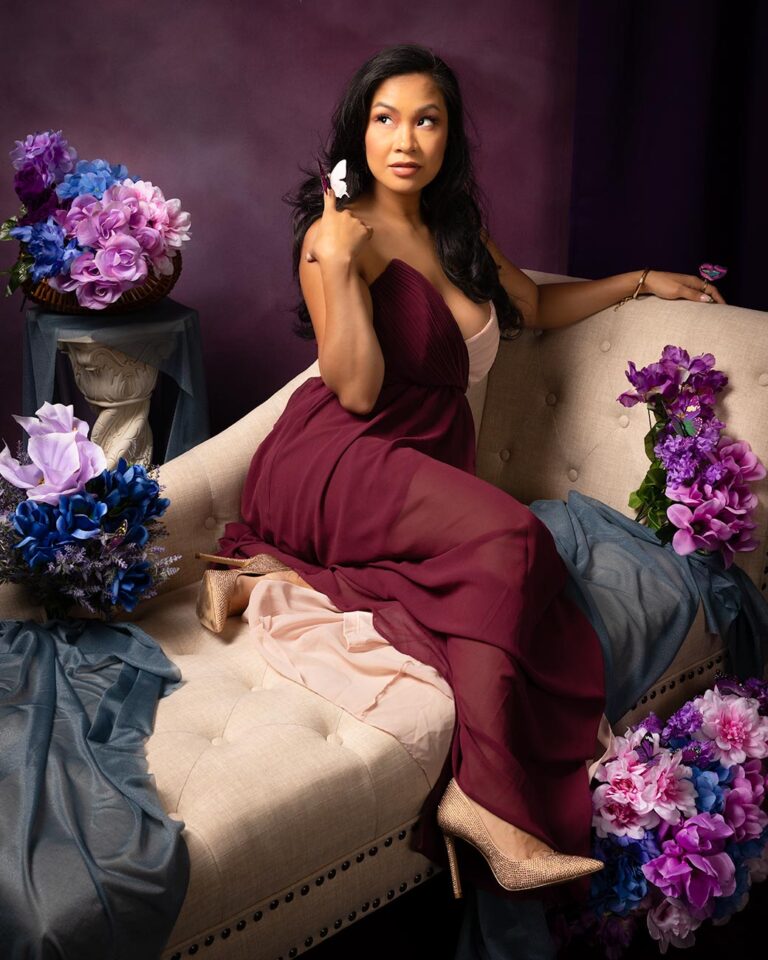
As with other things in photography, I was able to find a level of competence with building a story around a concept which I was able to get comfortable with. I got decent at lighting and found that posing was the next thing that I had to really work with. Working with models like Michelle (above) I was able to get a better idea of how to position the subject within the frame to further the story that I was creating. It was yet another fold that I had to learn which had never been a thought when I was photographing old barns. The really funny thing about this stage in my development was that while I was learning a lot about people photography, I found that there were areas in my long-standing landscape and decay work where I could incorporate new ideas from what I had learned doing portraiture.
Yep, I ended up diving into things like color theory and learning about color harmonies and contrasts which seemed to go hand in hand with portraiture. I had never given color theory that much thought, though I understood that color contrast was a thing. Now I was going back to the creative drawing board to start looking at how colors worked together in my landscape and decay work. While I was at it, I was also putting to use the new insight that I had gained in terms of lighting and shadows in a scene.
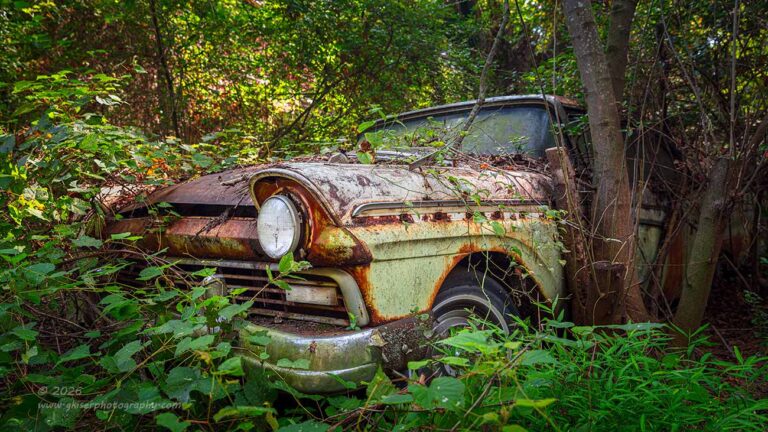
Essentially, I was going back to something that I was well versed at and applying new tricks that I had learned in relation to a different type of photography. It was something that I didn’t know that I didn’t know. Now that I understood that aspect, I was able to improve on my photos across the board. Of course, as I worked on improving those aspects of all of my photos, I started to find other little areas where I didn’t have the knowledge that I really thought that I did.
For years, I had been teaching Lightroom in a workshop setting and in mentorships. I thought I had a really good understanding of image post processing, but now that I was really getting into color harmonies and dealing with light and shadow, I found that my editing skills were limited and needed to be expanded on. I started learning about the different ways in which you can color grade an image and found that contrasts affect the saturation levels. There were aspects of image processing that I had never even knew existed which could have a profound effect on a finished image. All of a sudden, I was looking at how the colors were treated in a very specific way and I learned how to harness the light and shadowed elements in a photo to create something more dramatic than I had been able to create before.
In many ways, learning all that I had with portraiture had given me a whole new path to follow with the landscape and decay work that I had been doing for so many years. Of course, learning these new aspects started to show other areas where I was not as proficient as I had once thought that I was. The question started to enter my mind as to whether or not I was as talented a photographer as I had thought. At every turn, I was finding areas where my knowledge was nowhere near where I wanted it to be. How could this be? I had learned how to use a camera, then I had used the camera to learn how to capture how I saw the world. Now it seemed that I kept returning to that learning state like I was brand new to the craft.
It wasn’t that the end goal of learning was getting further and further away, it is just that the goals in my learning kept moving in relation to how much I had already learned. I was putting forth the same effort as when I was learning how to ride a bike, yet I was going much faster. It really started to make sense to me around this time. I would never get to the finish line in photography. I would always get better, but with each new stride that I took, there would be so much else that I wanted to learn. I could be very competent in the art and craft of photography yet still have so much to learn. It wasn’t a problem or a failure; it was just the fact that my passion would never allow me to get to a point where I was through learning about the craft.
This is where photography truly gets interesting to me. There is a huge problem with a finish line. Once you cross it, the race is over. It is time to go home. If there were a finish line in photography, there would come a point and time where you just went out and did your normal thing over and over….and over again. This would undoubtedly get very boring and that is the point where you would hang up the camera and start to pursue something else because like it or not, humans do like learning and seeing improvement in their own lives. There are those that will find a finish line of sorts in photography and will decide that they have had enough. It is not so much that they hit a wall and find there is nothing else to learn, they just decide that learning that next step isn’t worth it.
I’m not here to judge anyone that has felt that way, because I’ve been there before. I’ve been there when it comes to photography as well as other pursuits. There just comes a time when you just don’t want to stretch what you know and understand any more because you just don’t see the point in it. When I arrived at that point in photography, it was because I had hit a major hump on how to make prints that matched what I was seeing on my screen. I was doing proofs with every photo that I wanted to keep and then I had to apply Kentucky Windage to the colors to get them true to life in the print. Even then, the print still didn’t look exactly the way that I wanted it to, and I had ruined the digital image in the process, so there was really no way to have a photo that worked well as a print and to be seen on the screen. This kept photography from being enjoyable to me and I felt that any further effort was going to be wasted and not worthwhile. I hung it all up and sold everything photography related to start with riding a bike on a very serious level.
It took two years to come back to photography because I inadvertently found the reason for all of my woes when it came to color in my prints. I hadn’t taken control of the printer driver in Windows so that I could control the color and therefore the output. With that one bit of knowledge, it was game on again for photography. I had to refresh myself which took a little bit of time, but before long, I was back into the learning curve and increasing what I knew about photography. The race to the finish line was back on again.

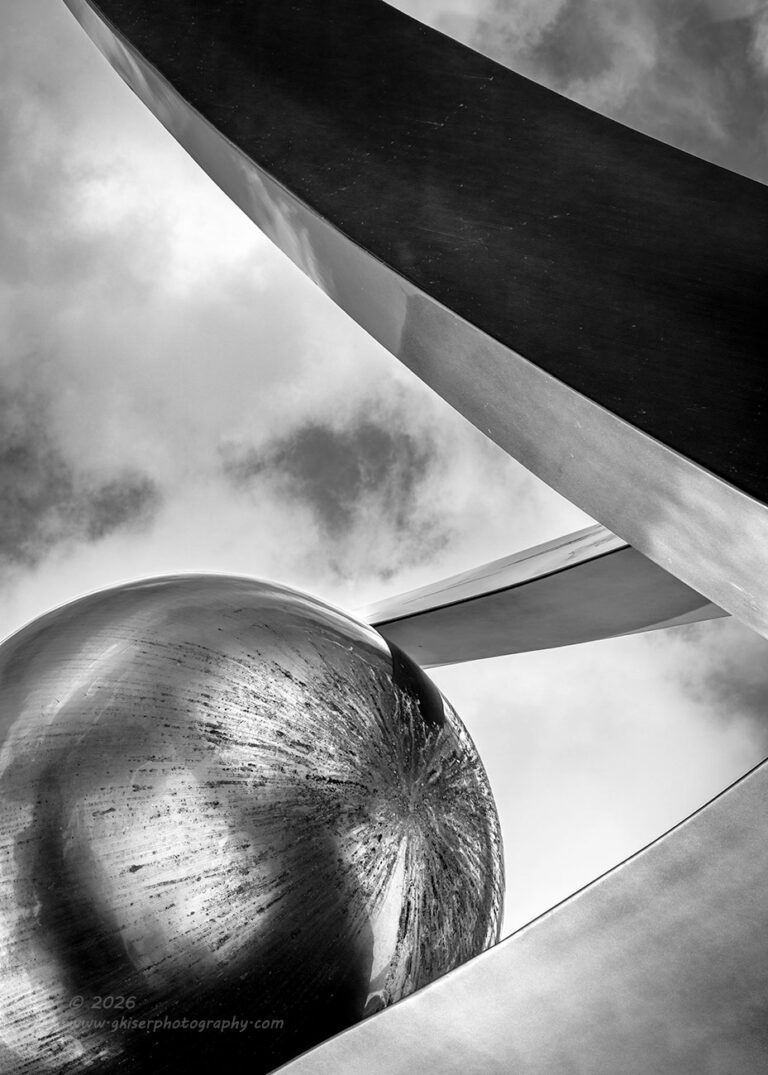
All of that happened between 2011 and 2013, so well over a decade ago. Here I am today still pushing myself to learn different things. In the photo above, I was faced with a very complex scene but a fantastic subject. I worked out this composition that featured tricks that I had come across over the years, and I managed to get a complete composition even though I didn’t include a single full subject. This is a minor thing, but something that even a couple of years ago I more than likely would not have really thought to do. This is how I have fun with photography at this point. It has become more about problem solving rather than learning a new skill. I have learned many different tricks that are now tools in my box. It is the application of those tools where I am spending most of my time. Of course, I am learning more and more along the way, but blending different techniques into a photo has become something that is a skill within itself.
This is what I am talking about when I say that there is just no finish line at all. In photography, as in many other pursuits that you are passionate about, you will find new and different ways to apply those things that you learn. You continue to learn new skills as you go which are then added to the mix. Each time you go out and engage in photography, you are creating another chance to make new connections with the different skills that you have learned. You are also presenting yourself with more opportunities to find out what you don’t know. In either case, you are seeing more room to grow within the craft. You can never be satisfied…though that isn’t a bad thing at all.
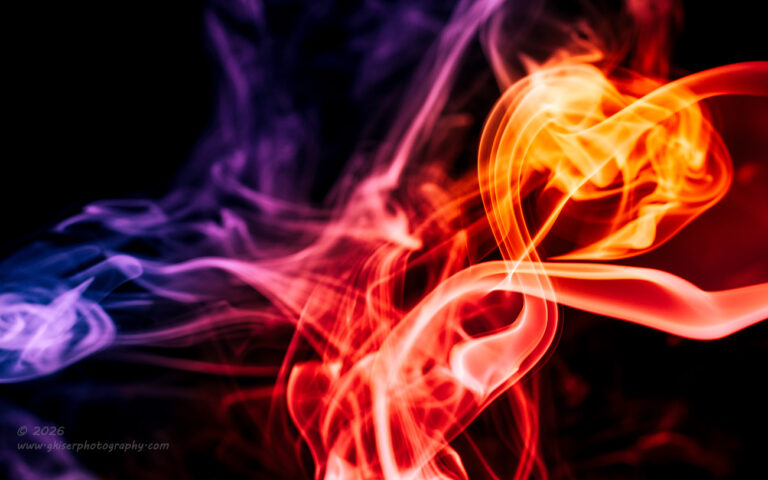
If you have been around for a while, you will know that I have been working on smoke photography for quite some time. This is one of those techniques that I started to learn around 2008 or so after reading a book that included many different photography projects that you could do to gain skills. It was simple enough and I followed the directions which gave me an interesting gray smoky pattern on a black background. I could shift the colors a bit using the white balance in post, but that was pretty much it. Eventually, I started to really push the colors in Lightroom and found that I could bring in some more vibrant versions of the colors. That brought me to the point where I figured out that I could use masks to bring in different colors within the same frame. This was where my understanding of color theory came into play which I had learned through portraiture. Having the ability to select the colors and how they were applied to the smoke started to really amp up the abstract nature of this kind of photography. I had been learning abstract work through my decay photography in dealing with isolations on old cars. The concepts that I had learned from my decay photography as well as my portraiture, were added to the basic understanding of a creative technique in photography to yield some very unique images.
Had I viewed learning photography as something with a finish line, I would have stopped once I achieved what that book had told me to do. I had arrived at the same outcome that the author had suggested and had done everything that they had said. I was there…at the finish line. However, by putting in the same effort, but pulling from different techniques and skills, I was able to take my smoke photography to the next level and started to pedal faster. I was no longer following a step-by-step guide to arrive at the outcome. I was creating the steps based on what I felt would work best for the photos that I had in mind.
This is what I’m talking about in terms of learning photography. There is just always something different to learn and new ways of applying what you have already learned. Each finish line is just the starting point for the next evolution. This is another area where I think that folks will get discouraged with photography. When they reach that finish line (the one in their head) they find out that there are things that they don’t know, or room for improvement. With everyone being their own worst critic, this is a perfect opportunity for the person to say that they actually don’t know what they are doing or that they just aren’t good enough.
You might be familiar with the Dunning-Kruger effect which was studied in the late nineties. Without really going off topic and down that rabbit hole, it was a study where they found that those people who didn’t know a lot about what they were doing would overestimate their abilities while those that understood what they were doing would underestimate them. In a craft like photography, it is very easy to think that you know all you need to know and that you are proficient with the craft. All you have to do is look at that first photo of the neon barn in this entry to see that I was suffering from that very thing. I didn’t know what I didn’t know and thought that I had it all figured out. Here we are some 20 years later, and I view myself as very competent behind the camera but know that there is so much that I don’t really understand.
It took me a while to get to the point where I could look at my shortcomings face to face without feeling like a failure. When I shot that photo of the barn, I really thought that I had a very strong photo because I didn’t understand what I had done wrong with it. I messed up the framing and cropped the edges very wrong. The composition was not all that interesting, and I don’t need to even talk about the colors. It wasn’t until a few years later that I started to see that photo for the train wreck that it was. By that time, I understood how much more I needed to learn, but at the time I shot that photo it would have been devastating to hear someone tell me all the things that were wrong with it. What I had achieved with the barn photo was a realization that I understood exposure and how to control the camera as well as the filters that I was using on the lens. I had arrived at a finish line, but the view from there showed a very long path ahead of things to learn. I just didn’t really understand that I was seeing that path and thought that I had finished the race.
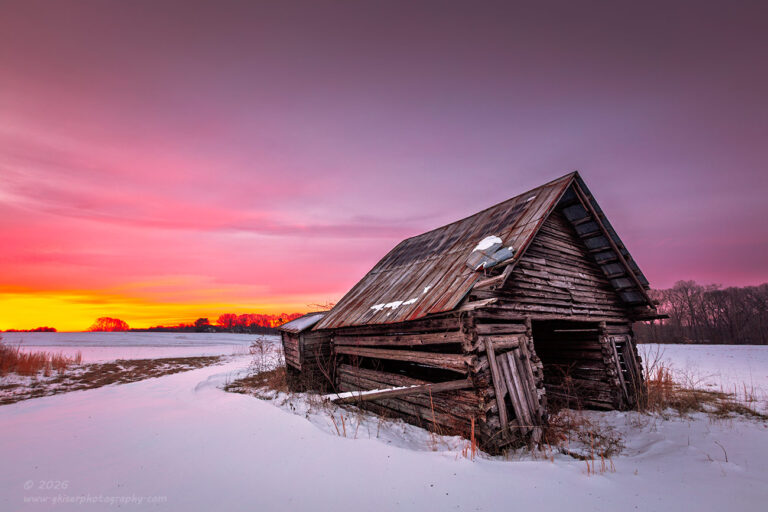
Compare the barn photos to see my point. The one above was shot at the beginning of 2026, twenty years after that first one. The subject is similar, but the execution is very different. That difference in execution was because of several different aspects. First of all, I had reached many more finish lines and had started off on new tracks to learn more. Second of all, I had started out the year with a goal of doing more with my wide-angle lens. This is one of those things that I have kind of started doing in the past few years. I’ll look back on the previous year and see something that I had been doing that was a bit different and would then decide to purposely pursue that technique. In this case, I had seen some interesting photos coming out of the wide-angle lens and I wanted to explore that even more. The scene above was one that I would have normally shot with a standard zoom but made that decision to reach for the wider lens. That choice made a huge difference in the photo which was what I was hoping for. It was the beginnings of learning a new interpretation of a scene. Of course, I brought in things that I knew about colors and composition as well as post processing to deal with the lighting across the scene. There were so many aspects of this photo that worked together to make the image that you see here that I just didn’t have a clue about two decades earlier. In another twenty years, I will likely bring in more techniques to further improve on my photos of similar subjects.
These days, I assume that there is room for improvement. I don’t need to hide away from negative feedback from others. I’m not scared of it, and more than likely, I have already pointed out all of the areas where I could improve to myself. I can know that I am competent at the craft of photography, yet at the same time, I can also know that there is so much more to learn. I’m on that second Dunning-Kruger climb, the much slower one. I also know that there are plenty out there who are astounded by my abilities with a camera, and while I appreciate being held in high regard, I know that I’m still very much a student of the craft and will always be learning.
That is my new comfort zone with photography. I don’t want to reach a finish line. I know that if I do, the photographic world will pass me by. There are many photographers out there who are better than me, and as everyone progresses, I’ll be left in the dust if I’m not constantly learning new things and improving. The bar will always get higher, but the truth of the matter is there are so many bars out there that you really should only aim for one at a time.
The one bar which is worth aiming for is the one that you have set. Always strive to set your own bar higher and higher. Be better than you were the day before. The only way to do that is to learn something new and apply it. If you keep aiming for your own bar and trying to improve, you will continue to get better. If you try to chase everyone else’s bar, you will just get frustrated and find that you are no longer creating images that you want to create. You are just trying to recreate other’s work which isn’t being true to yourself.
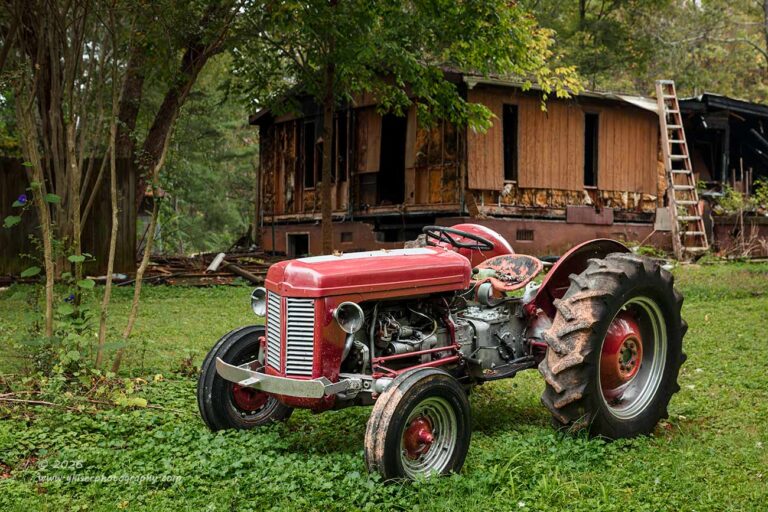
Accept that there is always something to learn and that there is no finish line in photography. Once you do that, every time you venture out with the camera is another chance to improve and stretch what you already know. It will be an exciting adventure which has nothing at all to do with epic locations or getting the same photo as somebody else has. Photography becomes a pursuit where even mundane scenes like the one above turn into something magical because you have a chance to explore your own creativity.
The problem with a finish line is, once you cross it, it’s over. If photography had a finish line, I don’t think that it would be something that I would be interested in for more than a few years. Because there is no such thing as a true finish line, I can continue to learn about this craft until my body will not allow me to hold a camera or see what I’m doing. Essentially, I am my own limitation, but if I’m able, photography will always provide an avenue to learn something new. I can learn about the craft, or I can learn about myself. Either of those things will contribute to the images that I capture.
Thank you for joining me for another installment of my monthly Behind the Camera. I do hope that you have enjoyed it, and that it has provided you with a bit more insight into what makes me tick as a photographer. This one was a lot of fun and comes at a time when I am starting to look at my goals for 2027. I don’t know what those goals will be yet, but I’m sure that I’ll have something designed to improve on an aspect of my work based on something that I am seeing through the past year. I will treat it as another chance to learn more about photography and how that craft fits in my own life.
Until then…

Remember to use the code KISER10 to get 10% off your purchase