Welcome back to another installment of my monthly Behind the Camera. It is here that I will pick a topic that I want to delve into a bit more in depth than I can during a routine blog entry. This month, I am going to get into a topic that I came up with possibly a year ago but have just now felt ready to unpack it. It is dealing with composition in your images and how you can really dial in what that composition should be. Don’t worry, this is not going to be a another one of those “Rule of Thirds” suggestions where I talk about grids and swirls over your scene. No, this is something much more impactful to your overall photograph and something that I have been doing subconsciously for many years.
There always comes a time when you look at something interesting and start to figure out a composition for that scene. Typically, you end up framing up the entire scene and taking the shot. I’ve seen more than one photographer check the image review and then move onto the next scene without another thought. This is where folks are missing the chance to create something very special and that is what I am going to attempt to convey through this entry. When you are reading through my blog entries as I talk about the different treks that I go on, you will hear me talk about fine tuning the composition, changing focal lengths, using the power of “And”, as well as doing the composition dance. None of this is flare that I add to make things sound more interesting; it is a fundamental part of my photography when it comes to organizing the composition within the camera. Since I don’t like to spend too much time in post and really hate throwing pixels away for no reason through cropping after the fact, I really try to get everything correct in the field. When it comes to composition, that is what is most important because you can’t change that in post aside from simple cropping. Things like the scope of the scene, the angle it is shot from, and how the light is used is pretty much baked into a photograph once the shutter is pressed.
All of that is to say that composition is going to be one of the biggest things that you have control over in a photograph and it is worth spending some time to develop. The problem that I have seen time and time again through workshops as well as mentorships over the years is that the photographer will always capture more than they think they are within the frame. I know this because I’ll always ask why the photographer is photographing the particular scene they are working with. If they have an answer, it is usually because of a detail within the scene that I totally missed out on because it represented such a small portion of the photo. As we start discussing how to improve the composition, the scope of the photo usually is reduced a great deal so that what they really liked about the scene is better represented.
This works the same way no matter if the composition is based on a landscape, old barn, waterfall, or old car. Even portraiture can work the same way. It goes back to how our minds filter out the extra information and allows us to focus on a tiny detail within a scene, dismissing everything around it. This is great for the mind that has already spotted that detail, but when it comes to a viewer looking at the scene for the first time without the benefit of the other four senses, that detail will likely be overlooked. When we understand that concept, we are one step closer to creating photographs that can really communicate how we are seeing the scene.
This takes practice, and I’ve spent some time working on a way that I could teach this concept in a preemptive way so that photographers are better equipped from the beginning to get the photos that they are wanting. The method that I have landed on actually has nothing to do with photography, but with drawing or sketching. Don’t worry, I’m not going to require you to get out a pencil and paper, although you are more than welcome to do so. When faced with a scene, I am asking that you start to draw that scene in your mind paying attention to each stroke of the pencil or whatever writing stick you choose. Think about the lines and the curves, the shading, the detail. What parts are you just putting on the paper and what parts are you really spending time with? That is the distinction that I want us to concentrate on here.
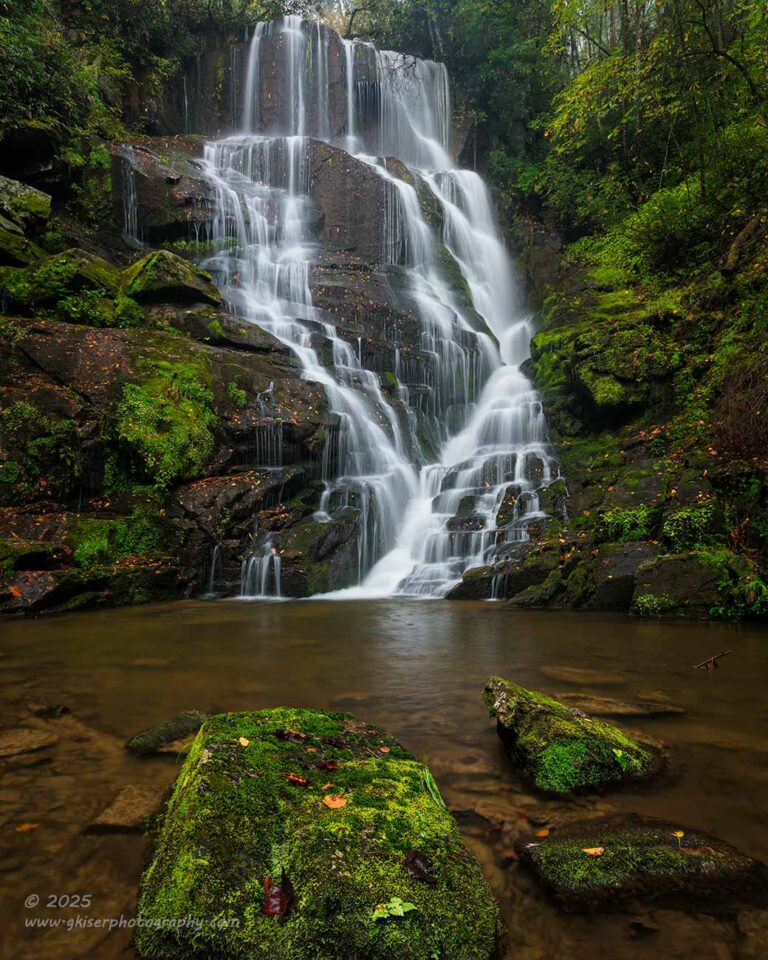
Let’s take a look at this scene which is Eastatoe Falls and was shot last Fall. There is no doubt that this is an all-encompassing scene of the waterfall. It is well composed (I think so anyway) and captures the grandeur of the scene for sure. It was the first composition that I shot of the waterfall once I got to it. Job done! I could move on from this point, but that is not my style. I much prefer to work a scene and try to get a lot of different options when it comes to what compositions I come up with. Part of that working a scene isn’t just taking many grand views from different angles, though that can play a part in the method. For the most part, I am working on dialing into the details that appeal to me within the broader scene.
For the sake of conversation today, let’s look at this as the scene that we are faced with. It is beautiful, no doubt, but shall we start drawing it? There is a lot of detail here and since I am not a sketch artist by any stretch, my time and effort needs to be focused on the things that are important to me. Would I spend time on either of the upper corners? How about the pool of water at the bottom? The top of the waterfall would get some time, but for me, I would spend the majority of the time drawing on the lower section of the falls, and in particular the lower right where the rocks cause the water to cascade in steps. If I were drawing this scene, that would be the most detailed part while the rest of the scene would be a little rougher and hurried through. What that tells me is that this is the most important part of the scene to me, and that is where I need to spend the time. My time is not spent drawing though; it is photographing with a camera. No difference there because I can get in tighter to that area that I want to focus on and create an image around that as opposed to the larger scale of the opening image.

Those areas that I wouldn’t spend much time drawing, were removed through cropping with zoom and positioning, and that brings us to a much more succinct view of the waterfall and there is no question as to what section I am liking the most. This is where clarity of thought comes into play and revolves closely around what I would spend the most time drawing. Both of these photos are of the same waterfall and roughly the same angle and location. However, both photos are very different in feeling and impact. This might not be the best comparison because the overall scene was a very considered composition in its own right and not just an establishing snapshot of the scene. I’m sure you can get the point between the two photos though.
Now one of the benefits to looking at a broad scene as if you were drawing it is that you can usually find several different areas that you would spend time on with your writing stick. That happened with me while photographing Eastatoe and when it comes to making insignificant details impactful, I can think of no better example. While viewing the waterfall from a distance, I noticed a branch that had fallen at the top of the waterfall on the right side and had stuck itself right at the ledge. At first this was seen as a distraction, but as I started to look at it more, I could see myself drawing in the delicate branches over the silky-smooth water. That was an area that I would spend time drawing and getting the shading just right. If I would go through that effort with a pencil, there was no reason that I shouldn’t photograph the same detail with a similar amount of care.

This is the detail shot of a “distraction” that I could barely see in the overall composition as shown above. It turned into one of my favorites from the trip and is certainly something that I would have spent time within the scene drawing in the details. Knowing that it was something I found beautiful allowed me to pull yet another composition out of this waterfall based on the sketch theory that I was developing. I now had three very different compositions from the same subject. This is beneficial to allow you to add more photos to your collection, but it is also a chance for you to really decide on the composition that you are wanting to shoot.
Once again, the three photos used so far are all considered compositions and stand strong in their own right. The point that I’m trying to make here is that when you are not sure about what in a scene interests you that you have a tool to use before the camera even comes out of the bag. It is a way of forcing yourself to really look at what your motivations are in creating the image. Each time you capture a composition, review it and look to see if everything in the frame would get equal time if you were drawing it. If not, you need to dial in your composition a good deal more. It is really as simple as that.
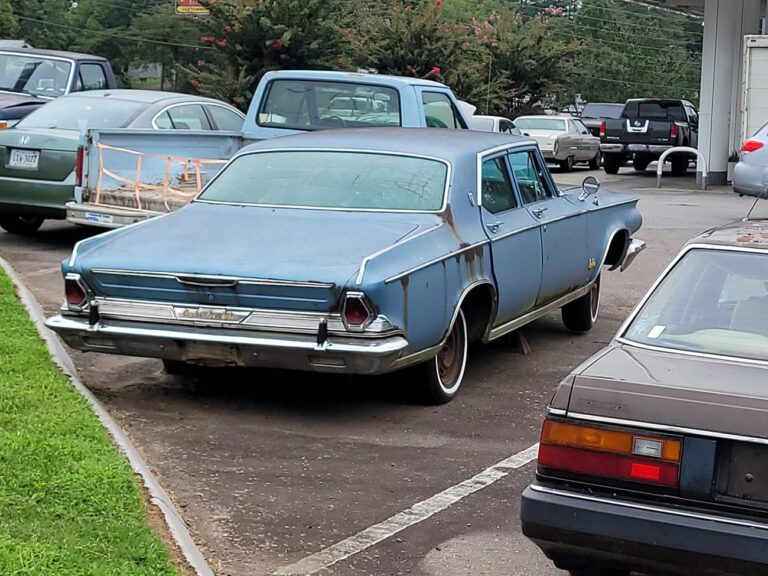
This might be a fairer example of what I am talking about. Obviously, the reason that I was drawn to this scene was the blue New Yorker and I had just successfully shot a photo that included that car. However, there are nearly ten other vehicles in the scene which I would not spend any time at all drawing in detail for. In fact, if I were drawing the scene, none of those cars would be there at all. I would focus my time and attention on the New Yorker and that is where all the effort would be.
Now looking at this as a photograph, we kind of have to take into account the surroundings because we are pretty much at the mercy of the scene as it appears. I know that the car is what I would draw, but that is not an option for a composition in a photograph with all of the distractions around it. This is where I take for granted that the car is what I would spend time drawing and force myself another layer deeper into the hypothetical drawing. What details will I spend the most time drawing? This is what will define my compositions through my time at the location. There isn’t much to the body panels and panted surfaces that would require much time to draw, so that isn’t the answer. The areas that I would spend the time getting right are more around the taillights and the emblem in the center of the rear panel. This is the part that excited me the most about this entire scene and I went to work to capture that aspect.
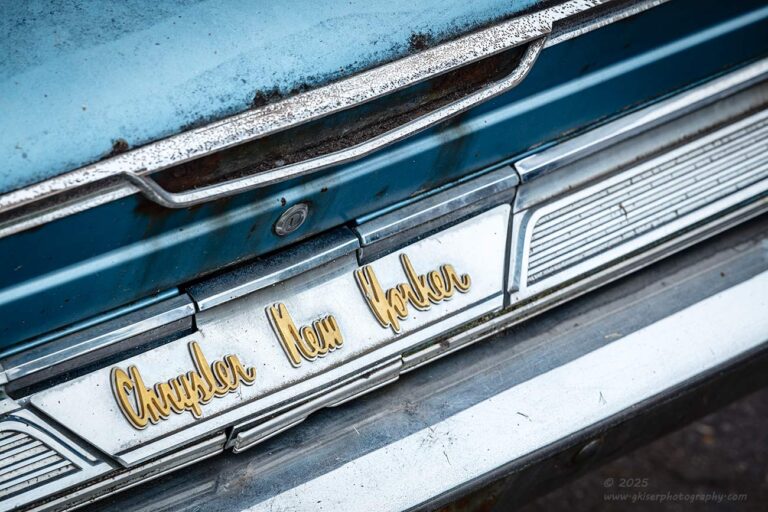
Now you can see where the benefit is with this thought process when it comes to building a composition. If you won’t waste time drawing it, why are you wasting pixels capturing those elements. Get that composition dialed in while you are there and focus your time and energy on the parts that matter to you. As I’ve said before, fill the frame with what you like, don’t let the thing that you like get lost in a box of unnecessary visual stimuli.
Now, nothing I have said thus far has dealt with compositional theory, or rules, or anything like that. That is because those don’t really matter here as we each have our own ways of shooting. For me, balance is the key and I want a well-balanced scene and one that is appropriate for the subject. I use a lot of different compositional techniques interchangeably and at times throw them all out the door if it suites my photograph. All I am trying to get across here is when you are trying to figure out your compositional scope to start with, that looking at it as a drawing will help you define that scope.
Years ago, I was asked by a workshop participant how I chose the scenes that I shot. It seems like a very basic question, but it was a question that has stuck with me for probably five years or so now because it was a great question that kind of formed the basis for this whole topic. Of course, the answer to that question all those years ago was that I looked for something that stood out in the landscape or the scene that I was looking at. Just something unique whether it be a tree, the shape of the hill, or maybe a bit of unique rust on a fender. It could be that I liked the way that the vines were growing over the side of that barn, or the way that the light was hitting that bridge. Whatever the case, there was something specific about the scene that stood out from everything around it. That was what I was wanting to photograph, and that was how I chose the scene that I would shoot. Everything would be built around that element.
The next step was the composition, and it would be far too easy to place that detail that stuck out to me into a broader composition. I had already started to determine what I would spend the time sketching within the scene and what would just become filler on the paper. That is where the composition started to develop. I would reduce the visual clutter down to just the element that I wanted to capture and then carefully add things back in that would balance out the composition and give it a bit more visual interest.
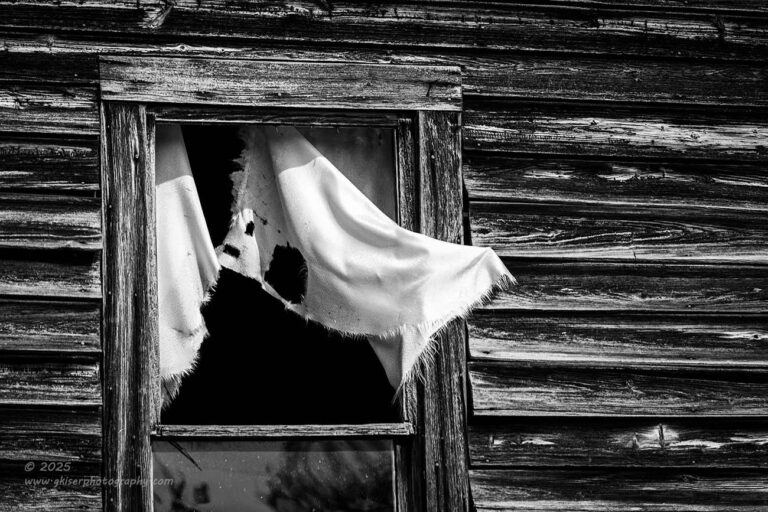
In this example, I had spotted a house on the side of the road that interested me. I did get the overall shot of the house, but I knew that there was more to capture here than just that postcard shot. Looking around, I found that I loved the window on the side of the house with the top pane broken out allowing the curtain to be blown out of the window and snagged on the wood. This seemed to capture the story of the house as a whole. I worked on a composition that featured that detail that I would have gladly spent time drawing in. I reduced the composition down to the entire window and enough of the side of the house to provide grounding and balance. There was still too much there, and I reduced the composition even more to exclude the lower portion of the window as well as the foundation of the house. This focused the attention on the curtain and the snagging which was what I wanted to capture. I added in enough of the lower glass to balance out the frame of the window at the top and then offset the window to the left for a bit of visual tension and to give the curtain some nose room. This composition was dialed into just what I would have spent the time drawing in the overall scene. There was no question what I was drawn to here and even the black and white presentation supported that focus as it was all about the curtain and the textures around it.
Thinking about scenes as drawings really does help you to determine the scope of your compositions. If the composition doesn’t quite affect you the way that you want it to, there is more than likely a simple fix for that. Most of the time, you are just including too much in the scene. Take a moment to sketch that scene in your mind and think about those pencil strokes and where you are going to spend the most of your time and energy. If you are going to put a lot of effort into only 5% of the frame, you have too much extra in the frame. Crop things in closer and try that composition. Take that 5% of the scene and make it 50% or more of your photo and you will have a much more impactful scene overall.
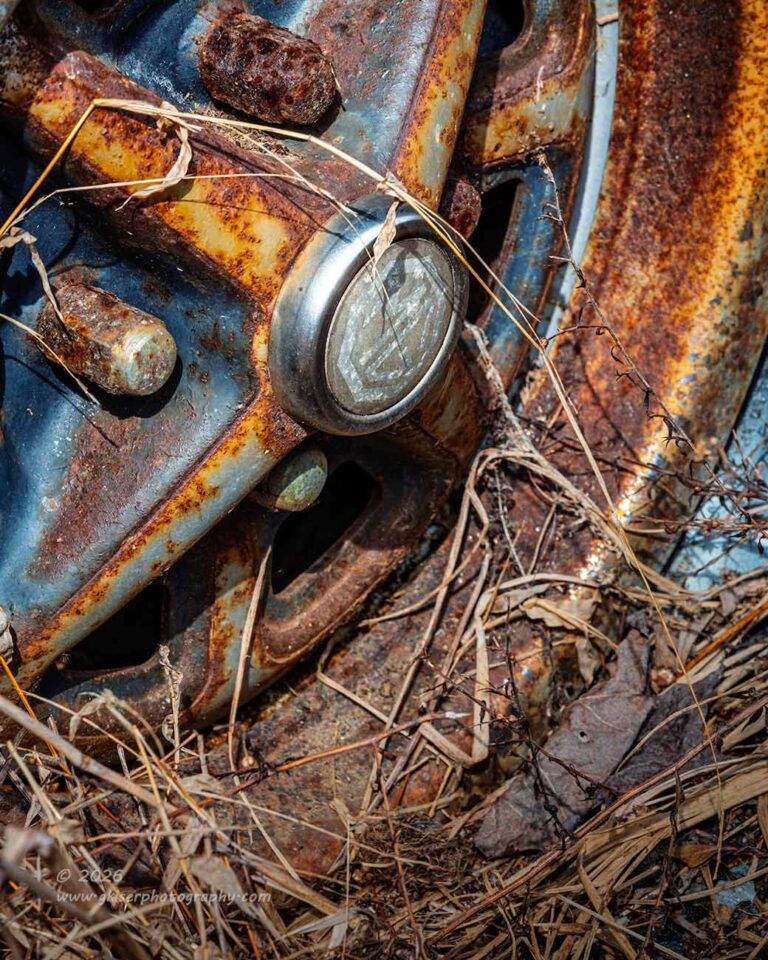
The wheel on this MG is a great visual for this technique. Of course, I had photographed the whole car to start with as I like to do. Then I started to come in for some isolations shots. I began by looking at the front corner of the car in a scene that included the headlight, marker light, bumper, fender, and wheel. You know the composition because that same one has appeared many times over the years with a variety of different cars. For this subject, the composition felt boring and expected. As I was looking at the layout of the composition in the viewfinder of the camera, I saw that the body of the car held very little interest to me because there wasn’t that much rust or texture. The headlights were pretty bland as well. The part that really interested me was the wheel and how it had turned so rusty over the years. This was the area that I would want to spend the time drawing. Thinking about that, I realized that the tire wasn’t really included in that sketch, and the only part of this broad photo that I really found interesting was the wheel.
I changed up my position and started to really crop in close to the wheel to get a feel for the shot that I wanted. I started off including the entire wheel which brought in the tire and some other extras. That composition was more of a photograph to prove that “I was there” kind of composition and had no artistic flair to it. I changed how I was framing the image which allowed me to really get into only a portion of the wheel, so I was able to focus on the shape of the spokes rather than the roundness of the rim. By changing the focus on the shape of the scene, there was an abstract quality that developed which I thought really showed off the part of the scene that I would have spent the time drawing.
I’m telling you, this technique can really work wonders if you learn to use it. It is a little more complicated than looking at the grid on the back of your camera that tells you the intersecting points of the rule of thirds, but the nice thing is, you get to decide more of what it actually is that you want in the frame this way. Things are not arbitrary and rooted in rules. You are essentially asking your subconscious to determine what needs to be in the frame, and what doesn’t need to be. Then you start applying your own chosen compositional strategy to place that important part of the scene within your frame.
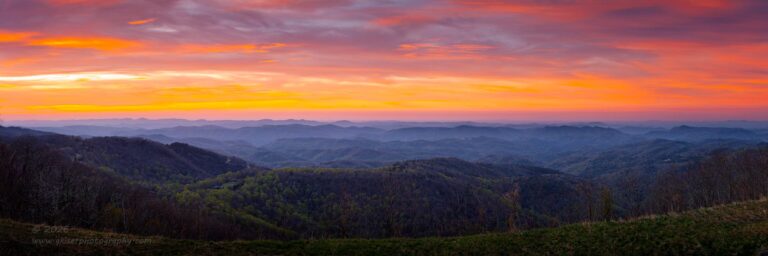
As I write this out, I am seeing how it looks like I am focusing a lot on dialing in the photo to show certain details of a scene and that applies to isolation type images very well. Does that mean that this technique only works for small details within a scene. Absolutely not! Let’s take a look at the panorama above which is a scene with a very large scope. It is actually ten different images stitched together covering hundreds of miles of the landscape. How does this fit into the sketch theory that I am talking about?
Well, imagine the full scene from my feet well out to the horizon and all the sky that would be visible above. I was looking at that scene in real time but was struck by the colors of the sky, the textures of the clouds, and the way that the mountains were rolling off into the distance. I could have very easily popped on the wide-angle lens which is a lens I am wanting to get better with this year and captured all of that scene in a single shot. I considered it but then thought about what I would spend the time drawing within the scene and found that I didn’t care at all about the foreground which was the embankment from the road leading up to a bunch of brush before getting to the good part. As easy fix for that would be to tilt the camera up to avoid that which would give that glorious sky much more visual weight within the frame. Only, if I did that, I would end up capturing a sky that was actually kind of gray with limited interest above a certain point above the horizon.
The parts of the scene that I wanted to spend the time drawing were the mountains in the haze off in the distance along with the colors of the sky. In this situation, I would have been using colored pencils it would appear. The parts that I would spend the time drawing were the parts close to the horizon and I would apply equal time to the drawing of both the ground and the sky. To capture that in a single photo would lose the scope of the scene and would minimize what I was seeing. The idea of the wide-angle approach would have easily captured that, but with extraneous detail. The answer was this panoramic image of the scene where I didn’t have the foreground or the boring part of the sky but still had a great deal of width to the scene that captured the true magnitude of what I was seeing.
It was a perfect example of how this theory works on a broad scale as well. Everything in the frame is something that I would have spent the time drawing or sketching. It was all worthwhile and because of that, I had created an image that effectively communicated what I was enjoying about the scene. That is all photography is when you think about it. It is a way of taking what we see with our eyes, applying how it made us feel, and then using technology to translate all of that into a single image. We have to think of ourselves as painters in this respect and take full control over what is in our frame. If a painter won’t take the time to add it to the canvas, why should we fill the finite area in a photograph with those details?
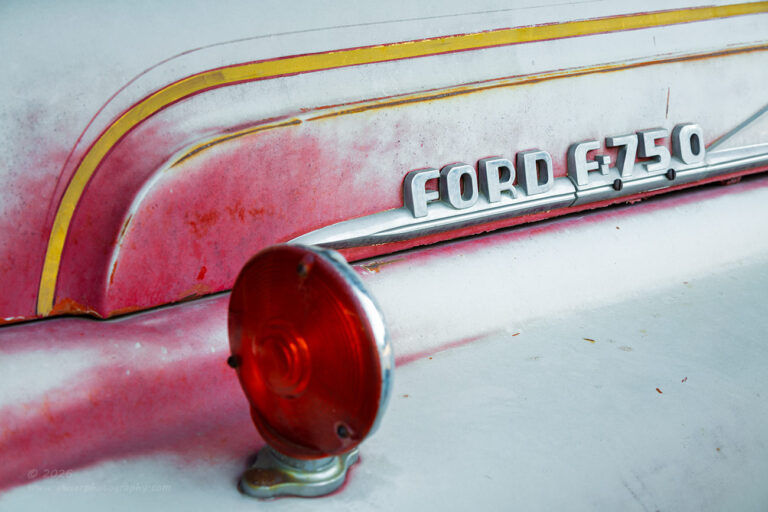
I’ve done a lot of talking about the importance of spending time drawing elements in a scene and only including those things. I don’t want that to come across like you can only fill the frame with elements that are worth drawing or sketching. As you might expect, there are different levels to this concept and negative space becomes something that we have to discuss. Now, there is a difference between negative space and empty space. Empty space serves no purpose and is a distraction to the overall image. Negative space adds something to the main elements and plays an important role in the image as a whole. It might add visual tension, gives the main subject room to breathe, sets a mood, or in the case of the image above, helps to define the overall flow of shapes.
Here we see the negative space being the white area on the fender which bleeds into the faded portion of white on the hood. This negative space defines the shape of the reddish pink paint that becomes the root of the curve of the stripe which frames the emblem on the hood. The negative space creates a composition that has more visual interest than just the main subject. This composition desperately needs the negative space to work, and I would argue that the subtle nature of the curves as an element would be lost if that negative space was filled with the textures of rust.
Would I spend time drawing the area that is white and blank. Obviously not, but in a sketch, that blank paper would be as important as what I had drawn for the reasons that I have explained. Because of that, the same negative space would have been included in a sketch so therefore belongs in this photo. Make sense?
This sketch theory really works in all kinds of photographs and is a great way of defining the composition that you are wanting to work with. It is not the only step because you will still have to organize the elements within the frame after defining the scope of what you want to shoot. It is a great starting point when you are just not sure what portion of the scene should be in your photograph. It is as easy to press the button and capture too much as it is to press the same button and not capture enough. Most importantly though, it is just as easy to press the button to include the exact right number of elements in your scene. The difference is how much consideration you put into things before that button is pressed. The tool to use for that is pencil and paper (virtual version) as I have described to you here today.
Thank you for joining me for today’s Behind the Camera. I do hope that you have found it useful. I’ll be back here next month with another topic to discuss. If there are any topics that you would like for me to tackle, drop me a comment or email and let me know. That also applies if you have a question that you would like to ask me. I’m always looking for new topics to discuss in this feature and while I have a collection of ideas ready to go, I would much rather get into something that is of particular interest to one of you.
Until next time…