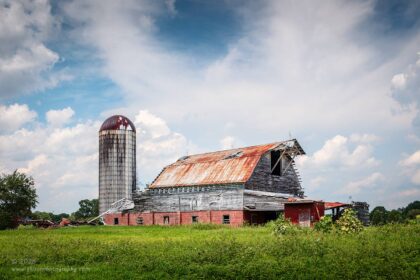
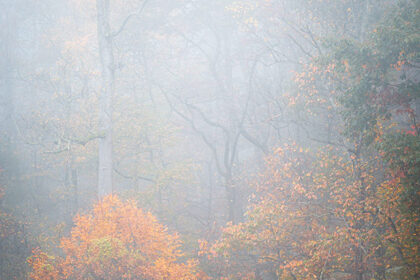
Wednesday, October 28, 2026
Welcome back for the fourth and final installment of this blog series from my Wednesday trek. If you have read through all of the entries I thank you for taking the time to do so and I hope that you have enjoyed the previous blogs. Considering that this all started out with a quick trip to Forsyth County to photograph a single Impala that I had seen in passing a little over a month before, this has turned into an epic journey with a ton of photos collected. When we last left off, I had finished up with the photos from the Impala which turned into 17 keepers bringing my total for the day to 20 counting the two quick locations that I stopped at on the way. For those that are curious about the title to this blog, that is the reason behind it. When I was starting out with photography I would far too often pass up on a photo that was right there in front of me because I was rushing to get to something else that I had planned for. Far too often, that location wouldn’t be as good as what I had passed by. Gradually, I started to adopt the theory of one in the hand is worth two in the bush meaning that I needed to take advantage of the photo that was right in front of me rather than hope for something better down the road.
In this case, I managed to get two locations shot on the way to the planned location and then spent about an hour and a half at that location getting more photos than I thought would have been possible. I had finished up with the Impala rather abruptly as my creative energy just flatlined with it. I didn’t fight it because I knew that it was telling me that I had all that I needed to get for this visit. It didn’t mean that I wasn’t keeping my eyes open on the way home.
In fact, I picked the same route home that I had taken to get out to Forsyth County because there was a barn of some sort that I had seen on my way to the Impala that caught my eyes differently than it had in the past. Why didn’t I stop to get the photo then, you ask? Well, the light was all wrong, but I was seeing the potential in it. Now that was not the first time that I have seen this barn. in fact, I have seen it for years, even when I was working at the radio station in East Bend while I was still in high school. I’ve watched it age and more recently, I’ve seen it just about every time I’ve been in the area of Outlawed Restorations, and it is at the entrance to a salvage yard that I have considered exploring. I’ve seen this barn many times over the years, but it has never really struck me as a good photographic subject.
The problems that it faces are a commercial building on the left and a house with some small sheds to the right. Of course, the driveway leads to the salvage yard and to the front is the main road. The siding on the barn is that fake brick applique that I’m just not a fan of. All of these things were working against it photographically speaking. When I saw it in the morning, I could see the changing trees behind it and the facade that I didn’t care for was starting to fall off revealing the wood beneath it. It wasn’t perfect, and the location hadn’t changed, but it spoke to me in that brief moment passing it by. The light just needed to be more on the face of the barn than it was at the time.
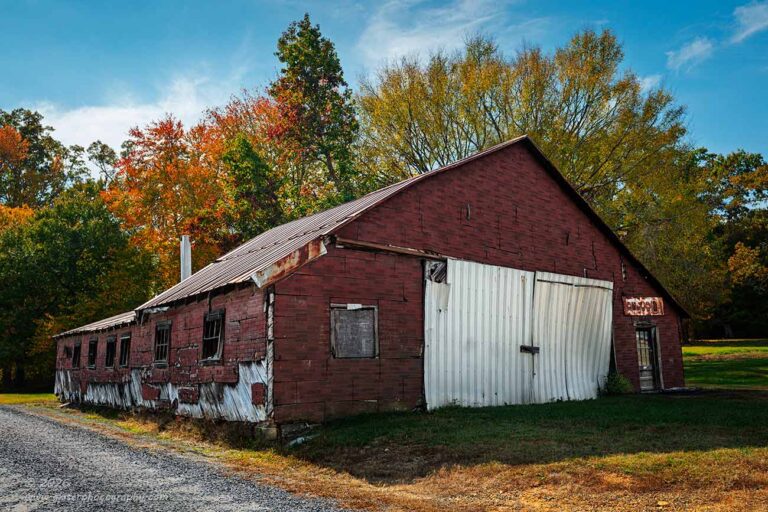
When I was driving home, I was figuring that the light would be better on it and I might want to take a moment to get the photo at that point. It wasn’t too far from where the Impala was, and it didn’t take long to arrive at the barn. I pulled into the parking lot next door and then moved into the driveway next to the barn to look at it critically. The light was still wrong for what I would have wanted to get as the front was still in the shadows. Ideally, this would have been done under some thick clouds with lots of texture. The lighting would have been much more even in that situation and the barn would have stood out more in the photo. The thing that I had to keep in mind was what drew me to the scene specifically this morning. I’ve passed it by countless times without a second thought, but this morning I had seen the bright leaves behind the barn which set the reddish color off quite nicely. This was what I was interested in, and that aspect was still looking good. In fact, with the sun backlighting the leaves, they were glowing in the sky. Those leaves would not be there much longer and things would change, likely back to what I was used to seeing here.
The whole theme behind this trek had been the photo in the hand was worth two in the bush. In this case, better lighting was sitting in the bush out of reach at the moment. The photograph that I had in hand was the one with the colorful tree that benefitted from the backlighting. It wasn’t perfect, but it was workable and I was here with the camera. With that in mind, I committed to making some photos of this barn in the current conditions.
Once I got parked, I pulled out the camera and fitted the standard zoom to it. Then I thought better about that. I knew that I was going to be working close in to the barn and would not need anything tighter than say 40mm, so there was no reason that I didn’t use the wide-angle lens that I have been trying to get more proficient with through the year. It was a quick and easy switch since I was still at the truck with the bag. I mounted a polarizer as well to get a little more contrast to the sky as well as remove the glare off of the metal roof since the sun was beating down on it.
When I got into position with the barn, I started to see where the exposure values fell. I had considered bringing a grad filter or two with me but decided that I would use those as a last resource because I didn’t want to lose the colors in the trees by dropping their exposure. The histogram was showing just enough space on either end of the graph to indicate that I had workable tones in both the shadows and highlights. It was close, but I felt confident that I could make it work the way that I needed to for the presentation that I had in mind.
I wish that I could say that the composition was complicated and it took a long time to work it out. Short of moving slightly to the left after starting, there wasn’t much change at all in the composition. My frame was dictated by the structures around the barn, and I had to focus on making sure that none of them entered into the photo. Fortunately, the angle that I was forced to work with was the one that was the most interesting with the barn and showed off the siding that was falling off. There was a total of six frames that I shot of this composition with one position change and several exposure shifts as the light changed to make sure that I had the most even lighting possible in the circumstances.
As it turned out, the last of that series turned into the keeper from this group because I had finally gotten the composition just right and was getting a better feeling for the light. It seemed like a lot of effort for a single photograph. It was the one that I had stopped for, so I was relatively happy with that. However, I couldn’t remember what the rear of the barn looked like and I knew that it would be in better light. I was here, and it wasn’t a far walk to the other end.
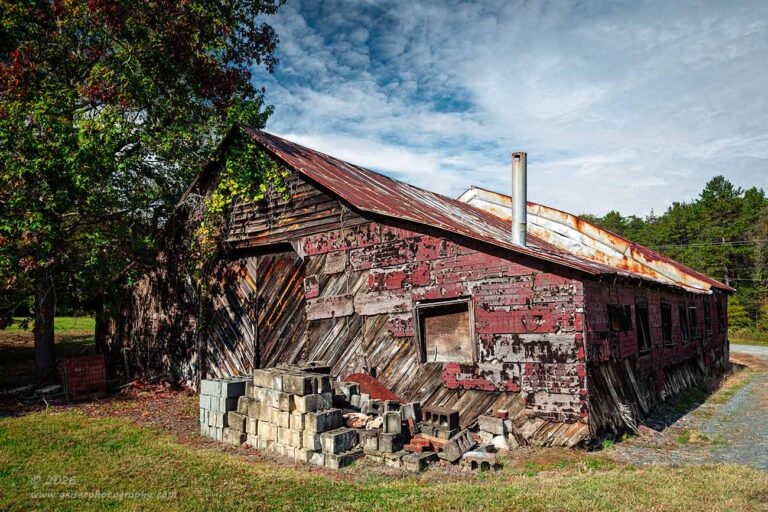
When I got to the back of the barn, I was thrilled to see that it had more character than the front of the barn. There was a tree right at the corner that created a nice shadow on the face for a bit of depth, but most of the face was in full sun. The shaded side made more sense here as well, and the stacks of blocks didn’t bother me at all since the door was closed. I started to work out a composition knowing that I was going to have to get part of the road in the background along with all of the power lines that were running alongside the road. I was happy to see that there were no other distractions in the frame from this angle. When I got set up right in the middle of the driveway, I heard a truck coming from the salvage yard, which meant that I had to move out of the way. After he passed another came from the other direction and I decided that my best bet was going to be moving in closer to the barn and using more of that wide angle goodness in my lens. I was really happy that I had chosen this lens over my standard zoom for that reason. This also meant that I was going to have to elevate the camera a bit higher to control the converging verticals.
Once I had the composition set up again, I started making exposures with tweaks to the shutter speed as the light changed, and I would even move the camera slightly if I saw a better option available. I ended up shooting a total of seven exposures of this barn from this end. The keeper was actually the second one that I shot. As it turns out, the changes that I made which were supposed to make it a stronger composition actually turned out kind of unhelpful. I had it right to begin with and that made me feel pretty good about it.
This was the end to my day. By this point, I was quite tired and creatively exhausted. I had shot a total of 92 frames which ultimately yielded 22 keepers which were then processed over two days. It was enough, and even though I hadn’t been very active through the month of October, treks like this have really kept me on track with a constant supply of new photos to share on social media during my daily posts.
Thank you all for joining me on this trek, and I apologize that it got a little long in the tooth. I hope that you still found it enjoyable and liked the photos as much as I did creating them. Remember, I do make prints of all of my photos, and you can select your favorite one and then decide how big you want it and what kind of media you would like it printed on. You would be supporting my art and business while making it possible to go on these treks. You would also be the owner of a unique piece of wall art that makes for a great conversation starter. There is just no better way to view photography than in a physical form. There are too many variables in digital media and chances are, you are not seeing things exactly as I intended when you look at your monitors. A print will always be done to my specifications with color accuracy and contrast as I designed it from the beginning. Let me know which print you would be interested in and we will get the process started.
Until next time…

Remember to use the code KISER10 to get 10% off your purchase