Welcome back to another installment of my monthly Behind the Camera. For those who are new here, this is a chance for me to talk about something a bit deeper in the realm of photography than I can really get into during a blog entry about a particular trek. I think we can probably all agree that those entries can get a little long just with covering that particular experience. For those who have been with me for a while, I’m glad to see you again and hope that you will find this one interesting. This month we are going to change gears a little bit from the entries that I have been doing and talk about a distinction that I have realized in my own photography over the last few years. The idea for this blog actually came to me a little over a year ago after watching a video series on how photography can be closely related to Haiku poetry. This has stuck with me in many ways over the last year and has even defined a bit more how I deal with the detail shots of my subjects. That is the idea of synecdoche which is something that I have been doing for a very long time without knowing there was a term for it.
That is not going to be what I’m talking about in this entry through. I’ve covered that enough through the treks where I have applied that thought process. Today, I am going to be talking about a much wider distinction in photography that some photographers are already aware of, but many might not be. This is the distinction between conceptual photography, or contrived scenes, compared to capturing a scene that you have noticed and responded to which appears in reality. This was another aspect that Haiku shared with photography and one that I had to let roll around in my brain box for a while as I had just realized the difference a short time before. So I am not throwing a lot of information at you all at once, shall I just take you on a journey so you can have the same realizations that I have had?

Starting out as a landscape photographer, I trained my eye early on to see the scenes that would make for a good photograph. I could instantly analyze the lighting over a scene and pick out a composition pretty quickly. In short, I was responding to the scene. It was either pretty, or it wasn’t. If it was pretty, I would take the photo. If it wasn’t, more than likely, I wouldn’t have stopped to look in the first place. There were those times when I liked a scene and saw potential in it, but it wasn’t quite ready. I might hang out for a bit to see if the clouds would move, or if the sun would change positions in the right way. More often than not, I would recognize the scene as being pretty and when I might need to come back to the spot for the actual photo.
This was pretty much how I worked as a photographer when I was starting out. Mostly, it was responding to the scenes as they appeared to me at that particular moment in time. Responding is the key word here, and that is what most landscape photographers do while looking for photos. We might add the step of previsualizing with different conditions, but that still really falls into responding to a scene in front of you because the main ingredients are kind of baked in already. There are certain core elements that are going to be set in stone in a manner of speaking. We have to work around those things in order to get the photo.
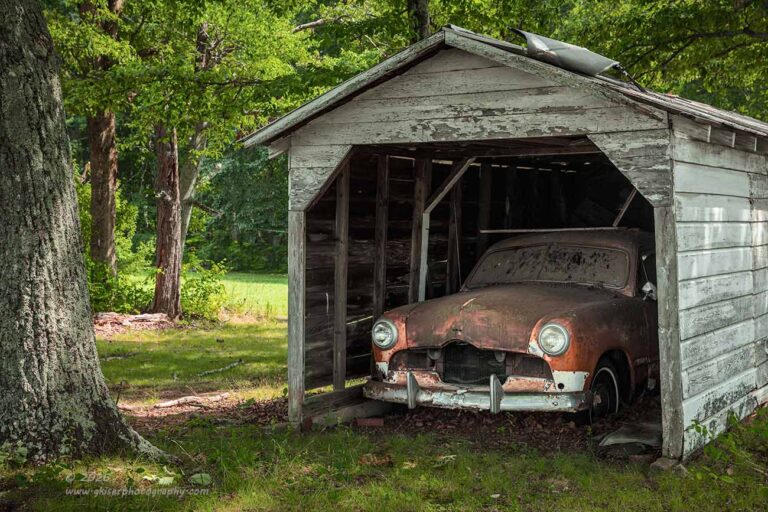
The concept of responding to scenes held true into my transition into a decay photographer. It was always the scene that caught my eye, or maybe the subject. It was something that was there which I felt would make a decent photograph. More often than not, I’ll be driving around looking for these scenes and will go out in areas that I’ve been before to see what the current weather conditions look like with the subjects. Essentially, I am waiting on the right time to take the photo by responding to the subject in the existing lighting and weather.
This has served me well over the years and has formed the basis of my photography since 2005 when I started learning the craft. I thought that it was difficult because I was constantly having to work with the weather conditions and the lighting. Patience was the key here. I would stay home for weeks at a time looking for that one day that had the right conditions to go out and get the photos that I was looking for with a certain type of subject, or a particular one in mind. It was frustrating, but there was really nothing else that I could do other than respond to the conditions around me.
I found that in many instances, I could go by a location multiple times and keep on driving because the conditions were not right and I was not responding favorably to those existing conditions. I could usually find another subject that would work in those conditions, but that would involve responding to yet another scene based on the current look and conditions. No matter how I looked at it, I was at the mercy of the weather and lighting conditions, and I chalked it up to one of those things that a photographer must do.
This was the case for many years and honestly, I never really thought about it that much. I remember thinking that this was the height of photography because you had no control over things short of what to point your camera towards. I would see those photographers that photographed people and think that they had it easy. As long as they had a person that was smiling in front of the camera, the photo was simple. They didn’t need to worry about where the photo was taken or finding that perfect set of weather conditions. People photography was almost cheating and it wasn’t something that I wanted to lower myself to.
I’ll stop myself right there and admit that I owe all people photographers a huge apology for that thought that I had more than once through the years. While I never came out and said it, I was thinking it and was putting myself and other landscape photographers on a bit of a higher level. This was wrong of me, and I am ashamed of that thought process. While I dabbled in people photography as far back as 2007, it was never anything that I got a lot of enjoyment out of and didn’t think that I was particularly good at. Again, it felt like I was taking the easy way out and so much of it seemed to be deceptively simple and not creatively rewarding.
By Spring of 2021, things were about to change for me. That was the Spring that I was asked to do some headshots for a person that I had met while I was a police officer in Greensboro years before. She was looking to enter a political race and wanted some headshots and professional portraits for her campaign materials. This was really the first time that I had done anything like this and after telling her that it was not something that I do normally, she insisted that I take on the job. With my normal sense of wanting to do the best that I could, I learned everything that I could in short order (like a week) so that I could make the best photos possible. What I learned was that I was going to need flash so that I could shape the light on her. I also needed to understand reflectors since some of the photos would be outside.
To make a long story short, I botched the whole gig but was able to recover well enough to make the client happy. That experience did start a new direction in my photography because my eyes had been opened to what was possible when it came to people photography. I loved the idea of controlling the light and creating a reality that wasn’t actually there. No, I’m not talking about creating a scene through AI or by digital manipulation, though that would have been a welcome feature in that last portrait shoot because of a few things that I hadn’t paid attention to prior to getting started. I’m talking about the ability to change the conditions of what I am photographing. After all of those years of waiting for the weather to be just right to go out and get the photo, I was seeing that I could create the light that I wanted in just about any situation.
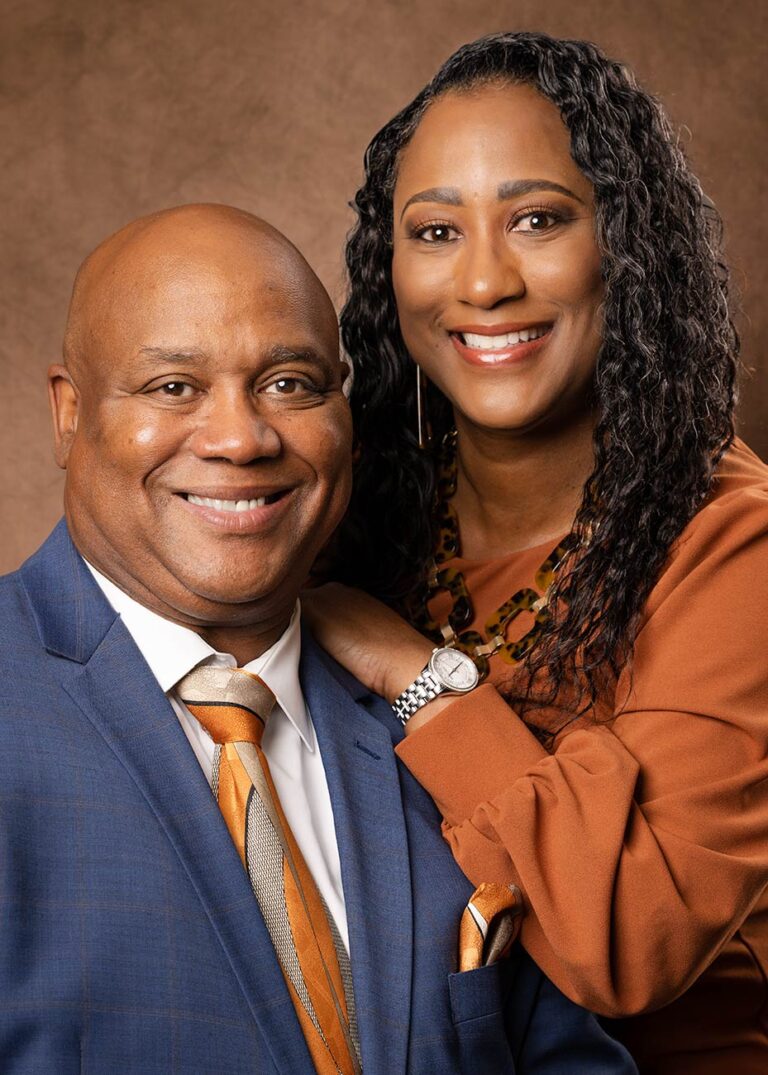
In the following months I learned even more and found out how to take full control of the light. I set a studio up in the house so that I could take on client sessions much easier. While I was still oversimplifying things and looking at the lighting as the key, I was starting to unlock other areas of photography. One of those areas was color theory which I hadn’t really paid that much attention to before. I had a good feeling for what colors looked good together, but that was about the limit to it. Now I was starting to learn how to harness the different colors in a photo. I was able to recommend clothing to my clients and I even started bringing in set design for that color palette. As you can see in the photo above, I went with a contrasting color palette that made his suit jacket really pop while the rest of the frame was largely monochromatic. It was a method of defining the two subjects in the frame while keeping everything happily working together.
Eventually, I had a pretty good sense of control over my lighting and the colors within a scene. I hadn’t realized it yet, but I was starting to take full control over the scene. I was no longer responding to what I was seeing. Instead, I would take a blank canvass and place subjects within the framework of that canvas and have them exist in that space with consideration to an overall look. I would then apply the lighting that would flatter the subject. In essence, I was now leaning into creating a look and then executing it for the photo. The scenes that I was photographing now, had not existed until I put them all together.
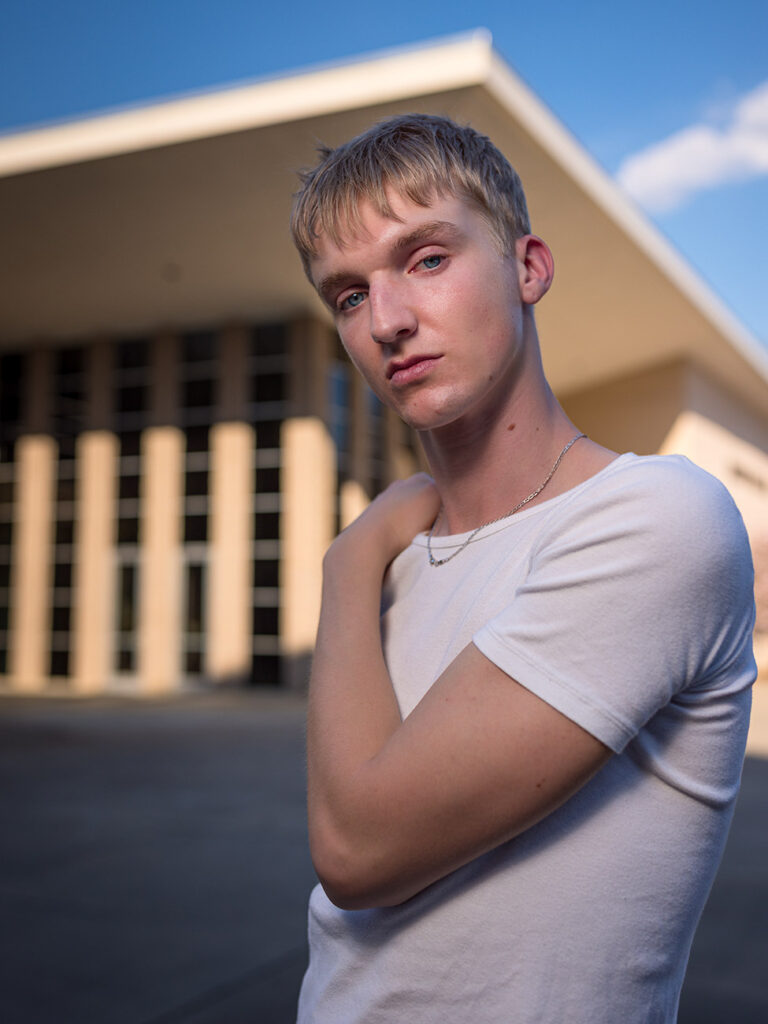
I realized that this was happening and even wrote about in in a previous Behind the Camera, but I hadn’t really considered the implications as much as I am now. I had the presence of mind to know that when I was photographing landscapes, I was capturing a scene that already existed and when I was photographing people, I was either inserting the main subject into a location that was already there or creating a scene to put them in. In one case, I was starting with a scene that was already there, and in the other, I was creating from basically nothing. This was the realization that I had which made me reconsider whether people photography was actually cheating compared to landscape photography. I now think that they both have their challenges and frustrations, but when it comes to actually taking control over the photo, it is the scenes that start from nothing that become the more difficult to execute.
This was where I started to really understand what executing a contrived or developed scene was all about. It was something that I did with all of my portrait work since I started treating it as placing the subject into a frame of some sort rather than finding the frame to capture. I was still responding to scenes when I was doing my normal landscape and decay work, but my people photography took on a whole different approach. This went on a for a few years until I started to get more comfortable with creating the scenes that I was photographing. The next logical step was about to take place though.
If I could create an environment for a subject to exist in, could I not create the subject as well? That was an interesting question and one that I quickly found the answer to. It actually started out as a photography project that I had done just a few years after starting photography where I would photograph smoke with a flash. With my new understanding of studio lighting, I chose to bring back that technique of abstract work and start to explore it a bit more. What had started as a pretty simple process of capturing smoke using a flash had turned into a chance to selectively color the smoke and start to really pick out the essence of the abstract shapes that I was seeing in the formation of the smoke.
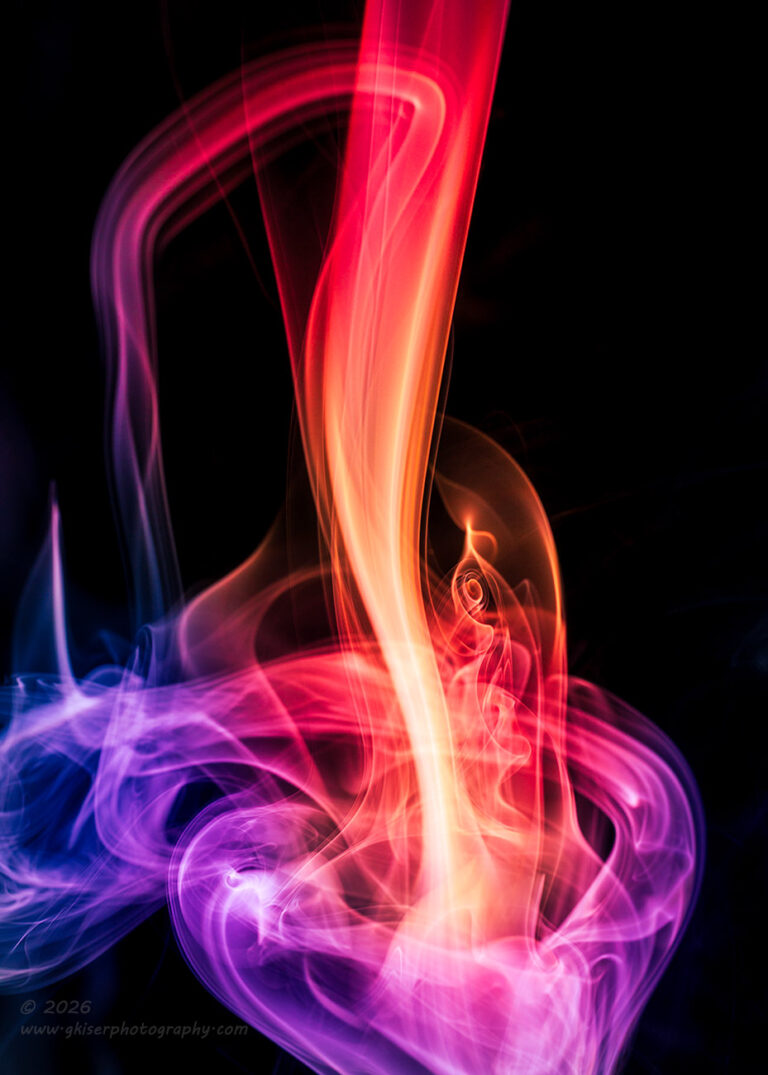
This turned into a wonderful little exercise that I would do once or twice a year. I was literally building up the scene from nothing. I’ve talked about how I do this technique a number of times, but essentially, I am starting with a black background and an exposure that picks up no light at all without the flash firing. I then add a cone of incense that will provide the smoke which I would then light with a flagged or gridded light source off to the side. That flash duration of something like 1/1000 of a second becomes the exposure time and the camera captures that split second of light. From there, I have a structure that is lit in the frame, but it is the next step where I give it life. I take that gray smoke into Lightroom and give it colors based on how I am seeing the scene. Quite literally, I go from a totally black frame to what you see above. It is a scene that never existed and then only existed for that split second when I captured it.
In no way am I responding to something that I see because I can’t see the exact composition that I am photographing. Instead, I am predicting what the smoke will look like in the immediate future. Most of the time, I am missing what I am expecting to happen, but there are other times that luck is on my side and I press the button at the right time. It is still always up to chance and there is no way of knowing what the camera will capture which is the beauty of it all.

Remember to use the code KISER10 to get 10% off your purchase