Friday, July 21, 2023
Jekyll Island (Part 1): Getting to Know the Island
Jekyll Island (Part 2): Trying it All Out
Jekyll Island (Part 3): Visiting Another World
Jekyll Island (Part 4): My Last Stand
It is mostly dark in the room except for the one light in the hallway that we keep on since there is a five-year-old sleeping. I’m not sure what the time is, and my eyes aren’t good enough to see the clock from where I am laying. I reach up to get the cell phone which is perched on the top of the headboard. I pull it down and it is showing 3:45am. In most cases this would be absurdly early and I would promptly roll over and go back to sleep. On this occasion, I decided to turn the alarm off since it was set to go off in just 15 minutes. I might as well get woke up because I had a 2.6 mile hike to go on in order to get to Driftwood Beach. I was excited and nervous to go there because I actually had an idea of what was there based on other photographer’s photographs. This is dangerous because it can give a very skewed view of a location which will set you up for disappointment. I’ve always felt better shooting closer to home because if things don’t work out, you can always go back and try it again with different conditions. Here I was over six hours from home with only “hero images” to gauge the potential of a location that I was all set to visit in near total darkness for the first time. It was why I was here, so I really couldn’t allow excuses to cloud my judgement on going.
I checked the weather on both of my normal apps. They were actually in agreeance with what to expect during the morning hours and it didn’t seem like there was going to be terrific light available. The clouds were going to be thin for the most part and it looked like the chance for color was slim. The transition from clouds to full sun was going to be pretty quick as well which meant that my shooting time would be very limited. In short, this was looking like a day that I would probably not go out in the first place. I was at the beach, however, and I can’t say that about most days. I laid in bed and pondered what I should do. I was up plenty early enough to go to Driftwood Beach, but the thought was I would be disappointed with the lighting conditions and then wouldn’t be able to stay long at all due to the full sun. With two hours of walking on the line to get there and back, I had to be smart about things. There was also the fact that we were there with Aulani, who wanted to go in the ocean and pool. Since Toni can’t swim, I knew that for Aulani to have the fun that we wanted her to have, I was going to need to be available. I would certainly be able to get back to the room quicker if I stayed around the hotel for the morning.
Yeah, I was making excuses, and I didn’t like giving up on Driftwood Beach, but at the same time, I had to think about this as a landscape photographer who had to put light before anything else. the light just wasn’t going to be right for what I wanted to shoot there. I could be more flexible here since I had an idea of the different compositions that could be had. It was now 4am, and I gave myself 15 more minutes to decide on what I wanted to do. That would still give me enough time to get out to Driftwood during blue hour so I could set up the shots and potentially get a few before the sky came to life.
Those 15 minutes ticked by quickly and almost with every tick of the second hand, I was changing my mind as to what to do. I was almost paralyzed with the thought that whatever I chose to do, I would be making the wrong choice. I hate mornings like this because it usually means that I end up making the choice to stay home and not go out at all. I had to keep telling myself that I had to go out and make use of the time here. I just had to figure out the option that had the best chance of success.
Looking ahead at Saturday morning, I saw a greater potential for a dramatic sky and a longer window to shoot in. It made more sense to choose Driftwood Beach for that morning, and stay closer to the room for this first morning. I was still getting into the mindset to make coastal images. The previous evening had gone a long way to getting me in that headspace, but I still wasn’t fully there yet. Things like color palettes and compositions with a very flat horizon had to be considered and took time after shooting in the mountains for so long. It was now 4:15, and I decided that I was just going to stay close to the room and see what I could get right there. it made the most sense, and took a lot of the pressure off for the day. Not enough that I could go back to sleep because I was now going to have to get up in just 45 minutes to make sure that I was out before first light.
At 5am, I finally rolled out of bed to get dressed. I grabbed a quick breakfast of Pop Tarts and threw my boots on. Yep, I’m that guy who goes out on the beach in essentially combat boots. They allow me to travel in the sand, water, pavement, and grass. I don’t have to worry about shells, spurs, or anything else that might cause pain or problems. It felt strange leaving without a camera on my back, but there I was with just my ballcap on my head walking out the door. I went around to where the car was and pulled the camera out of the trunk. I put the rain cover on the bag which I always do when I expect to be on a beach as it keeps the rest of the bag sand free, and the rain cover is easy to wipe down to clean off. With that, I was on my way to my first stop…the tide pools.
I’ve experimented with tide pools a number of times at beaches, but I’ve never really had the amount of them that I had seen during the walk the previous day. After checking the tide charts, it appeared that the tides were going to be about the same during the morning as they had been during the evening walk which meant that I was going to have a similar landscape to work with. With any luck, the footprints would have all been washed away with the overnight high tide. My idea was to take advantage of any color that I could through the reflection in the water. It would give me some visual interest and an anchor to the image which is always very helpful in coastal photography. If things went well, I would then go back to the wicker chair for a sunrise photo, followed by a return to the trio of palm trees once the sun came up in the clearing sky for a nice silhouette shot. With the light of day, the idea was to shoot inland with some interesting trees off to the North of the hotel property. of course, I would read the light as I went and make any adjustments as needed.
first things first though, I wanted to get down to the tide pools and see if I could make anything work there. The walk was quick and surprisingly easy. Georgia sand isn’t near as floaty as NC sand and walking is quite a bit easier. There are also a lot less shells on the beach. It just made it easy to maneuver around which I appreciated. I stopped at each tide pool and looked at the shape of it and how the background was looking. It was still very much dark at the time, and I was in no hurry to get anything set up. I paid attention to each pool that I passed, until one struck me as interesting in shape and position. I started to look for a composition and found one now that the sky was starting to light up. A quick read of the scene told me that I was probably going to want to use the wide angle lens which is not one that I will typically use at the beach. My goal was to use some different lenses while I was here so I didn’t just stick with my standard walk around glass which gives a very similar look to everything that I shoot.
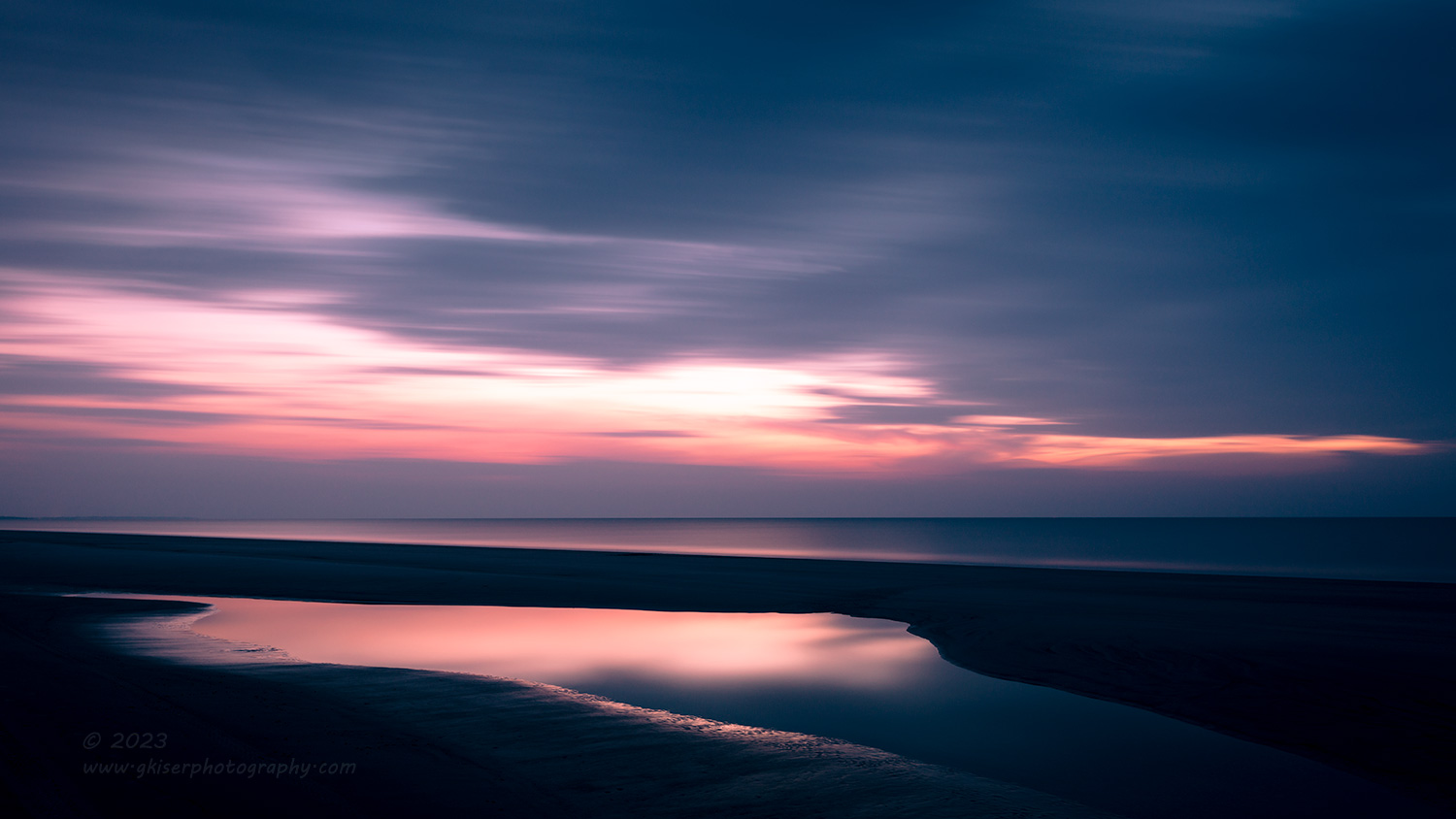
Setting up the composition was very difficult since it was so dark. I could see fine through the viewfinder, but the live view was useless. I got things all fine tuned and was ready to make an exposure. The problem was I had no idea what the exposure was going to be. I had just a shadow of a view in the LCD at 30 seconds, which meant that I was going to need several minutes to make the image work. I could have worked out an exposure with the light meter, and then done some math to come about the right long exposure, or I could just wing it. I decided that three minutes should be enough since it was about 2.5 stops above that 30 second mark. I also opened the aperture a little bit. I started the camera and waited. Three minutes took an eternity to pass, but the camera finally clicked the second shutter curtain and I could see the test image show up on the screen. It was a bit too dark, but the composition looked very good at least. The motion in the clouds was a nice benefit to the long exposure as was the smoothing of the ocean. I made some quick calculations based on experience rather than a meter and decided to lengthen the exposure to five full minutes. I pressed the button and waited.
Five minutes later, the camera clicked, and the red light turned off on the back. A second later, the LCD came alive with an image. this one was well exposed and looked great. I had my baseline exposure set and I could start making adjustments to the composition. That second test image appears above. It was that good, and I liked what I had captured during those five minutes. In fact, I felt pretty good about it at the time, and instead of doing more long exposures, I started looking for different compositions to work with.
This was the best tide pool in the near area and I was happy to stay with it. Now that the sky was starting to light up, I had another element to consider to the composition. With the clouds changing, I felt that I needed to go a little narrower in my focal length which meant swapping over to my 24-70mm lens. This also allowed me to avoid some distractions on the horizon. The lens change went very smoothly, even though there wasn’t much light to work with. I had my red lensed flashlight (required for beach use here with the sea turtles), which gave me just enough light to make the change. There was still no need for filters since the light was pretty much even with the overall darkness. This is part of shooting at blue hour that I love. The long exposures bring out colors that you just can’t see with your own eyes, and the scene always look surreal, especially when there is water present.

With a tighter crop on the scene showcasing the change in the cloud position, I made a quick calculation that the light had increased a little bit which meant that I needed to drop the exposure just a tad to keep it evened out. I now had the camera set for four minutes, which really isn’t much of a difference from five, but that was an early morning mistake. I should have gone a full stop and brought it down to 2.5 minutes. Oh well, this was a test shot to see how the composition was going to pan out.
Four minutes later, the camera clicked, and the red light turned off revealing the captured image. It was very washed out and I could see the blinkies dancing in the brightest parts of the sky. I had overexposed this one by about a stop by the looks of it. There was no time to really examine the histogram to see how badly I had messed up and figured that this was going to be a throwaway image. I needed to get the camera rolling again before the clouds changed position because the composition that I had set was nearly perfect. The light had changed significantly though, and I felt that I could probably get away with a 30 second exposure at this point, so I switched back over to manual mode from bulb mode. The histogram popped up and I was happy with the exposure at f/11 and 30 seconds. I fired the camera and waited. At the end of that exposure, I saw the clouds had moved into a less than favorable position and that the composition was lost. I had just the one which was overexposed which I was now really hoping to be able to recover all of the details in post.
As luck would have it, I pulled the image into Lightroom and started to look at the highlight warnings. There were a few that popped up, but just a few areas which were not totally blown out. I pulled the exposure down about a stop and found that all the values fell into place nicely. I had screwed this image up at the time of capture, but I was able to rescue it in post and correct that oversight of mine. I was able to do a full edit on the image which ended with a horizontal flip of the photo so that it read a bit better from left to right. it was the position of the clouds which dictated that flip while the first image of the day was left in the native direction which flowed better for that one.
Even with the minor oops, I was feeling pretty good about the morning. There wasn’t much color at all in the sky save for that sliver that I had been working with. The hopes were that things would get better, but that sliver of light was getting smaller and smaller as the sun got closer to the horizon. I could have stuck with the tide pools, but getting a reflection to fill the pools were getting more and more difficult. Instead I decided to head over to the wicker chair once again to see if that composition that I had worked the night before would pay dividends with this sky.
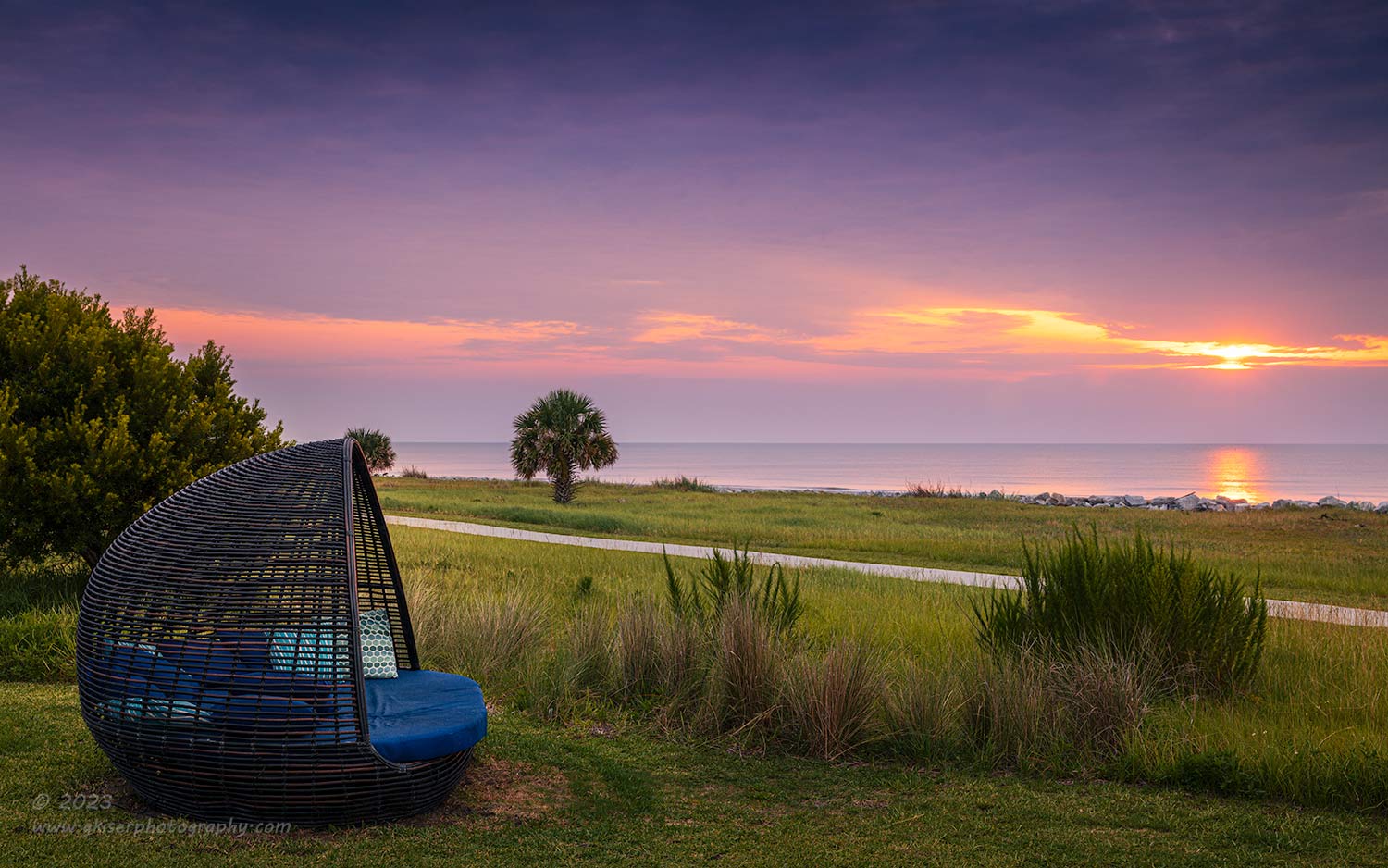
The trip to the new location took about 3 minutes and I knew right where to go. This was the benefit of scouting the location the night before. I still had the 24-70mm lens attached and knew about where to sit the camera. I backed up a bit more than I had been the night before so that I could get more of the sky in the shot with a wider angle focal length. Once I had the composition situated, I looked at the histogram and saw that I was going to lose detail in the shadows if I protected the highlights. Again, I pulled from the experience on the previous night and slid in a 2 and 3-stop soft edge ND Grad slightly staggered to even out the exposure. That worked perfectly, and I was able to start making exposures.
The sky didn’t change much, but the intensity of the light kept changing. I was also having to account for the breeze which was causing the vegetation to blow a good bit. With the dim light, I didn’t want to boost the ISO too much, but I was going to have to do something as my exposures were several seconds at ISO 100 in order to get the depth of field that I needed. There was also something about the composition that I didn’t like and kept changing the position of the camera. Sometimes it was to avoid a person on the beach, other times, it was to change the relationships between the elements. With the ever-changing light, the motion blur I was trying to minimize, and the composition changes, I ended up shooting 41 images of this basic composition. To put that into perspective, from the first shot that I had made the night before, through the tide pools, I had only shot 41 frames. I had just doubled the frame count for the last two days on this one composition. It wasn’t that I loved this composition that much, I just wanted to capture the best version of it and there were a lot of variables that had to be taken into account.
Regardless of how many frames I shot of this scene, I’m very happy that I kept shooting it, because while there were a few that were decent photos in the series, it was the very last image that became the keeper. It was the way that the sun was poking through the clouds that made the difference. Since it wasn’t really putting a lot of color into the upper clouds, having the drama of the sun to the right balanced the image very well in my opinion. This was the one with the most color reflecting off of the clouds which was another bonus. I’m very happy that I was culling the images backwards because I saw this one first and only picked a couple more potential candidates. If I had been going in order, about every third photo would have been a potential keeper. Only having three to choose from made the process much easier, and it was the very last one that got the nod for the morning.
At this point in the morning, I had planned on going back to the palm trees for a shot of them with the low sun in the sky. Of course, by this point, I had expected the clouds to have cleared. What I had planned for the trees was not workable at all at this point. Instead, I decided to walk North a bit and check out the gnarly trees I had seen from the beach. I was hoping that the sun would be shining on them and bathing them in a warm light by the time I got there. That wasn’t the case at all. In fact, the lighting had gone totally flat with an overcast sky. There seemed to be very little chance that the light was going to get better any time soon, but I wasn’t ready to go back to the room just yet. I was hoping that I would find something worth photographing in the trees.
As I walked over to the other side of the property, I couldn’t help but think about Driftwood Beach. Would I be having a better time there with the conditions I was seeing? I doubted it. In fact, I wasn’t sure that I would have anything at all to shoot there with the flat lighting that I was seeing now. I was glad that I had stayed close to the room. I was going to have a lot more energy to go swimming by doing it this way, and I was saving the best location for when the conditions were going to be better. At least I was hoping that the forecast was right, and that Saturday was going to be better than today. I could debate this all day, but the fact of the matter was I needed to get back to making images since that was what I was here for. As they say, there is no bad light, it just takes a competent photographer to find the right images with the available lighting. That was what I was looking to do next.
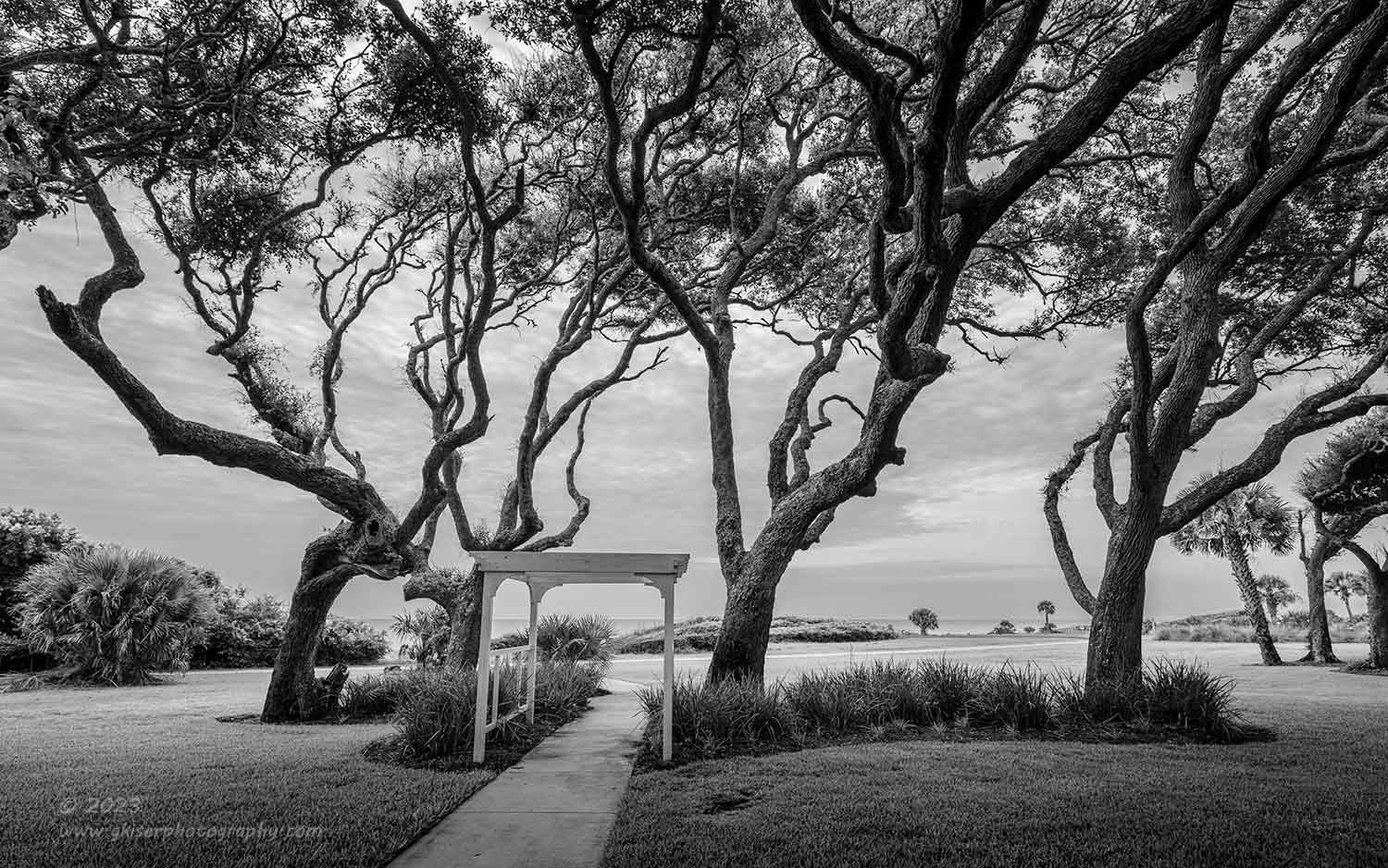
The trees were very interesting, and I loved the shapes they brought into play. I hadn’t taken into consideration that there were large buildings and houses behind them as I was looking into the scene. This was the direction that I would have been shooting if the sun was shining on them, but that would hot have worked from a composition standpoint. I had lucked out with this because the flat lighting allowed me to shoot back into the sun without having exposure issues. The shadow detail would be visible still. I just had to figure out a composition that I liked, and that was a bit more difficult that I had imagined. Everywhere I looked I saw man made objects in the frame. I wanted this photo to be about the trees, and only about the trees. However, that was just not going to happen, at least not in a way where I was able to capture the specific types of trees that I was after. I was going to have to incorporate some other elements into the frame, or I was going to have to give up entirely on the chance.
I found a group of four trees that I liked, but there was a walkway that split down the middle, and over that walkway was a trellis of sorts. It wasn’t ideal, but at least those elements didn’t distract from the trees. In order to get the scope of the trees to factor into the scene, I opted to switch out lenses for my wide-angle once again. That gave me just the right framing with the ability to fine tune the composition. The scene was very high contrast and I immediately saw it as a black and white image. I was so committed to that concept that I chose a B&W picture style on the camera just to help me visualize the composition. I tried a lot of variations on the composition from vertical to horizontal and even focused my attention on single trees. It was a slow process to land on the right combination of elements. I made 13 separate exposures here with slightly different framings. Some of those shots were duplicated because a man walking his dog entered the frame and I had to wait for him to walk out of the picture. It was that 13th image which made it through the culling process and into the blog entry. I’m actually quite happy with how this one turned out, and it was one of the first 10 photos that I edited on the first night that we returned home. It isn’t perfect, but it does show the scene the way that I saw it at the time.
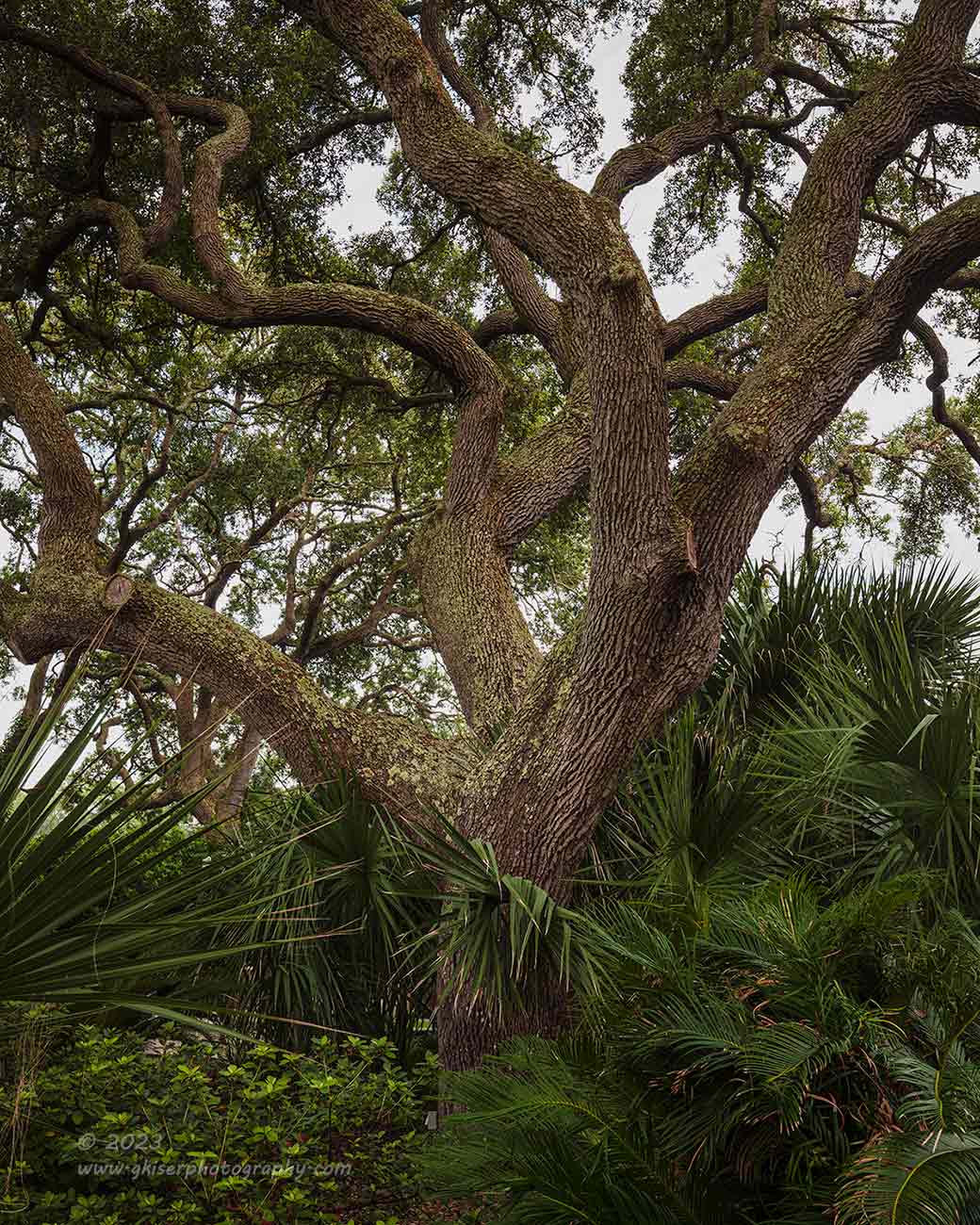
When I was finally happy with the photo of the large trees, I turned my attention to some of the other trees in the area. There was one which was surrounded by ferns which caught my eye. It was kind of a woodland image, and I liked the way that it was shaped. The soft light helped the scene quite a bit and I decided to give it a try. I didn’t spend a lot of time with this one but shot a few variations on the composition. I was thinking that this was going to be done in black and white also, but when I got home, I changed my mind. The textures got lost without color and the tree ceased to stand out from the greenery. Since it was the tree that I wanted to stand out, I had to draw attention to it. This was where the colors came into play.
The color version was much better, and I was still able to focus on the shape of the tree and the textures of the ferns and wood. It was far from my favorite image, but it was one that helped to tell the story of the morning and it had value in my collection. I also learned a few new things with how I edited this one to bring out the attention that I was after. Once I had done a few different compositions here, I realized that I was starting to force the images at this location. I had come over here for the trees but hadn’t seen the buildings that were all around. These buildings were causing some pretty significant distractions to the images I was trying to create which limited what I could shoot. Instead of staying here a long time trying to get an image that I no longer thought was possible, I decided to work my way back to the room. The light was pretty much gone at this point from what I could see.
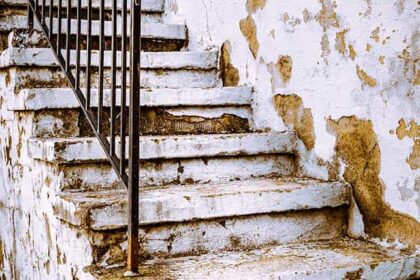
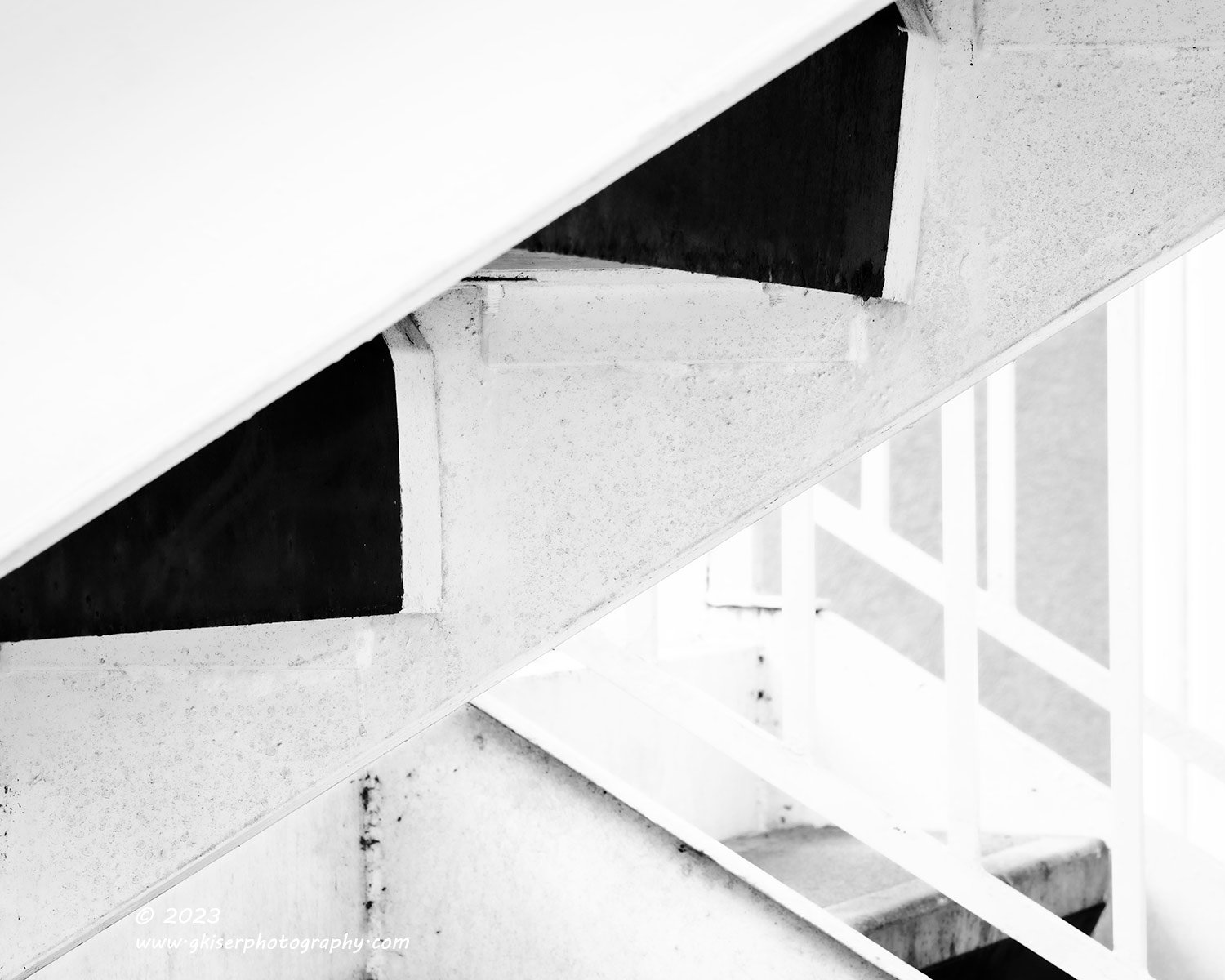
I went back through the parking lot area and past the onsite restaurant not really looking for anything else to photograph. However, when I got to a breezeway between two buildings, I was struck by the shapes of the stairs leading to the upper floor. The hard lines and angles spoke to me, as did the contrast of the darker sections against the white surfaces. This was certainly not an ocean specific subject, and it wasn’t something that I had even considered photographing, but I have been wanting to do some architectural photography for a while now. I was here, the camera was here, and the light was decent for that purpose. I went ahead and found a composition and started to set the camera up.
Now picture this, a guy wearing combat boots with cargo shorts and a t-shirt setting up a camera on a tripod with a long lens attached maybe eight feet from a staircase. The beach is on the other side of the building where the ocean and sunrise are. Everyone that comes down the steps is either going to the beach or to their cars, yet here I am taking a photo of some steps. I never claimed to be normal, so don’t believe for a second that I was bothered by this. I just put things together and started to find the composition that I was after.
I was after the broad shapes more than anything here and looked for triangles and diagonal lines wherever I could find them. The first composition came together rather quickly because it was a variation on why I had stopped in the first place. It was so nice not to have to worry about the shutter speed here. For the first time, what I was shooting wasn’t moving, and I was thrilled about that. I also stopped the lens down quite a bit to get a very large depth of field. That killed even more light, and I was shooting frames in excess of a second long exposure.

Of course, as I got more familiar with these steps, I started to see other compositions revealing themselves. I started to see the true abstract qualities when I started looking up from down low. The way that the steps had been installed, there were triangles in many different directions and angles. I spent far too long going through the different possibilities with this scene and I just kept making new images in the hopes that some of them would work out. I had to pause every so often as a somebody would come walking down the steps. What surprised me was that nobody seemed to even notice me, or care that I was there taking photos. I’ve gotten so used to people asking me what I’m doing when I am shooting the unexpected scene like this. It was strange, but I didn’t mind at all. It left me able to stay focused on what I was shooting.

The longer I was there, the more complex the images seemed to get. I kept opening up the viewable area with the lens and including more in the scene. I had an idea how I was going to be processing each of these photos and knew that they were more than likely going to be done in black and white. Since it was the shapes I was after, I just needed to be able to establish that part of the equation. Introducing colors would make this more about what it was rather than the shapes that were created. In addition to removing the color, I did a lot of local dodging and burning to further identify the shapes within the frame.
While I was shooting the stairs, I realized that the clouds were finally starting to burn off and the blue sky was coming out. This was what I had expected about an hour before, but coastal weather is about as unstable as mountain weather. While I was looking around to see what the light was doing, I happened to notice a palm tree right behind me catching the morning light from the low sun. The warm hues on the trunk and the leaves made the scene very interesting to me. It was enough to cause me to divert my attention from the stairs and focus on the tree. Now there were about three trees in close proximity. They were right up against the building with the trunks down right beside the parking lot. There was not a good way to shoot the whole tree, but the fact of the matter was I didn’t need the whole tree. what I needed was just the top where the sun was hitting as well as where all the interesting details were located.
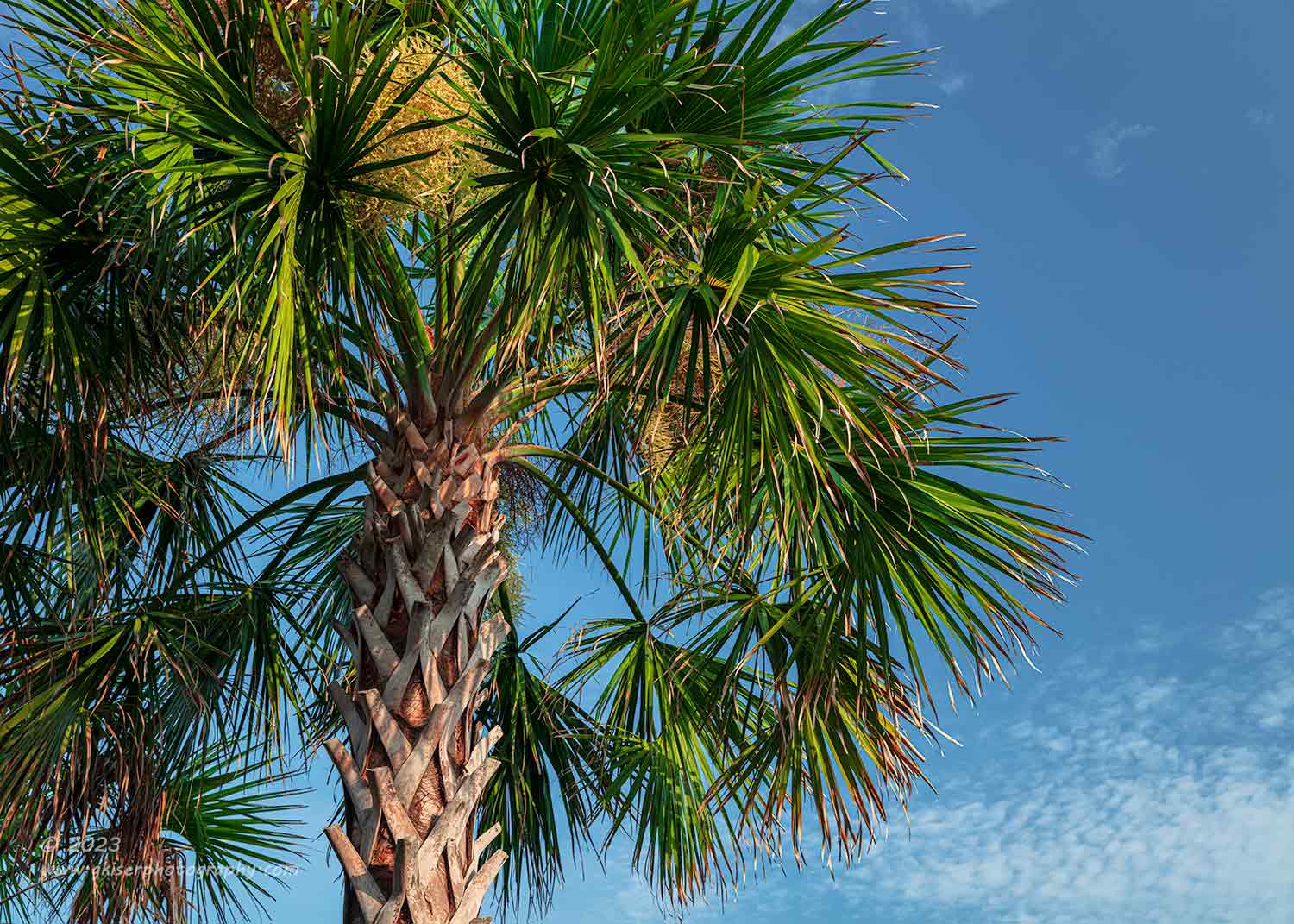
Since I was just wanting a very isolated portion of the tree, I aimed my long lens in that direction, but found out that it was too narrow for the composition that I wanted. I quickly swapped out to my standard lens which allowed me to frame up the image that I was wanting. I also added a polarizer to it since there was a blue sky and some white clouds in the scene. It would also allow me to saturate the colors of the leaves a bit more as well which I wanted to happen. There was a bit of breeze, but nothing too terrible. Just to be safe, I boosted the ISO to 200 which got my shutter speed into a reasonable range to freeze the motion.
I shot a high number of photos of this tree with slightly different compositions and lighting. It might seem like shooting a section of a tree is a very simple thing, but when the light is the part that you are wanting to capture, you have to make sure that you capture just the right quality of light, and that the composition supports that idea. That concept brought me to another 13 frames captured of a single subject. The keeper was number 11 because the light quality faded after that point.
After I was satisfied with the tree, I was feeling pretty tired, but was interested in the harsh light from the sun. It was well past golden hour at this point and the sun was bright and hot. It was still kind of low which meant good shadows, and that was something that I wanted to play with for a bit. I’ve always wanted to photograph sand dunes, but the closest that I can get to that is the sand on a beach, which was just what I decided to work with next. I knew that there were some interesting patterns of sand there at the tide pools which I had seen earlier in the morning as I was shooting in the blue hour. That was as good a location as any to check out next.
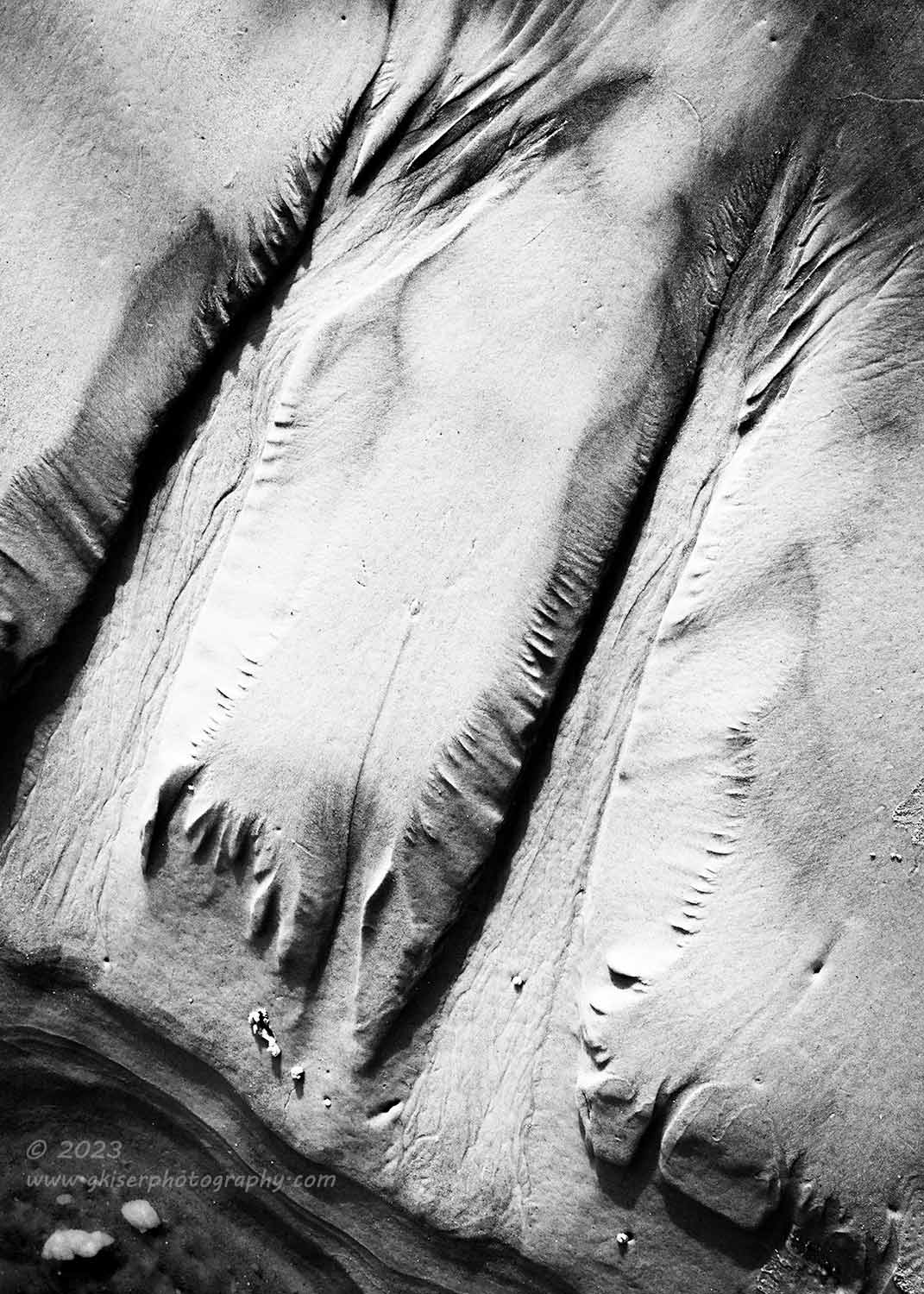
The walk out there didn’t take long at all, and I was thankful for my boots which had worked in all the different environments that I had shot to this point. I began the process of walking around the tide pools making sure that I didn’t get too close as to introduce footprints into the scene. I think it was the third tide pool that I came to which had the most interesting shapes and textures to show. I pulled out the camera once again and chose to go with the standard lens for this subject. There was no need for filters here as I was wanting to get the highlights in the sand as part of the contrast of the scene. The trick was finding the best angles and compositions to work with. This was a matter of getting nearly on top of the scene and shooting with the camera aimed between the tripod legs. It was an awkward way of working, but thankfully made easier with the use of the live view on the back of the camera.
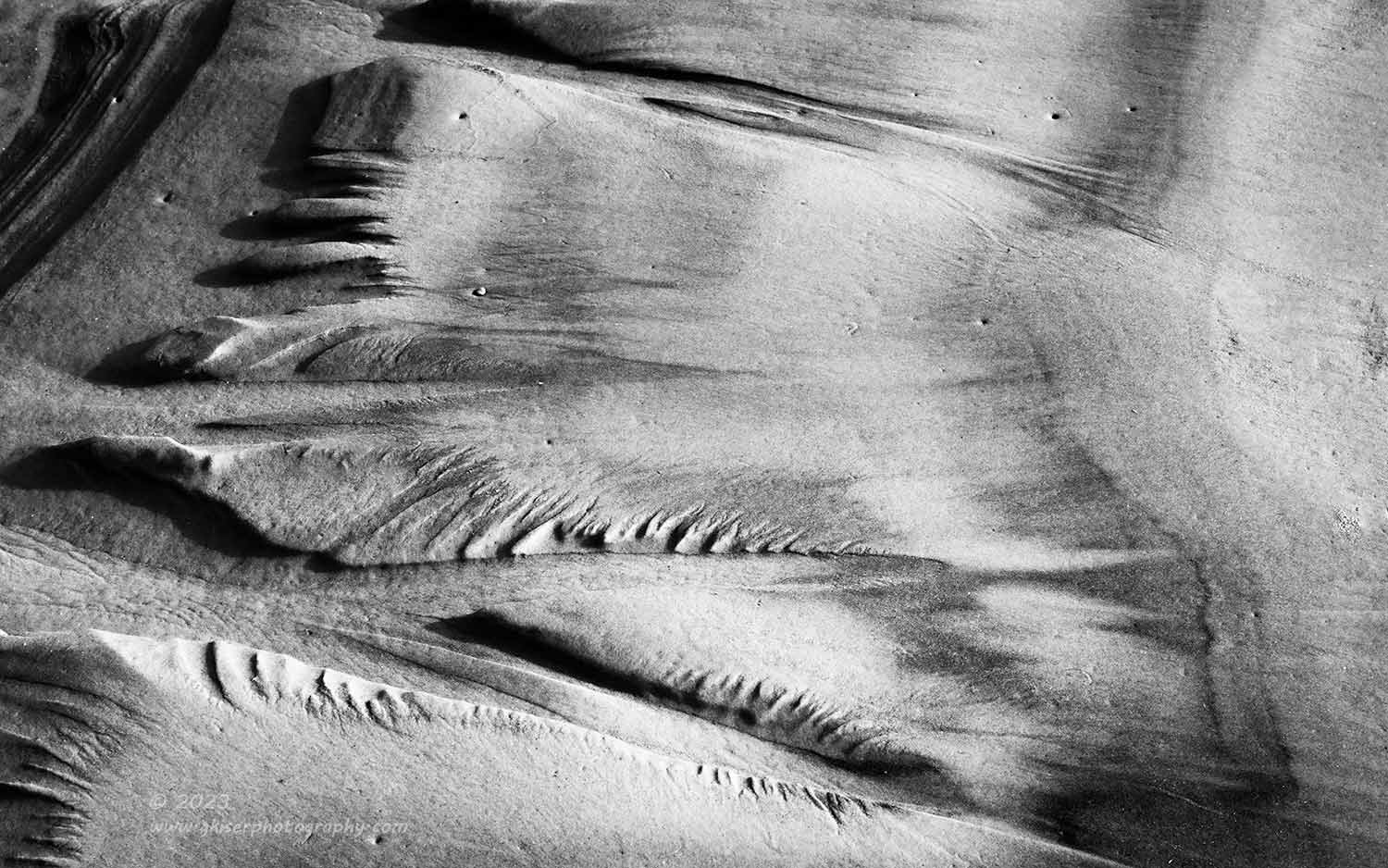
I picked out several different areas to work and tried to concentrate on scenes that still had a good deal of contrast from the sun. It helped that I was on the ocean side of the pools and the slope was pointed towards the sun. This gave the illusion of the sun being much lower than it actually was. I knew that I was going to be doing these as black and white captures, and I would be boosting up the contrast to really play on the shapes of the patterns. Since these were going to be abstract, it didn’t really matter the direction that I shot them in. I knew that when I got home, I would rotate and flip them until they read correctly for me. That was pretty much how these images went. I did a full edit on one of them, and copied the adjustments which were applied to the rest of them. I then just played with the rotations until I had something that I liked. A few image specific tweaks were all that was needed after that.
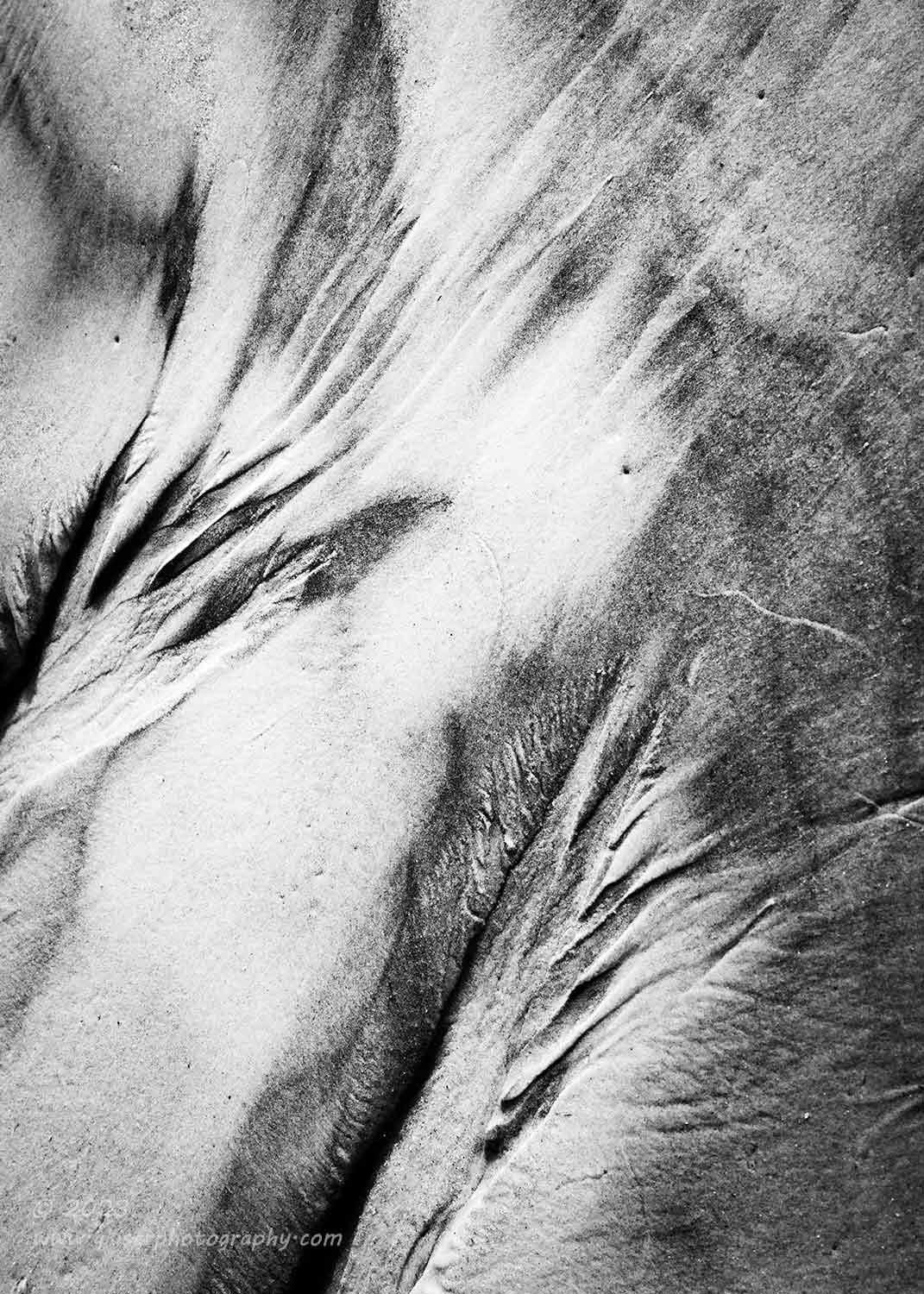
When I got finished with the sand series, I decided that I was pretty well spent creatively. I had shot a sunrise, beach scenes, woodland scenes, architecture, and abstracts in the last few hours. I still hadn’t really connected with the area yet, but I was feeling better able to create images of what I had been seeing. If I were to spend any more time out and about, I would really be forcing the images. I needed to rest and spend some time with the family. I packed up and headed back to the room where they were just getting up and moving.
I brought the camera in because I needed to charge the batteries and certainly didn’t want to leave it in the car during the heat of the day. I did pull the camera out and start reviewing the images that I had shot with Toni so that she could see what I had been up to. Up to this point, there wasn’t anything spectacular, but I could tell that I was getting better and that was because I was getting into the right mindset of coastal photography. I was surprised that by this point, I had 134 images on the memory cards. It really didn’t seem that I had shot that many scenes, nor pressed the button that many times. I was excited that I was getting images, but I still wasn’t feeling like I was producing the images that I was truly capable of making just yet. Plus, I still hadn’t been to Driftwood Beach which was the main draw for this location.
I was committed to going there on Saturday because I needed a safety day in case the weather didn’t turn out good. I had made the right choice this morning about sticking close to the room. I had managed to get more photos than I would have gotten at Driftwood Beach, and the photos made more sense with the lighting that was available. It still didn’t change the fact Driftwood Beach was the main attraction for me here and I had to get out there and work it before we left. The funny thing is, I still hadn’t done that much research on the beach itself. I just remembered seeing some awesome images with the deadfall trees on the beach right at the water. It had been a bucket list type of composition for years and I have been looking for that kind of visual anchor in all of my beach photos. I was hopefully finally going to be able to experience that and have the photos I’ve been looking for all these years.
There was an off chance that the weather might work out to where I could get out there for an evening session, but only if the clouds made sense. That was still a long way away, and I had an ocean to swim in and a pool waiting for swimming lessons for Aulani. After she had her breakfast, I took her down to the ocean while Toni went to the office to work things out with the tub and some other issues that we were having with the room. In an hour or so, she came to join us at the ocean and let me know that we were going to be moving rooms, which I kind of expected. When Aulani said that she was tired of the waves, we all went back to the room and packed things up to move to the different room. We managed to get it all in one trip, and the room was much nicer. It also had a balcony on the second floor. This was very helpful for keeping my camera acclimated to the humidity and temperatures for the morning outing.
Once we got the room moved, we all went down to the pool for the next few hours. After that, we were all pretty much worn out and ready to go back to the room to get cleaned up for dinner. I took the camera with us when we went out for dinner, and we drove around the entire island trying to find something interesting to photograph. I saw a lot of potential, but the lighting wasn’t all that great. I was also worn out from the day’s activities. In the interest of making sure I was fresh for the morning; I didn’t look too hard for new photos that evening. When we got back to the room, I started to look at the forecast and saw that there were now storms expected through the night and into the early morning. Those storms were going to come back around lunchtime which left just enough time to go out to Driftwood Beach under some interesting clouds and get the photos that I was after. I even checked the sunrise forecast and it was showing a good potential for color on the coast.
I again set the phone for 4am with the intention of being on my way by 4:30. I set the camera outside on the balcony and we all turned in at 9:30. Yes, that was a bit early, but none of us could keep our eyes open at this point. I fell asleep knowing that no matter what happened, I was going to be at Driftwood Beach before first light. I just hoped that I was going to be able to make this work out better than my last two outings here. I didn’t hate the images, I had been shooting, but they just weren’t what I was hoping for on this trip.
Stick around to see how Driftwood Beach turned out, or if I even made it there. Time is running out for me to make that bucket list location work out. I had already missed one morning, and now we were getting into the stormy weather which could mean any number of things for the images. In the meantime, while you are waiting to see what happens, consider purchasing a print of one of the many images that I’ve created from Jekyll Island thus far. In order to make the images a bit larger for your viewing here, there is a lot of compression to the file size which is creating some artifacts that don’t really represent the final image quality. The truth is, there is just no way to fully appreciate a full resolution image over digital means. The only way to really see the image for what it is, would be in print form. That way you are seeing the colors as desired by the photographer, as well as all the detail which can’t be seen on the screen. Print purchases also help fund my ability to go to these places to capture the images, so it is a win-win for everyone.
I’ll see you back here tomorrow with the third part, and what I think is the best day by far for this trip.
Stay tuned….

Remember to use the code KISER10 to get 10% off your purchase