Behind the Camera: The Difference Between Staged and Noticed

· Reading Time: 26 minutes

Welcome back to another installment of my monthly Behind the Camera.  For those who are new here, this is a chance for me to talk about something a bit deeper in the realm of photography than I can really get into during a blog entry about a particular trek.  I think we can probably all agree that those entries can get a little long just with covering that particular experience.  For those who have been with me for a while, I’m glad to see you again and hope that you will find this one interesting.  This month we are going to change gears a little bit from the entries that I have been doing and talk about a distinction that I have realized in my own photography over the last few years.  The idea for this blog actually came to me a little over a year ago after watching a video series on how photography can be closely related to Haiku poetry.  This has stuck with me in many ways over the last year and has even defined a bit more how I deal with the detail shots of my subjects.  That is the idea of synecdoche which is something that I have been doing for a very long time without knowing there was a term for it.

That is not going to be what I’m talking about in this entry through.  I’ve covered that enough through the treks where I have applied that thought process.  Today, I am going to be talking about a much wider distinction in photography that some photographers are already aware of, but many might not be.  This is the distinction between conceptual photography, or contrived scenes, compared to capturing a scene that you have noticed and responded to which appears in reality.  This was another aspect that Haiku shared with photography and one that I had to let roll around in my brain box for a while as I had just realized the difference a short time before.  So I am not throwing a lot of information at you all at once, shall I just take you on a journey so you can have the same realizations that I have had?

“Southern Exposure“, Canon 5DS R, 24-70mm f/2.8L Mk2, Singh-Ray Galen Rowell 3-stop soft edge ND Grad, 7 image pano

Starting out as a landscape photographer, I trained my eye early on to see the scenes that would make for a good photograph.  I could instantly analyze the lighting over a scene and pick out a composition pretty quickly.  In short, I was responding to the scene.  It was either pretty, or it wasn’t.  If it was pretty, I would take the photo.  If it wasn’t, more than likely, I wouldn’t have stopped to look in the first place.  There were those times when I liked a scene and saw potential in it, but it wasn’t quite ready.  I might hang out for a bit to see if the clouds would move, or if the sun would change positions in the right way.  More often than not, I would recognize the scene as being pretty and when I might need to come back to the spot for the actual photo.

This was pretty much how I worked as a photographer when I was starting out.  Mostly, it was responding to the scenes as they appeared to me at that particular moment in time.  Responding is the key word here, and that is what most landscape photographers do while looking for photos.  We might add the step of previsualizing with different conditions, but that still really falls into responding to a scene in front of you because the main ingredients are kind of baked in already.  There are certain core elements that are going to be set in stone in a manner of speaking.  We have to work around those things in order to get the photo.
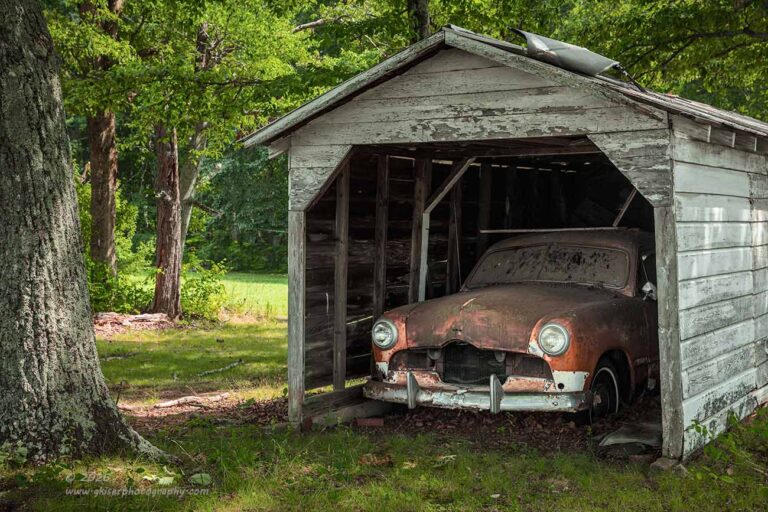
“Hidden From the World“, Canon 5DS R, 24-70mm f/2.8L Mk2, Singh-Ray Color Combo Polarizer

The concept of responding to scenes held true into my transition into a decay photographer.  It was always the scene that caught my eye, or maybe the subject.  It was something that was there which I felt would make a decent photograph.  More often than not, I’ll be driving around looking for these scenes and will go out in areas that I’ve been before to see what the current weather conditions look like with the subjects.  Essentially, I am waiting on the right time to take the photo by responding to the subject in the existing lighting and weather.

This has served me well over the years and has formed the basis of my photography since 2005 when I started learning the craft.  I thought that it was difficult because I was constantly having to work with the weather conditions and the lighting.  Patience was the key here.  I would stay home for weeks at a time looking for that one day that had the right conditions to go out and get the photos that I was looking for with a certain type of subject, or a particular one in mind.  It was frustrating, but there was really nothing else that I could do other than respond to the conditions around me.

I found that in many instances, I could go by a location multiple times and keep on driving because the conditions were not right and I was not responding favorably to those existing conditions.  I could usually find another subject that would work in those conditions, but that would involve responding to yet another scene based on the current look and conditions.  No matter how I looked at it, I was at the mercy of the weather and lighting conditions, and I chalked it up to one of those things that a photographer must do.

This was the case for many years and honestly, I never really thought about it that much.  I remember thinking that this was the height of photography because you had no control over things short of what to point your camera towards.  I would see those photographers that photographed people and think that they had it easy.  As long as they had a person that was smiling in front of the camera, the photo was simple.  They didn’t need to worry about where the photo was taken or finding that perfect set of weather conditions.  People photography was almost cheating and it wasn’t something that I wanted to lower myself to.

I’ll stop myself right there and admit that I owe all people photographers a huge apology for that thought that I had more than once through the years.  While I never came out and said it, I was thinking it and was putting myself and other landscape photographers on a bit of a higher level.  This was wrong of me, and I am ashamed of that thought process.  While I dabbled in people photography as far back as 2007, it was never anything that I got a lot of enjoyment out of and didn’t think that I was particularly good at.  Again, it felt like I was taking the easy way out and so much of it seemed to be deceptively simple and not creatively rewarding.

By Spring of 2021, things were about to change for me.  That was the Spring that I was asked to do some headshots for a person that I had met while I was a police officer in Greensboro years before.  She was looking to enter a political race and wanted some headshots and professional portraits for her campaign materials.  This was really the first time that I had done anything like this and after telling her that it was not something that I do normally, she insisted that I take on the job.  With my normal sense of wanting to do the best that I could, I learned everything that I could in short order (like a week) so that I could make the best photos possible.  What I learned was that I was going to need flash so that I could shape the light on her.  I also needed to understand reflectors since some of the photos would be outside.

To make a long story short, I botched the whole gig but was able to recover well enough to make the client happy.  That experience did start a new direction in my photography because my eyes had been opened to what was possible when it came to people photography.  I loved the idea of controlling the light and creating a reality that wasn’t actually there.  No, I’m not talking about creating a scene through AI or by digital manipulation, though that would have been a welcome feature in that last portrait shoot because of a few things that I hadn’t paid attention to prior to getting started.  I’m talking about the ability to change the conditions of what I am photographing.  After all of those years of waiting for the weather to be just right to go out and get the photo, I was seeing that I could create the light that I wanted in just about any situation.
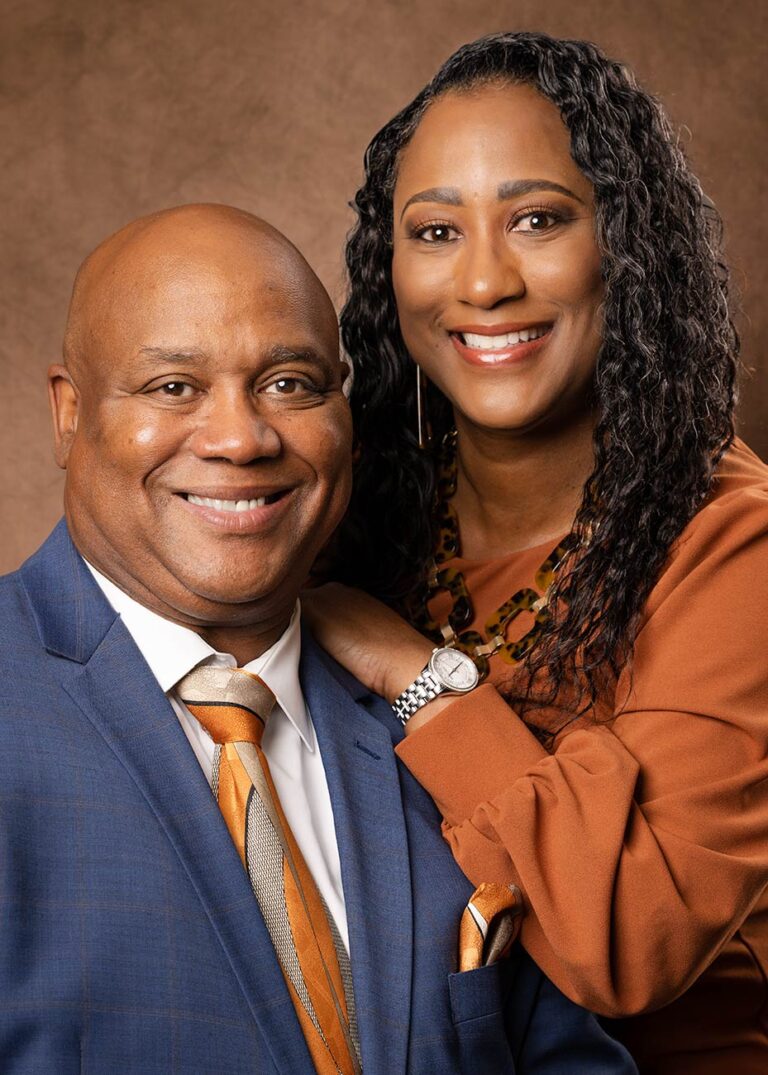
Canon EOS R5, RF 70-200mm f/2.8L

In the following months I learned even more and found out how to take full control of the light.  I set a studio up in the house so that I could take on client sessions much easier.  While I was still oversimplifying things and looking at the lighting as the key, I was starting to unlock other areas of photography.  One of those areas was color theory which I hadn’t really paid that much attention to before.  I had a good feeling for what colors looked good together, but that was about the limit to it.  Now I was starting to learn how to harness the different colors in a photo.  I was able to recommend clothing to my clients and I even started bringing in set design for that color palette.  As you can see in the photo above, I went with a contrasting color palette that made his suit jacket really pop while the rest of the frame was largely monochromatic.  It was a method of defining the two subjects in the frame while keeping everything happily working together.

Eventually, I had a pretty good sense of control over my lighting and the colors within a scene.  I hadn’t realized it yet, but I was starting to take full control over the scene.  I was no longer responding to what I was seeing.  Instead, I would take a blank canvass and place subjects within the framework of that canvas and have them exist in that space with consideration to an overall look.  I would then apply the lighting that would flatter the subject.  In essence, I was now leaning into creating a look and then executing it for the photo.  The scenes that I was photographing now, had not existed until I put them all together.
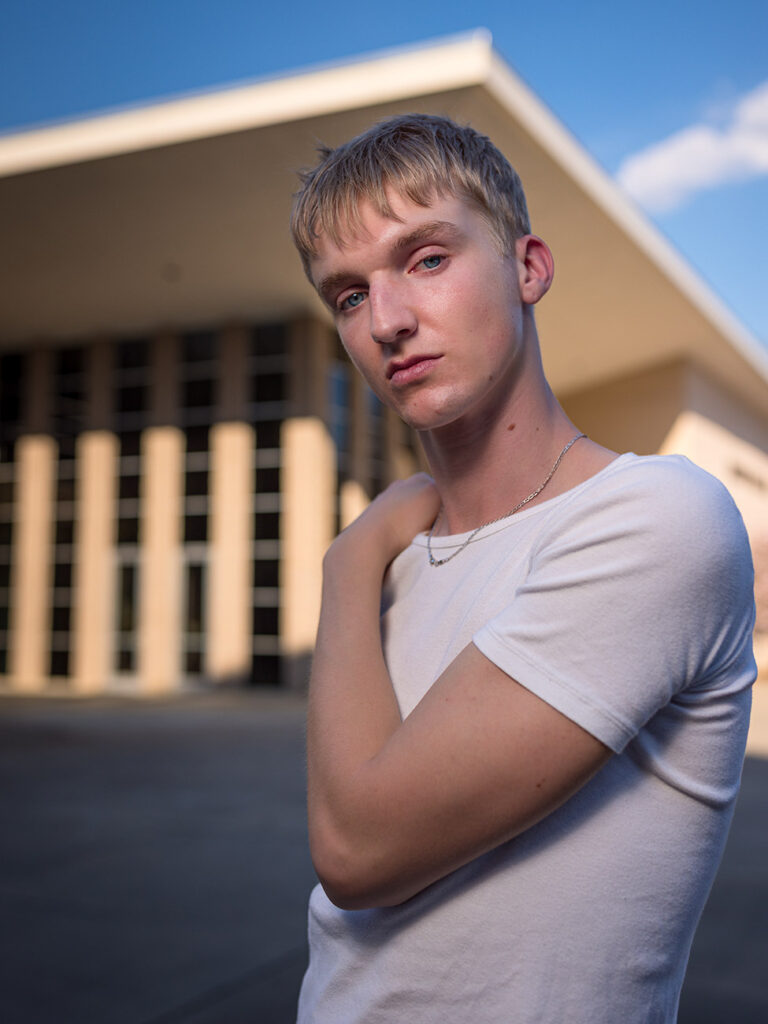
Canon EOS R5, EF 35mm f/1.4L Mk2, EF to RF Adaptor

I realized that this was happening and even wrote about in in a previous Behind the Camera, but I hadn’t really considered the implications as much as I am now.  I had the presence of mind to know that when I was photographing landscapes, I was capturing a scene that already existed and when I was photographing people, I was either inserting the main subject into a location that was already there or creating a scene to put them in.  In one case, I was starting with a scene that was already there, and in the other, I was creating from basically nothing.  This was the realization that I had which made me reconsider whether people photography was actually cheating compared to landscape photography.  I now think that they both have their challenges and frustrations, but when it comes to actually taking control over the photo, it is the scenes that start from nothing that become the more difficult to execute.

This was where I started to really understand what executing a contrived or developed scene was all about.  It was something that I did with all of my portrait work since I started treating it as placing the subject into a frame of some sort rather than finding the frame to capture.  I was still responding to scenes when I was doing my normal landscape and decay work, but my people photography took on a whole different approach.  This went on a for a few years until I started to get more comfortable with creating the scenes that I was photographing.  The next logical step was about to take place though.

If I could create an environment for a subject to exist in, could I not create the subject as well?  That was an interesting question and one that I quickly found the answer to.  It actually started out as a photography project that I had done just a few years after starting photography where I would photograph smoke with a flash.  With my new understanding of studio lighting, I chose to bring back that technique of abstract work and start to explore it a bit more.  What had started as a pretty simple process of capturing smoke using a flash had turned into a chance to selectively color the smoke and start to really pick out the essence of the abstract shapes that I was seeing in the formation of the smoke.
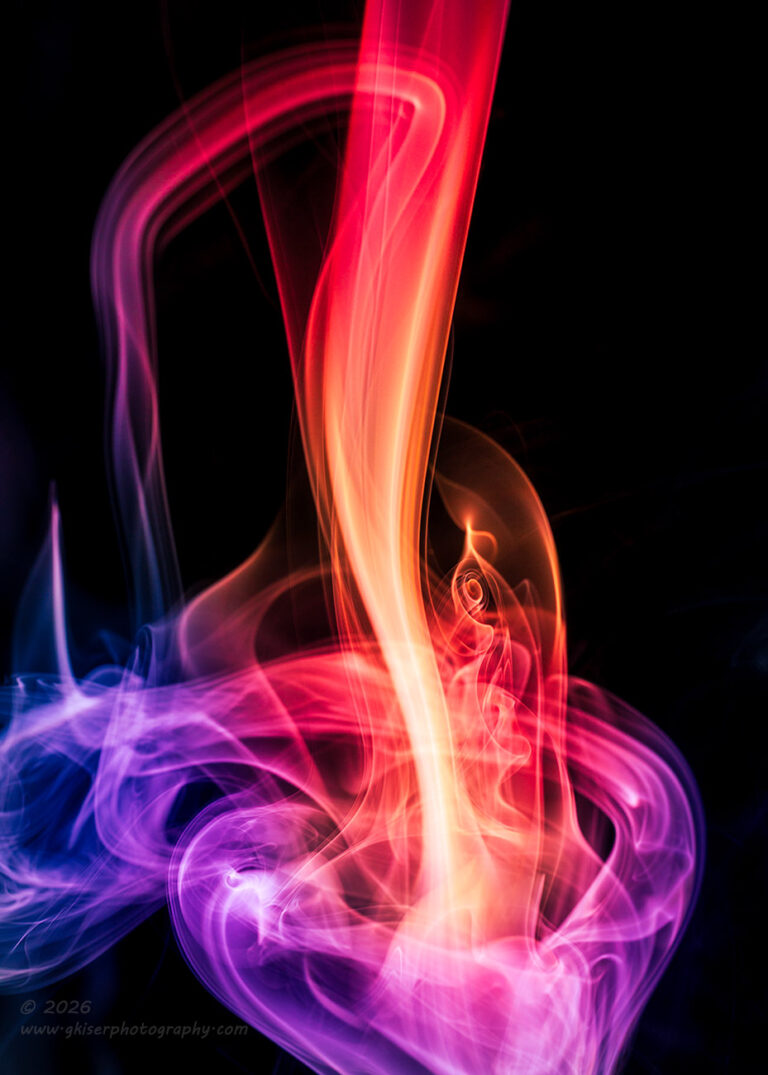
“When the Magic Happens“, Canon EOS R5, RF 100mm f/2.8L, No filters

This turned into a wonderful little exercise that I would do once or twice a year.  I was literally building up the scene from nothing.  I’ve talked about how I do this technique a number of times, but essentially, I am starting with a black background and an exposure that picks up no light at all without the flash firing.  I then add a cone of incense that will provide the smoke which I would then light with a flagged or gridded light source off to the side.  That flash duration of something like 1/1000 of a second becomes the exposure time and the camera captures that split second of light.  From there, I have a structure that is lit in the frame, but it is the next step where I give it life.  I take that gray smoke into Lightroom and give it colors based on how I am seeing the scene.  Quite literally, I go from a totally black frame to what you see above.  It is a scene that never existed and then only existed for that split second when I captured it.

In no way am I responding to something that I see because I can’t see the exact composition that I am photographing.  Instead, I am predicting what the smoke will look like in the immediate future.  Most of the time, I am missing what I am expecting to happen, but there are other times that luck is on my side and I press the button at the right time.  It is still always up to chance and there is no way of knowing what the camera will capture which is the beauty of it all.
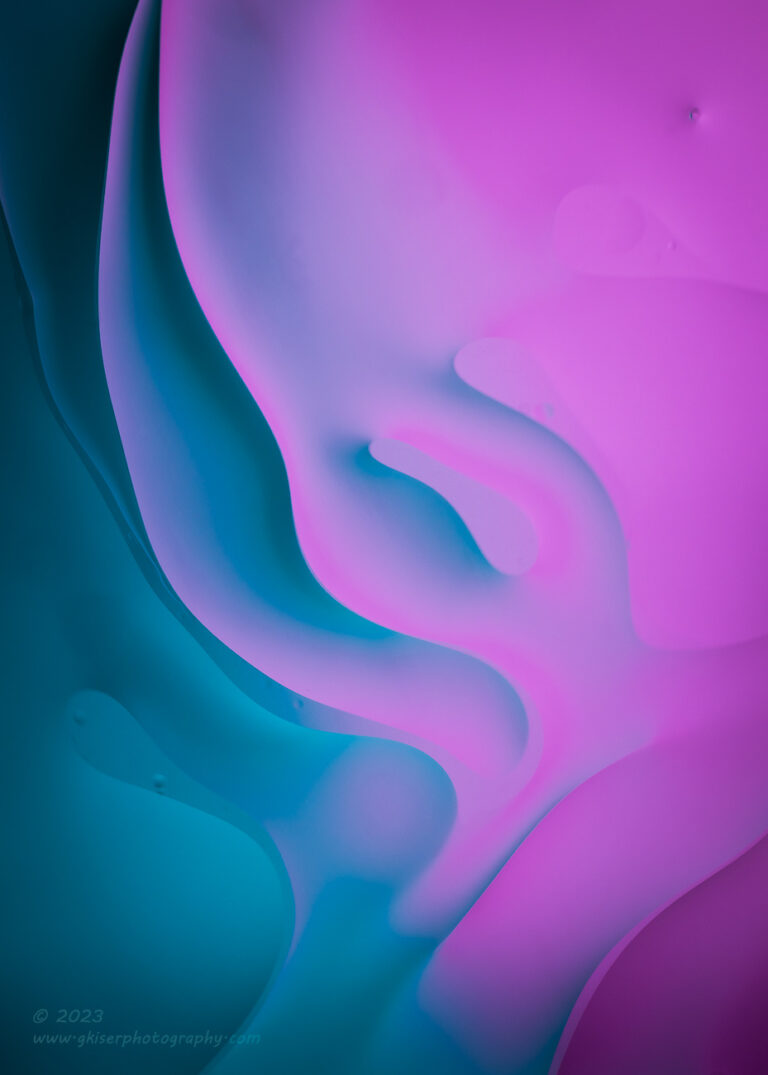
“Transition to Calm“, Canon EOS R5, RF 100mm f/2.8L Macro, No Filters, Godox LC500
Another situation where I am creating an image from the ground up is in the case of my oil and water abstracts.  This is another technique that is a lot of fun to do but takes a bit of time to set up.  I’m actually wanting to do it again but looking for a better container for the water currently.  Essentially, I’m taking a mixture of water and a few drops of oil in a casserole dish that is elevated about a foot from a surface.  On that surface, I am putting paper or boxes that have pleasing colors that will form the color palette for the photos.  That surface is lit by either a flash or constant light so that the colors are visible to the camera.  By using a shallow depth of field and focusing on the surface of the water with the oil floating, I’m now seeing the shapes created by that mixture while the colors beneath are blurred out.

This setup is multi-layered and looks nothing at all like the finished product while looking at it through our own eyes.  Only through the camera will the shapes and the colors come together in a single layer.  There is also the timing element as the water and oil are constantly in motion during this kind of session.  That is another aspect of creating a photo where there is no actual scene to respond to.  In both the cases of the smoke and the oil and water mixture, I am creating a subject that really doesn’t exist in a way where I could just respond to it.  These are great ways of creating abstract works and I get a lot of pleasure out of doing this type of photography.  Oddly enough, these photos rarely get any attention online and seem to just fall into the background which is a real shame.

The idea of creating an entire scene with depth and a bit of creativity is getting to where it interests me more and more.  It is this realm of conceptual photography that I am starting to really enjoy exploring.  It all stems from an idea or concept in my mind and then I start to put all the pieces together to make it come true.  This could be something as simple as putting a person into a setting that I have created or creating a completely manufactured scene where everything is treated like a costume and set for a movie.

Canon EOS R5, RF 28-70mm f/2L

In this example, I was trying to tell a very specific story about addiction and the isolation that it manifests in a person’s life.  Essentially, I was trying to create a very impactful mood into a photo.  My raw materials for this photo happened to be the client, but everything else was up to me.  I found the location, talked with the client about wardrobe, and figured out the time of day that would work best.  But that was just the start.  I also had to add light, and it had to have a specific quality to to that light to further the mood.  Then there was the pose.  In the end, the client’s face was only a small portion of the frame and there wasn’t much form to her body.  The photo was processed in a very unnatural way to capture the mood even further.  This photo goes well beyond a portrait, and I think fits very well into the idea of a created and contrived photo rather than responding to what I saw.  Nothing about this photo had anything at all to do with what I saw when I was scouting locations, or even when I was getting the client into position.  It was all about what I had seen in my head after talking with her a month or so before.  Every aspect of this photo was something that I chose, including the specific location because of how the stones helped to frame her.  This is still one of the greatest photos that I have ever shot, and I think that it illustrates this concept quite well.

Canon EOS R5, RF 28-70mm f/2L

This is another example of a scene that I created in my mind and then put together in the studio.  As with the smoke photo from earlier, I was starting with a black slate quite literally speaking.  Since this was in the studio, I was shooting against a wall that had framed photos of old cars on it.  Of course, the camera’s exposure was set to where none of the ambient light was registering.  The concept for this was to have a stage setting with a marionette that was coming to life.  There was going to need to be an overtone of the supernatural about it, but things were going to have to come together to create a reality.  This was where the creative end came to be so important.  Since I was starting off with a pretty normal location that looked like a living space, I had to create a different reality.

That process began with a faux wooden floor that is the basis for the studio stage, and I felt that it would work very well for this enchanted setting.  I had curtains that were dark and would go with the colors that I wanted for the scene which were placed on either side of a black background for depth behind the curtains.  I had an old trunk that was just about the right size to look like the case that the marionette would be transported in.  I then built the handheld controller for the puppet out of long dowels and silver yarn.  Sabrina, the model for the day, did an excellent job with her makeup creating a very realistic wooden look to herself.  She even perfected how the movements would go as she did the different poses.  That got me a baseline of how the images were going to work, but I still had to set the right mood and atmosphere.  The low key lighting was the main aspect as I wanted lots of the scene to be in shadow for mystery.  I needed some color for excitement so I added in some gelled light that would make it look like stage lighting.  For an additional element of the macabre, I brought in some smoke that helped capture the gelled lighting.  Having Sabrina climbing out of the trunk was one of those moments that I wanted to capture when I was going through the development of the session in my head.

Everything that appears in this frame is something that either Sabrina or I created to make the entire photo work for our intended purpose.  The entire session went like this, and we created some fantastic photos which all fit the theme that we were going for and that theme had been created and discussed over a period of a couple of weeks leading up to the actual session.  Again, there was nothing at all to respond to, and the scene never existed before.  I took a 10×10′ area of my studio and put together a reality that had only been in my head a short time before.

I’ve come to find out that this is where the magic of photography actually happens.  When I was up on that high horse and thinking that landscape photographers had it so bad because we were forced to wait for good light, I didn’t have a clue how easy I actually had it.  There I was staring at a setting and a scene that had been established for many years.  It was there to be enjoyed by anyone at any time.  As a photographer, I just had to pick the right time to photograph it and choose the right location to place the camera.  All the heavy lifting was already done for me.  That was what I was responding to.  The kind of photography that I was doing here recently started with a simple thought, a concept if you will.  That developed into ideas and a plan that were eventually executed.  Sets were built; scenes were located because of attributes that they had, and I thought through things like lighting and wardrobe.

Could I do the same thing with a still life subject?  Could I take a simple thing that existed and place it into a contrived scene and make it work on a level that would otherwise not be possible?  I didn’t see why not.  Since the beginning of my time as a photographer, I have occasionally done what I called “studio days” when I would do still life photos.  There might be some light painting involved, it might be some macro photography of flowers, but it was always something that I had seen and wanted to photograph.  I was responding to things, and that could just be inspiration from seeing other photographer’s work.  It was still a response to something.

One example that comes to mind is the idea of photographing a chess set.  I like the game of chess and because it was one of those games that my grandfather taught me and instilled the seriousness of thought to it, I have always equated it with a higher level of dignity than a normal game.  I tried to photograph several different chess sets in this way and always had a hard time with it.  Each time brought me closer to my goal, but I still wasn’t capturing the essence of how I saw the game in my head.

“Fallen Soldiers“, Canon 5DS R, 24-70mm f/2.8L Mk2, No Filters

After so many recent successes with creating photographs rather than responding to the scenes, I decided to work the idea of the chess set backwards.  It was a new way of doing it, and I didn’t really understand what I was doing at the time but looking back on it, things are much clearer now.  In fact, it was this session that really got me thinking about doing this topic more than anything else.  It marked the first time that the actual subject of the photo wasn’t really at the forefront of what I was wanting to create.

Allow me to clarify this for a moment.  The concept started with the large chess set that I have down in the studio.  I’ve photographed it several times in the past, but it always started off with pulling the set out and getting things positioned the way that I thought would look right.  Then I would add the lighting to go along with what I was seeing developing and kind of go from there.  It would always start with the chess set.  To be fair, that was the idea that started this session out, but it was just the idea of wanting to photograph the chess set.  That had started in relation to me needing to get the smoke machine out and running again since it had been a while.  It was just a simple idea of working the smoke into the chess set that started me down this path.

The next step was deciding how I was going to want to introduce the smoke knowing that I was going to have to light it from the back.  Would I use gels or leave the smoke gray.  I could color it like I do with the smoke photography, but that was going to cause problems with the chess pieces.  What kind of background was I going to use?  Black seemed like the logical choice, but that started to feel very boring as I wanted to create a setting for the pieces to play in.  There was enough detail in the pieces that I could really get a mood and atmosphere to come together if I did things correctly.

I chose to do this as a battlefield scene and tell the story through the photos.  For that, I saw a twilight or dawn battle with moonlight as the main light source.  I liked the idea of a woodland background but didn’t have a backdrop that would work for that.  I did, however, have an optical spot that had a woodland cookie to create silhouettes of trees.  I liked that idea and chose to gel that light with a blue gel for that moonlit look.  I wanted the smoke to stand out, so I backlit the smoke with two other strobes with no gels.  By altering the white balance in the camera, I was able to give a bluish tone to the entire scene, but with a contrast to the smoke to keep it separated from the background.  The extreme angles of the smoke lights didn’t put a lot of light on the front of the scene, but that added to the mystery, so I chose not to use a specific key light and let the side light be the key as well.

Only after getting all of this figured out in my mind did I pull out the chess set and start creating the compositions that would work for the concept that I had formed.  Once again, this was a situation where I was starting with nothing but a black frame in front of the camera based on the exposure settings.  The lights were all positioned and set to achieve the look that I had come up with in my mind.  I framed up the shot in the camera to capture the story that I was looking for and the let the smoke fly before getting many images at a time as the smoke moved through the scene.  The most important aspect of these different compositions was the placement of the pieces.  I didn’t want this to look like a game of chess, so I didn’t keep the pieces in position that would indicate the game.  I had some pieces laying down after falling in battle, others were randomly positioned to fit the composition that was developing in my mind.

The editing process was the last step and that went even further into setting the mood of the images.  It all came together beautifully, and I am still very impressed with the outcome.  There is just something about doing photographs like this that fulfill my soul and really show me what I am capable of.  When I am out responding to a scene, that is usually the biggest influence on a photo.  I get to choose the framing and the time that I capture it, but in the end, I am just responding to something that is already there and already complete.  I’m documenting it, though hopefully that is in an artistic way and one that others will appreciate.  When it comes to a contrived scene or one that starts with a concept, I get to make all of the choices and in many ways these photos are more a part of me than what I have built my portfolio around for the last 20 years.

Going back to Haiku poetry, many of the poems are created in response to a scene that the author has witnessed.  There are others which are written around a mood or emotion which paint a picture that has never appeared.  Looking back over this entry and the progression that I have made, you can better understand the differences between the two.  Is one better than the other?  I don’t think so, and I really don’t think that it is a contest at all.  There are just different slants to creativity that are involved in responding or building from nothing.

“Power Leap“, Canon 5DS R, 70-200mm f/2.8L Mk2, Singh-Ray Color Combo Polarizer

I think that for the most part, my photography will start to have more of a combination of these different approaches than it once did.  Let’s take one of these recent photos as an example of what I am talking about.  The first stage here was that I responded to the hood ornament and the grill badge on this Jaguar.  I liked what I was seeing and started to think about how I wanted to capture it.  That was where things really started to get interesting because the photo that I wanted to develop was not about the car or the trim work.  I wanted to anthropomorphize the leaping chrome cat to give it life and excitement.  The subject became the setting, the composition became the vehicle for the emotion, and the photo turned into something that focused more on the idea behind the hood ornament rather than the ornament itself.

If I did my job correctly with this photo, you have an immediate reaction based on the composition and then when you start to really look at the photo, you start to see the actual car as the subject.  It just adds another layer, but I think that it goes well beyond me just reacting to the scene as I saw it initially.  The extra seasoning came from an imagination to bend reality just a bit and create a photo of something that wasn’t actually there.

Just remember that the best part about all of this is that you don’t really need to differentiate the routes of the creative process to enjoy the images.  That is all worked out by the photographer as part of their style and how they like to create.  It usually isn’t even a conscious thought, but the photos are formed through those stylistic choices.  As an audience, you just get to enjoy, or you may choose to not enjoy the photos.  It is really just that simple.

I do a lot of introspection into my own photography as I’m sure you have gathered.  I try to think about why I make the choices that I do and try to understand myself better through those connections.  This is just one of the most recent discoveries that I have made about my photography, and I felt that it might be something that would interest you.  In order to grow in this craft, I’ve found that one’s energy is much better spent looking into their own work rather than always comparing to others and attempting to create similar images.  The more you understand yourself and your own interpretation of the art, the more of an individual you will become in the artistic community.

Thank you so much for joining me for this month’s Behind the Camera.  I hope that you enjoyed it and possibly learned a little something about my photography as well as yours if you are a photographer.  If you just enjoy looking at photos, maybe I’ve given you another layer to think through as you are determining if you are enjoying a particular piece of work.  As they say, beauty is not skin deep, and a photograph doesn’t need to succeed or fail on its face value.  A properly done photograph is there to be explored and interpreted rather than swiped through to get to the next one.

I’ll be back here again next month with another installment which you might find interesting.  I’ve already started putting it all together and we will be discussing what the finish line looks like when it comes to learning photography.  Be sure to check back here again next month for that.  If you don’t want to mis a single blog entry, you can always subscribe to me by entering your email address here and then confirming your subscription through a follow-up email.  It is free, easy, and is the best way to get notified of every new published blog that I do here.

Until next time…


www.singh-ray.com
Remember to use the code KISER10 to get 10% off your purchase