Welcome back to another installment of my monthly Behind the Camera Series. It seems like only yesterday that I was doing the year end wrap-up for 2021, but here we are in the last month of the year already. I will say that this has been one of the lowest stress years for topics for this feature because most of them I had figured out in the closing months of 2021. What I am wanting to talk about today is one of those topics that didn’t really come to mind until some point in the Summer. As I was making big moves in my portraiture ventures, I had to do some revamping of my equipment to make life easier on me. Of course, during this transition I had become all too familiar with the pitfalls of GAS (Gear Aquisition Syndrome) and was trying really hard not to fall victim to marketing hype. I had been playing things very smart for the past year as I built up my studio and kept everything within budget for the most part. Essentially, I was buying equipment at the rate that I had income resulting from its use. This went very well and allowed me to build up a really flexible studio environment which got me started doing some more high-end work when it came to people photography. I would never be finished growing in that direction and would always have the need for little additions here and there, but by the Spring of 2022, I was seeing the need for a large expenditure to support this new direction.
You can tell by the title of this entry that I might just be talking about making the move to a mirrorless camera. I guess in a way you would be right, but there are some heavy caveats to that statement because if you look back on pretty much every one of my recent treks, you will still see that I am still using my trusty Canon 5DS R for pretty much everything. However, if you have been paying attention, when I post entries about portrait shoots, you will see that I am using a Canon EOS R5, which is a mirrorless camera body. I’m not really one to recommend collecting cameras and making it to where you have to really think about what gear you want to use for a particular job, but here I am. I value familiarity and constancy with what you use. This makes you work faster and more subconsciously which is very beneficial. So why in the world am I actively using two different camera systems?
The answer is kind of complex, and the reason that I wanted to get into that with this month’s Behind the Camera. Mirrorless has been around for quite a long time now. In fact, those digital point and shoots we were all using around 2005 were essentially mirrorless cameras. By “Mirrorless,” I’m talking about the deletion of the mirror assembly and the pentaprism that allows you to look through the lens by looking through the viewfinder of a camera. This is what an SLR, of DSLR camera body is designed to do. When you look through the optical viewfinder, you are actually looking through the lens with the visual path bent around by the use of a mirror and a pentaprism which mandates the large hump at the top of the body. In order to take a photograph, that mirror has to flip out of the way, opening up the visual path to the sensor (or frame of film) which is exposed by a shutter opening and closing. This all takes place in a fraction of a second. Those digital point and shoots had no need for a mirror and just left the sensor exposed behind the lens which gave you a digital display in the viewfinder. It was choppy, low resolution, and had terrible rendition of light. In short, it was a best guess as to what you were photographing. There was a huge lag as the digital display caught up with the movement of the camera, and when you made an exposure, there would be a very long blackout period where you could no longer see in the viewfinder until the camera reset. These cameras also had fixed lenses and were designed for family snapshots, not serious photography.
My first “real” camera was the now archaic Sony F828, which was a “prosumer” camera fitted with a fixed 28-200mm Zeiss Lens which I really liked. It had an electronic viewfinder as well as a small LCD on the back. I could toggle between the two and they would work exactly the same, just one was much larger than the other. It was how I learned to shoot, and now depend on that rear LCD and live view in so many cases. This Sony was a mirrorless camera, and I was shooting with it in 2005, so why is it such a big deal these days that mirrorless technology is here? Hasn’t it BEEN here?
Well, the term mirrorless isn’t really applied to cameras like my old Sony, or even the Nikon Coolpix cameras of the era. When you hear mirrorless these days, you are actually hearing “Interchangeable Lens Camera” or ILC. These pioneer cameras started arriving around a decade ago based on the point and shoot cameras of the time. They were geared towards the enthusiast shooter who was used to using the point and shoots but wanted the flexibility and quality of being able to change the lens based on the job at hand. It was a great idea, and would have really applied to photographers such as myself, who were at the limits of their current point and shoot systems like the F828. Having the ability to select specific glass and have it resolve better than these superzoom fixed lenses was wonderful. However, there was still that problem with the lag, blackout, and lack of resolution in the viewfinders which made these cameras clunky to deal with. The sensors were also more along the size of the existing point and shoot cameras and not the larger ones that appeared in the DSLRs. The clunky EVF, or electronic viewfinder, highlighted the need for an optical viewfinder which the DSLR cameras had nearly perfected. Without turning on the camera, a DSLR could give you a view of what the lens saw with up to 99% accuracy to allow you to frame up a scene without using battery power. You could also focus better, and quicker, either in manual or auto focus. By design, a DSLR camera allowed you to swap lenses to get the results you were after which was the biggest selling point of the earliest ILC systems. To add salt to the wounds on the new technology, there just weren’t that many lenses natively designed for the mirrorless cameras.
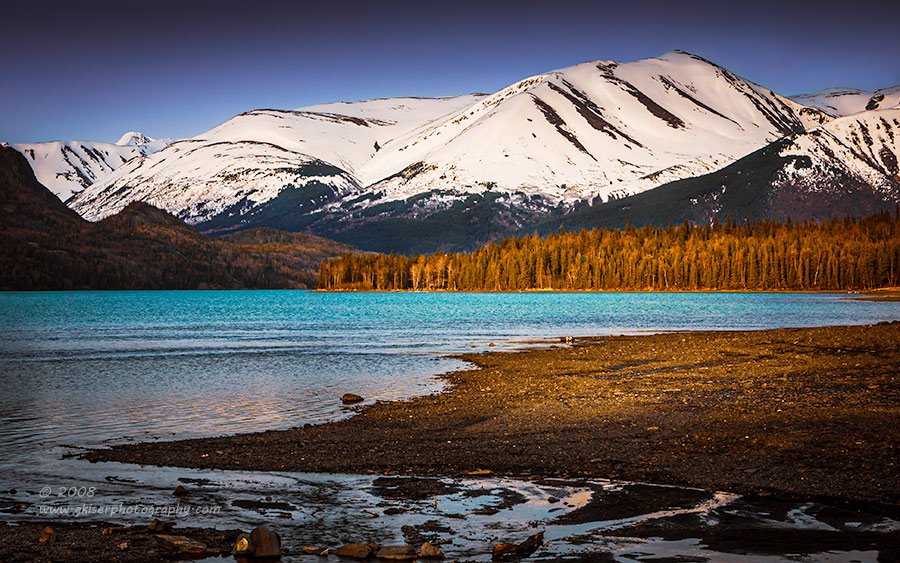
I, like many photographers shunned the ILC systems and stayed with the DSLR architecture. I made the move in late 2007 to my first DSLR and that was largely because the Canon 40D offered this new feature called live view which would allow me to flip the mirror out of the way and use the LCD in the same way that I did with my Sony point and shoot. If this seems odd, you are right. I discounted the new technology and went with older technology which I then used in a way that was much more like how an ILC system was intended on being used. Why would I do that? Well, the simple answer was the DSLR camera bodies were much better in terms of build quality, and image quality. The lenses were better, and I could choose a wider variety of lenses by using a DSLR. While we are on the topic, I chose Canon over the then brand new Sony Alpha DSLR, or Nikon offerings because the Canon simply felt better in my hands. Those were the three major players at the time in my research. I was hesitant to stick with Sony because they were basically just a rebadged Minolta at the time and were still developing their own architecture. Nikon felt too cumbersome in my hands and looked too complicated coming from a point and shoot. Canon made the most sense because it felt good, looked to be understandable and easy to use. I still hold with that logic and Canon has remained the most logical choice for me although it might not be the best choice for you.
I learned to use a DSLR quickly and never looked back on my choice to dismiss the new ILC concepts out there. I had a great optical viewfinder that allowed me to see things as they were in the field without needing to turn the camera on which gave me an opportunity to save batter power while figuring out compositions. I could focus very easily in either the viewfinder or in live view which was important because I was using manual focus exclusively back then. My eyes have gotten to the point where I don’t trust them as much and have found auto focus much easier to work with in subsequent cameras. I had everything that I wanted out of a camera system. I was able to stockpile the sharpest lenses with the most usable focal lengths, use live view along with a histogram for exposure, and I could see detail in the shot through the optical viewfinder that was just not possible with an electronic viewfinder (EVF). I was very happy with my choice and moved through several different camera bodies over the next 15 years. I replaced the 40D with a Canon 5D Mk2 which introduced the live view into a professional quality camera body. After a temper tantrum where I sold everything, I came back to photography with a new Canon 5D Mk3 which was a slight improvement on the Mk2. I stayed with this camera body until the Fall of 2020 when I came to another decision point.
At this time, I was being asked to provide very large prints for Hampton House in Winston Salem and felt that I needed a resolution bump so that I could create tack sharp images as the size they were requesting. It was at this time that the debate of going mirrorless came back up again. Things had changed quite a bit over the last decade or so, and the ILC systems were now called simply “mirrorless” and Sony had led the way with their Alpha line featuring a full frame sensor. The A7R Mk4 had been released with 60-something megapixels and had great reviews. There was a new thing going with Eye-AF which would automatically track the eyes of the subject which means nothing for a landscape photographer, but since I was starting to get into portrait work, this would soon become a big deal. The biggest draw for the Sony was that megapixel count which would satisfy my requirement for a new camera, but if I changed to that system, I would want to get native lenses and the G Master line was just as expensive as the Canon L glass that I had been using since the beginning. My EF lenses were still top quality and great glass. They could be used easily on any Canon body as well. That meant I would have to ditch my Canon glass if I went to Sony, or I would have to adapt it which can prove cumbersome at times with loss of functions. I wasn’t feeling great about switching back to Sony, and that hesitancy got even stronger during one of my landscape workshops when I had the chance to work an A7R Mk4. Nothing about it felt good, and while the EVF had come a very long way, it still wasn’t something that I liked. The camera was too small for my hands, and the controls made no sense to me. In that experience, I pretty much decided that I would not go the Sony route despite what all the reviews were saying, not to mention that many Canon shooters I followed on YouTube were jumping over to Sony touting it as the way of the future.
Around this time, Canon had entered the arena with their own mirrorless system, the EOS R and RP camera bodies which introduced the RF line of lenses. Neither of these cameras would suit my purposes though. They were obviously an entry point into the market for Canon and a way to start developing new lenses. They were no match for the Sony A7R line that had been out for a very long time. Going to the EOS R platform would have been a step down from my 5D Mk3 in most every regard and there wasn’t but a handful of lenses available for the new mount.
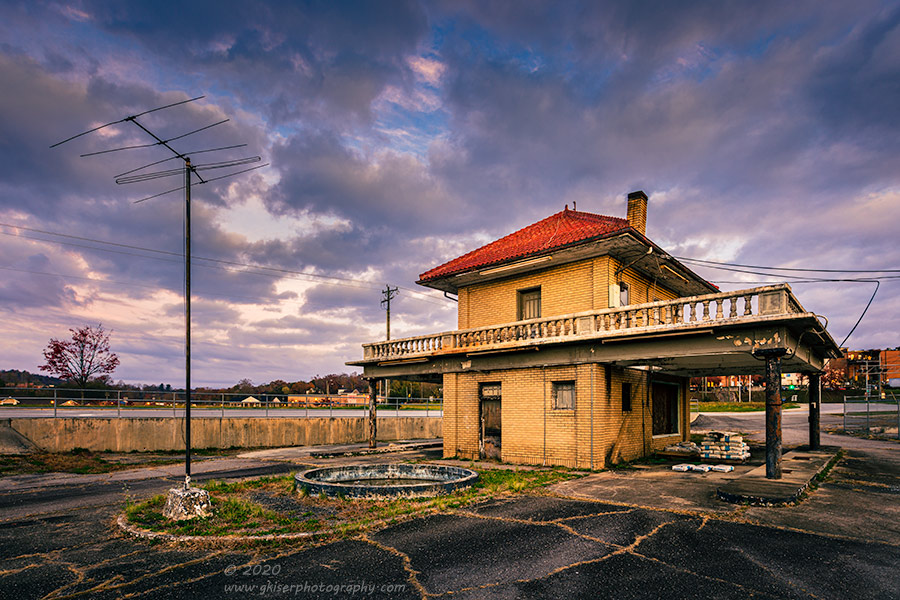
Nope, I was still very satisfied with my DSLR system, but I needed more resolution for what I was being asked to produce. The solution came by way of a friend of mine. Michael Surratt happened to see that B&H was offering up the resolution king for Canon cameras at clearance prices to clear the shelves in preparation for the influx of mirrorless cameras. The 5DS and 5DS R were marked down significantly from what they had been when new. These cameras were of the same generation as my 5D Mk3 and shared a design familiarity that made for a seamless transition. Of course, they would work with my current EF glass, and it would be a simple changeover to get higher resolution. The other end of the argument was that Canon had finally announced a worthwhile mirrorless camera with the EOS R5. This camera wasn’t quite the resolution of the 61MP Sony at only 45MP, and it fell short compared to the 5DS and 5DS R which were 51MP each, but I was hearing great things about the viewfinder, and a similarly effective Eye AF which was starting to become a consideration for me. The official release was still out in the future though. I wasn’t doing much portrait work at this point, and I didn’t feel that was a huge need of mine so I kind of discounted the AF features of the new camera in favor of a cheaper entry into the high-resolution market.
I ultimately chose the 5DS R because it was in stock and much cheaper than the R5. The R5 still had not be released at this point and it was a guessing game as to when it would be available for order. I would have to adapt all of my current lenses to the camera through a $200 adaptor as I gradually replaced the EF lenses with the newly developed RF lenses that were sharper, and in some cases faster than the EF glass. I was very happy with my decision to bypass all the hassle of the mirrorless system and was able to fall right into a groove with the new 5DS R body that just fit like a glove in my bag. Functionally, I noticed no difference at all with the new camera with the exception of some icon movements on the LCD. The files were gorgeous and there was a certain medium format feel to the detail that I was capturing with the new camera.
The only rub that I was running into was when it came to portrait work. While I had originally purchased my EF glass with the intent of having glass ready for portrait work, the f/2.8 apertures were a little slow in a lot of conditions. I was also having a hard time nailing focus at the wider apertures because I was having to manually position the focus point over an eye, lock the focus, and then grab the photo. In that time, the moment is lost all too often. Also, if they moved slightly after I locked onto their eye, I would end up focusing on their nose, or ear which wasn’t good at all. I missed more shots than I got, and my culling process turned into a game of pick the ones in focus and choose the best one from that. The truly great photos were already eliminated due to focus issues which was a fault of mine, not the camera. Having spent nearly 20 years with the camera on a tripod focusing on objects that didn’t move created a problem in my process of capturing images quickly. I wanted exact focus because that was what I was used to, and I wanted it consistently. Now that I was handholding the camera, doing critical focus on an object that might move slightly caused a lot of frustration and made me concentrate more on the focus than on the composition or expression. My normal patterns of working the camera just didn’t work in a portrait setting, and I just wasn’t proficient enough with precise focusing on the move as I should have been. I learned quickly that was not the way to go about this kind of photography. I needed the camera that would continue to be an extension of my hand and eye so that I wasn’t thinking about the technical parts, only the image.

My 5DS R, great as it is, wasn’t delivering the goods for portraiture. To add to the issues, I had added several fast primes to my lens arsenal to allow faster shutter speeds while keeping the ISO reasonable. That was another shortfall of the 5DS R that I haven’t really talked about. As with most DSLR camera bodies, the high ISO performance is moderate at best. For me, after ISO 800, the image becomes tricky to work with in terms of noise, so I try not to go higher than that. Well, for handheld portrait work, I might be working in shadows while still needing to keep a shutter speed of at least 1/125 of a second. In many cases, that would mean boosting the ISO, and in many cases beyond that ISO 800 mark. That was another limitation on the body, and I tried to band aid it with fast primes for outside work. It helped, but to really take advantage of the fast apertures, I was going to have to be spot on with my focus which wasn’t always possible. This kind of mitigated the benefit from the fast glass, and I was still shooting at f/2.8 in most conditions which caused the ISO to stay where it was with my zooms. I had spent money and gained nothing at all trying to make the DSLR work better for me.
I had reached a crossroads of monumental proportions at this point. I had the perfect setup for my landscape and decay photography with the high resolution 5DS R. There was nothing that I didn’t like about that system in that use. However, when I turned that rig into a portrait tool, it all fell apart. I could have worked harder and learned different techniques to nail focus and deal with the noise from the high ISO shots, or I could let the current technology help me out. I’m not one to shy away from learning things as you well know, so I didn’t take the lazy way out. In fact, the more I researched methods of overcoming my issues with the 5DS R, the more I realized that other, more seasoned people photographers were having the same issues and were missing shots more often with the wide apertures. Almost universally, I found that the best answer was getting a camera with Eye AF which meant going mirrorless since the focus is based off of the sensor (pixel phase detect based rather than optical contrast based). I was back to the drawing board with what to do.
I knew that I didn’t like the Sony at all, so that was out. I had recently started really looking into the Fuji GFX line of medium format cameras which was an affordable way of getting into medium format. It would be perfect for my landscape work and would also work as a portrait camera quite well. It would also involve changing over my entire system and carrying something that was heavier than my current kit. I would also not have the wide choice of lenses that I would with another system like the Canon mirrorless offerings which had their own native lenses as well as the ability to adapt their existing line of EF glass with no loss of function. The Fuji lenses were top notch, but there were some glaring omissions in the line which would affect me in both realms of my photography.
The more I thought about it, the more comfortable I became with a choice to stick with Canon and go with the R5 which was finally now available and in stock. That decision brought a whirlwind of purchases as I built a dedicated portrait kit. I’m still waiting on an RF 35mm prime to be released sometime next year, so I have adapted my existing EF 35mm f/1.4L Mk2 to the camera and it works very well. I’ve sold the other two EF primes that I had bought for the 5DS R and replaced them with the RF versions which are faster, and sharper. This gives me a 50mm f/1.2 and an 85mm f/1.2. I even recently added a 100mm f/2.8L macro lens for its close focus ability. For studio work and close in spaces, I have two zoom lenses, an RF 28-70mm f/2L, and a 70-200mm f/2.8L. Everything about this kit is based upon doing portrait work very well. I am still using the DSLR for the majority of what I shoot though which might seem strange.
I just can’t give up my DSLR just yet. It works so well in the field and gives me much longer battery life thanks to the ability to set a shot up with the camera off, and by switching the live view off, I am not using hardly any batter power at all. I still use the camera largely like a mirrorless by using the live view most of the time so those concerns might seem minor. The actuality of it is, I love the look of the images that the 5DS R produces. There is a certain feel to the textures, and the way that the detail is rendered thanks to the way the sensor is formulated. I get better fine detail in grass and trees which works better for landscapes, and the detail in the rust is just amazing when it comes to my decay photography. This camera just fits my style of photography and I see no reason to get rid of it just yet. Eventually, I’m sure that technology will change with the mirrorless system, or the camera will just wear out and I’ll be forced to upgrade. For now, though, this is the best tool for my landscape and decay photography.
So, why in the world did I go through the expense of getting a mirrorless system put together which I only use for a portion of my photography? Looking at things from a business point of view, when it comes to photographs that I actually create, I see a much stronger financial return from portraiture than I do from my landscape and decay work. In essence, my DSLR is used for my freelance work, and to hone my skills for teaching workshops as well as enticing those clients that might want to partake in a workshop. The R5 is a camera that I use to make an income based off of the shoots it is used in. I’m more interested in results in this situation, and I don’t have the luxury of slowing the process down. I need features that allow me to work in a variety of conditions as well as working very efficiently. What the R5 offers is perfect for my portrait work whether it be a headshot, family portrait session, or a bodyscape session. My hit rate has gone up roughly 500% between the two systems and that means money in my pocket. The R5 is on its way to pay for itself right now and I’ve already pulled in roughly 33% of the entry cost for the changeover. It has allowed me to capture images that I would have not been able to get at all during a recent editorial portrait session, and it has allowed me to work at a pace that I never could have done with a DSLR. I am forced to remember back to the shoot that I did in the early Summer for a book cover, where I missed a lot of great photos because I just missed the focus getting candid shots of Joe. Those missed shots were missed opportunities for the client to feel great about the session, not to mention missed opportunities for sales. That was just not how I wanted my portrait business to go.

I’ve been using the R5 now since the Spring and I feel that I am kind of qualified to offer some opinions on the concept of mirrorless cameras as they are produced today. This isn’t about to be a review of the R5 as there are a ton of those out there. This is going to be a lot broader for those that might be looking to make the switch from DSLR to mirrorless. Is this for you, and should you believe the marketing hype? I will start off by saying that technology has overcome the biggest reservations that I had about mirrorless. There are no blackouts between shots as the camera resets almost instantly. The EVF is now as good as an optical one, at least in the newer cameras being developed. I honestly forget that I am looking through an EVF now on the R5 except when I enable exposure simulation and then it is infinitely better because I can judge exposure through the EVF as I once did in live view. The addition of the histogram in the EVF is a real convenience for me when shooting handheld. Does this mean that you should sell your DSLR in favor of the newest mirrorless system? Nah. The fact that the EVF’s have gotten as good as an optical viewfinder is not a reason to move at all. That just levels the playing field between them.
As I mentioned, I am still using both systems and happily doing so. I think that they both have their place, so you might want to pay attention here. When it comes to image quality, the actual output of your image, there is no difference that a mirror will make. This is a product of the sensor and the lens…and of course, how you actually use them in your creative process. The differences that I see between the photos of the 5DS R and R5 come down to the sensor construction and that is it. The difference is minimal with only a slight edge going to the DSLR. Other than that, the output is no different between the cameras providing the exposure was right at the time of capture. The reason that I mention that is that the dynamic range (ability to capture shadow and highlight detail) is superior on the R5. This allows me to rescue images that are severely underexposed, or marginally overexposed. A byproduct of that is there is a lot less noise at higher ISO ranges. This will yield a cleaner image (less noise) where the shadows have been heavily recovered, or if you had shot at a higher ISO. Advantage…R5 in this case. However, if you are able to get correct exposures, and are shooting on a tripod, that advantage goes away because it just doesn’t apply anymore. Sure, the extra dynamic range is nice to have just in case, but is it worth getting rid of the DSLR in favor of a mirrorless? Eh, not for me.

When mirrorless cameras (or ILC) first came out one of their biggest advantages was the more compact size they offered because of the omission of the mirror and pentaprism. That is kind of the case with the Sony offerings, but as I mentioned, I hated how that camera body felt in my hand. It was just too small to be comfortable. The lenses are still roughly the same size as the old Sony DSLR lenses. There is no appreciable difference in size between the R5 and the 5DS R, and since I have a battery grip on the R5, it is actually a bigger body than the 5DS R. The lenses are still about the same size as the EF offerings with the exception of the RF 70-200mm f/2.8L which has an extending barrel for the zoom rather than an internal zoom of the EF 70-200mm f/2.8L. Extended, they are roughly the same length though. The RF 28-70mm f/2L is a monster of a lens with a 95mm filter thread compared to the 82mm thread on the EF 24-70mm f/2.8L Mk2. This lens is much bigger, and heavier than the EF lens, but that is because it is rated at f/2 vs f/2.8. The RF 24-70mm f/2.8L is more comparable in size to the EF, but not really smaller. The Canon L range of lenses for the RF mount is heavy and bulky which kind of defeats the purpose for mirrorless, not to mention that they are expensive. The RF 28-70mm is a $3000.00 lens, but I feel that it is worth the money for what if offers. Speaking of pricing, that nifty 50 lens that is always so cheap and light….well, the RF 50mm f/1.2L comes in at $2300.00. I bought an EF 50mm f/1.8 for my Optical spot a while back for a whopping $125.00 brand new. The idea that mirrorless would save weight and be cheaper isn’t the case at all. If anything, I’m seeing a heavier kit and much more expensive than for the DSLR. Not to mention you can pick up used DSLR bodies and the lenses for pennies on the dollar now that everyone is jumping ship to go mirrorless. Advantage here goes to the DSLR, especially if you already have the camera and are just needing to build your lens collection.
Something else to consider when it comes to lenses is at least with the RF glass from Canon, the focus is now electronic. This means that there is no longer that manual interaction between the focus ring and the actual focus of the lens. Your primes won’t have a depth of field scale on them any longer. You can adjust the speed at which the lens focuses which is nice, but if you like that tactile feel, it will be missing with the mirrorless glass. I’m not sure about the other manufacturers, but it would stand to reason that this is probably going to be the way of the future. Personally, I miss the manual focus because I could always tweak the focus manually without having to shift from AF. It is a little more fidgety with the new electronic focusing and I don’t trust it, so I’ve just disabled manual focus when in AF mode to keep from accidentally missing the focus.

You can kind of see why I was hesitant to move to mirrorless. There was really nothing that it offered me over my current DSLR that mattered. Sure, the technology was newer and there were more bells and whistles. It just seemed that the biggest thing going for the R5 specifically was that it could shoot 8K video. Well, I don’t do video, and I just needed a stills camera. I was also hearing that if you recorded for more than 30 minutes the camera would become a raging bonfire which was less than appealing to me. At any rate, I paid no attention to the video function of these cameras and that was where mirrorless really shined. With DSLR cameras, shooting video was very hinky with the auto focus and in many cases, you had to lock focus and keep it there for the duration of the video. To be fair, in that regard, the video capability of these cameras yielded the most important feature for me in terms of decision making.
As I mentioned before, the focusing in a DSLR was designed to work with the mirror. The focusing motor was driven optically by way of the image in the mirror. It was based on sensors through about 80% of the viewing area with the most sensitive being in the center. There were cross type sensors and single sensors designed to lock onto contrast points. The faster the lens, the quicker and more accurate these points would be. In low light, with a slow kit lens, you might not even be able to autofocus because there wasn’t enough light available. It wasn’t until live view had been around for a generation or two that auto focus was able to be adapted to that sensor-based function. It was based off of pixel shift technology, which was accurate, but very slow on the DSLR bodies. It would take 2-5x longer for my auto focus to lock when in live view as opposed to through the viewfinder. While this is no problem with a landscape, I can’t work that slow when dealing with people, plus I have a much more stable shooting platform when the camera is jammed up into my eye socket which eliminates me using live view during a portrait shoot. Through the viewfinder, I have to move the AF point manually to where I need it to be and press the button to engage the AF motor which takes time, and I’m limited to one of roughly 50 AF points I believe, which aren’t always where I need them to be. This meant that even specifying the focus point in the viewfinder, I was still having to focus and recompose so I had to use single shot AF as opposed to servo AF. That meant that if I moved, or the subject moved, the focus would not update after the recompose. That was where I lost a lot of my shots, and the process slowed me down which caused me to miss shots because I just wasn’t ready for them.
Since mirrorless cameras don’t have to worry about focusing through a mirror, the focusing technology is all designed at the sensor level. This does several things. First of all, it is more accurate because the lens is focusing directly to the sensor and is independent to small differences in mounting of the lens and position of the mirror. There is the absence of lens calibration in my mirrorless menu because you no longer need to do micro adjustments to the focus for each lens used on a body. It is no longer an issue. The other benefit to having a sensor based focusing system is that it has been designed that way from the ground up. While a DSLR using pixel shift focusing is slow to happen because this was a design afterthought, a mirrorless system works smoothly and quickly to get focus. Because we are no longer requiring specific points for focus, we have the ability to focus on anything in the viewing area. That’s right, 100% of the sensor is available for the focus to lock onto. Face detect is now a regular feature in cameras while it was only available as a live view option on my 5DS R and wasn’t available at all on prior cameras I owned. Face detect has opened the door to eye detect which Sony brought to light first if I’m not mistaken. This feature allows the focusing system to lock onto the face and then track the closest eye to the camera while everything is in motion. It is fast, and accurate which has become the biggest selling point for a mirrorless camera for me.

Using the Eye AF on my R5 has changed how I shoot portraits. It has made me faster, more consistent, and given me the opportunity for a much higher hit rate. While I used to cull my images based on what was in focus, I now get to go through my images and pick the ones out that have the best moments knowing that the focus is going to be right. This technology has opened up my ability to capture the photographs that I want without getting bogged down thinking about focus. My compositions are better straight out of the camera because I don’t have to focus and recompose which means that I spend more time seeing where limbs are at and the design of the composition.
It has really come down to that single feature which I dismissed early on because I didn’t shoot enough people pictures to justify the cost. There is no doubt about it, in the case of auto focus, the mirrorless wins hands down. I’ve sunk a good bit of my savings into moving to this mirrorless system and I was worried about having buyer’s remorse for it. I’m happy to say that some six months later, I don’t regret it at all. Every time I use the R5 I am reminded at how good it is for the job at hand. I’ve left each shoot more confident than I ever did with the 5DS R because I wasn’t worried about whether or not I’ve nailed the focus or not. Even shooting at f/1.2, I’ve managed to nail the focus for quick grab shots that would have yielded another dozen or so images from the book shoot earlier this year. So, why have I not sold my 5DS R to recoup some of the investment I’ve made in the R5?

Well, that is a tough question actually. The difference in resolution is minor and really not a realistic concern even though the 5DS R has a bit more detail. The image quality in reality is very similar when it comes to print. It comes down to an emotional response that I get from looking at the photos shot with the DSLR. There is a characteristic of these images that feels very much like medium format. It isn’t really tangible, and probably isn’t even noticed by anyone else but me, but I feel happier looking at my landscape and decay images when they were shot with the DSLR. I also like the process of creating the images better. There are no touch screens, high tech focusing settings, and I can set the scene up without even turning the camera on. I’m in my element with a more rudimentary camera when dealing with landscape and decay subjects. I’m more in touch with the process of creating, and I get to really immerse myself in that process. The camera works at the same rate that I am thinking through the images…slow. The process is more fulfilling for me, and more enjoyable.
On the other hand, that same camera becomes a source of frustration for me when I am dealing with people. It gets in the way of what I am trying to create and causes me to miss the moments that I want to capture. The R5 allows me to work at the pace the subject demands, and with the auto focus taking 60% of the workload off of my mind, I’m allowed to focus my attention on the content of the photo which might change several times per second. Using the mirrorless system for portraiture makes the process more fulfilling and more enjoyable for me as well as giving me a much higher hit rate through the session. I can interact with the subject, and be a part of the moment, but for landscape and decay work, it would isolate me from what I’m doing and put me into a position where I am just capturing a scene. The two cameras do two completely different things for me, and they do those things very well.
I know at some point, I will have to replace my DSLR, and I have no doubt that I will be mirrorless all the way at that point. I don’t reject that idea, but for right now, my voice is clearer using a DSLR for the slow work and a mirrorless for the fast work. What does this mean for your own decision? That is personal to you, and you will have your own reasons for that decision. I will suggest that you take a step back from the marketing hype and look at what you have to gain or lose through either system. Think about what you shoot, and how you work through the process. One might be better for you than the other, just very few people out there will recommend leaving that choice up to you. Just remember that the mirror is the difference between the systems, and that mirror has nothing to do with the image quality of the final image.
If you don’t have anything at all and are on a tight budget, go with a DSLR. You can get a top-of-the-line kit built with used gear for less than an entry level mirrorless kit. If you have the ability to afford a good quality mirrorless kit though, I would strongly suggest that you go in that direction. That is the future of photography at this point and all the manufacturers are phasing out their DSLR lines in favor of the mirrorless systems. Eventually, you will be making that swap, so might as well do it from the get-go if you can. There are no negatives now with mirrorless, but the positives are very selective. If you currently own a DSLR system and you either use manual focus or are happy with the auto focus for you use, the only other reason to justify the switch right now is if you have a problem getting the right exposures, or you regularly shoot at night. There is no denying that the dynamic range and high ISO performance of the mirrorless cameras is superior to that of a DSLR, but if you shoot in well-lit conditions at low ISO like I do, that advantage is insignificant.
Outside of just getting started in photography, I think the biggest factor in making the switch to mirrorless comes down to the auto focus, and that is only if you are photographing things that are moving. If you do people photography, animal photography, or sports photography mirrorless will make your life easier, even if you use manual focus because you will get a feature called focus peaking that will allow you to see where your focus is sharp very easily with a digital overlay through the EVF or rear LCD. That is the only reason that I made the switch earlier this year, and only because I was starting to see a larger chunk of my income resulting from portrait sessions. Had I not gone off in that direction, I would still be using my DSLR 100% of the time. Looking back after spending time with the R5, the DSLR would still be the right choice to make because that is still my favorite camera for doing landscape and decay work.
If you listen to the reviews, influencers, and corporate marketing, it seems like you have to use mirrorless because they are so much better than DSLR’s. That is just not the case. The camera is still just a tool, and the resulting photographs will look the same no matter what you use. The tool has the ability to make your job easier, but only you can determine if a feature will, in fact make your job easier, and if that feature is worth the money. The manufacturers see a great deal of profit from converting customers to mirrorless because they will ultimately sell not only camera bodies, but lenses to go with them. That is more profitable than just relying on an occasional upgrade to a camera body that uses the same lens collection. The influencers get to evaluate the new gear for free and play around with it so, of course, they are going to recommend that you part with your money to achieve the images that they are getting. The reviewers are not incorrect when they talk about how good these cameras are, but then again, the DSLR cameras that are being replaced are also that good. We are not seeing huge differences in image quality at this point. The differences are more in how the images are captured and that comes down to how you work as a photographer. Put your money where it will do the most good, and if your gear earns you money, make sure that it can justify itself through making your life easier or more efficient, allowing you to make money quicker. Just don’t listen to the masses when it comes to how to spend your money. Be considerate in your choices and make the decisions based on your particular needs.
I’ve pretty much documented the choices that I have made in regard to camera bodies since I started in 2005. My experience will likely be different than yours, but the process behind the choices should apply to your own decisions. I still stand by my original thought that when it comes to spending money, the lenses come first, and the camera body comes well below filters and tripods. In the end, we spend the money on what will produce the best photograph where the viewer will not see any of the gear that was used. Every piece of gear that we have as photographers is there for only us. The piece of paper with an image on it that we produce is for our audience. Tell me which part of that equation is most important to you, and I’ll tell you what kind of photographer you are.
Thank you for joining me for this last Behind the Camera of 2022. Keep an eye out because later this month, I’ll be doing my annual significant image entry, and on January 1st, we will take a trip down memory lane to see what all happened of interest during this past year. I’ve got another year’s worth of topics ready to go as well, but if there is anything particular that you would like me to discuss, please feel free to make a suggestion.
Until next time…

Remember to use the code KISER10 to get 10% off your purchase