Sunday, October 9, 2022
OK, I know I said that I wasn’t going to spend much time in the blog with my portrait endeavors, but this one was too interesting to not talk about. It was one of the best learning experiences I’ve had in photography in quite a while. I pushed myself, I pushed my gear, and my subject pushed a horse. Let me back up for a moment and get you up to speed. Back in the Summer I was contacted by Bob who is a veteran from two of my workshops as well as some mentorship time. He wasn’t contacting in reference to his own photography though, he was wanting to book a portrait session…well, kind of. When Bob isn’t out hunting waterfalls all over Western NC, he is wrapping up a career of Equine Physical Therapy. As he describes it, this is much more than just rubbing a pony and making it feel better. There is a lot of techniques that he employs to find out where the issues are, and then to actually relieve any discomfort or pain. He is the only one in the area that does this technique and he’s been doing it for more than a decade now. He is slowing down and looking towards retirement but realized that short of a few selfies that he shot with his clients, there was very little documentation about what he did.
That was where I came in. Bob had been following my development as a “people photographer” and knew that I was very much interested in capturing the story through a photograph. He was interested in whether or not I might want to document him at work. Well, at the time I was looking for all kinds of opportunities where I could learn different parts of portraiture, and this posed some very interesting challenges for me which I wanted to work through. I agreed under the caveat that I was still very new at this and had absolutely no experience in this specific kind of portraiture. However, my previous experience with photography had taught me how to capture the moment of what was there, which was theoretically all that I would be doing for this session. We agreed on a price (deeply discounted since I was going to be using the opportunity to learn) and set a tentative date for some time in late September or early October.
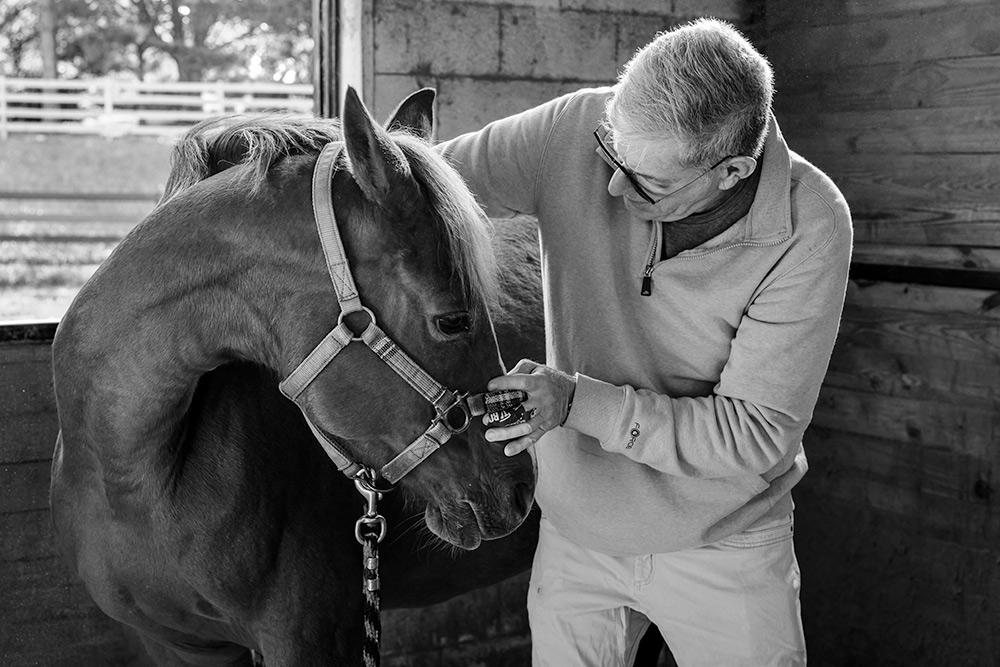
As the weeks turned into months, we would chat a bit here and there about how the shoot should go and what he was wanting me to capture. This wasn’t designed to be a place your hand here, look this way, and push your shoulders forward kind of posed shoot. I was actually going to be a fly on the wall capturing things as they happened. That both thrilled me and terrified me at the same time. I’m not the best at posing subjects, but at the same time, I was going to have no control over anything with the shoot. I was going to have to react to a very fluid situation and pick out compositions and make creative choices on the fly. I was going to have to think ahead while not knowing what was coming next.
I knew that the primary concern here was to tell a story of what Bob actually did. A distant second concern would be the regular issues with a portrait shoot like lighting and positioning. The lighting issue was even more difficult because with the nature of the horses, I wasn’t going to be able to use flash. I didn’t know how that would affect me, but I knew that one of my tools was going to be gone which I have learned to rely on for low lighting situations. I would only have natural light to work with, and it would be light flowing in through a stall which would chance through the day, with each new horse as he would go to their stalls. I felt confident that I could work with the light in a stall but had the added concern that I wasn’t going to be able to direct Bob into the best light since he was going to have to focus on the rather large animal he was working on.
I got to thinking about equipment. I had just recently added the EOS R5 to my arsenal for my people photography. I knew that this camera had much better high ISO performance than my existing 5DS R which I was going to lean on pretty heavily through the day. The reason that the ISO was a concern was that I had to be mindful of my shutter speed and keep it fast enough to avoid camera shake in my images. It would also help to freeze motion in the scene, but to keep the shutter speed up, I was going to have to rely on either aperture or ISO. I knew that since I was going to be telling a story, I was going to be using a moderate aperture for most of the day so that the surroundings wouldn’t blur out too much. I wanted to keep focus on Bob and the horse, so that left me with ISO.
I had never used the R5 at what would be considered a high ISO before but knew that being inside I would see ratings of 5000, or more potentially. I get nervous at 800 on my DSLR camera, but I don’t have to worry about that for the landscape and decay work that I do since I keep the camera on a tripod all the time. There was going to be no tripod for this session, as I had to stay flexible and moveable. The other thing that the R5 had over the 5DS R was the auto focus based on pixel contrast rather than focusing through the mirror. I had set the camera to use back button focus where one button activates the eye AF which is very good at picking out the subject’s eye, while the other button focuses on a point that I can select with the touchscreen on the back of the camera. In theory, this allows me two different focus options without taking the camera away from my eye. The DSLR is much more clunky when it comes to auto focus, and I’ve missed more shots that I’ve gotten trying to focus on the fly.
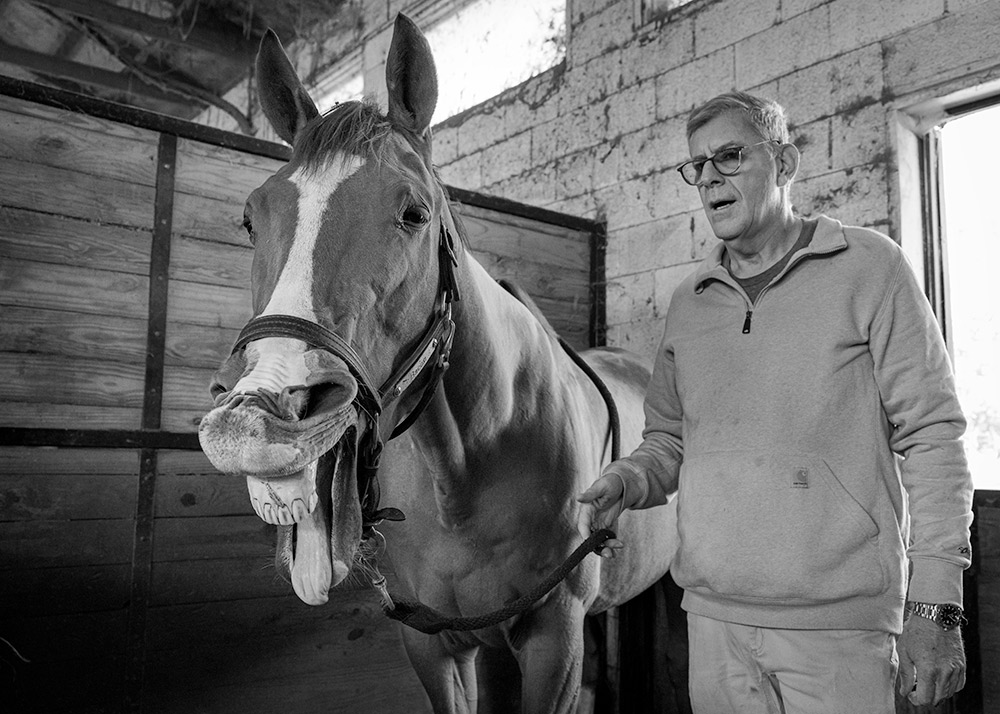
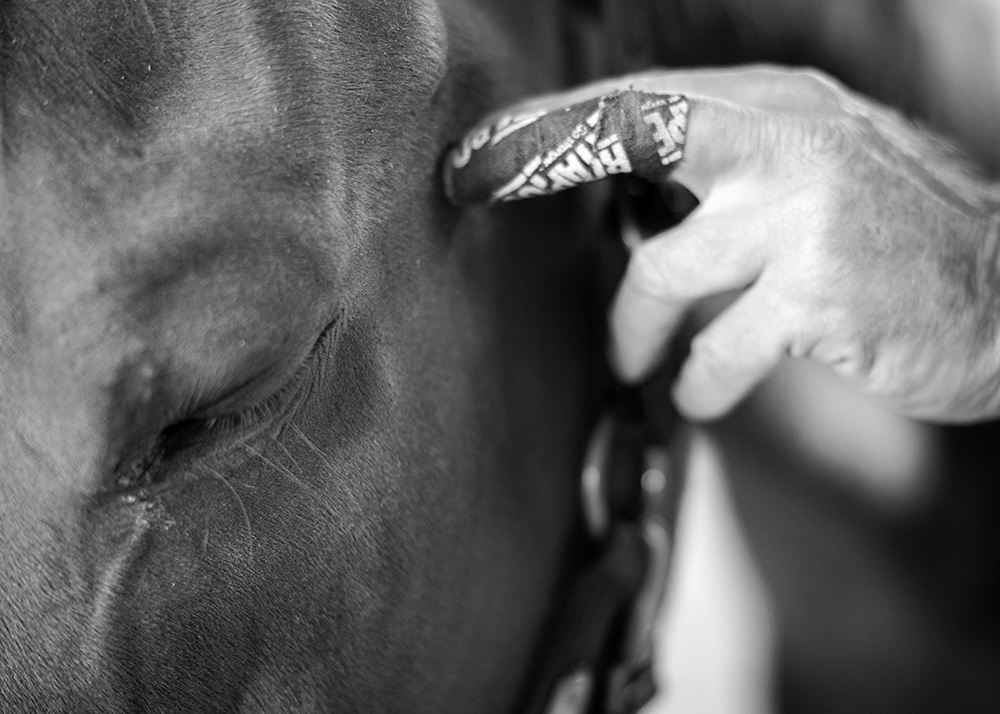
We ended up setting the date for the 9th of October when he would have a full schedule for horses. The plan was to have four, hour long sessions that I could document. Since I wasn’t exactly familiar with the whole process, Bob suggested that I look up some videos on the Masterson Method which I did. This showed a very slow process of following the Bladder Meridian and watching the horse react. The reactions would be chewing, yawning, licking, and drooping eyes. These would be the indications that the horse was getting benefit from the treatment. Those were the reactions that I wanted to look for.
Watching the videos put me at ease that I would be able to capture these moments with relative ease. It was so smooth and slow in the video and that was what I was expecting. It did give me ideas of how I wanted to capture the photos to tell the story. I had a better understanding of what I was going to be looking for, and what angles I needed to work around. I was feeling pretty confident at this point because I wasn’t going to have to do the hardest part for me which was the posing. I just had to shoot it as I found it, which was something I was very comfortable with.
Knowing that my youngest daughter, Sierra, was very much into horses, I checked with Bob to see if she could tag along and possibly be my sherpa for the day. He confirmed with the stables and I got things set up with Sierra. Imagine this conversation via text.
Me: Hey, would you mind helping me out on a portrait shoot by carrying some equipment and possibly holding some reflectors?
Sierra: Sure
Me: Great, it will be a stable and I’ll be photographing somebody doing physical therapy on the horses.
Sierra: SEROIUSLY! OMG! I can’t believe it, I’m so excited, really, horses????? When are we going???
Yeah, I rank well below horses, but at least she was willing to help me out without knowing that we were going to be working around horses.
So, as I was getting prepared for the session, I was thinking about things that I might need. Horses are tall, and Bob is tall…like 6’7″ tall. Also looking at the interior of the barn, from some videos that he had sent, I could see the possibility of needing to get a little altitude in order to get the right angles with the camera. I was going to need a stool just in case. I also wanted two different reflectors because I knew that my main light source was going to be coming in from the exterior stall door that was opened at the top forming a window. If I shot from inside, I might need to bounce some of that light back onto my subjects.
When it came to lenses, I decided that I wasn’t going to worry with my prime lenses because extreme shallow depth of field would be of limited use to me in this scenario. I wanted to tell the story here, and part of that was the surroundings, so there was no need for f/1.2, or at least not a big need for it. Fortunately, I had managed to slip in and snag one of the very hard to get RF 28-70mm f/2L lenses a few months back. It was bought as a studio lens along with the RF 70-200mm f/2.8L. I figured that both of the lenses would serve me very well for overall scenes as well as intimate captures that I planned on getting. I was figuring that I would spend the most time with the telephoto lens since I was going to be working with a tight space figuring that I would be standing outside of the stall for the captures.
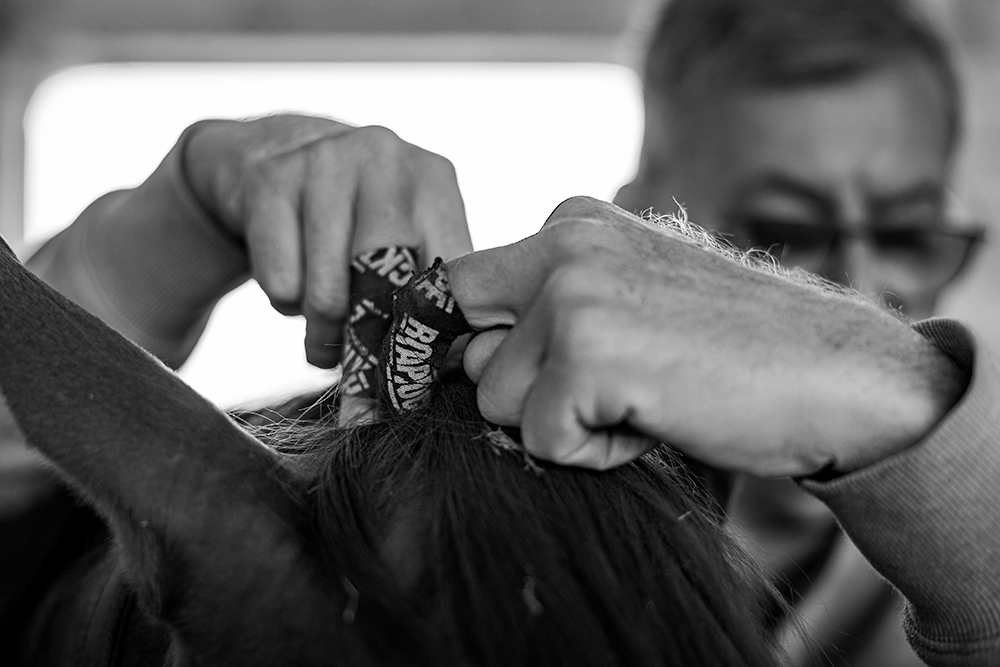
My plan of action was pretty simple. There were three points that I could photograph from which included the exterior stall door with the open window and the inner stall door along with a feeding window on the other side of the stall. I could work through all of those areas for variety in the photographs since Bob would be doing roughly the same thing with all four of the horses. The last thing that I wanted to do was keep getting the same shots over and over. I figured that where I shot from would be dictated by the light more than anything. I was potentially going to be having direct light coming in from the exterior that could either be a key light or my rim light depending on the angle and intensity. If I shot from inside, I would probably need a reflector. Since Sierra was coming with me, I could have her hold it and provide the splash of light that I needed. The concept was perfect, and I knew that I was going to do well with this one.
Of course, I always think that weeks ahead of the shoot. It is the day before that is when everything I feel confident about falls apart. That was pretty much what happened this time as well. I was feeling good about things right up until that Saturday when I started to question everything. Did I even know how to work the camera? That is a realistic question considering I’ve only shot with it four times since May. Those were three studio shoots and a single outside location with bright light. In case you aren’t keeping track, I have not used this camera inside with only natural light, and to be fair, I haven’t shot in that scenario at all with any of my cameras. Now you see why I was wondering if I could even work the camera.
Of course, I knew the theories behind it all, and mentally I knew what to do, it was just the actual process of doing it that got me a bit unnerved. Add to that, I was putting a lot of trust in reviews of the camera that told me that it would succeed in this situation. I knew my 5DS R much better and would have felt more comfortable using it, but for the reasons that I had already mentioned, that was not the best option for the shoot. I knew that it would cause serious problems unless the light was nice and bright which would force me to shoot from outside hoping that the sun was shining into the stall. I couldn’t count on that scenario at all, nor did I want that kind of light for the photos.
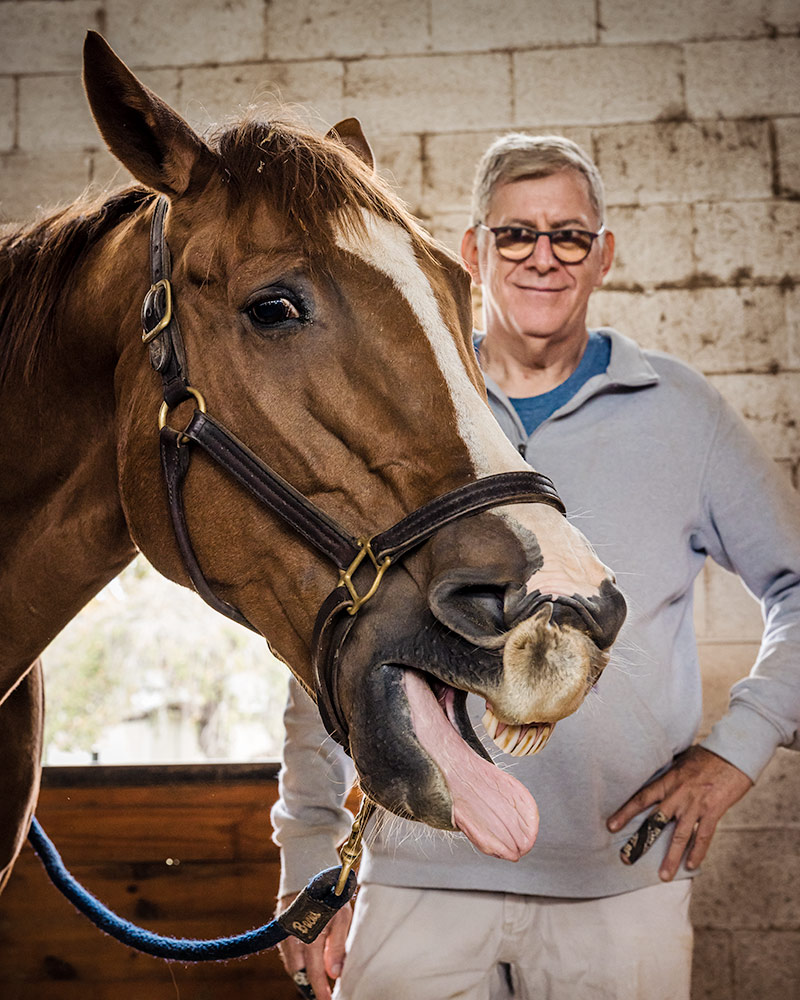
Speaking of light, I wanted soft light for the most part on Bob’s face because having him in harsh direct sunlight would cause very deep shadows, and I would have the chance to lose the story I was trying to capture. I needed light that sculpted his face and was flattering, but I knew that I was going to be at the mercy of the situations he was in for that to happen. The best way that I could prepare for that was to shoot from outside with the sunlight not actually entering the barn. That would give me reflected light into the stall with some good shadows to bound the scene. My second option was to shoot from the inside using the bright sunlight as a rim light. That would give me very soft light on the scene with good separation. The downside was I would have a very bright window in the background of the shot unless there were clouds out. The weather forecast was calling for bright sun, so I was going to have to expect a bright window if I shot from inside. A reflector would bounce some light back on the subject if the sun was coming in at the right angle which could help.
These were my lighting considerations that I had to think about before the shoot started because once things got rolling, I wasn’t going to have the luxury of reading the light. It was going to be reacting to the action and finding the shots where they happened. From the videos that I watched, it wasn’t going to be too difficult to follow the process and pick and choose the exposures. To help make things quicker for me in regard to exposure, I planned on shooting in Aperture Priority mode which is a departure from my usual Manual choice. By pairing that mode with Auto ISO (set to kick in at 1/125 of a second and capping at ISO 12,800), I’m able to concentrate just on setting the aperture that I need for a shot and the camera can work the rest out. I used that successfully on a grand scale for the first time during an engagement shoot outside. It worked very well and allowed me to keep the shutter speed fast enough, and the ISO as low as possible for each photograph.
I didn’t sleep much the night before because I was going through all kinds of contingencies so I could be prepared for the shoot. One of the things that I have come to realize as a professional photographer is that being professional has nothing at all to do with what gear you use, what mode you shoot in, or how you dress. Being professional is all about problem solving in a way that nobody knows you are figuring out a solution. This comes from years of experience in handling things so that you have a bunch of options in your head ready for those situations to develop. I was running through those scenarios through most of the night so that if something were to pop up, I would be able to roll with it and just keep on going.
When the alarm rang, I was already awake, and it took nothing for me to get out of bed. Today was the day I was going to either succeed or fail at this new type of portrait shoot. I got dressed and grabbed a quick breakfast before doing some of my normal morning tasks down in the studio. I was on the road at 7am which would put me getting at the barn at 8:30. Did I mention that I will travel for portrait shoots when needed? The ride down was filled with more pondering of how I wanted to shoot this series of images. Bob had left it all up to my creative choices which was both a good and a bad thing. I had just enough information about what he was looking for that I understood the concept, but not necessarily the creative direction he was envisioning. He trusted me to fill in that end of it which I was happy to do. He even let me pick out his clothes for the day so that the color palette would be suitable.
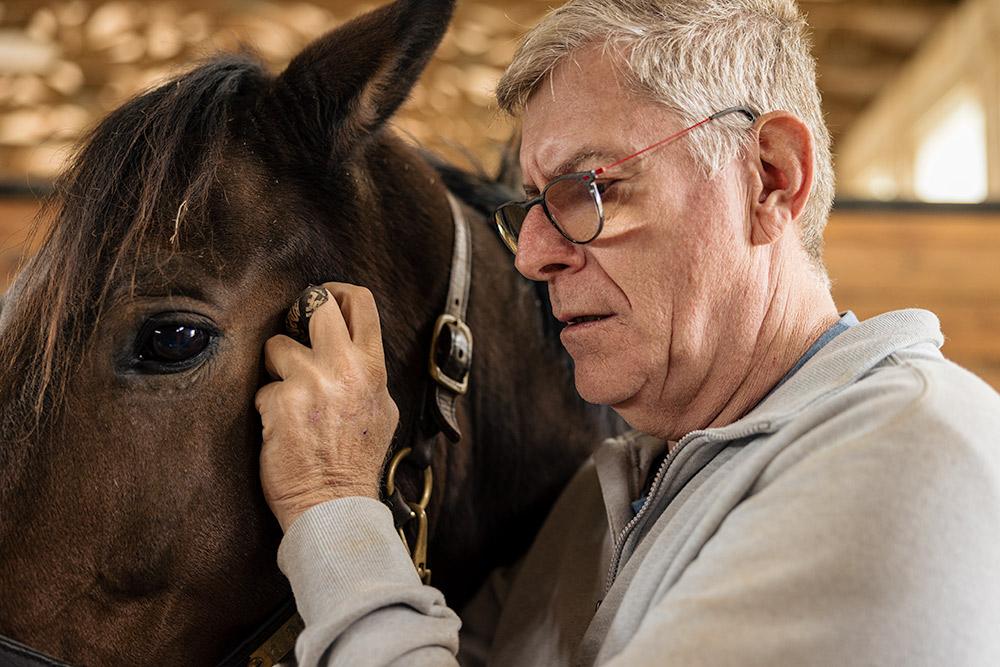
After looking at the videos that he had sent me, I had come to the conclusion that most of the tones in there were very earthy tones with beiges, browns, and oranges. I wanted to keep with that analogous color scheme, so I wanted him to wear something beige, tan, or a light blue for a bit of cool contrast. We both chose a grayish sweatshirt, and he added a blue t-shirt underneath which worked fantastically. This would give me a lot of creative freedom in the location because he wouldn’t clash with the existing colors, and I would be able to work with both color and black and white images which I had a feeling I would be doing both.
We started out with a walk-through of the stables. Bob was thinking about getting to work, as was I. Sierra, who had beaten me there, was on cloud nine seeing all the horses. She was just as dialed in as Bob and I were, only Bob and I had a much more serious look on our faces. During the walkthrough, I was paying attention to the all-important light. The sun was coming into some of the stalls, but the light was looking pretty good from the inside on both sides of the barn. I wasn’t seeing much possibility of using a reflector though which upset me a little bit. The light was soft in the stalls, but it was very dim. I didn’t need a light meter to tell me that even shooting wide open, I was going to be relying on a fair boost in ISO to get the exposure right…and I wasn’t wanting to shoot wide open.
When we were done familiarizing myself with the environment, I went out to the truck and grabbed my camera bag. I left the reflectors because I really didn’t see any need for them. I also left the stool behind because I wasn’t sure if I was going to need that or not. The first horse was going to be a warm-up more or less so I would decide if I needed the stool after that one, or I would have Sierra run out to get it for me during. I pulled out the camera and decided to start with the RF 28-70mm f/2L glass as I was going to use this part of the day to establish the setting which would mean using a wider-angle focal length. I intended on swapping out to the RF 70-200mm f/2.8L to get into the details later on.
With the camera built, I made sure that I had everything set up right for the session. Since I don’t use this camera much, I had to refamiliarize myself with the controls which is admittedly a terrible first step. In time, I will get more acclimated to this body as it is very similar to the 5D series that I have used for years now. I started to run into some menu settings that didn’t look right, so I decided to simplify things and go to my custom shooting mode number two which I had set up for doing natural light portraiture. I was comfortable that everything was right there, but I had to remember that every time the camera shut off, the white balance would default to sunlight and the aperture would go back to wide open. Staying in the regular Aperture Priority mode would allow those settings to remain at what was used last when the camera powers back on. It was minor, but a tradeoff that I was willing to make to ensure that the camera behaved as I wanted it to.
I shot a quick test photo to see how the settings were looking and I was surprised that my first exposure came in at f/4, 1/160, and ISO 640. That told me that the light was very dim inside and I was going to see exposures with much higher ISO’s as the day progressed and I stopped the lens down more. I did make a mental note to keep the lens at a maximum of about f/5.6 just to help out the ISO. I went through a few test shots to get used to how the auto focus was going to work in this environment. I knew that strong backlight was something that caused problems with Eye AF and was hoping that there was enough light inside to allow me to use this very helpful feature. It looked like there was going to be enough light in my first few tests. I went ahead and got Sierra in position to hold the gray card so I could set the white balance, and I was off and running.

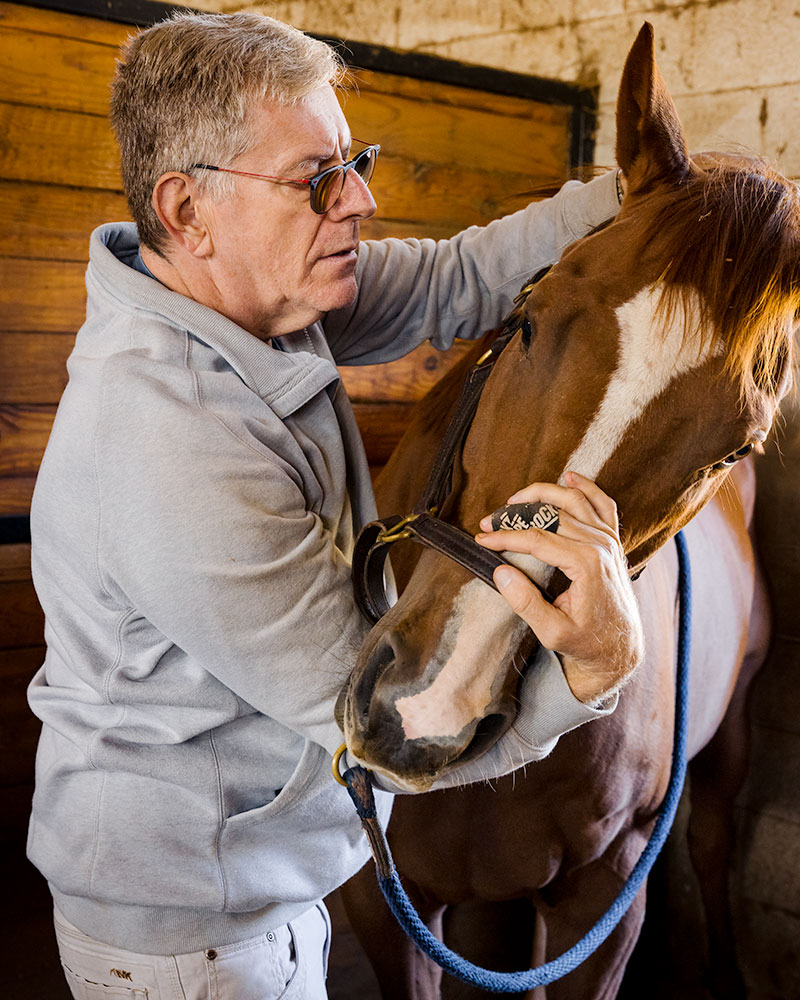
Bob made contact with his first client, and we moved to that stall as he started getting to work. Something that I realized pretty early on was he liked to talk through his process with the human client as much as with the equine client. That posed a problem for me because I was there to capture the interaction between him and the horses, but I was left seeing him making more eye contact with the human as he worked. I had to get very good ad picking those moments when he was completely engaged with the horse which took some practice. This is not meant to imply that he didn’t focus on the horses because he was very much in tune to their body language, but he could tell as much through touch as he could by looking.
I found myself in that situation where I was just blasting frame after frame trying to get the right moment. After about 10 minutes I stopped and looked at the camera to see how the photos were coming out. They were looking good from an exposure standpoint, but they weren’t telling the story. I had also shot over 100 frames at this point. I needed to pick my moments more carefully, and I needed to capture the story much better than I had been. I had been bouncing back and forth between the feeing window and the inner door for the most part while staying in the breezeway of the barn. The more I shot, the more I started to feel like I was outside looking in which was not the atmosphere that I wanted for this session.
After a while of working from that side, Bob asked Sierra to go out to his truck and grab two stones that he uses on the horses. He said that this might be the only one that he uses the stones on today, so I decided that I was going to try and get a detail shot of that. While Sierra was going out to get them, I swapped lenses to my telephoto and then walked around the barn to get to the exterior door. I tried to get the framing right with the long lens, but it felt off to me. The lighting from this side was terrible as well. Nothing was working out at this angle, so I went back inside where the light was better. I tried to get a few shots with the long lens, but it just had too much reach to it, and I found myself pegged at the 70mm mark and wanting to go wider. That was my clue to go back to the 28-70mm lens because that was working well for the space I was in.
I was very happy that I had managed to get this lens when they are in such short supply. It had the range of focal lengths that worked for the location, and it allowed me to go with a very shallow depth of field at f/2. It wasn’t quite as shallow as my primes, but there is no doubt that the range of the zoom was key for this space. I had no regrets shooting this whole session with zooms. My last natural light shoot was done with all primes, but I had more space to move around, and my feet became the zooms while I had more options for depth of field. As far as the space I was working with, it was pretty much restricted to the open stall door and the feeding window. The horse’s owner was in the doorway so they could see what was going on with their horse. I wasn’t about to ask her to move because I was very aware that she was being nice enough to let me do some photography which included her horse. I just worked around the best that I could.
When that first hour long therapy session was over, I had a chance to consider what was going on. I realized that things were not as I had envisioned them to be. Bob was moving much faster than I was anticipating, and the horse, not knowing that they needed to be still for the photos, was moving around the stall forcing Bob to react to it rather than to position everything for my benefit. I was going to have to work much faster, and I was going to have to figure out how to get into the story rather than photographing from the cheap seats. Looking at the frame counter, I had shot around 400 frames in the first hour. That meant I was on track to have over 1200 frames when I was done. That was more than I wanted to capture for the day, so I needed to be much more selective about what to shoot.
When we went to the next horse, I started to shoot from inside the door to the stall and moved occasionally within the stall. This put me much closer to the action, but that forced a less than flattering focal length on the lens. It was here that I finally saw the wide-angle side of 28mm as a benefit over my more familiar 24-70mm lens. At 28mm, the distortion wasn’t terrible, but I’ve never shot a portrait at close range using 24mm that turned out looking right. that 4mm difference made it to where distortion didn’t kill any of the images.
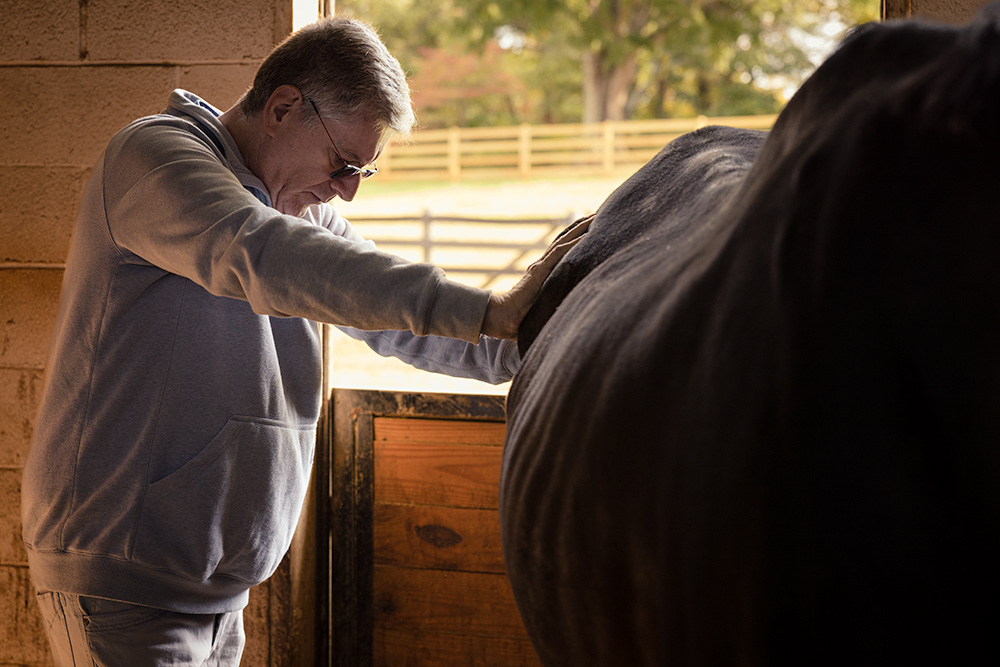
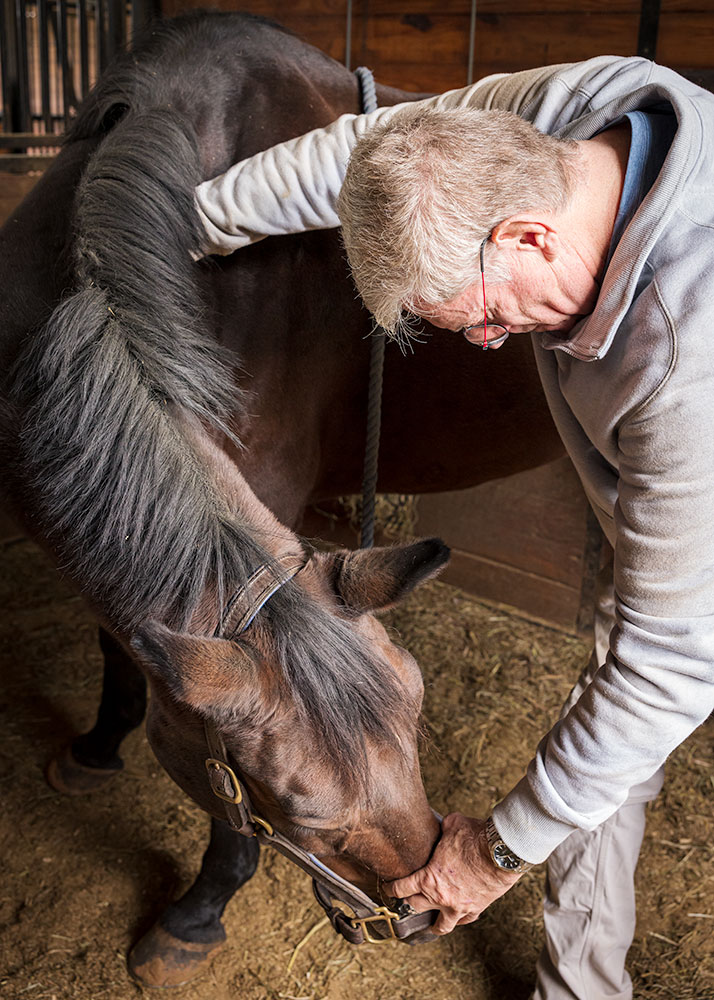
Now that I was inside the stall, I had more angles to shoot from, and I had to worry more about the light from these different angles. I was figuring out the routine that Bob was doing and could anticipate the shots better and better. That allowed me to get into position with the light as favorable as possible to get the shots. I had been used to the simple moves made on the videos but found out that those simple and slow movements are just a small portion of the therapy. Bob ended up doing some very violent moves as he evaluated range of motion and worked kinks out. I remember when I finally got one of those photographed that I showed it to the owner and said that she could use it for the assault investigation later on. It really did look that violent to me. However, the reaction of the horse showed a different side of it entirely. The eyes would droop or close, I would see the chewing, licking, and yawning and could tell that the horse was at ease. It was actually quite magical to watch.

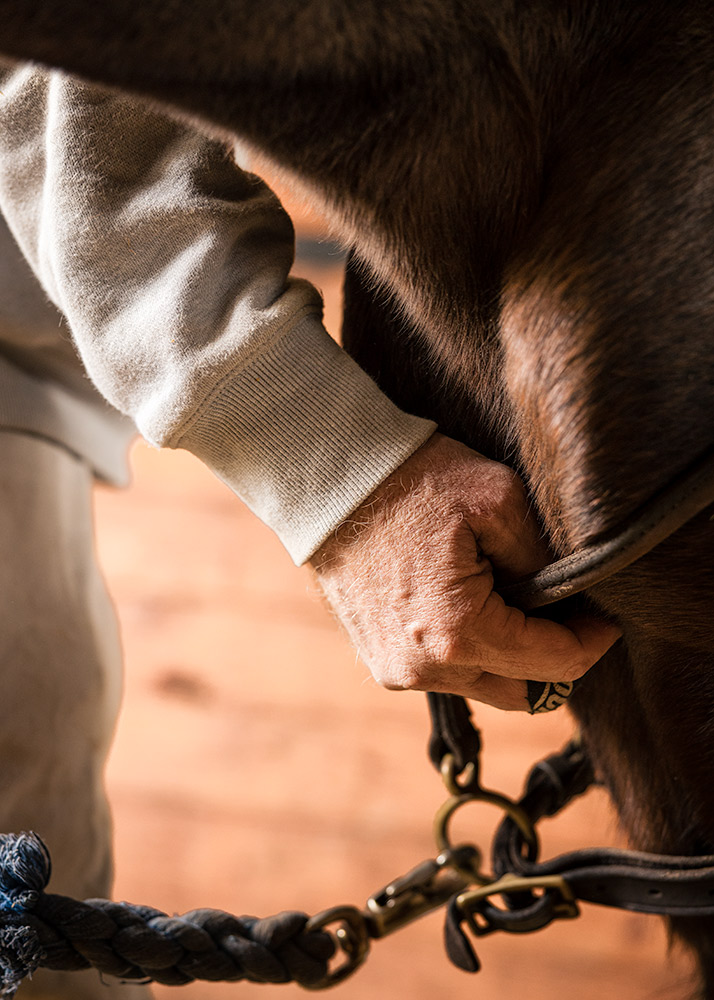
As I got more and more familiar with the process, I realized that when Bob was doing the move when he pulled the head close while pushing from the shoulder, he was actually deep inside the scapula of the shoulder with his hand. I started really enjoying capturing that aspect, and by the last horse, Bob was commenting about how deep he was getting his hand. By this point, he was showing Sierra a lot of what he was doing with the horses, and she was soaking it up like I would photography stuff. Having been made aware of how interesting the depth of his hand was, I got in very close for a capture of this, and it yielded a fantastic image that showed just how much is involved with this process.
With each horse, I had gotten a little braver with getting in close. It wasn’t that I was scared of the horse, it was that I didn’t want to be in the way or cause any distractions to the process. It was by getting in close that I was able to tell the story that I was after. The proximity allowed me to get great isolations with the 28-70mm lens and the times that I needed a very shallow depth of field, the f/2 aperture was perfect. I was able to slow down the shutter count because I knew the moments that I wanted to capture and didn’t waste the press until I had the shot. In the end, I had shot 918 frames which is the most I have shot from any single session ever.
In those 918 frames I learned a lot about photography in general, and I got very familiar with my new camera. There were several shots that were exposed at ISO 12,800 which was the cap I had set for the Auto ISO. Surprisingly, the noise was actually quite minimal considering I would look at ISO 1600 on the 5DS R as unusable. Even at ISO 5000 which was a pretty standard one for the day, I was barely having to use noise reduction. The ones where I boosted shadows a lot with a high ISO were the only ones that caused any issues. The camera had functioned flawlessly all day and I had managed to shoot the entire time using two batteries that were at 67%. Only in the last 10 minutes did I swap in two fresh batteries. In the category of learning, I have to mention that I am very glad that I always have the lens hood on when shooting handheld. It is great for shielding the lens from the light, but it is also very good at preventing bumps. I know this because while framing up a shot, my viewfinder went dark as the camera kicked back on my eye. I realized that the horse had decided to check me out and bopped the lens with his nose. The hood kept the lens element safe except for a dot of moisture and I was able to keep on shooting.
On the editing end, I tried out a lot of different techniques which were designed to color grade the images in order to take advantage of the analogous colors while giving them some separation. I also found that black and white really suited this series and I leaned on that presentation for many of the images because it showed the soul of the interaction much better than the color images did. I was very impressed with the dynamic range of the camera because you can see in several of these that there was plenty of detail in the window when I had obviously had to overexpose that portion to get the shadow detail that I wanted. It was also nice to be able to pull out plenty in the shadows to complete the images as I had envisioned them.
The tempo of the shoot was vastly different than I had expected. the speed at which Bob progressed through his process forced me to get really fast at anticipating what he was going to do while matching it up with how the light was falling in the scene. By the third horse, it was almost instinctual, and I didn’t have to think about it nearly as much. The EVF was a nice touch compared to the optical viewfinder because I was able to see how the exposure was looking in real time without having to rely on the histogram, but it was there in the EVF as well. If the scene looked too bright or dark, I was able to dial in a bit of exposure compensation to make it right before I shot the photo. I didn’t even look at the image review until there was a break in the action and I wanted to see what images were working and which ones weren’t.
It took me two days to get the images processed, and when it was all said and done, I had 56 images that I felt fit the assignment for Bob. There are another 20 or so of Sierra working with the horses that will get evaluated and processed at another time (she ain’t a paying customer). This has turned into a pretty big endeavor, but one that I think turned out really well, and I certainly learned a lot from it. I guess that is the reason that I wanted to write about this one. I’m sure I will look back on it in a year or more and laugh at how much I stressed over it.
I do hope that you have enjoyed the portrait session and a small group of the photos. Bob was very happy with them and thinks I delivered on what was asked of me. That is the only part that ever matters when it comes to portrait sessions. My satisfaction is secondary to the client. This is one of those times when we are both very happy with the outcome which is quite special. I’m very thankful that he entrusted me with this assignment.
If there is a certain aspect of your life that you want documented, please let me know. I would love to work with you on a personalized session of your own.
Until next time…