Welcome back for another installment of my monthly Behind the Camera feature. This month, I am going to go with a bit of a gear talk as opposed to something more directly related to my photography. That being said, there is a close relationship to the two because it is the gear that allows me to capture what I see. I know that many of you don’t care about the gear because you are not photographers, but there are quite a few that have cameras and want to improve on what they are able to do. My goal this month is to bring up an old debate that I really don’t hear that much about these days because technology has improved to the point where the issue is largely moot. I am, however, finally able to see both sides of the coin thanks to my ventures into portrait photography. My recent take on things might just be the reason that the debate has become mostly silenced by the masses, but there are still some considerations to be made on the subject. That subject is lenses…or more specifically, whether you choose to shoot with prime lenses or zoom lenses.
When I started in photography, I chose to go with zoom lenses because most everything that I was reading about them suggested that this was the best overall choice for what I was photographing. A couple of years ago, I made a different choice when building out my portraiture kit and chose to go with a number of prime lenses for my bag. Obviously, this meant that I was more knowledgeable about the differences and went with the better option, right??. Well, as I look towards the day when I replace my aging 5DS R body with a new mirrorless body like my EOS R5, I am again looking at the lens options. Unless something major happens, I will be stocking that bag with zooms once again, but how could that be? Are zooms or primes the better choice, and why not just go with the better option rather than blending the two? I am going with the better option, but which one is better can be different based on the intended use.

Since day one of learning photography, one thing has remained the same. My money is better invested on lenses, or glass, than on the latest and greatest camera body. In reality, the body is a disposable part of the equation and is designed to wear out and need replacement based on how much it is used. Pro bodies will last much longer than entry level bodies as they are built more robustly and have more of the higher end features which make the camera easier to use quickly. Even with that in mind, the manufacturers will release updates every few years with the hopes that everyone will line up to buy the next version of their favorite camera. This is where the marketing is, and that should be an indication of where the value in your kit really is. It isn’t in the camera body because those are constantly upgraded with minor changes that make the older versions less appealing (wrongly so) to buyers. These upgrades benefit the manufactures more than the consumer. What you don’t see much about are updated lenses. Those get updated much slower, and the only big news is when a whole new lens is released in a lineup. Here lately, the big news with Canon has been the lack of permission for third party manufacturers to create lenses on the RF mount which forced consumers to buy proprietary lenses or adapt older EF glass to the new bodies. This is big news because it is the lens that is ultimately responsible for the quality of the final image. What the body brings to the game is largely inconsequential outside of convenience of operation. A camera body will always just be a lightproof box with a shutter. Canon is wanting to squeeze out as much money from the lens shoppers as it can before letting the 3rd party manufacturers start sharing in the profits. I can’t blame them, and do love Canon glass, so it is not a concern for me.
Camera lenses are divided into two main categories with a few specialized lenses that could almost be their own categories. These primary categories are zooms and primes. It really is that simple when you are looking at lenses. So, what is the difference between these two types? A zoom lens is a lens that is designed to work at different focal lengths such as a 70-200mm lens. This lens will operate and project an image on the camera sensor (or frame of film) that can represent every focal length, or field of view, between 70mm and 200mm. This adjustment can be internal to the lens, or by way of an extending barrel. My first camera, the Sony F-828 had a 28-200mm zoom lens permanently attached which gave me access to a moderate wide-angle field of view and a moderate telephoto (narrow) field of view with everything in-between. The second type of lens is a prime lens. This is a fixed focal length lens that will only operate at a predetermined focal length such as the nifty fifty lens or 50mm. This is probably the most common prime lens because it is most comparable to the field of view that our human eyes have. Of course, there are plenty of other focal lengths that are represented by primes, and of course, there are a ton of zoom lenses that cover a wide range of focal lengths. In fact, it is safe to say that with a few exceptions, the zooms will cover everything that the primes can and then some, since they are infinitely variable within the zoom range. Add to that comparison that there are also ranges of maximum apertures within these lens classes. This is the f/number that is associated with a lens, such as a 50mm f/1.8, or 24-105mm f/4. What does all this mean for your photography?

The focal length refers to the field of view. As I mentioned, around 50mm is close to what the human eye sees, so anything with a lower number is deemed to be a wider angle, while a higher number is considered a telephoto, or narrower angle. These can be mild such as a 35mm or 85mm, or they can be extreme like a 10mm fisheye or a 1200mm super-telephoto that could photograph the leg of a tick at 1000 yards. In landscape photography, the holy trinity of lenses usually will represent something in the area of 16-200mm depending on the current state of technology on the wide end. It is in that range of focal lengths where most photographs are made, and the same holds true for portraiture and even street photography, although both of those tend to gravitate towards the poles of that range. After 200mm, you start to see a point of diminishing return unless you are talking about detail shots at a distance, such as a sports photographer or wildlife shooter who’s bread and butter lenses start at that 200mm point, only to get longer in focal length (more narrow).
Photographers like options, so the comparison between zooms and primes should pretty much be over at this point because a zoom can do so much more than a prime by allowing you to cover a whole range of focal lengths with a single lens. Heck, they have superzoom lenses like the Nikon 24-200mm which is very similar to the 18-200mm lens that I was going to base my first DSLR kit around in 2007. Yep, I was going to be a Nikon shooter when I made the decision to switch to a DSLR from my prosumer Sony point and shoot. The logic was great in my mind. I would get a zoom lens that covered all the range that I had become accustomed to with my Sony, and I would never have to switch lenses. I could do it all, but with a higher quality camera than what I had been using.
What got in the way of going with Nikon? Well, part of it was I hated the way a Nikon felt in my hand, and the buttons and menus confused me. I really think that Nikon is overly complicated for no good reason. I could have gotten over that easily enough, but the idea of a superzoom lens started to concern me as I researched my options. Quite simply, what I found out was that the larger the range of a zoom lens, the more compromises had to be made during the manufacturing process. This would lead to softer images, distortion, and different sweet spots through the lens zoom. In short, I could go with a superzoom, but at the expense of image quality. I hate to sound like a snob, but my Sony had a Carl Zeiss lens on it which kind of sold me on high quality glass which made me hesitant to go with a do-everything lens that might be of a lower optical standard. Yeah, I was big into reading reviews and trying to figure out the best of the best to buy.
My research brought me to the conclusion that a prime lens would be the best, and the cheapest option for me. With a prime lens, there are no compromises that had to be met. A 24mm prime lens would be sharper and have less distortion than the 24mm end of a 24-200mm lens which was designed to perform reasonably well across that entire range of focal lengths. The prime lens would also be much cheaper than a zoom, and lighter because there was less glass and moving parts within it. As I found out, these facts only applied to the entry and enthusiast level lenses. I started to look at what I would need, and I had already found that the holy trinity of lenses covered a range at the time of 17-200mm. Not knowing exactly how I would be working in a world of DSLR’s, I wasn’t sure of the exact lenses that I would be needing. Obviously, I would need the 50mm because that was what was recommended as a first lens for everyone. I’m not sure that I agree with this, but that is a story for another day. Then I would need a wide angle which was going to be a 24mm, but that might be too wide, so a 35mm would be handy to have. I knew that I spent a lot of time on the telephoto end of things, so I might need an 85mm, a 100mm, and a 200mm lens. OK, now I was looking at like a half dozen lenses and it seemed like I was only covering six specific focal lengths. I could do so much more with less bulk if I went with zooms, but I wanted the quality to be top notch which made me hesitant to go with zooms.
The more I dug, the more I found that lenses, whether prime or zoom, came in different classes. There was the economy class of lens that was often packaged with the camera body which was called simply the kit lens. This was usually an 18-55mm lens that was about a hundred bucks by itself (original non-IS version) with a 55-250mm lens option that was just a little more which could be bought to complete the package. They were cheaply built, but optically pretty decent. You could then step up to the enthusiast level of glass which was between $200-500 which improved slightly on the image quality but got much more robust in build quality and mechanics. At the time, you could get a Canon EF 50mm f/1.8 lens for just under $100 while the f/1.4 version was a bit more expensive at $350ish. The f/1.8 version was called the plastic fantastic lens because it was so cheaply made, but remained a strong performer optically. This lens comparison shows essentially the entry level and mid level ranges, but because a 50mm was so highly produced they were dirt cheap to buy at both of these levels. The next level of lenses was the professional line which brought in the big bucks of a grand or more. These lenses were weather sealed, built like tanks, optically excellent, and were faster (wider apertures). For the most part, the higher up the food chain you went in zoom lenses, the smaller the zoom ranges. The reason for this was that fewer compromises had to be made for the smaller ranges and these zooms resulted in much better optics across the entire range. That became very important to my decision making.
What I learned was that the less than stellar optical performance of the 18-200mm lens which was kind of putting me off of the Nikon range was something that wasn’t an issue if I went with a 24-70mm zoom of a pro level kit. Of course, at this point, I was introduced to the Canon “L Series” lenses which were highly regarded as the best optics around at that time. Every review convinced me that a Canon L Series zoom would perform nearly as well as a prime which gave me more confidence going with zooms for my kit. To be fair, the Nikon pro-line lenses as well as Sony have similar traits, but I happened to land on the Canon glass during my research. That is eventually what I did and haven’t looked back on that decision. My initial kit was an EF-S 10-22mm f/3.5-4.5, an EF 24-70mm f/2.8L, and an EF 70-200 f/2.8L. This was for a Canon 40D which had a cropped frame sensor (smaller than a frame of 35mm film) which forced a conversion of 1.6x on those focal lengths. Since the pro-level bodies were not cropped frame sensors, there was not an L Series lens option for the wide end which was why I had a middle level EF-S 10-22mm f/3.5-4.5 as my wide-angle choice that would give me an equivalent of nearly 16mm on the wide end. Before I even put the camera in service, I was worried about the gap between 22-24mm which was stupid, but I felt I was missing out, so I added the EF 17-40mm f/4L to my bag. I now had four lenses in my kit with a range from 16mm-320mm as well as a bit of overlap, and I used every bit of that over the years I shot with it.

When I was forced to replace my camera body due to a fall in 2010, I went with a full frame body because they were a bit more robust than the 40D that I had been using. With the addition of the 5D Mk2, I no longer needed that 10-22mm lens which was good since that lens had been on the 40D at the time of the fall. The barrel broke and it is still has the distinction of being my only lens that can shoot around a corner. This is why I will always opt for pro-level gear because I’ve had the camera fall a few times since, with either minimal damage, or none at all. I was now down to three lenses but had a focal length range of 17-200mm which I could work with. I didn’t really miss the range from 200-320mm because it really wasn’t that significant of a loss. The change at the wide angle was much more noticeable, and I eventually added a 14mm prime lens to the mix and replaced my 17-40mm f/4L with a 16-35mm f/2.8 Mk2. This all happened after the great tantrum of 2011, when I sold everything, only to return to photography in 2013, and buy it all again around a 5D Mk3. I also added a 2.0X teleconverter so that I could get the reach out to 400mm with my 70-200mm lens. The new kit covered the range of 14-400mm which has served me very well in the last decade of use.
It was this kit that I bought in 2013, which is still serving me today in my landscape bag as a matter of fact. The lenses have seen two different bodies with the upgrade to a 5DS R which I absolutely love. Had technology not forced mirrorless cameras to phase out the DSLR, the mount would not have changed, and those lenses would be waiting on the next body replacement as well as the next one after that. The lenses have a much longer lifespan than the actual camera and I was counting on that when I put down all that cash to get started. The body was disposable, and I wanted to invest in a lens collection that would outlast my needs. If you really want to get down to it, I do have an adapter for the R5 that will allow me to use each of the existing EF mount lenses with the new camera body and they could continue to be my workhorses for many more bodies to come. I’ve actually done that with one of my lenses, the EF 35mm f/1.4 Mk2 which is the only L Series 35mm option for the moment. I opted to make the switch to RF glass from my existing EF mounts because the mirrorless camera allowed for better designs with the lenses and therefore better optical quality which I wanted. I didn’t stick with the zooms that I had been going with though because my needs were different for this camera setup.
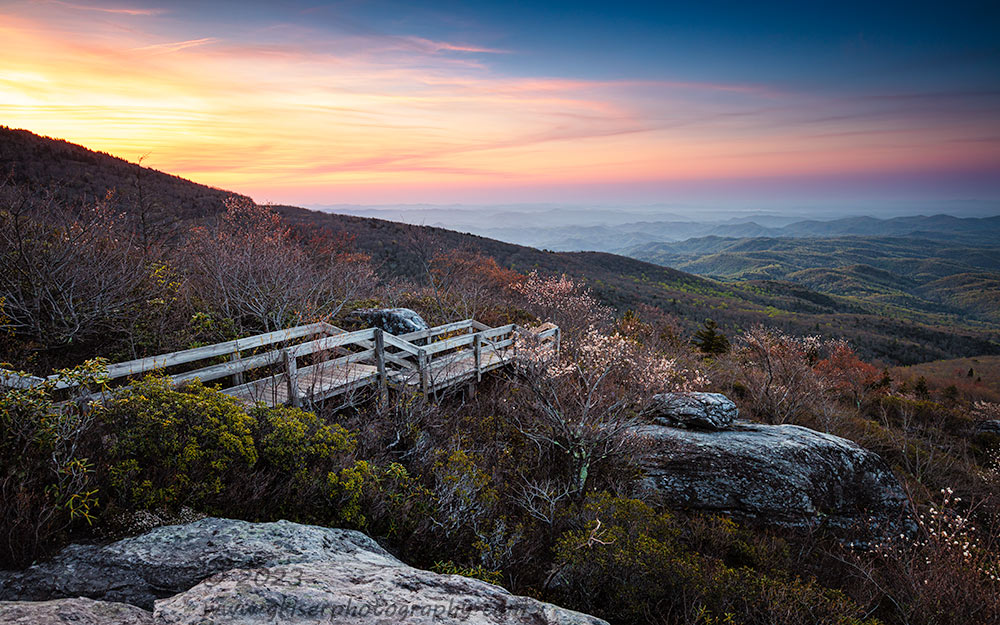
While I was working with landscapes, depth of field was the primary concern and I wanted everything in the frame to be sharp and in focus. I spent most of my time at f/11 or higher, like the image above which was shot at f/16. Fast lenses weren’t important to me, but I did select f/2.8 lenses even when there were f/4 options available just in case I needed my kit for portrait work, or low light situations. The f/2.8 aperture range is generally considered a fast lens and will give a nice blurry background when needed. It was a good compromise for what I needed, but for portrait work, I needed things to be a little more purpose driven to what I was after. I started to look at primes, and had actually gotten several prime lenses for my 5DS R until I realized that I was investing money in a lens mount that was being quickly phased out with dwindling support from Canon. Since I was looking at building a kit around primes, and wanted the focus abilities of the mirrorless camera, I opted to update everything to RF glass with the intention of eventually selling off my EF mount gear. I’ve since sold two prime lenses in the EF mount which has helped me to afford some of the new gear.
My criteria for the new lenses were not all that different from what they had been for landscape use. I wanted a robust lens that was optically beautiful which meant that I was again looking to the L Series lenses that I have grown to love and trust over the years. Having started with portraiture a year earlier, I knew more about the focal lengths that would be needed, and settled on wanting 35mm, 50mm, and 85mm primes. This would give me the options that I would most likely shoot at, and short of the 35mm, Canon had L Series options available, so I sourced an RF 50mm f/1.2L and a RF 85mm F/1.2L which I could have stopped with right there. The fast lenses (2 1/3 stop faster than my existing f/2.8 glass) would allow much better low light performance as well as a creamier blurred background when needed. Portraiture doesn’t deal with the same types of depth of field that landscape photography does. Here, I would shoot a wider aperture than f/11 most of the time and would be wider than f/2.8 when shooting outside generally speaking. These primes gave me exactly what I needed on outdoor shoots. However, I also found that when shooting in the studio, I went with tighter apertures to control the room light, and since I had control of the background, the small depth of field wasn’t nearly as needed. I liked the flexibility that I had from the zooms in framing things in confined spaces, so I went with an RF 70-200mm f/2.8L which is the current version of my favorite studio lens from the 5DS R. For some wider shots, I went with a new design RF 28-70mm f/2L which was a stop faster than the familiar EF 24-70mm f/2.8L, so I could also use it on location in natural light and to get a buttery smooth background when needed. An additional benefit was I wouldn’t have the option of accidentally going wider than 28mm which starts to look funny on a person unless done for a specific reason and in a specific way. I wasn’t advanced enough in this type of photography to see that difference readily in the viewfinder and would easily fall into a trap of shooting too wide and close only to get home and realize that I had ruined the photos due to perspective. This was a very real concern since much of my decay photography is in the wider-angle realm for that distortion effect. In response to an engagement shoot that I did, I later added an RF 100mm f/2.8L macro lens so that I could get detail images like the ring below during a shoot. That has rounded out my current kit and has allowed me flexibility both in the studio as well as on location.

I mentioned the future of my landscape photography will be with the RF mount mirrorless camera system, so will I be changing up my lenses, utilizing my existing primes because of the optical quality, or just adapting my existing lenses for the same type of work? To keep with the highest quality, I want to get the native mount lenses to go with the camera, but history has shown me quite a bit where I might have gone wrong with some of my original purchases. If you will recall, I said that I built my landscape kit around f/2.8 lenses so that I could press them into service for portrait work if needed? Well, they served that purpose, but now, I have a dedicated kit around portraiture with fast lenses, and fast zooms. The side of that choice that I don’t talk much about is the fact that those fast lenses (f/2.8 is still considered fast) are heavy. They are big, and they are expensive. I’m not getting any younger, and I’m getting a little tired of going around with a 25-30lbs bag on my back. Now that I am more established as a photographer, I don’t need to make nearly as many compromises when it comes to my gear. When it comes to landscape photography, I intend on putting together a much lighter kit when it comes time to replace the 5DS R. Technology has made my Rokinon 14mm lens unnecessary as I can get an RF 14-35mm f/4L that will cover that bit of extra focal length on the short end. I’ll pair that with an RF 24-105mm f/4L as my standard walk around zoom. I could easily go with the RF 24-70mm f/2.8L which is comparable to what I already have, but the f/4 lens will be a bit lighter and will cover more telephoto range which will allow me to address one of the other issues that my current kit has demonstrated many times over. I need more reach on the long end for landscape isolations, and the 400mm limit that I have is just barely capable of covering that. Using the RF 24-105mm f/4L I will get quality that is on par with the 24-70mm that I am used to, and I’ll have the range I need to move my telephoto lens up to an RF 100-500 f/4.5-7.1L which will more than cover what I am needing on the long end.
The biggest difference that I am benefitting from is that for the landscape kit, I am valuing weight and number of lenses over fast glass. This allows me to carry only three lenses as opposed to the four plus the teleconverter that I am carrying now. The lenses will be lighter than what I am working with now, so the bag will also be much lighter overall. Since most of my landscape photography is done at f/5.6 and higher, the f/4 threshold doesn’t bother me at all. Even with the telephoto lens, I am usually shooting a much higher aperture than f/7.1. Given the extremely high effective ISO of the R5 and its successors, and the addition of in body image stabilization (IBS) as well as the stabilization on the lens itself, there is no reason for me to need a faster aperture. I also have to consider that I shoot most everything in this genre on a tripod so even the image stabilization features don’t make a difference to me in most cases. Should I think I will need it, I could always swap out a lens for one of my portrait lenses for a specific look on a trek. Overall, though, I will enjoy the lighter weight, and smaller lenses in my field pack as it will allow me to go further and see more things.

Now that you understand my choices in lenses over the years, I can let the cat out of the bag. The difference between zooms and primes has really diminished over the years. Technology has improved and there are so many options out there for lenses that given enough money, you can certainly have optically perfect glass in either a zoom or prime. Of course, there will be slight reductions in quality with a zoom, but unless you are pixel peeping, the differences are minor and won’t be a distraction to any photograph that is shot, even printed very large. The difference now comes down to other considerations like how the lens will be used more than anything else. Even the cost of the lenses has become more and more similar. Where you will see the cost savings will be in the lower end glass where primes will be much cheaper, yet sharper still over the zooms. In the pro level, whether Canon, Nikon, Sony, Fuji, etc, you will find the cost of the lenses similar between zooms and primes which actually makes the zooms more cost effective now. For instance, my RF 28-70mm f/2L lens ran just a tick over $3,000.00 when released. In that range, I also have two fast primes to work with. The RF 50mm f/1.2L cost $2,299 by itself. The RF 35mm hasn’t been released yet, but I figure it will be at least that same price, but probably more which will almost double the cost of that one zoom lens. Could I get by with the 28-70mm, I really could without much of an issue. I’m actually seriously considering bypassing the new 35mm prime since I have that fast zoom, but I’m not completely sure at this point. The biggest selling point is that extra bit of light coming into the lens at f/1.2 versus f/2. The point here is that prime lenses no longer have that price advantage, but price isn’t the only consideration here.
For me, the biggest consideration between the two types of lenses is how they work. For landscape work, I am sometimes very limited on where I can stand which makes compositions a little more difficult. In these situations, I value the ability to fine tune my framing through the use of the zoom. Just a couple of millimeters difference on a zoom lens will mean the difference between having a distraction in the scene or avoiding it altogether. It could also mean having that one additional element included that might have been omitted due to the frame being a hair too small. Yes, I could go with a prime that overshoots the scene, but then I am left cropping deeply into the frame to get the composition that I want which will throw away valuable pixels needed for the final resolution of the image. I will also sacrifice the compression of a longer focal length which might be important to the composition and depth of field. If I can’t move my location, a zoom is a great alternative. On the other hand, when doing portraiture, I am a lot more flexible and can move on my feet to get the framing that I want. Having several primes allows me to get the perspective right and keep it locked in which is important when shooting people. The superwide headshot with a gigantic nose is just not a good thing. Better to lock in at 50mm or longer to get the right proportions from the start. From there, it is just a dance to get the camera the right distance away to make the photograph work which is super easy when working with people. It is not so easy when working with mountains, and unstable ground. The same could also be said for working in a small studio where you need some precise framing where a zoom can come in handy and also allow you to work quickly. Since studio work rarely requires a shallow depth of field, a fast zoom is plenty capable in that environment. I’m typically working at f/5.6 to f/11 when I’m in the studio.

When talking about the speed of a lens, it is important to mention the variable aperture lenses. These are the zoom lenses that look something like this 100-500mm f/5.6-7.1L. What this means is the engineering of the lens is such that the widest aperture at 100mm is f/5.6, but as you zoom to 500mm, that maximum aperture value is reduced to f/7.1. This will change your exposure values if shooting with the lens wide open. If you are working slow, this isn’t a problem, but if you are constantly changing the focal length, you will find that you are only working at f/7.1 because, the lens will not automatically open the aperture back up after it is closed down. Variable aperture lenses are common in lower and mid-grade zooms because it allows the price to remain lower as well as the size much smaller. Higher end lenses can also be found with variable apertures, but usually this is restricted to the longer telephoto lenses to keep the size and weight down. To keep a constant aperture over a range like 100-500mm, the front element would have to be huge, and the price would go up exponentially. If you are needing a fast lens at this focal length, you are much better off getting a prime with a faster maximum aperture like f/2.8, or even f/4. Effectively, this is why I am choosing the RF 70-200mm f/2.8L as my portrait telephoto zoom because I need that constant aperture for how I work. The landscape bag will get the RF 100-500 f/5.6-7.1L because I won’t care if I have to adjust the exposure after changing the focal length. I work much slower in that regard and will be up around f/22 with that lens anyway which means that I will rarely be affected by the variable aperture.

I’ve alluded to a lot of the reasons why I like primes as well as zooms. In essence, the zooms are much more convenient and with modern technology, they are on par with the primes when it comes to sharpness and overall optical quality. There are limits to the specifications on zooms with the fastest zoom I have, only being an f/2. If you are needing a faster lens, a prime is the only way to go as those will generally all be faster than f/2, even in the entry level prime lenses. The speed not only allows you to capture photographs in lower light, but they will also allow more separation due to blurring of the background which can also be used to minimize less than appealing backgrounds. It is those considerations where I have chosen primes for my portraiture since I’ve run into issues keeping a fast enough shutter speed when outside of the studio. For landscape work, zooms make the most sense to me still, and while my 14mm prime is a wonderful lens, and my second favorite cheap buy story, I do get tired of having to physically move the camera on a tripod for that exact composition I’m looking for. It is so much easier to adjust the zoom to get the framing perfect which is why I lean on zooms for landscape work.
Unfortunately, many of the benefits of using a prime lens are not present when shooting the pro-level lenses. There are no appreciable financial savings with those lenses, as they are on par with zoom costs. The weight savings are also not all that noticeable. Each of my RF primes are built like tanks and weigh as much as the zooms that I am used to using. The benefits that I am getting with primes in my portrait kit are the ability to lock into a focal length which is a safety net for me at this stage and the ability to have more control over the separation of the background when needed. I rarely shoot a lens wide open which begs the question why spend the money for an f/1.2 lens when I shoot it at f/2? Well, a lens is rarely at its best either wide open or stopped down completely. You need to be about a stop away from those extremes to get the best image quality out of a given lens. This means that I can shoot at that f/2 on a 50mm f/1.2L and get a better image than if I shot the 28-70mm f/2L wide open at 50mm. But if needed, I can open the prime lens wide open and get a very dreamy photograph should the situation call for it.
What option is the best for you? You have to ask what you value most in your kit. Do you like to shoot wide open and get those blurred backgrounds? Get a fast prime. Do you like to shoot in low light conditions and keep a fast shutter speed? Get a fast prime. Do you like to shoot on a tripod and get everything perfect in the frame before you make the exposure? Get a zoom. Do you enjoy shooting long exposures where movement is one of the elements in the frame? Get a zoom, and you don’t even need a fast one. Are you a run and gun type of photographer that needs to get a lot of different types of shots quickly? Get a zoom, preferably a fast one. Do you spend your time on a tripod shooting far reaching scenes at a high aperture? Get a zoom. Do you want maximum flexibility with a minimum of weight? Get a collection of moderately fast zooms, but if you are willing and able to do a lot of footwork to get the compositions, change that up to primes which will likely be lighter. Is your style one where you find yourself always shooting around 50mm? Get a fast 50mm prime and glue it onto your camera body. That is all you need. The answer is look at the type of photographer you are and see how that corresponds with your available budget.
For those wanting to get into photography and don’t know how to start things, this is the formula that works most of the time. Research lenses first. Figure out what type of lenses suit you, and then figure out what brand suits your needs. All of the manufacturers have essentially the same types of lenses, but you might find that one brand fits your needs a bit better than the others. Once you land on a lens maker, then you will know what camera brand to go with. Choose the body based on how it feels in your hands, and which one has the controls that you want. No matter the brand, the biggest difference between entry level bodies and pro level bodies is the placement of the buttons and what shooting options are available without going through the menu. Don’t spend too much on the body as the image quality will be very similar between them all. Your budget needs to go with the lens choices first and foremost. Those are the bits that will be with you the longest.
Thanks for joining me for this month’s installment of Behind the Camera. I hope I didn’t put you to sleep with the gear talk, and hopefully you learned something. While I centered mostly on the Canon line, the same will hold true whether you are looking at Nikon, Sony, or Fuji. Then you can add in the third-party lenses like Sigma and Tamron which will offer similar kit for a lower price point with the different lens mounts. In some cases, the quality of those lenses is even better than the native glass for a given camera. I know it seems like a lot to think about, but as I mentioned, glass is worth putting your money in, and if you are going to be spending that kind of cash, might as well research it and figure out what will work best for you in the long run. This is something that I can help you with through my mentorship programs if you are interested.
Join me again next month as I tackle another topic. I’m not sure exactly what I am going to be discussing just yet, but I suspect that it will be something along the lines of accepting the ebb and flow of creativity. Of course, if there is something that you would like to hear about, please drop the suggestion. I’m always interested in covering topics that appeal to my readers. In the meantime, enjoy the colorful month of October!
Until next time….

Remember to use the code KISER10 to get 10% off your purchase